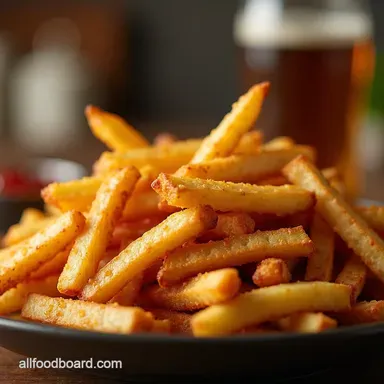
The Crispy Conqueror Restaurantquality Doublefried French Fries
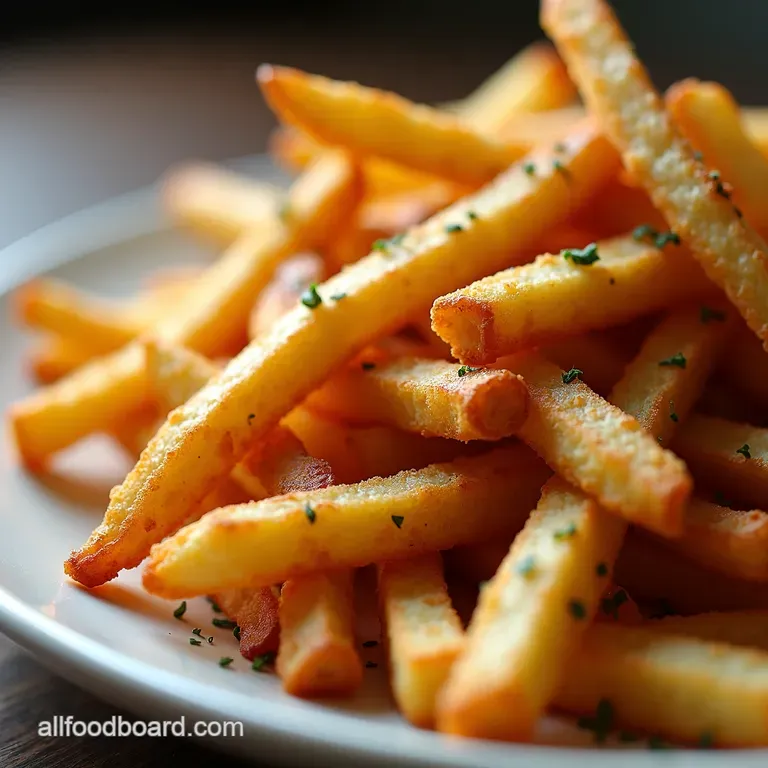
- Unlocking the Secrets to the Ultimate French Fries Recipe
- Why Double-Frying is Non-Negotiable for True Crunch
- Gathering Your Components for this French Fries Recipe
- The Precise Method: Executing the Double Fry
- Troubleshooting and Advanced Techniques
- Beyond the Basic Salt: Flavor Variations
- Frequently Asked Questions
- 📝 Recipe Card
Unlocking the Secrets to the Ultimate French Fries Recipe
Ah, the French Fry. A simple masterpiece born from the humble potato, elevated by technique. Forget those floppy, pale imitations you get down the local chippy when they’re having an off day. We are aiming for the gold standard: crispy on the outside, fluffy on the inside, and utterly addictive.
This recipe honours the classic Belgian approach: a quick blanch followed by a proper, hot finish. The result is a fry that boasts an unbeatable, shatteringly crisp exterior and a meltingly soft interior.
Seasoned simply with sea salt, these are far superior to anything you'll find lurking in a fast food bag proper chip shop quality, right in your own kitchen. While the ingredients are straightforward, achieving this level of excellence demands patience and precision; this French Fries Recipe is considered medium difficulty precisely because the technique, specifically the double frying and temperature control, requires attention.
Why Double Frying is Non-Negotiable for True Crunch
If you only take one piece of advice away from learning how to Make Your Own French Fries , let it be this: never rely on a single fry pass. The secret weapon behind the best fries the world has ever known is the double fry method.
This process ensures that the interior of the potato cooks completely until it’s light and floury, while the exterior develops a resilient, waterproof crust that locks in flavor and resists sogginess later.
Executing this technique perfectly is the key differentiator between sad, greasy potatoes and the Best Fry Recipe available.
Setting the Stage: Achieving Crisp Perfection
Before the oil even heats up, preparation is paramount. For this recipe, we rely on starchy potatoes Russets or Maris Pipers are your best friends here weighing in at about 3 lbs (1.4 kg). After peeling, the next critical step is uniform cutting. Aim for sticks roughly 1/3 inch (about 1 cm) thick.
Uniformity is not just aesthetically pleasing; it is absolutely crucial for even cooking. Following the cut, they must be rinsed and soaked in cold water for at least 30 minutes to draw out excess surface starch.
Once soaked, drain them thoroughly, and then spread them out on clean kitchen towels. They must be bone dry before they ever meet hot oil. Any lingering moisture will translate to violent spitting and steamed, rather than fried, potatoes.
The Mythology of the Perfect Potato Cut
The shape and thickness dictate the outcome. Thicker cuts (like steak fries) require longer cooking times, whereas shoestring varieties cook too quickly to achieve the desired fluffy interior. The 1/3 inch stick hits the sweet spot, balancing surface area for crisping against the volume needed for that soft center.
If you want truly Fresh Fries Homemade , treating the cut dimensions with respect guarantees success when you Deep Fry French Fries .
A Quick Sneak Peek at the Process
To summarize the journey: we begin by preparing the potatoes meticulously, followed by the initial low-temperature blanch at 300° F ( 150° C), which cooks them through. They must then rest and cool completely a non-negotiable step!
Finally, we return them to much hotter oil at 375° F ( 190° C) for a quick blast of high heat to achieve that iconic golden crunch. This entire system is designed to deliver perfect results when making your French Fries Recipe at Home .
Gathering Your Components for this French Fries Recipe
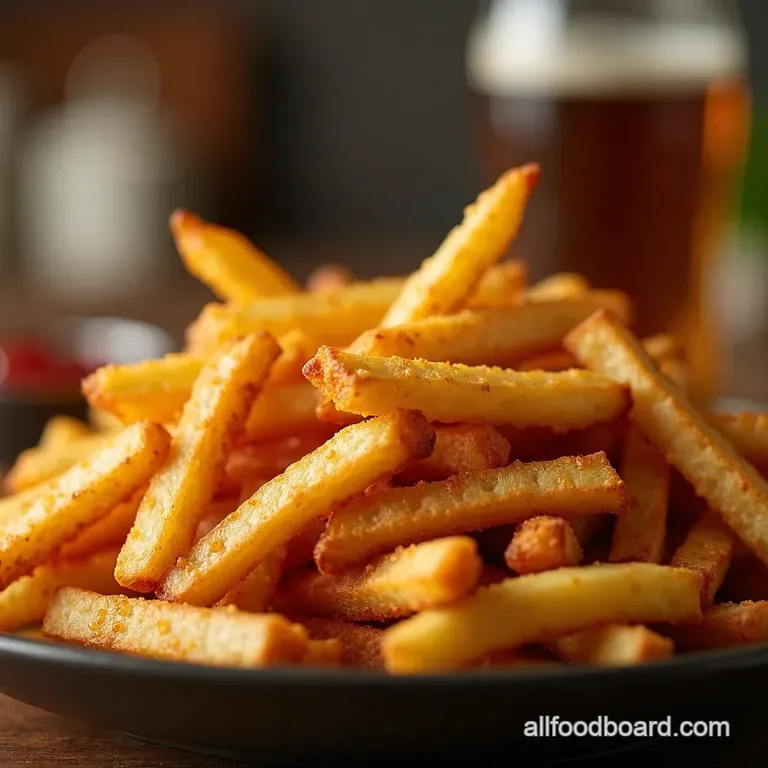
Creating restaurant quality fries requires selecting the right raw materials and tools. While the ingredient list is short, the quality of what you choose directly impacts the final texture and taste of your masterpiece. We are aiming for simple perfection, relying on technique more than heavy seasoning.
The Potato Selection Criteria: Starch vs. Waxy
The choice of potato is the foundation of any great Homemade French Fries attempt. You need high starch potatoes, such as Russets. Starch converts to sugar during the frying process, leading to a crisp, non-gummy exterior.
Waxy potatoes (like Red Bliss) have lower starch content and higher moisture, resulting in fries that tend to absorb oil and become limp rather than fluffy. For this recipe, stick to Russets or their European equivalents for the best structure.
Must Have Ingredients for Superior Frying
Beyond the 3 lbs (1.4 kg) of peeled potatoes, the ingredient list is elegantly simple: cold water for soaking, and fine sea salt for finishing. Resist the urge to pre-salt or pre-season before the final fry salt pulls moisture out, and we need every ounce of internal moisture preserved for that fluffy texture.
The Best Oil Choices for High Heat
Since we are dealing with two distinct frying temperatures, you must select an oil with a high smoke point. Peanut oil is the absolute gold standard due to its neutral flavor and high thermal stability, but refined vegetable oil or canola oil also perform admirably.
You will need 6 8 cups (1.5 2 litres) to ensure your potatoes are fully submerged during frying.
Equipment Needed to Execute Flawless Results
You absolutely must have a reliable deep fry or candy thermometer. Guessing oil temperature is a recipe for disaster. A deep, heavy bottomed pot, like a Dutch oven, holds heat exceptionally well.
You will also need a slotted spoon or spider skimmer for safe removal, and a wire cooling rack set over a baking sheet is preferred over paper towels for draining, as it allows air circulation, preventing the bottoms from steaming.
Related Recipes Worth Trying
- Golden Crunch Air Fryer French Fries RestaurantQuality Chips — Tired of floppy fries Learn the twostage secret to perfectly crispy air fryer French friesfluffy inside shatteringly crisp outside Simple steps inside
- The Ultimate Crispy Baked French Fries Recipe OvenBaked — Tired of soggy chips Master the best homemade fries oven baked for a satisfying crunch without the deep fryer Easy ovenbaked fries recipe
- The Ultimate Sizzler Easy Chicken Fajitas Recipe — Tired of bland chain restaurant versions This Chicken Fajitas Recipe features a zesty lime marinade for succulent meat and perfectly charred peppers Easy...
The Precise Method: Executing the Double Fry
With all components ready, we move to execution. This is where the magic happens, transforming simple sliced potatoes into crispy, golden delights. Remember, this process serves 4 people generously as a side dish.
Prep time totals about 25 minutes active work, plus at least an hour for chilling, and then about 15– 20 minutes of total frying time.
Temperature Control: The Key to Internal Fluffiness
Achieving the perfect interior texture relies entirely on managing two distinct heat zones. The first heat cycle is low and slow; the second is fast and fiery.
Phase One: The Low-Temperature Blanch (Cooking Through)
Heat your oil in the Dutch oven to exactly 300° F ( 150° C) . Once stable, gently lower your dried potato sticks into the oil in small batches do not overcrowd the pot, as this drastically drops the oil temperature.
Fry these blanched potatoes for 5– 7 minutes. They should emerge looking pale, cooked through, and barely kissed with gold. They will be floppy at this stage; this is correct. Use your slotted spoon to lift them out and place them onto the cooling rack.
The Essential Rest and Drying Interlude
This is perhaps the most overlooked, yet most critical, step in the entire French Fries Recipe . The blanched fries must cool down completely. Allow them to rest at room temperature for at least 30 minutes, or speed the process up by placing them in the refrigerator for 20 minutes.
This cooling period allows the steam trapped inside the potato structure to escape. If you skip this, that trapped steam will turn your final fry soggy.
Phase Two: The High Heat Golden Finish
Once the blanched potatoes are fully cooled, it’s time for the grand finale. Increase the oil temperature significantly to 375° F ( 190° C) . Return the cooled fries to the aggressively hot oil, again, working in small, manageable batches.
This second fry is quick only 2 to 4 minutes until they achieve a deep, uniform golden brown and you can hear the satisfying, audible snap when you lift them out.
Immediate Seasoning: When and How to Salt
As soon as the fries exit the high heat, drain them briefly (15 seconds is plenty) and immediately transfer them to a clean surface. Season liberally and immediately with fine sea salt. Salt adheres best when the surface oil is still hot and the starches are freshly crystallized.
Serve instantly for the best experience possible.
Troubleshooting and Advanced Techniques
Even with precise temperatures, pitfalls can occur. Knowing how to correct them ensures your ongoing success with making French Fries at Home .
Preventing Soggy Fries: Common Pitfalls
The number one cause of sogginess is oil temperature fluctuation. If you put too many potatoes in at once, the oil cools, and the potatoes absorb oil instead of crisping. Next,, failing to dry the potatoes after rinsing guarantees a steamy outcome.
Thirdly, the cooling rest between the two fries is sacred; never try to rush directly from the first fry into the second hot bath.
Storing and Reheating for Day-Two Crispness
If you must prepare ahead, store the cooled, blanched fries (after step 5) in an airtight container in the refrigerator for up to a day. To reheat, place them on a baking sheet and bake in a 400° F ( 200° C) oven for about 10 minutes to remove any fridge moisture.
Then, proceed with Phase Two (the high heat finish) exactly as written.
Pairing Suggestions: The Ultimate Dipping Sauces
While the pure, salty flavor of these fries is addictive on their own, they beg for a worthy accompaniment. A homemade Garlic Aioli provides richness, while a simple, tangy homemade ketchup cuts through the fat beautifully. For a pub experience, consider serving them alongside a classic burger or fried fish.
Beyond the Basic Salt: Flavor Variations
Once you’ve mastered the technique, you can begin experimenting with flavor infusions. These variations should always be applied after the final high heat fry, once the salt has been added.
For a smoky depth, immediately after salting, toss the hot fries with 1 teaspoon of smoked paprika and a pinch of garlic powder. If you prefer heat, a light dusting of cayenne pepper provides a wonderful kick.
For a lighter approach, consider the French Fries Recipe Air Fryer method mentioned below, though the texture will differ slightly.
Air Fryer Considerations
While deep frying yields the best crunch, the French Fries Recipe Air Fryer alternative is an excellent, lighter option. Cut your potatoes slightly thinner, toss them lightly in 1 tablespoon of oil, and cook at 380° F ( 195° C) for 15– 20 minutes, shaking the basket vigorously halfway through.
They won't achieve the deep structural crispness of the double fry, but they are remarkably good for a low-fat version.
Mastering this French Fries Recipe transforms the humble potato into a culinary event. Enjoy the snap!
Frequently Asked Questions
Why do my French Fries turn out soggy instead of crispy?
Sogginess usually comes down to two main culprits: not removing enough starch, or rushing the oil temperature. Make sure you soak the cut potatoes thoroughly, then pat them absolutely bone dry.
Secondly, you must use the double fry method; the first, lower temperature cooks the inside, and the second, high temperature creates that lovely crisp shell.
Is the double fry technique really necessary for a good French Fries Recipe?
Absolutely, if you want chip shop perfection! The first fry (blanching at 300°F/150°C) gently cooks the inside until it's fluffy, while the second, hotter fry (375°F/190°C) rapidly crisps the exterior without overcooking the centre.
Skipping this step often results in fries that are either pale and limp or burnt on the outside and raw within.
What's the best type of potato to use for these fries, and can I store the cut potatoes?
For the classic, fluffy interior, a starchy potato like a Russet (or Maris Piper if you’re lucky enough to find them) is the champion. You can absolutely store the cut, unblanched potatoes submerged in cold water in the fridge for up to 24 hours this prevents them from browning, but remember to drain and rinse them again before the first fry!
My oil smokes every time I try to get the second fry hot enough am I doing something wrong?
That’s a clear sign your oil has too low a smoke point or you’re heating it too fast! For high heat frying, always use oil specifically labelled for high heat, like peanut or vegetable oil; avoid olive oil.
If it smokes excessively at 375°F (190°C), your oil is breaking down, so turn the heat down slightly or change your oil for the second batch.
How long do these double fried French Fries last once they are cooked, and can I reheat them?
Like most fried goods, they are best eaten within about 15 minutes for peak crispness they sadly deflate quickly, much like a week old Greggs sausage roll. To reheat, the best trick is to spread them on a baking sheet and bake them in a hot oven (around 400°F/200°C) for about 5 7 minutes to crisp them up again, rather than microwaving them into submission!
Doublefried French Fries