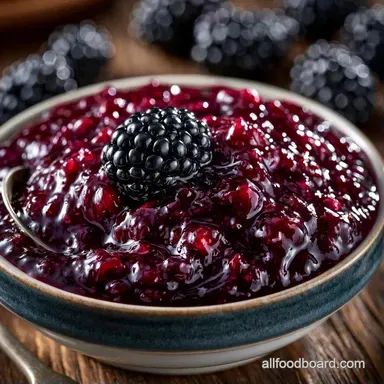
Sugar Free Blackberry Jam: Rich and Tart
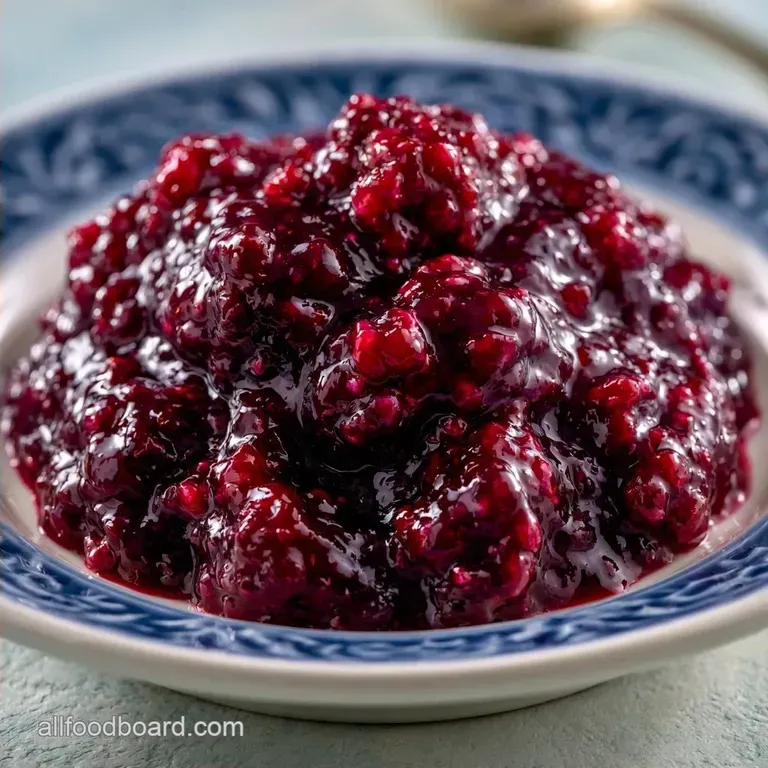
- Time: 20 min active + 25 min cooking
- Flavor/Texture Hook: Deeply purple, tart, and chunky
- Perfect for: Rustic morning toast or flour dusted pastries
- Making a Batch of Blackberry Jam
- The Core Ingredients
- Recipe Specs
- Gear for the Kitchen
- Step by Step Method
- Fixing Common Jam Issues
- Troubleshooting Common Issues
- Adjusting Your Batch Size
- Jam Preservation Myths
- Pantry and Freezer Tips
- Serving and Pairing Ideas
- Flavor Twists and Swaps
- Recipe FAQs
- 📝 Recipe Card
I can still smell the scent of simmering berries from my grandmother's kitchen, that heavy, sweet aroma that filled every corner of the house in late August. We would spend the whole morning with our fingers stained a deep, bruised purple, laughing as we filled old buckets from the brambles behind the garden.
There was something about those mornings, the soft light and the quiet hum of the stove, that made the world feel small and safe.
The goal here is to capture that rustic charm without the sugar crash. I want you to have a spread that tastes like a wild summer day but fits into a healthier lifestyle. This version is light on the calories but heavy on the fruit, keeping those lovely chunky bits that make a homemade preserve feel authentic.
You can expect a deep, glossy finish and a tang that cuts right through the sweetness. Whether you're making a sugar free Blackberry Jam for the first time or you've been canning for years, this method keeps things simple and honest.
Making a Batch of Blackberry Jam
The way this works is all about the balance between acid and pectin. Since we aren't using cups of sugar to create that structure, we rely on a specific kind of pectin that doesn't need sugar to bond.
Low Methoxyl Pectin: This allows the jam to thicken using calcium and acid rather than high sugar concentrations. Lemon Brightness: The acid from the lemon doesn't just add a zing, it actually helps the pectin network form and keeps the color from turning brown.
| Feature | Fresh Berries | Frozen Berries |
|---|---|---|
| Texture | Chunky and rustic | More uniform/smooth |
| Flavor | Bright and floral | Concentrated and deep |
| Set Time | Standard | Slightly faster |
The Core Ingredients
I've found that using the right tools for the job makes a huge difference. Here is what each part of the recipe actually brings to the pot.
| Ingredient | What It Does | Best Swap |
|---|---|---|
| Blackberries | Provides bulk and pectin | Raspberries |
| Monk Fruit | Adds sweetness without sugar | Allulose |
| Lemon Juice | Triggers the set | Lime juice |
| Pectin | Thickens the mixture | Chia seeds |
Recipe Specs
You'll want a heavy pot to avoid the berries scorching on the bottom. Don't use a thin pan, or you'll end up with burnt bits in your preserve.
- 4 cups (600g) fresh blackberries, rinsed and hulled Why this? Fresh fruit gives the best rustic texture. (Swap: Frozen blackberries)
- 2 tbsp (30ml) fresh lemon juice Why this? Acid is needed for the pectin to bond. (Swap: Lime juice)
- 1 tsp (5g) lemon zest, finely grated Why this? Adds a floral, aromatic top note. (Swap: Orange zest)
- 3/4 cup (150g) granulated monk fruit sweetener Why this? Great sweetness with minimal calories. (Swap: Allulose)
- 1 tbsp (15g) low methoxyl pectin Why this? Sets without requiring high sugar. (Swap: High methoxyl pectin, but requires more sugar)
- 1/4 tsp (1.5g) salt Why this? Balances the tartness of the berries. (Swap: None)
Gear for the Kitchen
Grab a heavy bottomed stainless steel pot. I prefer one with a thick base because the berries tend to bubble up and can stick if the heat isn't even. You will also need a potato masher, a whisk, and a digital candy thermometer.
For the canning part, make sure you have sterilized jars and lids. A large pot for the water bath is a must. If you don't have a thermometer, you can use the plate test, but the thermometer gives you that peace of mind.
Step by step Method
Right then, let's get into the cooking. Trust me, the smell as the berries break down is the best part of the whole process.
- Place the blackberries in your heavy pot.
- Mash the berries with a potato masher until they are broken down but still chunky. Note: Don't over mash if you like texture.
- Stir in the lemon juice and lemon zest.
- Simmer the berries over medium heat for 5-8 minutes until the excess water reduces.
- Whisk the pectin and monk fruit sweetener together in a small bowl. Note: This stops the pectin from clumping in the pot.
- Gradually stir the pectin mixture into the simmering berries, whisking constantly.
- Turn the heat up to medium high, stirring always to prevent scorching.
- Bring the mixture to a full rolling boil.
- Watch the thermometer until it hits 220°F (104°C).
- Do the plate test: drop a bit of jam on a frozen plate, wait 30 seconds, and push it. It should wrinkle and hold its shape.
- Skim any foam off the top with a spoon.
- Ladle the hot Blackberry Jam into sterilized jars, leaving 1/4 inch (6mm) of headspace.
- Wipe the rims, center the lids, and tighten the rings.
- Process in a boiling water bath for 10 minutes.
Fixing Common Jam Issues
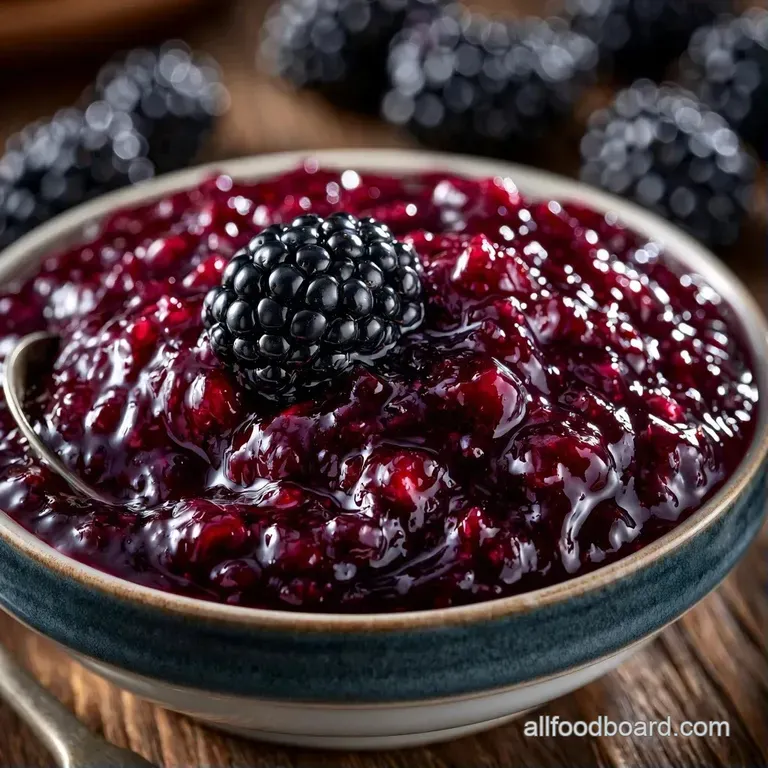
It's easy to get a bit nervous about the set. I've had batches that were too runny and others that turned into rubber. Most of the time, it's just a temperature issue.
Troubleshooting Common Issues
| Issue | Solution |
|---|---|
| Why Your Jam Stays Runny | This usually happens if the mixture didn't reach the full rolling boil or if the pectin wasn't mixed with the sweetener first. |
| Why Your Jam Is Too Thick | Overcooking is the culprit here. If you go way past 220°F, the water evaporates too much and the jam becomes a stiff gel. |
| Why Your Jars Won't Seal | Usually, this is because the rim wasn't wiped clean or the lid wasn't centered. |
Adjusting Your Batch Size
If you only have a few berries, you can scale this down to a half batch. Use a smaller pot and reduce the simmering time by about 20%, as smaller volumes evaporate faster.
When scaling up for a big harvest of Free Blackberry Jam, I recommend working in batches. If you crowd the pot too much, the berries steam rather than simmer, and it takes forever to reach the set point. For larger batches, only increase the salt and spices to 1.5x to avoid over seasoning.
Decision Shortcut:
- If you want more chunks, mash the berries less.
- If you want a firmer set, add a pinch more pectin.
- If it's too tart, add a teaspoon more monk fruit.
Jam Preservation Myths
You might hear that you need pounds of sugar to get a jam to set. That's just not true anymore. Low methoxyl pectin allows us to create a stable gel with very little sweetener.
Another myth is that fresh berries are always better than frozen. Actually, berries frozen at the peak of summer often have a more concentrated flavor than "fresh" berries bought out of season.
Pantry and Freezer Tips
Store your Blackberry Jam in the fridge for up to 3 weeks once opened. For long-term storage, the water bath method keeps them shelf stable for about a year.
If you have too much and don't want to can everything, you can freeze it. Leave a bit of extra headspace in the jar so the jam can expand. Frozen jam lasts about 6 months.
To avoid waste, don't throw away the stems from your berries. You can toss them into a compost bin or even steep them in hot water for a very light, woody tea.
Serving and Pairing Ideas
I love this jam on a rustic piece of toasted sourdough with a thick layer of salted butter. It's also a dream inside a flaky almond croissant.
For something more artistic, try swirling a spoonful into Greek yogurt or using it as a base for a cheesecake.
Plating Levels
| Style | Presentation | The Tweak |
|---|---|---|
| Simple | Toasted sourdough | Heavy butter base |
| Polished | Thumbprint cookies | Dust with powdered sugar |
| Restaurant | Deconstructed tart | Add fresh mint and a berry coulis |
Flavor Twists and Swaps
If you want to change the vibe, try adding a pinch of cinnamon or a drop of vanilla extract at the very end. This turns the Blackberry Jam into something that tastes like a warm pie.
For those who want an even faster result, you can try an easy 30 minute jam approach. If you are making Free Blackberry Jam for diabetics, ensure your monk fruit brand is pure and doesn't have added maltodextrin.
You could also swap half the blackberries for raspberries to get a "forest berry" mix. The result is a silky, deep red spread that looks stunning on a breakfast platter. Just keep the lemon juice the same to ensure the set holds.
Recipe FAQs
Can fruit jam be made without sugar?
Yes, use monk fruit sweetener. If you enjoyed balancing flavors here, see how the same acid technique works in our natural pectin jam.
Can diabetics eat sugar-free jam?
Yes, provided it uses a low-glycemic sweetener. This recipe uses monk fruit, which doesn't cause the blood sugar spikes associated with traditional granulated sugar.
What happens if you don't add sugar or sweetener to jam?
The jam will fail to set and spoil quickly. Sweeteners work with pectin to create the necessary gel structure and act as a preservative for shelf stability.
How to make homemade blackberry jam?
Mash blackberries in a heavy pot and simmer with lemon juice. Stir in a mixture of pectin and monk fruit sweetener, then boil until it reaches 220°F.
Is it true that boiling jam longer always makes it a better set?
No, this is a common misconception. Overcooking past 220°F causes excessive evaporation, turning the jam into a stiff, rubbery gel.
Why does my jam stay runny?
Ensure the mixture reaches a full rolling boil at 220°F (104°C). Runniness usually occurs if the target temperature isn't hit or if the pectin wasn't mixed with the sweetener first to prevent clumping.
Why won't my jam jars seal?
Wipe the rims completely clean before applying lids. Any sticky residue on the glass prevents a vacuum seal from forming during the boiling water bath process.
Blackberry Jam with Monk Fruit