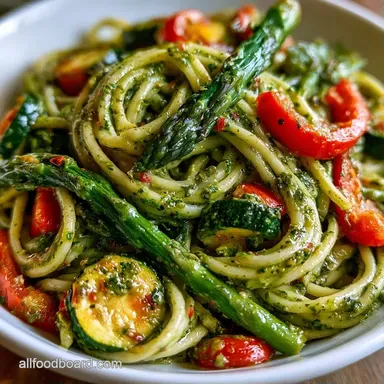
Pesto Veggie Pasta with Roasted Vegetables
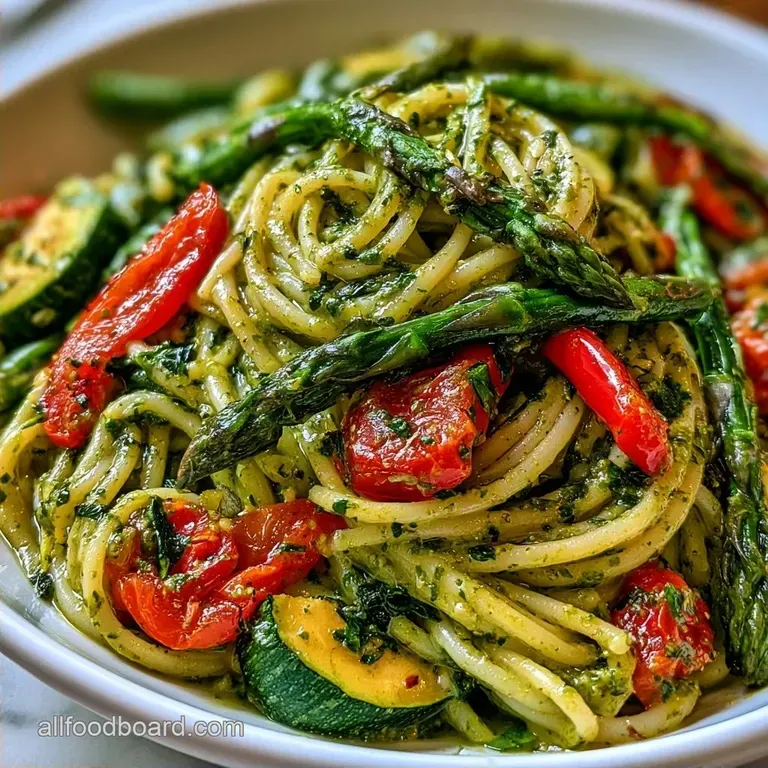
- Time: 10 min active + 25 min cooking
- Taste Profile: Smoky charred vegetables paired with a zesty, nutty basil sauce
- Best for: Easy plant-based weeknight meals or healthy meal prep
- Pesto Veggie Pasta for Busy Nights
- Why These Flavors Actually Click
- The Plant Based Ingredient Breakdown
- Essential Kitchen Gear
- The Step-by-Step Cooking Flow
- Fixing Common Texture Issues
- Adjusting Portions and Swaps
- Debunking Pasta Myths
- Storage and Scrap Tips
- Serving Your Meal
- Recipe FAQs
- 📝 Recipe Card
Ever notice how some vegetable pastas feel thin and oily, while others are lush and well integrated? I used to simply mix raw spinach and store-bought pesto into boiled noodles, but it always resulted in a soggy disappointment. The colors were muted, and the sauce just pooled at the bottom of the bowl.
The secret lies in how you prepare the vegetables. Roasting them at a high temperature creates caramelized edges that add a rich, smoky dimension to the dish. This Pesto Veggie Pasta is all about contrast, balancing those deep, charred notes with a bright, fresh basil emulsion.
It is a vibrant, plant based meal that tastes sophisticated despite requiring very little effort. Between the snap of asparagus and the sweetness of red peppers, every ingredient is bound together by a sauce that perfectly coats every curve of the pasta.
Pesto Veggie Pasta for Busy Nights
Now, let's break down the process. The aim is to time it so the roasted vegetables are done just as the pasta reaches al dente.
- 1. Prep Flow
- Begin by chopping the vegetables, then blend your pesto.
- 2. Cooking Flow
- Roast the veggies while the pasta water comes to a boil.
- 3. Finish
- Mix everything together with a drizzle of starchy pasta water.
Quick Decision Shortcuts:
- Brighter flavor? → stir in 1 tsp lemon zest
- Nut-free option? → use toasted sunflower seeds instead of pine nuts
- Extra protein? → mix in one can of rinsed chickpeas
Why These Flavors Actually Click
Starch Binding: Reserved pasta water blends with the oil in the pesto, creating a sauce that grips the noodles.
Over High heat Roasting: Roasting at 400°F evaporates excess moisture from the zucchini, preventing the Pesto Veggie Pasta from becoming a soup.
Fresh vs. Shortcut Comparison
| Feature | Fresh Basil Pesto | store-bought Pesto | Impact |
|---|---|---|---|
| Flavor | Bright and peppery | Muted or metallic | Fresh is more vibrant |
| Texture | Coarsely textured | Overly smooth | Fresh has more bite |
| Control | You adjust the salt | High sodium levels | Fresh is healthier |
The Plant Based Ingredient Breakdown
The balance of fats and acids is what makes this work. Since we are keeping this plant based, the vegan parmesan adds the salty, umami punch that usually comes from dairy.
What Each Ingredient Does
| Ingredient | What It Does | Best Swap |
|---|---|---|
| Fresh Basil | Provides the primary herbal base | Baby spinach (milder) |
| Pine Nuts | Adds creamy, nutty richness | Walnuts or Almonds |
| Lemon Juice | Cuts through the fat of the oil | Apple cider vinegar |
| Vegan Parmesan | Adds salty, cheesy depth | Nutritional yeast |
The Grocery List
- 1 lb (450g) zucchini, diced into ½ inch pieces Why this? Holds shape well when roasted
- 1 red bell pepper (150g), diced Why this? Adds sweetness and color
- 1 bunch (200g) asparagus, trimmed and cut into 2 inch pieces
- 2 tbsp (30ml) extra virgin olive oil
- ½ tsp (3g) sea salt
- ¼ tsp (1g) cracked black pepper
- 2 cups (60g) packed fresh basil leaves
- ½ cup (60g) vegan Parmesan cheese (or a nutritional yeast blend)
- ⅓ cup (50g) toasted pine nuts or walnuts
- 3 cloves (15g) garlic, peeled
- ½ cup (120ml) extra virgin olive oil
- 1 tbsp (15ml) fresh lemon juice
- ¼ tsp (1.5g) salt
- 1 lb (450g) Penne or Fusilli pasta Why this? Ridges hold the pesto better
- 4 qts (3.8L) water
- 2 tbsp (30ml) salt
Essential Kitchen Gear
While you don't need a professional kitchen, having these tools will make preparing this Pesto Veggie Pasta much more efficient.
- Food Processor: Key for the pesto. If opting for a blender, be careful not to over process the mixture into a smooth paste.
- Large Sheet Pan: Ensures the vegetables stay in a single layer; overcrowding the pan results in steaming rather than roasting.
- Colander: For straining the pasta.
- Large Pot: To boil the noodles with enough room for them to move freely.
The step-by-step Cooking Flow
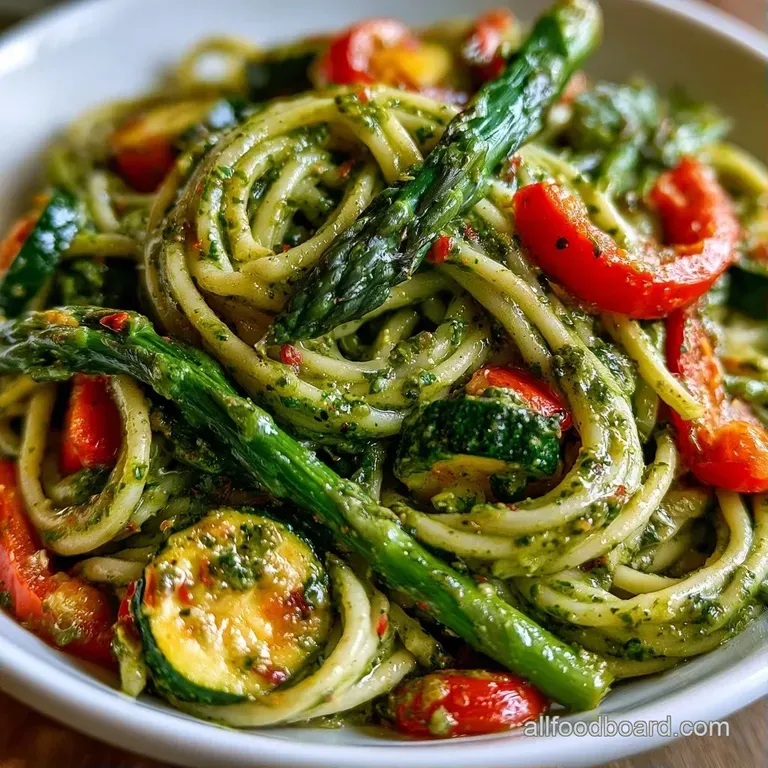
Time your steps carefully; ensure your pesto is finished before the roasted vegetables are ready.
- Set your oven to 400°F (200°C).
- Combine the diced asparagus, bell pepper, and zucchini on a baking tray with salt, pepper, and 2 tbsp olive oil. Spread them out evenly. Note: This keeps them from becoming mushy.
- Roast for 15-20 minutes until the edges char and the vegetables are crisp tender.
- Use a food processor to pulse the garlic, lemon juice, toasted nuts, and basil until they are coarsely chopped.
- While the processor is running on a low setting, slowly pour in 1/2 cup olive oil until the mixture becomes smooth and emulsified.
- Stir in the vegan Parmesan by hand or pulse it in quickly. Note: Over processing the cheese may result in a gummy texture.
- Cook the pasta in salted water until it is al dente.
- Save 1 cup (240ml) of the starchy cooking water before you drain the pasta.
- Put the drained pasta back in the pot over low heat, stirring in the pesto and roasted vegetables.
- Slowly add the reserved pasta water while tossing until the sauce turns glossy and coats the pasta.
Chef's Note: For an extra flavor boost, lightly brown your pine nuts in a pan without oil for 3 minutes before blending. This adds a rich, buttery taste that raw nuts lack.
Fixing Common Texture Issues
Occasionally, the Pesto Veggie Pasta might not turn out perfectly. This is typically due to issues with heat or liquid levels.
If the sauce appears to be splitting, the oil is separating from the basil. This typically occurs when the pan is too hot during the pesto addition. To prevent this, lower the flame or shut off the heat before mixing in the greens.
If the dish seems dry, the pasta has likely soaked up the sauce too fast. Rather than adding oil, stir in a bit more pasta water; its starch content ensures a smooth, velvety consistency.
Texture Fixes
| Problem | Root Cause | Solution |
|---|---|---|
| Sauce is too thin | Too much pasta water | Simmer for 1-2 mins more |
| Basil turned brown | Heat exposure or oxidation | Add pesto off heat |
| Veggies are mushy | Overcrowded baking sheet | Use two pans next time |
Adjusting Portions and Swaps
This Pesto Veggie Pasta is highly adaptable. Feel free to swap the greens or the base depending on what you have growing in your garden.
Scaling the Recipe - Scaling Down (Half Batch): Use a smaller sheet pan and cut the roasting time by about 20%. You may need to scrape the sides of your processor more often to ensure the pesto is well blended.
- Scaling Up (Double Batch): Instead of doubling the salt and garlic, increase them by 1.5x. Use two separate baking sheets for the vegetables so they roast instead of steaming.
For a different twist, try making this a Pesto Veggie Pasta Bake. Simply mix everything together in a dish, add a bit more vegan cheese to the top, and broil for 5 minutes. For another plant based idea, take a look at this Ricotta Lasagna and substitute the cheese with a tofu based ricotta.
Serving Size Guide
| Guests | Pasta Amount | Veggie Amount | Pesto Amount |
|---|---|---|---|
| 2 People | 0.4 lb | 0.6 lb | 1/2 cup |
| 5 People | 1 lb | 1.5 lb | 1.2 cups |
| 8 People | 1.6 lb | 2.5 lb | 2 cups |
Debunking Pasta Myths
You might hear that you should rinse your pasta after draining. Don't do it. Rinsing removes the surface starch, which is exactly what makes the Pesto Veggie Pasta sauce stick to the noodles.
Another common thought is that you need to sauté vegetables in a pan for more flavor. While sautéing works, roasting at 400°F creates more complex, caramelized flavors without the risk of the vegetables releasing too much water in the pan.
Storage and Scrap Tips
Store any remaining portions in a tightly closed glass container in the fridge for 4 days maximum. Since the sauce can thicken during storage, stir in a teaspoon of water or a touch of olive oil before microwaving to restore its glossy sheen.
For another plant based meal prep idea, try my Spaghetti Sauce.
Zero Waste Tips:
- Basil Stems: Avoid throwing these away! Blend them directly into the pesto for more taste, or freeze them within oil cubes to use for later sautés.
- Parmesan Rinds: If your vegan hard cheese has a rind, toss it into simmering pasta water to enhance the flavor depth.
- Veggie Scraps: Collect pepper seeds and asparagus ends in a freezer bag to create a homemade vegetable stock.
Serving Your Meal
This Pesto Veggie Pasta looks best in a shallow bowl. To finish it off, sprinkle some toasted pine nuts on top for a bit of crunch. A squeeze of fresh lemon juice right before eating wakes up all the flavors.
Pair this with a simple arugula salad or a slice of toasted sourdough rubbed with garlic. Since the dish is quite rich from the olive oil and nuts, the acidity of a side salad balances the meal.
If you're serving this for a crowd, keep the pasta and pesto in the pot and add the roasted vegetables at the very last second. This keeps the vegetables from getting too soft while the pasta sits.
Recipe FAQs
What vegetables work best for this pasta?
Zucchini, red bell pepper, and asparagus. Roast these at 400°F for 15 20 minutes until the edges are charred for maximum flavor.
How to ensure the pesto is smooth?
Drizzle olive oil slowly into the food processor on low speed. If you nailed the stable emulsion here, use the same principle in our cheese sauce for a similar texture.
Can I use jarred pesto instead?
Yes, but the flavor is less vibrant. Still reserve a cup of pasta water to ensure the store-bought sauce coats the pasta properly.
Is it true that every pesto recipe requires cheese?
Not true. Simply omit the Parmesan to keep the sauce vegan or use a nut-based substitute.
Why is some pesto considered unsuitable for vegetarians?
No, and here's why. Traditional Parmesan is often made with animal rennet, which is not vegetarian friendly.
Does this specific sauce count as vegan?
No, it contains Parmesan. To make it vegan, leave out the cheese and add extra toasted pine nuts.
What should I do with a lot of leftover pesto?
Freeze it in ice cube trays. Once frozen, transfer the cubes to a bag for quick additions to future pasta dishes.
Pesto Veggie Pasta for 5 Servings