The Queen of Soaked Sponges Proper Pristine Tres Leches Cake
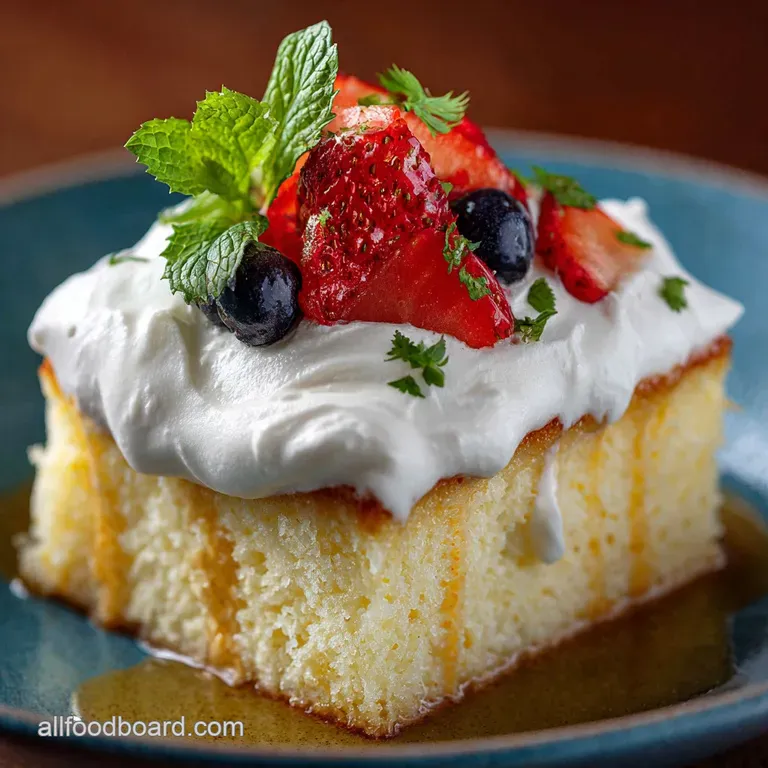
- The Essential Guide to Proper Tres Leches Cake
- Securing Your Supplies: Ingredient Ratios and Quality Checks
- Zero Butter, Maximum Air: Achieving the Ideal Sponge Texture
- Phase 1: Crafting the Feather-Light Sponge Base
- Phase 2: The Critical Soaking and Chilling Protocol
- Serving and Storing Your Homemade Tres Leches Cake
- Advanced Twists: Variations on the Classic Tres Leches Cake
- Recipe FAQs
- 📝 Recipe Card
The Essential Guide to Proper Tres Leches Cake
Few desserts achieve the magical balance of lightness and profound saturation found in a properly prepared Tres Leches Cake. The name, which simply translates to "Three Milks," belies the complex technical skill required to transform simple, airy batter into a creamy, almost pudding like confection.
Our goal here is not merely to bake a cake and pour milk over it, but to execute the Best Tres Leches Cake Recipe Authentic in its entirety, guaranteeing a structure that can absorb every drop of the decadent soak without collapsing into mush.
This involves mastering the genoise style sponge a feat of aeration that requires precision and adhering strictly to the soaking and chilling protocols.
Decoding the Three Milks: What Each Dairy Contributes
The secret to this magnificent dessert lies entirely in the signature triple milk soak. Each component of the Tres Leches provides a distinct textural and flavor quality. First, there is the Sweetened Condensed Milk (a full 400g can), which is the primary source of sugar and contributes a necessary thickness and stickiness, preventing the liquid from simply dripping out.
Second, Evaporated Milk (355ml) provides the essential liquid base; it is thinner than condensed milk and crucial for hydrating the sponge thoroughly. Finally, we incorporate Heavy Cream (120ml, minimum 35% fat) directly into the soak, boosting the overall richness and fat content, resulting in that incredibly luxurious, creamy mouthfeel that defines the Authentic Tres Leches Cake.
A Historical Dive: Where Did the Soaked Sponge Originate?
The precise roots of the Tres Leches Cake are a delightful culinary mystery, though it is universally recognized as a beloved staple of Latin American cuisine. While various regions from Nicaragua and Mexico to Venezuela claim ownership, the concept of a rich, egg-based cake soaked in liquid has medieval European precedents.
However, the modern iteration, utilizing the specific trio of canned milks, likely gained widespread popularity in the 1940s when canned dairy products became readily available. Some historians point toward Nestlé, which printed the Tres Leches Cake Receta on the labels of its evaporated and condensed milk cans across Latin America, cementing its status as a foundational dessert and explaining the ubiquity of this recipe across the continent.
Understanding the tres leches cake origin reveals a dessert tied both to tradition and the rise of commercial dairy.
Sponge vs. Soak: Why Dry Cake is the Ultimate Failure
The greatest error in preparing this dish is baking a sponge that is too dense or too heavy. A conventional butter cake, for example, will become excessively soggy and heavy under the weight of the soak.
This recipe calls for a specific genoise technique, which is inherently fat-free (except for a small amount of melted butter folded in later) and relies entirely on volume created by whipped eggs. This process creates millions of tiny air pockets, ensuring the sponge acts like a truly thirsty vessel.
If you fail to achieve maximum aeration in the sponge, the resulting cake will be dry in parts and heavy and dense in others, defeating the entire purpose of Tres Leches Recipes.
Securing Your Supplies: Ingredient Ratios and Quality Checks
To ensure the feather light base required, securing high-quality, measured tres leches cake ingredients is essential. We use 1 ½ cups (190g) of sifted all-purpose flour combined with 1 ½ tsp of baking powder and ¼ tsp of fine sea salt for the dry mix.
For the crucial aeration stage, five large eggs are separated. It is vital to measure the sugar accurately: one cup total, split into a ¾ cup portion for the yolks and a ¼ cup portion reserved strictly for stabilizing the egg whites.
For the full recipe, you will need a 9x13 inch (23x33 cm) metal or glass baking dish, ensuring the cake bakes evenly and provides ample space for the deep soaking to follow.
Zero Butter, Maximum Air: Achieving the Ideal Sponge Texture
The foundation of a great Tres Leches is a sponge that achieves maximum lift with minimum interference from fats. This batter starts with separating the eggs a necessary, technical step. By whipping the egg whites into a firm meringue, we introduce volume and stability.
The yolks are then beaten with the majority of the sugar to the "ribbon stage" before the dry ingredients and a small amount of liquid (60ml room temperature whole milk and 1 tsp vanilla) are incorporated.
The challenge is ensuring that when the whisked egg whites are folded into the final batter, the hard earned air is not deflated, resulting in the desired light, spongy texture.
Essential Baking Components (Flour, Sugar, Eggs)
The structure relies heavily on the quality and preparation of the core ingredients. The flour must be sifted to eliminate lumps and ensure it combines seamlessly. The granulated sugar is key, not only for sweetness but for providing stability when creamed with the yolks and when whipped into the meringue.
Crucially, the five large eggs must be separated when cold for ease, but allowed to reach room temperature before whipping, as this helps them achieve maximum volume and stability.
Preparing the Perfect Triple Milk Bath
The milk mixture is exceptionally straightforward but demands thorough mixing. In a large jug, you simply whisk together the full cans of sweetened condensed milk (400g) and evaporated milk (355ml) with the ½ cup (120ml) of heavy cream.
Whisk until the mixture is uniform and the dense condensed milk has completely dissolved into the thinner liquids. This simple step must be perfectly executed to ensure every portion of the cake receives the same creamy richness once poured.
The Simple Tools Required for Separating Eggs and Whipping Peaks
While the technique sounds complex, the required tools are basic, though a stand mixer is highly recommended for achieving stiff peaks quickly and efficiently. You will need a stand mixer (or electric hand mixer) with a whisk attachment, two large mixing bowls (one should be non-plastic and impeccably clean for the egg whites), a fine mesh sieve, and a crucial rubber spatula.
Anyone searching for Tres Leches Cake Videos online will quickly see how indispensable the spatula is for the gentle folding technique required to marry the meringue and the yolk base without losing air.
US vs. Metric Measurements Conversion Chart
For bakers outside the US, following the measurements accurately is paramount to success. For the sponge base, our 1 ½ cups of all-purpose flour equates to 190 grams. We use 5 large eggs, regardless of the system. The 1 cup of total granulated sugar converts to 200 grams.
For the triple milk soak, the standard 14 oz can of condensed milk is 400g, while the 12 oz can of evaporated milk is approximately 355ml. Using these conversions ensures consistent results no matter where you are baking the Best Tres Leches Cake Recipe Authentic.
Related Recipes Worth Trying
- The Speedy Pudd Fluffy 5Minute Classic Vanilla Mug Cake Recipe — Get a perfectly moist singleserving treat in 5 minutes This easy mug cake recipe vanilla delivers a tender sponge zapped in the microwave for speed Say...
- The Ultimate Spiced Carrot Cake Recipe with Silky Cream Cheese Frosting — Forget dry bakesthis is the definitive moist Carrot Cake recipe Perfect spices crushed carrots and that impossibly silky cream cheese frosting A baking...
- The Emergency Chocolate Mug Cake A OneMinute Molten Fix — When the craving strikes like a London bus whip up this glorious molten chocolate mug cake in 90 seconds Its the perfect fussfree rich Mug Cake For One...
Phase 1: Crafting the Feather Light Sponge Base
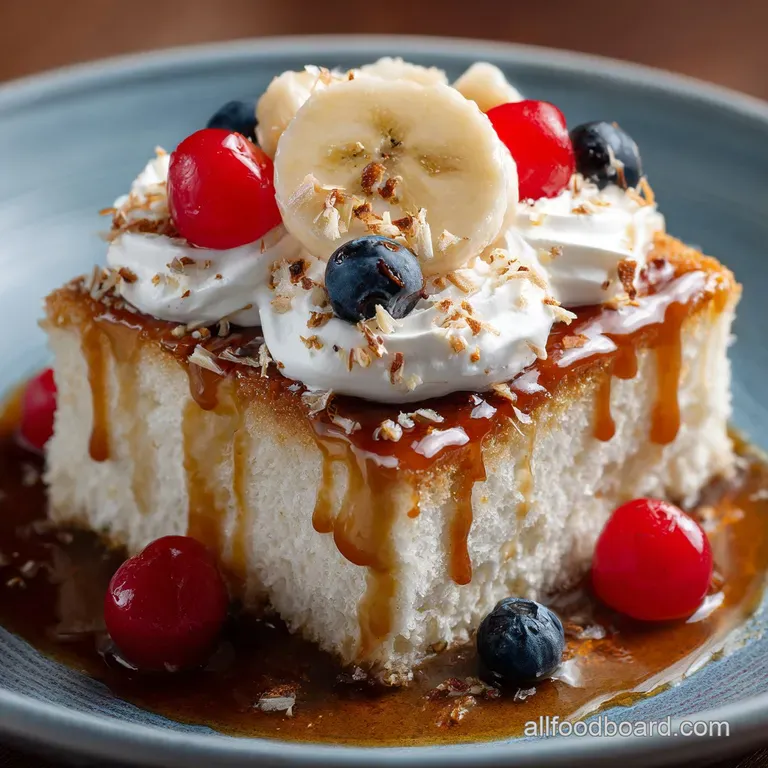
The active prep time for the sponge is about 20 minutes, beginning by preheating your oven to 350°F (175°C) and prepping the 9x13 inch dish. After combining the dry ingredients, the process starts with whipping the five cold, separated egg whites until they hold firm, glossy peaks using the reserved ¼ cup of sugar.
Next, the remaining ¾ cup of sugar is creamed with the five egg yolks until pale and thick. Once the milk, vanilla, and cooled, melted butter are incorporated into the yolk mixture, the dry ingredients are added on low speed until just combined.
The critical final step involves gently folding the whipped egg whites into the batter in three additions, ensuring that the volume remains intact before pouring the batter into the prepared dish and baking for 25– 30 minutes.
Phase 2: The Critical Soaking and Chilling Protocol
Baking the sponge is only half the battle; the true transformation happens during the soaking and chilling protocol. Achieving the hallmark creamy, moist texture depends entirely on allowing the cake adequate time to fully absorb the dense milk mixture. This transition is what makes this dessert so spectacular.
Whipping Egg Whites to Stiff, Stable Peaks
To achieve the necessary structure for the sponge, the egg whites must be whipped in an entirely clean, dry bowl. Start on medium speed and increase to high, whipping until soft peaks form. Only then should you gradually stream in the ¼ cup of granulated sugar.
Continue whipping until the peaks are stiff, glossy, and able to stand up straight when the whisk is removed this is the structural key to preventing a dense cake base.
Gently Folding the Batter: Maintaining Aeration
Deflating the batter by overmixing is the most common pitfall. Once the meringue is ready, use a large rubber spatula and incorporate it into the yolk mixture in thirds. Cut down the center of the batter and sweep the spatula underneath, lifting the heavier yolk mix over the lighter meringue.
Stop immediately when no white streaks of meringue remain. This delicate, intentional folding technique ensures the final baked cake will be airy enough to function as the perfect recipient for the milks.
Testing for Doneness and Cooling Completely
The sponge should bake for approximately 25– 30 minutes. It is ready when the surface is golden brown, a toothpick inserted into the center comes out clean, and the surface springs back lightly when pressed.
Immediately remove the cake from the oven and allow it to cool in the pan on a wire rack for exactly 20 minutes. This partial cooling is essential before the next step.
Poking the Cake: Creating Channels for Absorption
While the cake is still warm but slightly cooled in the pan, take a fork or skewer and pierce holes deeply and evenly across the entire surface. You must be aggressive here; the goal is to create maximum channels for the soak to penetrate down to the very base of the cake.
This step ensures consistent moisture and prevents pooling on the surface. Once poked, the milk mixture (which should already be prepared) is slowly poured over the cake, beginning with the edges and working inwards until every surface is fully saturated.
The Minimum Chilling Time for Hydration and Stability
Patience is the defining trait of a successful tres leches cake recipe easy to achieve, yet technically demanding. After the milk is poured, the cake must be covered tightly and transferred to the refrigerator for a minimum of four hours. Ideally, it should chill overnight.
This extended refrigeration period allows the dry sponge cells to fully hydrate and convert the three separate liquids into a unified, creamy sauce that completely saturates the cake, resulting in the luxurious, creamy texture this dessert is famous for.
Serving and Storing Your Homemade Tres Leches Cake
The final step is the crowning glory: a generous layer of freshly whipped cream. Just before serving, whip 2 cups (480ml) of very cold heavy cream with ¼ cup (30g) of sifted confectioners’ sugar and 1 tsp of vanilla until firm peaks form.
Spread this over the chilled, fully saturated sponge, cut into 12 generous squares, and enjoy.
Advanced Twists: Variations on the Classic Tres Leches Cake
Once you have mastered the traditional Authentic Tres Leches Cake, exploring variations on the standard Tres Leches Recipes can introduce exciting new flavor dimensions. Whether you are using a slightly modified Tres Leches Cake Receta or incorporating seasonal components, the goal remains the same: a moist, flavorful cake that holds its shape.
Shelf Life and Optimal Refrigeration Techniques
Due to the heavy dairy content, including the three milk types in the soak and the final whipped cream topping, Tres Leches is highly perishable. It must be stored in an airtight container in the refrigerator immediately after serving.
Properly refrigerated, the cake will maintain its superb texture and flavor for 3 to 4 days. After three days, the sponge texture may soften too much, but the flavors deepen beautifully.
Recommended Toppings Beyond Basic Whipped Cream
While plain whipped cream is traditional, garnishing the final cake offers opportunities for personalization. A light dusting of ground cinnamon adds warmth and visual appeal. For a cleaner look, fresh, sharp berries such as raspberries or strawberries cut through the richness wonderfully.
Alternatively, toasted coconut flakes can be sprinkled over the top, especially if you opt for a tropical infusion in the soak.
Pairing Suggestions: What to Drink with a Slice
The intense sweetness and creaminess of the cake require a beverage that can cut through its richness. A strong, freshly brewed cup of hot coffee provides the perfect counterpoint.
For an elegant pairing, consider a chilled glass of dessert wine, such as a full bodied Tawny Port or a late harvest Riesling, which echoes the sweetness while adding complexity.
Integrating Chocolate: A Richer, Darker Milk Blend
For those who desire a richer experience, a chocolate Tres Leches is a simple adaptation. Simply substitute 3 tablespoons of the all-purpose flour with high-quality unsweetened cocoa powder (sifted).
This gives the sponge a darker hue and a subtle, rich chocolate base, which pairs beautifully with the traditional milky soak.
Seasonal Fruit Swaps and Flavor Infusions
The soak mixture is an excellent canvas for flavor infusion. For a tropical variation, substitute the heavy cream in the soak mixture with full fat canned coconut milk, transforming it into a Coconut Leches.
If you prefer a depth of flavor, incorporating 1 tablespoon of dark rum into the soak and dissolving 1 teaspoon of instant espresso powder into the whole milk used in the batter yields a sophisticated Coffee & Rum Tres Leches.
These simple swaps allow for endless creative possibilities while preserving the integrity of the soaked structure.

Recipe FAQs
Why isn’t my sponge cake absorbing the three milks properly?
Ah, the magic moment! If the milk is pooling, you likely need deeper channels. Don't be shy when piercing the cake; you need to go nearly to the bottom of the pan to allow the soak to penetrate evenly.
Crucially, the cake must be given proper time at least four hours, but an overnight rest is truly ace for achieving that uniformly moist texture.
How long can I keep my Tres Leches Cake, and should it live in the fridge?
Because this dessert is absolutely saturated with dairy, it must be stored in the refrigerator from the moment it is soaked. When covered tightly (or in an airtight container), this cake keeps beautifully for 3 to 4 days.
If you haven't yet topped it with whipped cream, the soaked sponge itself can often last an extra day, though the best texture is within 48 hours.
What makes this specific Tres Leches Cake recipe so airy, and why is folding the egg whites so crucial?
The light texture comes from the Genoise style sponge, which relies almost entirely on whipped eggs for its lift, rather than just leaveners. Gently folding in those stiff, glossy egg white peaks (the meringue) is essential to keep the air trapped.
If you mix too vigorously, you’ll deflate the batter, resulting in a dense, heavy cake that won't soak up the milks correctly.
I have dietary requirements. Can I make this a gluten-free or dairy-free delight?
Absolutely, yes! For a gluten-free option, a good quality 1:1 baking blend works perfectly as a direct swap for the flour. If you’re going dairy-free, substitute the milks with canned coconut condensed milk, evaporated coconut milk, and a suitable plant based whipping cream alternative.
This gives a lovely, subtle coconut twist to the traditional flavour.
It looks very sweet can I reduce the sugar without ruining the sponge?
Reducing the sugar in the sponge significantly is tricky, as sugar helps stabilise the whipped egg structure and keeps the cake tender. Instead of tinkering with the sponge, the best way to cut the perceived sweetness is through garnishes.
Serve the cake with tart elements like fresh, sharp raspberries or a sprinkle of lime zest this classic trick cuts through the richness brilliantly.
Authentic Tres Leches Cake Recipe
Ingredients:
Instructions:
Nutrition Facts:
| Calories | 300 kcal |
|---|---|
| Protein | 5.2 g |
| Fat | 13.4 g |
| Carbs | 31.9 g |
| Fiber | 0.2 g |
| Sodium | 3422 mg |
