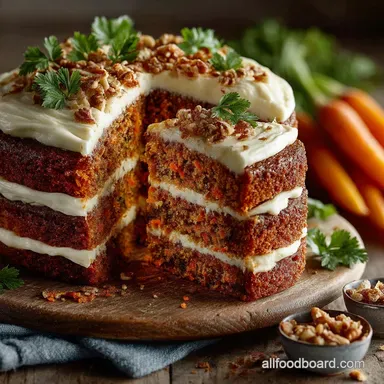
The Ultimate Spiced Carrot Cake with Silky Cream Cheese Frosting
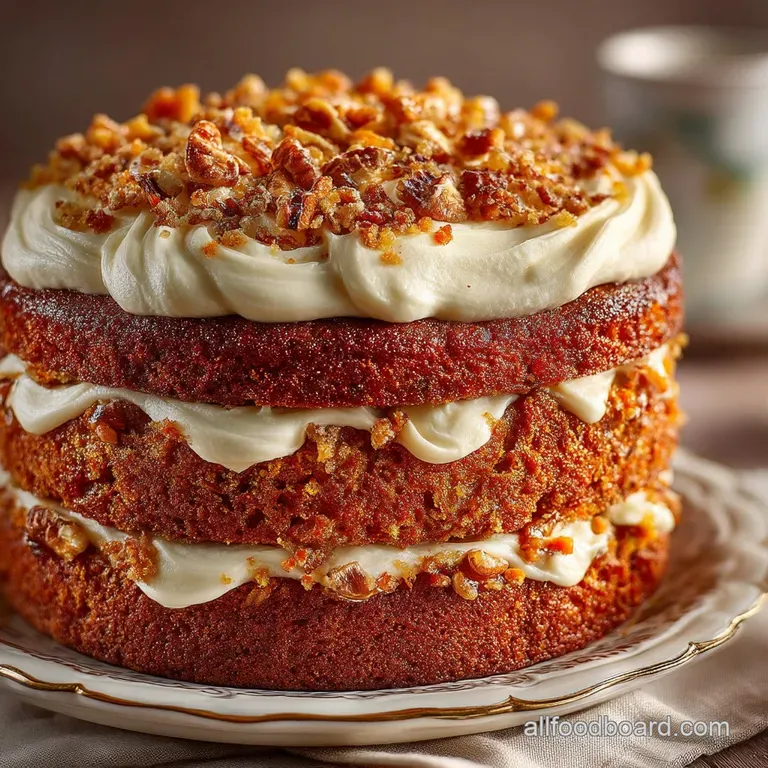
- Why This Spiced Sponge Defines Perfect Carrot Cake
- Essential Elements for the Perfect Batter and Frosting
- Kitchen Gear for Your Carrot Cake Baking Mission
- Crafting the Deeply Flavored Carrot Cake Base
- The Silky Finish: Whipping Up Tangy Cream Cheese Frosting
- Troubleshooting and Guaranteeing Carrot Cake Success
- Maximizing Freshness and Variations for Your Finished Carrot Cake
- Recipe FAQs
- 📝 Recipe Card
Why This Spiced Sponge Defines Perfect Carrot Cake
The defining characteristic of the ultimate Carrot Cake is its texture: a deep, rich tenderness achieved through the strategic use of oil and specific spice blends.
Forget the dry, overly dense versions of the past; this approach yields the Best Carrot Cake imaginable a robust yet beautifully tender crumb, heavily aromatic with cinnamon, ginger, and the vital hint of freshly grated nutmeg.
Paired with a thick, tangy cream cheese frosting, this is more than just a dessert; it’s a celebration of baking resourcefulness and flavor complexity. The beauty of this Carrot Cake Recipe lies in its relative simplicity, relying on precise measurements and folding techniques to maximize moisture retention.
The Secret History of the Wartime Root Vegetable Cake
Contrary to its modern reputation as a decadent treat, the development of the carrot cake was primarily driven by necessity. Originating perhaps as early as medieval times, the root vegetable saw a true renaissance in wartime Britain.
When rations made sugar and other imported sweeteners scarce, resourceful bakers turned to naturally sweet vegetables like carrots to provide the necessary structure and sweetness.
These early versions were often much heavier and more bread like, but they laid the foundation for the complex, spiced layer cakes we adore today.
Our Definitive Approach to Achieving Maximum Moisture
The key to creating truly Moist Carrot Cakes is the exclusive use of neutral oil rather than butter. Oil remains liquid at room temperature, keeping the cake sponge soft, tender, and incredibly rich long after baking. We also utilize a combination of granulated and packed light brown sugar.
The molasses in the brown sugar not only imparts a beautiful depth of color but also adds hygroscopic qualities, pulling moisture into the cake structure itself. Finally, we insist on hand grating 350 grams (3 cups packed) of carrots finely; this ensures the carrot almost melts into the batter, distributing moisture evenly without creating unpleasant hard strings.
Essential Elements for the Perfect Batter and Frosting
Success in this Carrot Cake Recipe Easy relies on respecting the quality and preparation of the core ingredients. We use four large, room temperature eggs and a full cup of neutral oil (such as canola or vegetable) to build the emulsion that forms the stable base of the sponge.
For the signature flavor, the combination of two teaspoons of cinnamon and one teaspoon of ginger is non-negotiable, underpinned by a half teaspoon of freshly grated nutmeg. On the frosting front, the balance between the 225 grams (8 ounces) of cold cream cheese and 115 grams (one stick) of softened butter is paramount for stability, forming the structural basis for the luxurious topping.
Kitchen Gear for Your Carrot Cake Baking Mission
While the mixing technique is straightforward, having the correct tools drastically simplifies the process and elevates the final result. You’ll need two 8 inch (20 cm) round cake tins, lined with parchment, to ensure even baking and easy release.
An electric stand mixer or robust hand mixer is essential for achieving the perfect volume and texture in the silky cream cheese frosting, though a simple hand whisk suffices for the initial stages of the batter.
The importance of a microplane or fine grater for preparing both the carrots and the crucial fresh nutmeg cannot be overstated.
Preparing Your Pecans: The Crucial Toasting Step
While optional, incorporating the three quarters of a cup of chopped pecans (or walnuts) adds a satisfying crunch and nutty depth that complements the spices. Before folding them into the batter, lightly toast these nuts in a dry pan over medium heat for about five minutes, or until they become fragrant.
This simple step evaporates excess moisture and awakens their natural oils, giving them a sharper, more pronounced flavor that stands up beautifully against the dense cake base.
Selecting the Right Oil for a Tender Crumb
The choice of oil directly influences the texture of the finished cake. To guarantee a truly tender crumb without introducing competing flavors, stick strictly to neutral oils like vegetable or canola. These fats integrate seamlessly into the batter, ensuring that the cake remains exceptionally soft and moist.
This is a primary differentiator from butter based cakes, which often dry out faster due to butter's lower fat content and molecular structure.
The Cream Cheese Conundrum: Full Fat is Mandatory
When crafting the essential companion to the spice cake the cream cheese frosting there is zero room for compromise on the fat content. You must use full fat cream cheese.
Low-fat or whipped varieties contain too much water, which destabilizes the frosting when combined with the 360 grams (3 cups) of powdered sugar, resulting in a runny, unusable mess.
Using cold, firm, full fat cream cheese beaten with softened (but not melted) unsalted butter ensures maximum stability and that signature tangy, fluffy volume.
Ensuring Accuracy: Why a Digital Scale Matters
In baking, volume measurements can vary wildly based on how ingredients are scooped. For maximum consistency and to flawlessly execute this recipe, particularly the delicate ratio of flour (250 g) to leavening (2 teaspoons baking soda), a digital kitchen scale is highly recommended.
Measuring the flour, granulated sugar, and brown sugar by weight guarantees the perfect balance, ensuring your cake rises evenly and achieves the intended dense yet moist crumb structure.
Mastering the Mix: Stand Mixer vs. Hand Whisk
The tools used for mixing should change depending on the stage of the recipe. For the carrot cake batter itself, a robust hand whisk or even a rubber spatula is preferred for combining the wet and dry elements. The aim here is low speed and minimal mixing to prevent gluten development.
In stark contrast, the cream cheese frosting absolutely requires the power of an electric stand mixer fitted with the paddle attachment. This high power beating is necessary to fully emulsify the cold cream cheese and butter and whip air into the heavy powdered sugar, resulting in a light, voluminous finish.
Related Recipes Worth Trying
- The Emergency Chocolate Mug Cake A OneMinute Molten Fix — When the craving strikes like a London bus whip up this glorious molten chocolate mug cake in 90 seconds Its the perfect fussfree rich Mug Cake For One...
- StickyMoist Carrot Cake with Cream Cheese Frosting A British Classic — This Best Carrot Cake with Cream Cheese Frosting recipe delivers a profoundly moist sticky sponge A true English teatime triumpheasy assembly zero lumps and...
- CloudBusting Fluffy Pancakes The Secret to Soufflé Heights — Learn how to make truly fluffy pancakes from scratch This recipe uses whipped egg whites for a pillowy cloudbusting stack Forget thin floppy affairsthis is...
Crafting the Deeply Flavored Carrot Cake Base
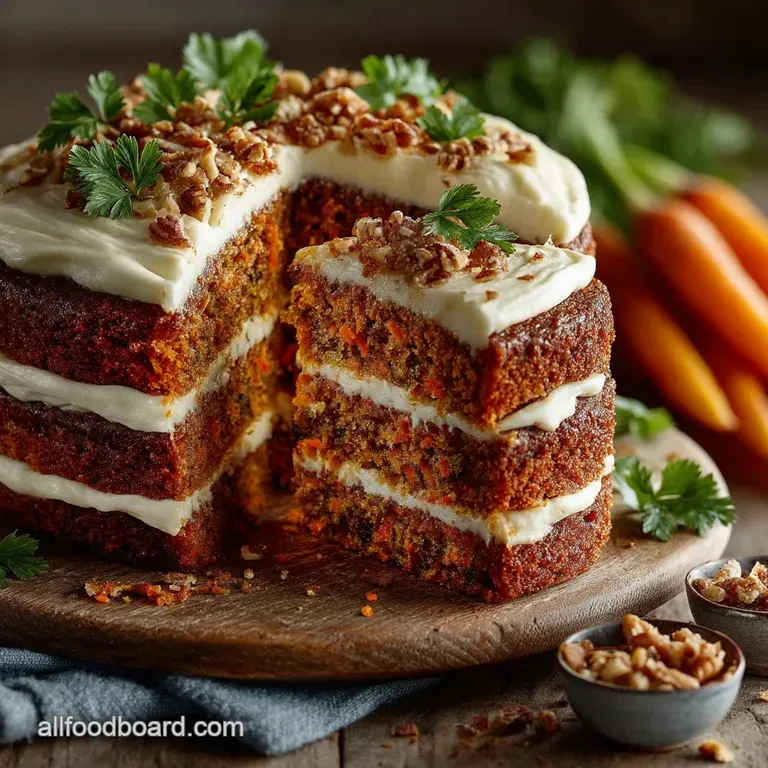
The process begins by uniting the dry components: two cups of sifted all-purpose flour, both granulated and brown sugars, the sea salt, baking soda, and all the warm spices. Whisking these together thoroughly ensures the leavening agents and flavorings are evenly dispersed before the wet phase begins.
In a separate bowl, whisk the oil, eggs, and vanilla extract until they are fully emulsified. The trick is integrating these two phases gently. Once the wet mixture is added to the dry, mix only until the flour streaks disappear.
This quick combination technique is vital before gently folding in the 350 grams of finely shredded carrots and the optional toasted nuts. The divided batter then bakes for a precise 30 to 35 minutes in a 175°C (350°F) oven, transforming into the perfect spiced sponge.
The Silky Finish: Whipping Up Tangy Cream Cheese Frosting
The cream cheese frosting provides the necessary bright tang to cut through the cake’s richness. To achieve that impeccable silky finish, the process starts with creaming the cold cream cheese and the softened butter together on medium speed until the mixture is uniform and perfectly smooth a process that generally takes about two to three minutes.
Once smooth, reduce the speed to low and introduce the three cups of sifted powdered sugar gradually, incorporating it in stages to avoid a messy dust cloud and ensure a uniform texture. A quick high speed whip at the end adds volume, resulting in a frosting that is light, fluffy, and stable for decorating.
Combining Wet and Dry: Preventing Over Mixing Syndrome
The greatest pitfall when baking a cake that incorporates substantial mix-ins is over mixing the batter. Once the wet ingredients hit the dry ingredients, the gluten begins to form.
To guarantee a tender, melt-in-your mouth crumb, you must stop mixing immediately when you see no more visible streaks of dry flour. Any further agitation will develop the gluten chains, resulting in a tough, rubbery cake.
Gentle Folding: Incorporating Carrots and Pecans
The final additions the finely grated carrots and the toasted pecans should always be folded in using a rubber spatula. This gentle motion, done by cutting down the center of the bowl and bringing the contents up and over, ensures the heavy ingredients are distributed throughout the batter without requiring the aggressive mixing action of a machine.
This technique further safeguards against the development of excessive gluten.
Temperature Control: Achieving a Smooth, Lump Free Finish
Temperature is the silent enemy of perfect cream cheese frosting. For the best result, the 225 grams of cream cheese should be cold and firm, while the 115 grams of butter should be softened just enough to cream smoothly. When you combine them, the difference in temperature helps create a stable emulsion.
On top of that,, always sift the powdered sugar. Skipping this step is the fastest way to introduce tiny, annoying lumps into your otherwise perfect, silky frosting.
Stacking Strategy: Building a Stable, Multi Layer Cake
Before assembly, the two 8 inch cake layers must be stone cold a crucial cooling period of at least two hours is mandatory. If your cakes have domed slightly during baking, gently level the tops with a long serrated knife to ensure a flat, professional looking presentation.
Start with a thin schmear of frosting on your serving plate to anchor the first layer. Distribute one-third of the frosting evenly across this layer, position the second layer on top, and then use the remaining frosting to generously coat the sides and top, providing a beautiful finish for your definitive Carrot Cake .
Troubleshooting and Guaranteeing Carrot Cake Success
Baking at a medium difficulty level means small errors can be magnified. The most common issues dryness, sinking, or crumbling are almost always resolved by addressing measurement accuracy or timing.
Always rely on an oven thermometer to ensure your oven is truly preheated to 175°C (350°F) and use fresh baking soda, as old leavening agents are a major cause of failure to rise.
Maximizing Freshness and Variations for Your Finished Carrot Cake
Once cooled and frosted, this cake is an absolute showstopper. Stored correctly, the moisture trapped by the oil and carrots ensures it remains tender for days.
Decoding Doneness: The Toothpick Test Myth Busted
The standard advice for checking doneness is inserting a skewer or toothpick into the center and ensuring it comes out "clean." A true clean result means the skewer comes out with a few tender, moist crumbs clinging to it, but no wet batter.
If it comes out entirely dry, you are seconds away from overbaking; if it’s coated in wet batter, it needs five more minutes. Hitting that sweet spot ensures the Moist Carrot Cakes title is earned.
Dealing with a Crumbly or Sinking Center
If the center of your cake sinks, it typically means it was removed from the oven before it had fully set a common issue when relying only on cook time rather than the toothpick test.
If the cake crumbles excessively upon slicing, the problem is almost certainly impatience; the structure of the cake is still delicate and needs to be completely cooled on a wire rack before any frosting or slicing is attempted.
Refrigeration Requirements for Frosted Cakes
Due to the generous amount of cream cheese and butter, the finished, frosted cake must be refrigerated if it is not going to be eaten immediately. This prevents the dairy elements from spoiling and helps the frosting hold its shape.
However, for the best flavor experience, take the cake out of the refrigerator 30 to 45 minutes before serving, allowing the sponge to soften slightly and the complex spices to awaken at room temperature.
Advanced Variations: Adding Pineapple or Coconut Flakes
This classic recipe provides a perfect base for creative experimentation. For an extra burst of tropical flavor and unparalleled moisture, consider integrating the highly praised Carrot cake with pineapple variation.
Simply drain half a cup of crushed pineapple very well, pressing out all excess liquid, and fold it into the batter along with the carrots. Alternatively, if you prefer smaller individual portions, the same batter recipe can be easily transformed into Carrot cake cupcakes , requiring a slightly shorter baking time of about 20- 22 minutes.
Calculating Portions and Nutritional Snapshot
This definitive recipe yields 12 generous slices when utilizing two 8 inch layers. Based on the use of full fat dairy and oil, each serving is an estimated indulgence, providing approximately 520 to 580 kilocalories.
This high caloric density reflects the richness derived from the neutral oil, two types of sugar, and the luxurious, buttery cream cheese frosting, making every slice a truly satisfying experience.
Recipe FAQs
Why did my Carrot Cake turn out dry and dense, rather than wonderfully moist?
A dry crumb usually comes down to two things: overmixing the batter or overbaking. Once you add the wet ingredients to the dry, stir only until the flour streaks disappear; overmixing develops gluten, making it tough.
Also, oven temperatures vary massively, so always check your cake at 30 minutes with a skewer if it comes out clean, it’s done, or you risk turning it into a total brick!
My cream cheese frosting went terribly runny is there any saving it?
Oh, the dreaded runny frosting! This happens when the butter or cream cheese is too warm or over beaten. The secret is using softened butter but still quite cold, firm cream cheese to start.
If it turns into a runny soup, slowly beat in an extra 1/4 cup of sifted powdered sugar, then pop the entire bowl into the fridge for 20 minutes before whipping it again until thick and dreamy.
I don't fancy grating all those carrots. Can I use pre-shredded ones from the shop?
While the convenience is tempting, shop bought shredded carrots are typically too coarse and dry, which interferes with the smooth, moist crumb this recipe relies on. A finer, hand grated carrot releases much more of its natural moisture into the batter during baking.
It might require a bit of elbow grease, but trust us, the superior texture is absolutely worth the effort for an ultimate cake.
How long will this finished cake keep fresh, and should I store it in the fridge?
Because it features a decadent cream cheese frosting, this cake must be refrigerated once assembled to keep it safe. Covered tightly with cling film, the finished cake is spot on for about 3 to 4 days in the chiller.
If you need to keep it longer, you can freeze unfrosted cake layers wrapped in foil for up to three months just defrost fully before you tackle the icing.
Can I substitute the nuts in the recipe if I have an allergy?
Certainly! The nuts are entirely optional and can be omitted without altering the baking science, though they do add a delightful crunch. If you prefer texture but need a non-nut option, you could try substituting the pecans with toasted sunflower seeds or shredded coconut for a slightly different, but still lovely, variation.
Ultimate Moist Carrot Cake Recipe