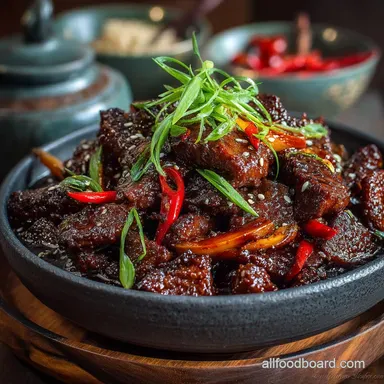
The Best Quickcook Mongolian Beef Sticky Savory and Seriously Moreish
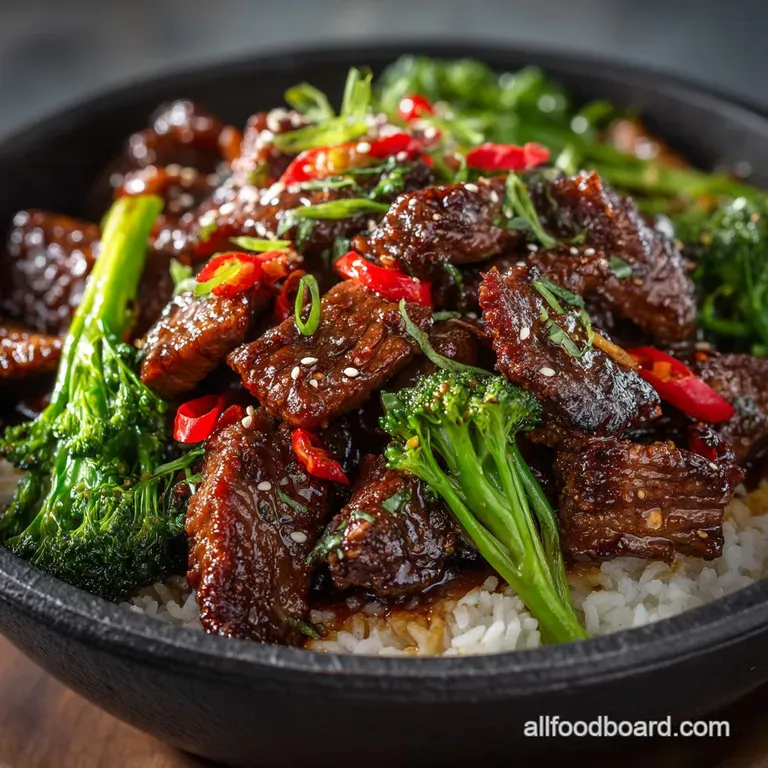
- Achieving Takeout Tenderness: Mastering the Mongolian Beef Glaze
- The Core Components: Ingredients for Authentic Mongolian Beef Flavour
- The Four Stages of Stir-Fry Success: A Step-by-Step Cooking Guide
- Elevating Your Plate: Expert Tips and Customization Options
- Storage, Reheating, and Nutritional Breakdown
- Recipe FAQs
- 📝 Recipe Card
Achieving Takeout Tenderness: Mastering the Mongolian Beef Glaze
The pursuit of seriously succulent, melt-in-your mouth beef strips at home often feels impossible, but I’m here to tell you that this highly sought after texture the signature of great Mongolian Beef is entirely attainable.
This Easy Mongolian Beef method relies on two foundational techniques: precise slicing and a simple cornstarch coating known as 'velveting.' Velveting seals the moisture within the meat, preparing it for the intense, flash fry environment that gives the beef its slightly crispy, golden brown edges.
Once that perfectly fried texture is achieved, we pivot directly to creating the iconic Mongolian Beef Sauce —a complex, profoundly sticky glaze that achieves its rich caramelisation in mere moments, coating every piece of beef for a satisfying finish that defines the dish.
Unpacking the Misnomer: Where Does This Popular Takeaway Dish Really Come From?
Despite its name suggesting nomadic origins, the classic dish we crave on a Friday night is not a product of traditional Mongolian cuisine, which generally relies on dairy, meat, and root vegetables often served simply grilled or boiled.
Instead, the Mongolian Beef Recipe is a brilliant piece of Chinese American culinary fusion, largely popularized by restaurants in Taiwan and subsequently refined in North America.
It’s a testament to the high heat cooking and sweet savoury balance characteristic of global Chinese cooking, providing comfort food that is familiar, fast, and flavourful. It sits proudly alongside other beloved adaptations as one of the Best Beef Recipes in the takeaway canon.
The Secret to Seriously Sticky Texture in Under 20 Minutes
The speed of this dish is one of its greatest assets. From the moment the heat is turned up, the actual cooking time requires a mere 10 to 12 minutes making it significantly faster than ordering delivery. This rapid execution is only possible because we embrace high heat.
The secret to achieving that seriously sticky texture lies in the high concentration of brown sugar in the glaze and the thickening power of the cornstarch slurry. When these elements meet the high temperature of the wok, they reduce and caramelise almost instantly, transforming the sauce base into a glossy, syrupy coating designed to cling fiercely to the velvety beef.
We must be prepared, however; the high sugar content means vigilance is key to prevent burning as we approach the final moments of combining and coating.
The Core Components: Ingredients for Authentic Mongolian Beef Flavour
Mastering this recipe starts with understanding the role each ingredient plays, from the cut of meat to the choice of soy sauce. This Mongolian Beef Recipe utilizes simple pantry items to create extraordinary depth.
Choosing Your Cut: Flank Steak vs. Skirt Steak Showdown
For this recipe, success hinges on using a cut that benefits from quick, high heat cooking. We recommend 450 grams (1 lb) of either Flank Steak or Skirt Steak. Flank steak is leaner and slightly broader, offering beautiful uniform strips. Skirt steak, conversely, is richer in flavour but has a slightly looser grain.
Whichever you choose, the key to maximum tenderness is to slice the meat very thinly, approximately 5 mm (1/4 inch) thick, cutting strictly against the grain. This shortens the muscle fibres, ensuring the beef practically melts when cooked.
The Cornstarch Coating: Why This Simple Step is Non-Negotiable for Crispy Edges
Before the beef hits the hot oil, it undergoes a crucial prep stage using velveting agents: a combination of 2 tablespoons of cornstarch, a teaspoon of grated fresh ginger, and a tablespoon of light soy sauce. Coating the beef thoroughly creates a protective layer that traps moisture during frying.
This process is absolutely non-negotiable for two reasons: First off,, it prevents the lean flank steak from becoming tough, and Next,, it ensures a crisp, neutral surface that can grab onto the thick, glossy sauce later.
Without this coating, the sauce would simply run off the meat, failing to achieve that coveted sticky finish.
Pantry Staples That Define the Sweet Savoury Glaze
The foundation of the distinctive flavour comes from the interplay of soy sauce and dark brown sugar. Our Mongolian Beef Sauce requires 120 ml (1/2 cup) of light soy sauce (preferably low sodium) for saltiness and base flavour, supplemented by 2 tablespoons of dark soy sauce, which adds a beautiful depth of colour and subtle molasses notes.
Sweetness is provided by a generous half cup (100 g) of packed dark brown sugar this caramelises beautifully and is responsible for the intense stickiness. We temper the richness with 1 tablespoon of rice vinegar for a touch of necessary acidity, and, of course, the vibrant punch from 4 finely minced garlic cloves and 1 tablespoon of minced fresh ginger, which provides the aromatic backbone.
Related Recipes Worth Trying
- Sunday Best Keto Instant Pot Recipes Beef Stew with Umami Mushrooms — Forget the Sunday carvery queue Our Sunday Best Keto Instant Pot Recipes Beef Stew is the ultimate keto comfort food Achieve forktender meat fast This low...
- Rich Creamy Ground Beef Gnocchi Bake Under an Hour — Ditch the takeaway This Easy Ground Beef Gnocchi recipe delivers ItalianAmerican comfort in a rich bubbly bake ready in under an hour
- Ground Beef Cottage Cheese Pasta Bake Quick High Protein — Meet your new favourite weeknight meal the Ground Beef Cottage Cheese Pasta Bake This creamy casserole is packed with protein and flavoura hearty lasagne...
The Four Stages of Stir Fry Success: A step-by-step Cooking Guide
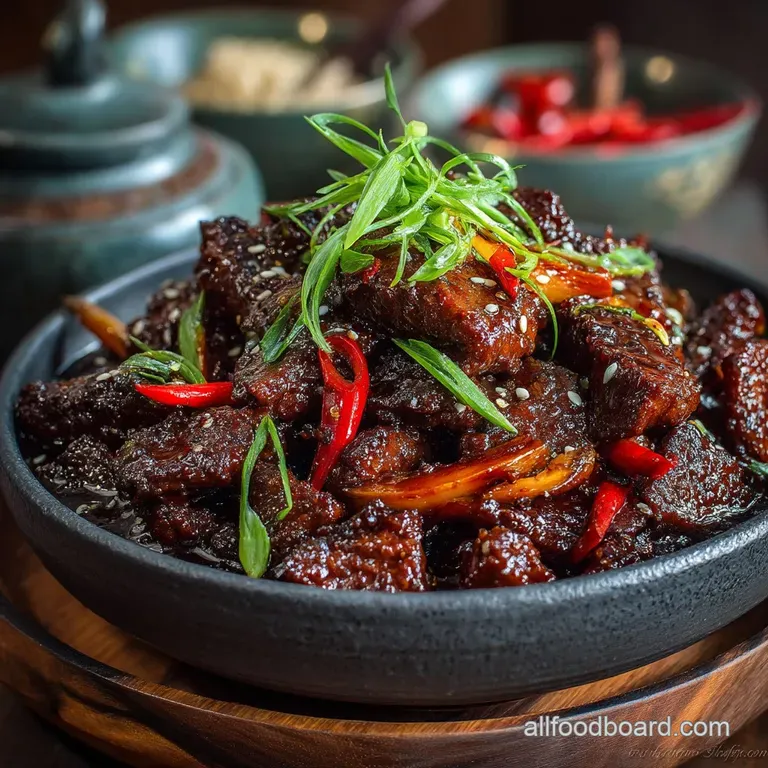
Cooking Mongolian Beef requires focus and speed. Before you start, measure and prep every single ingredient. In high heat cooking, hesitation leads to burning, so have your sauce, aromatics, and beef ready and waiting by the stove.
Preparing the Beef: Slicing, Coating, and Flash Frying
After slicing the 450 grams of beef thinly against the grain, toss it thoroughly with the velveting mixture. Allow this to marinate and chill for at least 30 minutes; this time is essential for the cornstarch to adhere and hydrate.
Next, heat 240 ml (1 cup) of neutral oil in your chosen cooking vessel over medium high heat until it reaches 180°C (350°F). We are flash frying here, not stir frying. Carefully drop the marinated beef into the hot oil in small batches frying for only 1.5 to 2 minutes per batch until golden brown.
Overcrowding the wok will lower the oil temperature and result in steamed, grey beef rather than crispy strips. Immediately drain the finished beef onto paper towels and set aside, reserving about 2 tablespoons of the frying oil in the wok for the next stage.
Setting Up the Velocities: Necessary Tools for High Heat Cooking (Wok Strategy)
For this recipe, a carbon steel wok is the ideal tool due to its ability to handle and retain extremely high temperatures, which is crucial for achieving rapid caramelisation. If a wok isn't available, a large, heavy bottomed cast iron skillet will suffice.
High heat is mandatory; low heat will result in tough, boiled beef. Because the cooking process is so fast, you must set up all your components (sauce, slurry, fried beef, and aromatics) within arm's reach.
This strategy ensures you can transition seamlessly from sautéing the aromatics to thickening the sauce without losing momentum.
Crafting the Aromatic Foundation: Blooming the Ginger and Garlic
With the reserved oil hot, reduce the heat slightly to medium. Immediately add the minced garlic, minced ginger, and any optional crushed red pepper flakes. Stir fry these aromatics for a brisk 30 seconds only.
The goal is to "bloom" the spices, releasing their fragrant oils into the residual heat without letting the garlic burn, which happens very quickly and will ruin the flavour profile.
The Grand Finale: Combining the Sauce and Achieving Perfect Caramelisation
Once the aromatics are fragrant, pour in the whisked Signature Sauce mixture. Bring this base to a simmer, stirring constantly for about one minute until the dark brown sugar is completely dissolved.
At this point, whisk your cornstarch slurry (1 tsp cornstarch mixed with 2 tbsp cold water) and slowly drizzle it into the simmering sauce while stirring. You will witness an immediate, dramatic thickening; the sauce should become glossy and syrupy, thick enough to coat the back of a spoon.
Finally, return all the fried beef to the wok. Toss vigorously to ensure every piece is fully coated in the thick, beautiful glaze. Remove the wok from the heat and toss in the generous 1 cup of sliced scallions just before serving, allowing their residual heat to soften them slightly while maintaining their bright green freshness.
Elevating Your Plate: Expert Tips and Customization Options
Achieving a restaurant quality result consistently is about attention to small details. A top tip for slicing the lean flank steak thinly is the "freezer trick": pop the beef in the freezer for 20– 30 minutes before slicing.
The resulting firmness makes cutting uniform, thin strips against the grain far easier. Also, remember that this recipe is inherently high in sodium due to the double dose of soy sauce; prioritize using a low-sodium light soy sauce for the bulk of the sauce volume to maintain flavor while providing healthier control over the salt content.
Storage, Reheating, and Nutritional Breakdown
Go Green: Adapting the Recipe for Vegetable and Dietary Substitutions
While the classic preparation is purely beef and scallions, this foundation is wonderfully adaptable. For a complete meal, consider adding quickly blanched vegetables during the final stage making this an excellent Mongolian Beef and Broccoli preparation.
The recipe also converts easily for dietary preferences; simply substitute the flank steak with chicken thigh strips or extra firm pressed tofu. For home cooks looking to make Beef Recipes Easy on the wallet, you can even adapt the flavour profile using mongolian beef with ground beef , though the texture will naturally be much softer than the traditional strip preparation.
Make It a Meal: Pairing Suggestions Beyond Plain White Rice
The sweetness and richness of the glaze demand a counterbalance. The simplest and most popular pairing is, of course, plain steamed Jasmine or Basmati rice, which acts as a perfect canvas for soaking up the excess sauce.
For a fresher side, quickly stir fry or steam some Bok Choy or tenderstem broccoli, lightly dressed with sesame oil. If you prefer a full bowl meal, toss the finished Mongolian Beef with stir fried or boiled mongolian beef noodles .
To complement the rich flavour profile, pair the dish with a light, crisp Pilsner beer or a chilled, dry Riesling, whose acidity cuts cleanly through the sweet, sticky glaze.
Freezer Tactics: Storing Leftovers and Reheating Without Losing Crunch
Leftover Mongolian Beef stores well in an airtight container in the refrigerator for 3 4 days. Freezing is possible, but the texture of the beef and sauce will suffer slightly upon thawing, becoming less crisp and sticky.
To reheat leftovers, avoid the microwave, which will turn the crispy edges soggy. The best method is to use a toaster oven or air fryer, spreading the beef out in a single layer and heating at 150°C (300°F) until warmed through.
This low, dry heat helps reactivate some of the crispness without drying the beef out completely.
Calculating Macros: Understanding the Nutrition Profile of Mongolian Beef
As one of the highly satisfying Best Beef Recipes , it’s important to understand its energy density. Based on four generous servings, this dish carries an estimated 550 650 kcal per serving.
This is driven by the fat content (30 40 g) from the frying oil absorbed by the beef, and the carbohydrate load (45 55 g), largely due to the half cup of dark brown sugar in the glaze. However, it also delivers a substantial protein boost (35 40 g) from the flank steak.
Be mindful of the high sodium levels (estimated 1,200 1,500 mg per serving); utilizing low-sodium soy sauce is the easiest way to make a significant improvement in the nutritional balance without sacrificing flavour.
Recipe FAQs
Why is my beef tough? I’ve followed the recipe but it’s not melt-in-the-mouth like a proper takeaway classic.
Achieving that proper, velvet texture hinges on two crucial factors. Firstly, you absolutely must slice the flank steak thinly against the grain; cutting with the grain guarantees a chewy result, no matter how much you faff with the marinade. Secondly, ensure you don't overcrowd the wok when frying!
Overcrowding drops the oil temperature quickly, causing the beef to steam instead of forming a lovely, crisp coating.
I fancy making this Mongolian Beef a bit healthier can I use less sugar or oil without ruining the sticky glaze?
You can certainly lighten it up, but prepare for a slight change in texture. For the oil, skip the deep fry and use only 2-3 tablespoons of oil for a shallow pan-fry, cooking in smaller batches to ensure crispness.
To cut down on sugar, try reducing the brown sugar by a quarter; it still caramelises beautifully but doesn’t make the dish quite so sweet. Consider using low-sodium soy sauce too, as this dish is inherently salty.
My sauce went too thin, or worse, too gloopy! How do I get that perfect, glossy restaurant coating?
The secret weapon here is the cornstarch slurry it separates quickly, so make sure you give it a vigorous whisk right before adding. If the sauce is too thin, create another micro slurry with a teaspoon of cornstarch and cold water, then drizzle it in while stirring until it reaches the desired thickness.
If it’s gone too gloopy, don't panic! Just stir in a tablespoon of hot water or beef stock to loosen it up to that gorgeous, syrupy consistency.
I only have rump steak will that work, or do I need the proper flank cut for this dish?
While flank or skirt steak handles high heat cooking best, you can absolutely use rump, sirloin, or even thinly sliced ribeye in a pinch. The key remains slicing the beef thinly and ensuring every piece is properly coated in the cornstarch velveting marinade.
Because rump is a leaner cut, watch the frying time closely; it will cook faster than flank steak and you don't want it drying out.
Can I prep the beef ahead of time, and how long do the leftovers keep in the fridge?
The preparation stage is perfect for working ahead! You can happily velvet the beef up to 24 hours in advance and keep it chilled it actually improves the tenderness. If you have leftovers, they keep brilliantly in an airtight container for 3 days in the fridge.
When reheating, give it a quick stir fry in a pan to revive the sauce and crisp up the beef a touch.
Sticky Easy Mongolian Beef Recipe