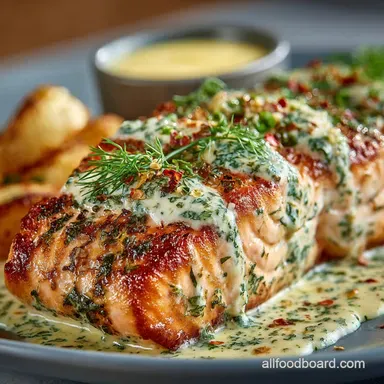
Spot on Sour Cream Baked Salmon with Dill and Dijon
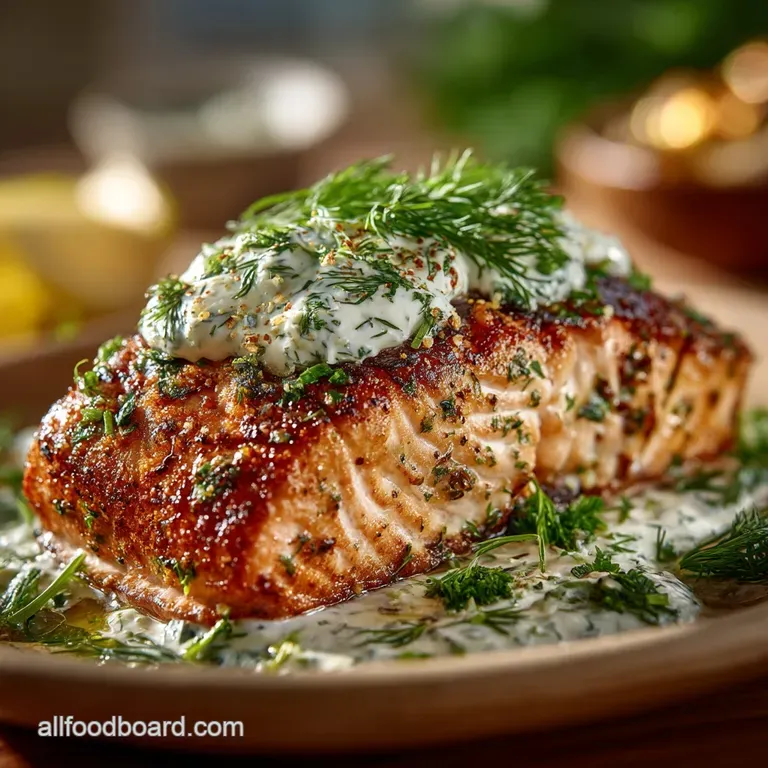
- The Secret to Perfectly Moist Salmon: A Tangy Sour Cream Crust
- Elevating Weeknight Meals: Why This Recipe Works So Well
- Essential Items for Making Sour Cream Baked Salmon
- Gathering Your Culinary Toolkit and Core Ingredients
- Step-by-Step Guide to Mastering Sour Cream Baked Salmon
- Flawless Execution: Preparing and Baking Your Fillets
- Troubleshooting, Storage, and Side Dish Pairings
- FAQs and Advanced Tips for Perfect Sour Cream Baked Salmon
- Recipe FAQs
- 📝 Recipe Card
The Secret to Perfectly Moist Salmon: A Tangy Sour Cream Crust
The greatest culinary tragedy in the home kitchen is dry salmon. We’ve all been there a beautiful fillet ruined by just five minutes too long in the oven. The foolproof method to eliminate this risk, and simultaneously boost the flavor profile, is applying a thick, creamy topping before baking.
This is the ultimate Sour Cream Baked Salmon technique. The simple yet luxurious blanket of dairy, seasoned with sharp Dijon and vibrant herbs, acts as a protective shield.
It insulates the delicate fish flesh, locking in all the natural fats and moisture, ensuring that the final result is flawlessly flaky and succulent every single time.
Elevating Weeknight Meals: Why This Recipe Works So Well
This recipe is a genuine weeknight dinner hero, delivering maximum impact with minimum effort. Classified as "Easy," the entire process takes just 30 to 35 minutes from start to finish, including a mere 15 minutes of active preparation time.
Unlike traditional techniques that require searing or complex pan sauces, this approach simplifies things dramatically. The combination of pre-seasoned salmon and the applied topping results in a gourmet quality Baked Salmon With Cream Sauce without the fuss of separate stovetop work.
It’s an incredibly reliable and easy sour cream baked salmon recipe that promises maximum flavor and minimum clean-up, especially when using parchment paper.
A Flavour Profile Breakdown: Dill, Dijon, and Ultimate Richness
The heart of this magnificent dish lies entirely in the topping. We harness the incredible compatibility of salmon and dill to create a bright, herbaceous coating. The ½ cup of full fat sour cream provides a crucial richness and body that withstands the high oven heat.
This is complemented beautifully by the 2 tablespoons of smooth Dijon mustard, which cuts through the fat with its characteristic tang, adding depth that sour cream alone cannot achieve.
The inclusion of 3 tablespoons of finely chopped fresh dill, 2 tablespoons of chives, and a teaspoon of lemon zest transforms this simple dairy mixture into a dazzling sour cream dill sauce for baked salmon , resulting in a truly irresistible sour cream dill baked salmon .
Addressing the Dry Fish Dilemma Once and For All
The primary function of the topping extends beyond flavour it’s a masterclass in moisture management. When preparing fish in the oven, fillets often dry out because the surface moisture rapidly evaporates.
By applying a thick, generous layer of the sour cream sauce for baked salmon , we create a thermal barrier. This prevents the exposed protein fibers from seizing up too quickly. On top of that,, we finish the preparation by sprinkling 2 tablespoons of grated Parmesan cheese over the top.
This cheese browns beautifully during baking, forming a light, savory crust that further seals the moisture, delivering perfectly cooked fish when using the reliable sour cream salmon oven method.
Setting the Stage: Essential Prep for Amazing Baked Fillets
Successful baking starts with methodical preparation. First, the oven must be preheated to a hot 400°F (200°C). We recommend lining a standard 9x13 inch baking dish with parchment paper a critical step for achieving non-stick results and ensuring zero fuss cleanup later.
Prior to seasoning, take the time to pat your four 6 oz salmon fillets thoroughly dry with paper towels. This crucial step helps the drizzled olive oil and light seasoning of ½ teaspoon sea salt and ¼ teaspoon black pepper adhere properly, establishing the foundational flavor of the dish.
Essential Items for Making Sour Cream Baked Salmon
Moving beyond the initial prep, ensuring you have the right components assembled streamlines the cooking process entirely. Whether you are a novice or a seasoned cook, having the measurements prepped and the necessary tools laid out means you can execute this salmon sour cream recipe swiftly and confidently.
We focus on utilizing fresh, high-quality ingredients, particularly the herbs, to achieve the bright, restaurant quality finish that characterizes the best Salmon And Sour Cream Recipes .
This recipe utilizes straightforward, accessible pantry staples, proving that sophisticated flavour doesn't require complicated sourcing.
Gathering Your Culinary Toolkit and Core Ingredients
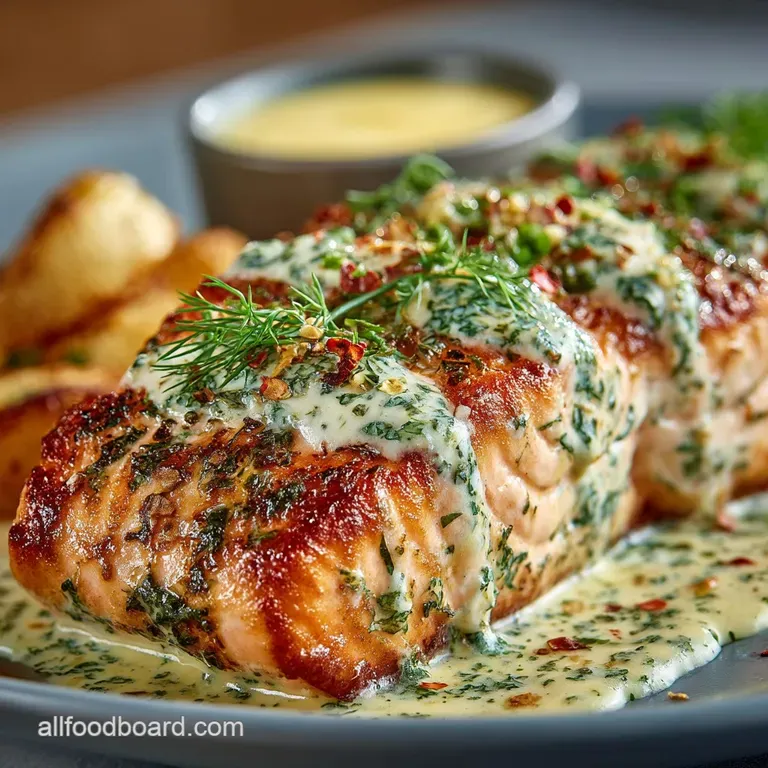
Selecting the Best Salmon Fillets for Baking
For optimal results, choose four center cut salmon fillets, approximately 6 ounces (170g) each. Center cut pieces tend to be uniform in thickness, which is vital for even cooking. While skin-on or skin off works, selecting skin-on provides better structural integrity during baking and easy transfer from the pan.
Before applying the sour cream sauce for baked salmon , ensure these fillets are lightly coated with 1 tablespoon of olive oil and the requisite salt and pepper.
Must Have Pantry Staples for the Luxurious Topping
The required components for the topping are simple but potent. You will need the aforementioned half cup of full fat sour cream, 2 tablespoons of Dijon mustard, 1 tablespoon of fresh lemon juice, and 1 teaspoon of lemon zest (always zest the lemon before juicing!).
The indispensable aromatic elements include 3 tablespoons of fresh dill and 2 tablespoons of fresh chives, both finely chopped. For those who enjoy a subtle warmth, a pinch of cayenne pepper is an optional but welcome addition, rounded out by the 2 tablespoons of grated Parmesan cheese for the final crust.
Swapping and Substituting: Variations on Herbs and Acids
While dill and Dijon offer a quintessential flavour profile, this recipe is adaptable. If you are out of sour cream, full fat Greek yogurt makes an excellent, slightly tangier substitute that maintains a good baking texture.
Dried dill can be used in a pinch, though the flavor intensity will be muted use only about 1 teaspoon of dried herbs for every 1 tablespoon of fresh. For a textural twist, whole grain mustard can replace Dijon.
Alternatively, for a Mediterranean influence, swap the dill and chives for fresh oregano and finely chopped sun-dried tomatoes.
Quick Check: Necessary Kitchen Equipment and Pan Prep
You will need a standard 9x13 inch baking dish, a small mixing bowl for the topping, a quality zester or microplane, and, most importantly, an instant read meat thermometer. The thermometer is non-negotiable for achieving that perfect 140°F (60°C) pull temperature.
Remember to always line your pan with parchment paper before placing the seasoned fish down.
Related Recipes Worth Trying
- The Ultimate Spiced Carrot Cake Recipe with Silky Cream Cheese Frosting — Forget dry bakesthis is the definitive moist Carrot Cake recipe Perfect spices crushed carrots and that impossibly silky cream cheese frosting A baking...
- StickyMoist Carrot Cake with Cream Cheese Frosting A British Classic — This Best Carrot Cake with Cream Cheese Frosting recipe delivers a profoundly moist sticky sponge A true English teatime triumpheasy assembly zero lumps and...
- NonSoggy Coleslaw Recipe The Secret to Creamy Crunchy BBQ Slaw — The ultimate creamy coleslaw dressing recipe Learn the trick to crunchy nonwatery slaw perfect for BBQ season Tangy flavourful and easy to master
Step-by-step Guide to Mastering Sour Cream Baked Salmon
Executing this recipe is an exercise in efficiency. The key stages involve preparing the fish, rapidly assembling the creamy sauce, applying the topping generously, and then monitoring the crucial final moments of baking to achieve flakiness.
The precision gained by following these steps ensures that your sour cream salmon oven experience yields perfect results.
Flawless Execution: Preparing and Baking Your Fillets
Crafting the Luxurious Sour Cream and Dijon Spread
In your small mixing bowl, begin by whisking together the ½ cup of sour cream, 2 tablespoons of Dijon mustard, and the 1 tablespoon of lemon juice until the mixture is uniform and smooth.
Next, incorporate the aromatics: fold in the 1 teaspoon of lemon zest, the 3 tablespoons of fresh dill, 2 tablespoons of chives, and the optional cayenne pepper. Taste the mixture and adjust seasoning if necessary; the goal is a bright, tangy spread that perfectly complements the rich salmon.
Preparing the Fish: Seasoning and Placement Techniques
With the oven preheated and the pan lined, position the four seasoned salmon fillets, skin side down, evenly spaced on the parchment paper. Using a spoon or small spatula, apply the prepared sour cream dill sauce for baked salmon generously over the top of each fillet.
The layer should be thick enough to completely cover the fish, maximizing its protective qualities. Finally, sprinkle the 2 tablespoons of grated Parmesan cheese across the creamy coating.
Optimal Baking Time and Temperature for Flaky Results
Place the baking dish into the 400°F (200°C) preheated oven. Bake for a relatively short period of 15 to 20 minutes. Keep a close eye on the visual cues: the topping should be bubbling heartily and developing a beautiful light golden brown color around the edges.
Crucially, check the internal temperature by inserting an instant read thermometer into the thickest part of the fillet. Remove the fish from the oven immediately when the thermometer registers 140°F (60°C).
The Chef's Touch: Serving and Garnishing Suggestions
Once removed, allow the salmon to rest, uncovered, for five minutes. This resting period is essential, allowing the residual heat to carry the temperature up to the food safe standard of 145°F (63°C) while redistributing internal juices.
Serve the perfectly flaky fillets immediately alongside classic accompaniments such as buttered new potatoes dusted with fresh parsley, or crisp, blanched asparagus dressed with a squeeze of fresh lemon juice.
Troubleshooting, Storage, and Side Dish Pairings
Addressing common concerns ensures a consistently excellent experience with this Sour Cream Baked Salmon . Knowing how to properly store leftovers and what side dishes best complement the richness of the topping elevates the entire meal experience.
FAQs and Advanced Tips for Perfect Sour Cream Baked Salmon
Troubleshooting: Why Is My Salmon Dry or Undercooked?
The most frequent culprit for dry salmon is pulling the fish at the final temperature of 145°F (63°C), instead of the target pull temperature of 140°F (60°C). Always use your instant read thermometer and trust the carry over cooking principle.
If the salmon seems mushy or wet, it is undercooked; simply return it to the oven for 2 3 minute intervals. A secondary issue can be using low-fat sour cream, which tends to weep liquid under high heat, disrupting the protective crust.
Stick to full fat dairy for the optimal sour cream dill baked salmon .
Maximizing Leftovers: Reheating Baked Salmon Safely
Leftover easy sour cream baked salmon stores well in an airtight container in the refrigerator for up to three days. To reheat without drying it out, avoid the microwave.
The best method is wrapping the leftover fillet loosely in foil and heating it low and slow in the oven at 300°F (150°C) until just warmed through (about 10– 12 minutes).
This gentle heat ensures the fish remains moist and the sour cream sauce for baked salmon doesn't separate.
Nutritional Overview and Calorie Considerations
This is a notably protein dense meal. Based on a 6-ounce fillet and the suggested portion of the topping, an estimated serving contains approximately 430 kcal and a substantial 45 grams of protein.
While the recipe is relatively high in fat (around 25g total), a significant portion of this comes from the beneficial Omega-3 fatty acids found in the salmon. The carbohydrate count remains low, typically around 5 grams per serving.
Scaling the Recipe: Adjusting for Larger Dinner Parties
Scaling this salmon sour cream recipe for larger gatherings is straightforward. Simply multiply the ingredients for the topping by the necessary factor. When baking eight or more fillets, ensure you use a larger sheet pan or multiple smaller pans.
It is essential that the fillets are not crowded and remain evenly spaced to allow hot air to circulate freely around each piece, maintaining the consistent 15 to 20 minute cook time.
Recipe FAQs
Crikey, how do I make sure this salmon is perfectly moist and doesn't end up like shoe leather?
The secret is twofold, mate: the topping and the thermometer. The rich, creamy mixture acts like a duvet, protecting the delicate fish from the harsh oven heat and locking in moisture wonderfully.
Crucially, pull the fish out when an instant read thermometer hits 140°F (60°C) in the thickest part; the resting time will carry it over to the perfect 145°F, resulting in flaky, succulent salmon every time.
I’m watching the calories can I swap full fat sour cream for something lighter, or maybe Greek yogurt?
You absolutely can substitute, but be cautious with low-fat options! Full fat ingredients are less likely to split or weep watery liquid when subjected to high heat, which can spoil that lovely crust.
If you must swap, use full fat Greek yogurt it offers the best structure and a pleasant tang that complements the dill and Dijon beautifully, though it will be slightly tangier than sour cream.
Can I mix up the topping ahead of time to save a bit of faff before dinner?
That’s a cracking idea for streamlining your prep! The sour cream, Dijon, herbs, and seasonings can be mixed together up to 24 hours in advance and stored in the fridge just cover it tightly with cling film.
However, don't spread the topping onto the raw fish until you are ready to put it straight into the hot oven, as the acid from the lemon juice can begin to ‘cook’ the fish (a process called denaturation).
Got any advice on storing the leftovers of this magnificent Sour Cream Baked Salmon?
Any leftovers of your Sour Cream Baked Salmon should be cooled quickly and tucked away in an airtight container in the fridge, where they will keep safely for 2 to 3 days. While they are splendid cold in a salad or flaked over new potatoes, reheating can sometimes dry the fish out.
If you do reheat, use a low temperature in the oven or air fryer to gently warm the fish through, avoiding the microwave.
I don't have fresh dill to hand. Is using dried dill a proper culinary faux pas?
While fresh dill delivers a superior, bright, and vibrant herbaceous flavour that truly makes the dish, dried dill is acceptable in a pinch it's certainly not a hanging offence! Just remember that dried herbs are much more concentrated.
You should use about one teaspoon of dried dill for every tablespoon of fresh required in the recipe to prevent the flavour from becoming overpowering.
Spot On Sour Cream Baked Salmon