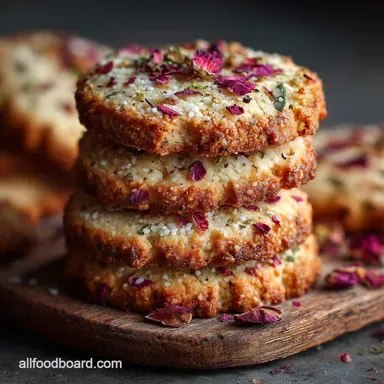
The Sultans Shortbread Rosewater Tahini Biscuits with Pistachio Crunch
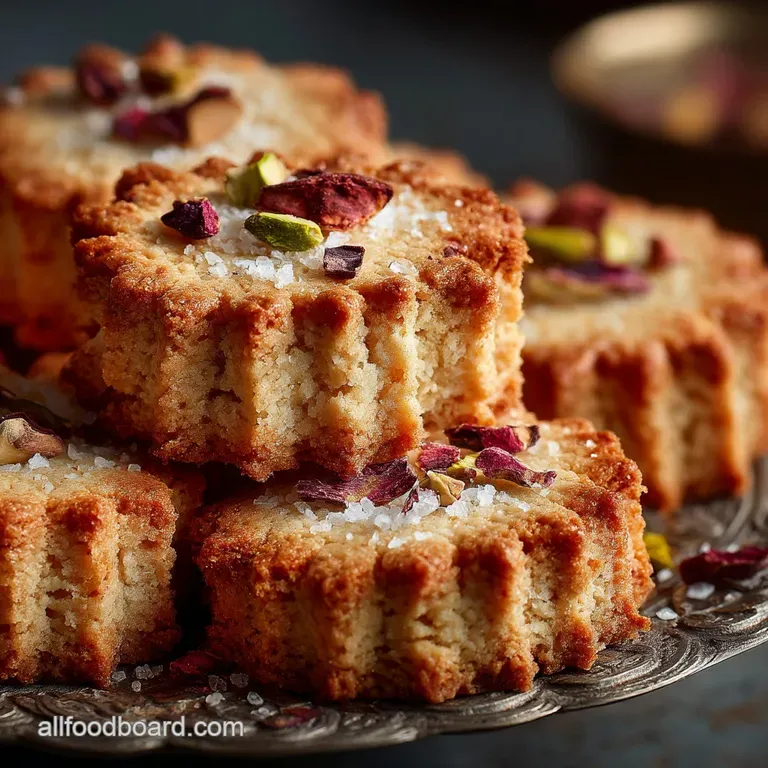
Why This Tahini Biscuit Recipe Reinvents the Classic Shortbread
Forget everything you thought you knew about traditional shortbread. This Tahini Shortbread Recipe transforms the buttery classic by incorporating rich, nutty sesame paste, pushing the boundaries far beyond the typical Scottish treat.
Inspired by the sophisticated sweets found across the Levant and Middle East, these Rosewater Tahini Biscuits offer a complex flavour profile that balances buttery richness with an earthy depth.
The simple act of substituting some of the traditional butter with tahini creates a textural marvel that is surprisingly sophisticated.
The Magic of Meltaway: How Tahini Enhances Crumb
The secret to this exceptional crumb lies in the unique composition of tahini itself. As a ground seed paste, tahini is incredibly high in fat and low in moisture. When combined with butter, this fat composition effectively interferes with gluten development in the flour.
The result is a shortbread that exhibits an unparalleled tenderness it doesn't just crumble; it truly melts the instant it hits your tongue. Unlike some traditional recipes that can be dense, these tahini cookies achieve a delicate, airy lightness while maintaining a satisfying, short texture.
Sourcing the Star: Choosing high-quality Tahini Paste
The success of any tahini recipe hinges entirely on the quality of its primary ingredient. You cannot simply grab any jar off the shelf. For this recipe, look for tahini that is ground from Hulled Ethiopian sesame seeds; it should be smooth, runny, and pourable, requiring minimal stirring.
If your tahini is thick, stiff, or separated with a layer of oil floating above a cement like base, it is likely too old or poorly processed. Using a thick, pasty product will throw off the fat-to-liquid ratio, resulting in dense and dry Tahini Butter Recipes rather than the tender biscuits we aim for.
Refining the Recipe: Our Easy Take on Levantine Sweets
This is much more than just a quick way to use up a jar of sesame paste; it’s a refined, Sweet tahini recipe inspired by centuries of culinary tradition. To lift the inherent earthiness of the sesame, we incorporate a subtle yet essential element: pure rosewater.
Just one teaspoon introduces a fragrant, floral note that prevents the biscuit from becoming heavy or purely savoury. While the preparation demands precision, the method itself is remarkably straightforward, positioning this as an Easy Tahini Recipe that delivers a maximum payoff in flavour and elegance.
Essential Pantry Staples and Kitchen Tools for Success
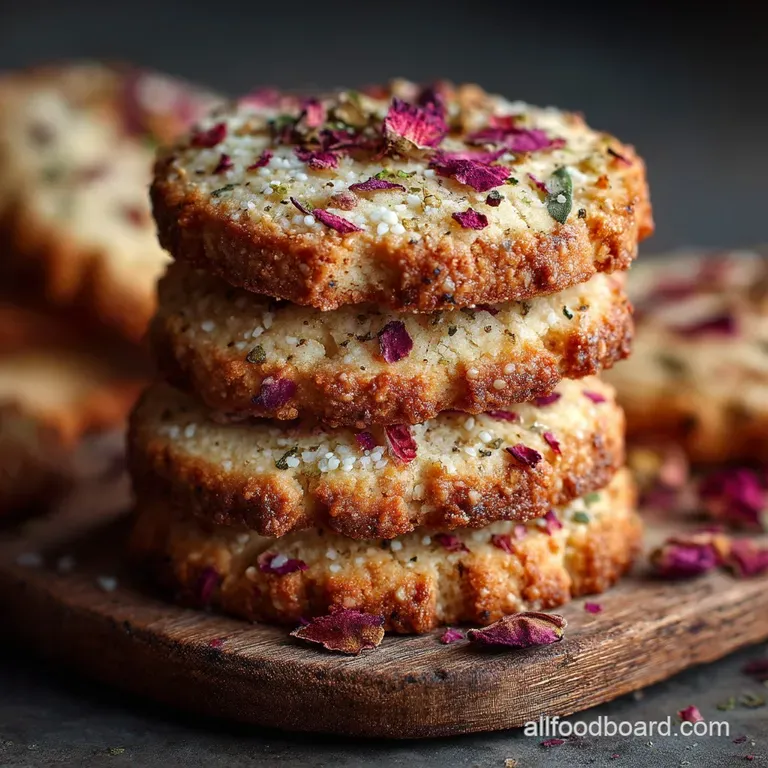
Baking shortbread, especially one as texture sensitive as this Sultan’s Shortbread, requires attention to ingredient quality and accurate measurements. While the list is short, precision is key to ensuring the dough has the right consistency for rolling and chilling.
The Specialty Component List (Rosewater and Nuts)
While butter and flour form the backbone, several specific components elevate this recipe. We insist on using caster sugar (superfine granulated sugar) over standard granulated sugar; its finer grain dissolves quickly into the butter and tahini, preventing a gritty final product.
Crucially, the pure rosewater must be used sparingly the measurement of exactly one teaspoon is vital, as too much will overwhelm the delicate sesame flavour. Finally, we utilize the vibrant green crunch of crushed pistachios and the nutty aroma of toasted white sesame seeds for a beautiful, textural topping.
Precise Measurement Tips for Baking Consistency
Given the delicate nature of shortbread and the introduction of a new fat (tahini), consistency in measurement is non-negotiable. I highly recommend using a digital kitchen scale to measure the flour (250 grams) and the butter (225 grams).
Measuring by volume (cups) often leads to discrepancies, especially when dealing with flour density. Ensuring the exact proportions prevents over-or-under incorporating the dry ingredients, which could lead to tough, overworked dough or a mix that won't hold its shape during the crucial chilling phase.
Must Have Equipment: Stand Mixer vs. Hand Mixing
Achieving the perfect texture starts with proper aeration during the creaming stage. While a standard rubber spatula is fine for folding in the flour, the initial mixing of the fats demands mechanical power.
A stand mixer fitted with the paddle attachment is the easiest way to combine the cold, diced butter, tahini, and sugar until they achieve that light, fluffy, and visibly pale texture a process that takes a full three to four minutes at medium high speed.
While an electric hand mixer can certainly be used, it will require more time and careful scraping to ensure all ingredients are uniformly combined.
Mastering the Sultan's Shortbread: A step-by-step Guide
The execution of this recipe is broken into two key stages: preparing the structurally sound dough and achieving the characteristic light bake. Follow these steps precisely to guarantee success.
Creating the Perfect Tahini Butter Mixture (The Creaming Stage)
Begin by ensuring your butter is cold and diced, and your tahini is well stirred. In the bowl of your mixer, combine the cold butter, the 1/2 cup of quality tahini, and the caster sugar. Beat this mixture vigorously on medium high speed.
This is the cornerstone of great Tahini Butter Recipes because you are not just mixing; you are trapping air. Continue beating for the specified three to four minutes until the mixture is truly lightened in colour and has a whipped, fluffy consistency.
Once this is achieved, introduce the single egg yolk and the teaspoon of rosewater on low speed, mixing just until they disappear into the batter.
Shaping and Chilling: The Key to Crisp Edges
Once the fats and flavourings are combined, reduce the mixer speed to its lowest setting and gradually introduce the measured flour and salt. It is imperative to stop mixing immediately the moment the last streaks of flour disappear and the dough forms a shaggy mass.
Overworking the flour will develop gluten, turning your anticipated meltaway shortbread into a chewy, disappointing result. Gather the delicate dough, press it into a thick disc (about 3/4 inch), wrap it tightly in plastic film, and chill it for a minimum of 60 minutes.
This chill time stabilizes the butter and tahini, guaranteeing the dough is firm enough to roll evenly and holds a clean shape when cut.
Achieving the Golden Brown Bake and Texture Check
Preheat your oven to a moderate 175°C (350°F). Roll the chilled dough evenly to a 1/4 inch thickness and cut your shapes (a 2 inch cookie cutter works perfectly). Transfer these shapes to parchment lined trays.
Bake the tahini cookies for 15 to 18 minutes, rotating the trays halfway through for even heat distribution. True shortbread should never look heavily browned; instead, look for the edges to achieve a delicate, light gold hue while the centre remains slightly pale.
When removing them from the oven, they will be very fragile. Do not attempt to move them; allow them to cool completely on the baking tray before handling.
The Finishing Flourish: Adding the Pistachio Crunch
Just before the baking stage, prepare the topping. Lightly whisk one egg white to create a wash. Brush the top surface of each cut biscuit very gently, ensuring not to pool liquid.
Immediately sprinkle the tops with the mixture of crushed pistachios and toasted sesame seeds, pressing gently so the nuts adhere to the egg wash. After the biscuits have cooled entirely, you have the option of adding one last touch of elegance: a light dusting of icing sugar across the surface for contrast.
Expanding Your Baking Horizons: FAQs, Variations, and Pro Tips
This final section addresses practical concerns, offers delicious alternatives, and places these biscuits within a broader context of baking and nutrition.
How to Store Baked and Unbaked Tahini Cookie Dough
These tahini cookies store exceptionally well. Once completely cooled, the baked biscuits can be kept in an airtight container at room temperature for up to a week. For making ahead, the unbaked dough is incredibly freezer friendly.
After the initial chilling period, you can slice the biscuits, arrange them on a tray, and freeze them until solid. Transfer the frozen, unbaked biscuits to a sealed bag or container and store for up to three months.
When ready to bake, place them directly onto the prepared sheet pan and add a minute or two to the baking time no thawing necessary.
Allergy Adjustments and Recipe Swaps (gluten-free Option)
The versatility of the Easy Tahini Recipe allows for several simple adjustments. For those requiring a dairy-free treat, the butter can be substituted entirely with a high-quality, plant based baking block (not margarine), which has a similar fat content to aid in the creaming process.
Since tahini is naturally gluten-free, transforming this into a gluten-free biscuit is straightforward: simply substitute the all-purpose flour with a 1:1 gluten-free baking blend that contains xanthan gum.
If pistachios are an issue, they can be easily swapped for finely chopped walnuts, almonds, or even pumpkin seeds for a different profile.
Demystifying the Nutrition: Are Tahini Biscuits Healthy?
While these biscuits are undeniably rich and satisfying, they offer some unique nutritional benefits thanks to the inclusion of tahini. Tahini is a nutrient powerhouse, providing healthy monounsaturated fats, calcium, iron, and a good dose of plant based protein (about 3 grams per estimated serving).
However, due to the substantial fat and sugar content required for the desired shortbread texture, they remain an indulgent treat. Based on the yield of 25 biscuits, each serving is estimated to contain between 160 180 kcal. They are best enjoyed in moderation as a wholesome, satisfying dessert.
Serving Suggestions: Pairing Your Biscuits with Tea or Coffee
Given their origins, these biscuits pair beautifully with traditional Levantine beverages. Serve them alongside a soothing glass of freshly brewed mint tea, which provides a crisp, herbaceous contrast to the rich sesame.
Alternatively, the density and flavour complexity of these Sweet tahini recipe biscuits stand up perfectly to strong, dark coffee, making them ideal for an afternoon espresso.
For a novel dessert presentation, try crumbling them lightly over a bowl of creamy Greek yoghurt or labneh, drizzled with a touch of honey for a truly balanced finish.
Recipe FAQs
Why is the quality of my Tahini so important in this recipe, and what should I look out for?
Excellent Tahini should be runny and pourable, like a smooth peanut butter, not thick or grainy. Using a separated, dry, or bitter batch will drastically change the ratio of fat to flour, leading to dense, dry biscuits instead of the tender, melt-in-the-mouth crumb we’re aiming for.
Give it a proper stir before you measure it out it's worth the faff!
My shortbread always turns out a bit tough am I over egging the pudding here?
Ah, the cardinal sin of shortbread: overworking the flour! Once the flour hits the wet ingredients, mix only until the dough just comes together into a shaggy mass. Overmixing develops the gluten, resulting in a tough texture that’s more like a rock cake than a delicate biscuit.
Also, ensure you adhere strictly to the chilling time it's vital for keeping the butter firm and the biscuit structure impeccable.
I've baked a big batch! How long will these delicious Tahini biscuits keep, and what's the best way to store them?
If kept in an airtight biscuit tin (a proper one, mind you!), these 'Sultan’s Shortbreads' will stay fresh and crunchy for up to two weeks at room temperature. For longer keeping, the unbaked dough freezes beautifully for up to three months; just wrap it tightly, let it thaw in the fridge overnight, and bake as usual.
You can also freeze the baked biscuits in layers separated by parchment paper for up to a month.
Rosewater is a bit strong for my taste. Can I leave it out or swap it for something else?
Absolutely, rosewater can be a bit 'Marmite' you either love it or hate it! If you want to tone it down or skip it entirely, replace it with a good quality vanilla extract for a subtle sweetness.
Alternatively, swap it for the zest of one large orange or lemon for a brighter, more zesty flavour profile that still complements the nutty tahini beautifully.
Can I make these fancy biscuits suitable for my vegan or dairy-free friends?
Yes, these adapt surprisingly well! Because shortbread relies on fat content, simply swap the dairy butter for a high-quality, plant based baking block avoid soft margarines, as they can ruin the required structure.
You can also omit the egg yolk and use a tiny splash of non-dairy milk instead of egg white for the wash to help the pistachios adhere to the top.
Rosewater Pistachio Tahini Biscuits