Marinated Ribs: Tender and Glazed
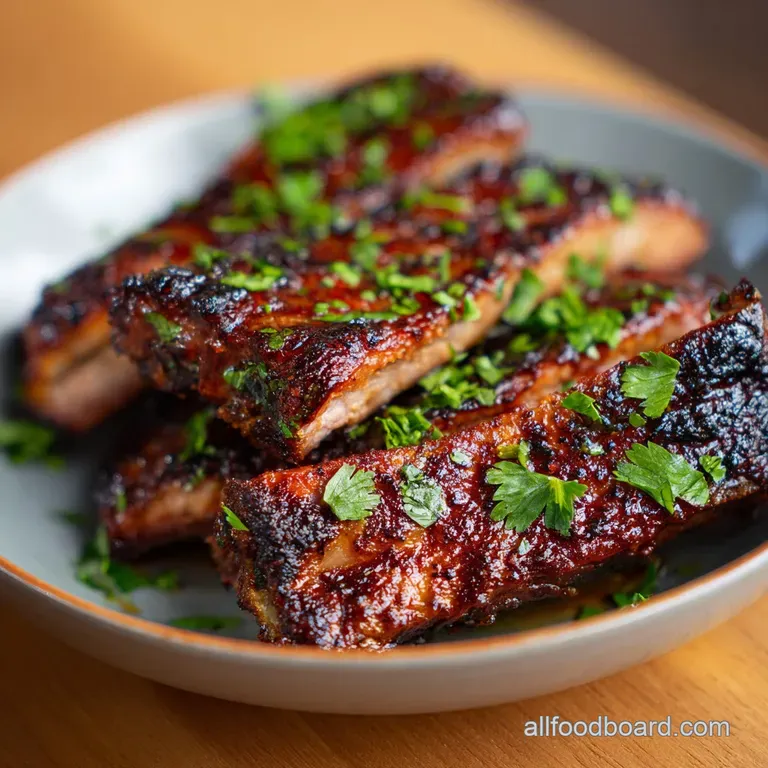
- Time: Active 20 minutes, Passive 3 hours 15 mins, Total 3 hours 35 mins
- Flavor/Texture Hook: Sticky, mahogany glaze with a fall off-the bone tender interior
- Perfect for: Weekend family feasts, game day crowds, or beginner cooks wanting a "no fail" win
- Achieving the Most Succulent Oven Baked Marinated Ribs
- Precision Control for the Perfect Texture
- Why the Foil Pouch is Non Negotiable
- Component Analysis and Ingredient Logic
- Essential Tools for Rib Success
- Step-By-Step Infusion and Roasting Process
- Handling Common Rib Roadblocks
- Adjusting for Different Batch Sizes
- Debunking Common Rib Misconceptions
- Storage Guidelines and Zero Waste Ideas
- Dynamic Visual Presentation Tactics
- Very High in Sodium
- Recipe FAQs
- 📝 Recipe Card
Achieving the Most Succulent Oven Baked Marinated Ribs
The absolute worst thing that can happen when you're craving a rack of ribs is ending up with something that feels like you're chewing on a rubber tire. I remember one summer early in my cooking journey when I tried to rush the process.
I threw the meat straight onto a over high heat grill without any prep, thinking the sauce would save me. It didn't. The outside was charred to a bitter crisp, while the inside was tough, flavorless, and frankly, heartbreaking.
It was a texture failure that stayed with me for a long time, but it taught me the most important lesson in BBQ: you cannot skip the "low and slow" breakdown of collagen if you want that melt in-the mouth sensation.
These oven baked marinated ribs are the targeted fix for that exact problem. Instead of fighting against the meat's natural toughness, we’re using a high acid marinade and a sealed steam environment to do the hard work for us.
When you open that foil pouch after three hours, the aroma that hits you isn't just "pork" it’s a dynamic, fragrant cloud of garlic, smoked paprika, and tangy apple cider vinegar.
It’s a nostalgic scent that reminds me of the night markets I used to visit in Taipei, where the air was thick with the smell of charred sugar and spices.
We’re going for a bold, fusion inspired profile here. We aren't just making "standard" BBQ; we’re layering flavors like soy sauce and Dijon mustard to create a deep umami base that pairs perfectly with the sweetness of dark brown sugar.
This isn't just about cooking meat; it’s about creating a lacquered, mahogany finish that shatters slightly when you bite into it, revealing the silky meat underneath. Let’s get into the details of why this specific technique works every single time.
Precision Control for the Perfect Texture
Before we get our hands messy, let’s look at the two main ways people tackle this dish. While some prefer the quick route, the classic low and slow oven method provides a depth of flavor and a tenderness that simply can't be replicated in a hurry.
| Method | Total Time | Texture Outcome | Best For |
|---|---|---|---|
| Fast (Pressure Cooker) | 1 hour | Soft, but can lack structural integrity | Quick weeknight cravings |
| Classic (This Recipe) | 3 hours 35 mins | Structural but tender with a lacquered crust | Impressing guests/Weekend feasts |
The reason we stick to the classic timing is all about the "sweat." In the oven, the ribs undergo a slow transformation where the fats render out and baste the meat from the inside. If you're wondering how to tell exactly when your ribs have reached that "sweet spot" of doneness, follow this quick decision guide below.
| Rib Thickness | Internal Temp | Rest Time | Visual/Physical Cue |
|---|---|---|---|
| Thin (Baby Back) | 195°F - 203°F | 10 minutes | Meat pulls back 1/2 inch from bone |
| Standard (St. Louis) | 200°F - 205°F | 15 minutes | Bone wiggles easily when twisted |
| Thick (Country Style) | 205°F | 10 minutes | Meat flakes apart with a dull fork |
Why the Foil Pouch is Non Negotiable
Understanding the physics of the oven environment is what separates a dry rib from a juicy one. This recipe relies on a few specific mechanisms to ensure success.
- Collagen Breakdown: At a steady 300°F, the tough connective tissues in the pork slowly convert into gelatin. This is what gives the ribs that "velvety" mouthfeel rather than a "stringy" one.
- Steam Saturation: By wrapping the ribs in a double layer of heavy duty foil, we create a micro environment where the apple cider vinegar and soy sauce evaporate and then penetrate back into the meat.
- The Maillard Finish: Increasing the heat to 400°F for the final 15 minutes causes the sugars in the marinade to caramelize rapidly, creating that "shatter crisp" mahogany crust.
- Osmotic Infusion: The 4 to 24 hour marinating window allows the salt in the soy sauce to break down protein structures, allowing moisture to be trapped deeper within the muscle fibers.
Chef's Tip: Freeze your garlic for 10 minutes before mincing. It makes it much easier to get a fine, paste like consistency that melts into the marinade without leaving chunky burnt bits on the surface during the final broil.
Component Analysis and Ingredient Logic
Success with marinated ribs starts with high-quality components. Every item in this list serves a specific functional purpose in the flavor chemistry of the dish.
| Ingredient | Science Role | Pro Secret |
|---|---|---|
| Apple Cider Vinegar | Acidic Tenderizer | Use "with the mother" for a more complex, funky tang |
| Dark Brown Sugar | Caramelization Agent | Pack it tight; the molasses content creates a stickier glaze |
| Soy Sauce | Umami & Salt Source | Swap for Tamari if you need a gluten-free deep savoriness |
| Liquid Smoke | Aroma Mimicry | A little goes a long way; it provides the "backyard" fragrance |
To really get the best out of these components, you need the right meat. We are using 4.5 lbs baby back pork ribs (2 racks). If you can't find baby backs, you can use St. Louis style, but you'll need to add about 30 to 45 minutes to the initial bake time.
For the liquid base, we combine 0.5 cup apple cider vinegar with 0.25 cup soy sauce and 0.5 cup dark brown sugar. This creates a high solids marinade that clings to the meat. The 2 tbsp Dijon mustard acts as an emulsifier, helping the oil based flavors and water based flavors stay married together.
We then add 4 cloves garlic, minced, and 1 tsp liquid smoke for that fragrance.
For the dry rub, which goes on first, we use 1 tbsp smoked paprika, 1 tsp black pepper, and 0.5 tsp cayenne pepper. This creates a "base layer" of spice that the liquid marinade will later hydrate. The umami depth here reminds me of my gastropub steak marinade but with a sweeter, more persistent finish that works better for pork.
| Original Ingredient | Substitute | Why It Works |
|---|---|---|
| Apple Cider Vinegar | Pineapple Juice | Adds natural bromelain enzymes for even faster tenderizing. Note: Will be much sweeter. |
| Dark Brown Sugar | Honey or Maple Syrup | Provides a different floral sweetness but burns faster; watch the 400°F stage closely. |
| Liquid Smoke | Smoked Sea Salt | Provides the aroma without the liquid. Reduce soy sauce slightly to compensate for extra salt. |
Essential Tools for Rib Success
You don't need a professional smokehouse to make world class ribs, but you do need a few specific items to ensure even heat distribution and a clean cleanup.
- Extra Wide Heavy Duty Aluminum Foil: Regular foil is too thin and will tear, letting all that precious steam escape.
- Large Rimmed Baking Sheet: This catches any rogue drips and prevents a "smoke alarm" situation in your kitchen.
- Wire Rack (Optional): Placing the foil pouch on a rack allows heat to circulate underneath the ribs, preventing the bottom from getting "boiled" or mushy.
- Instant Read Thermometer: Essential for hitting that 195°F to 205°F window precisely.
- Pastry Brush: For that frequent basting during the final 15 minutes to build up the "lacquer" layers.
step-by-step Infusion and Roasting Process
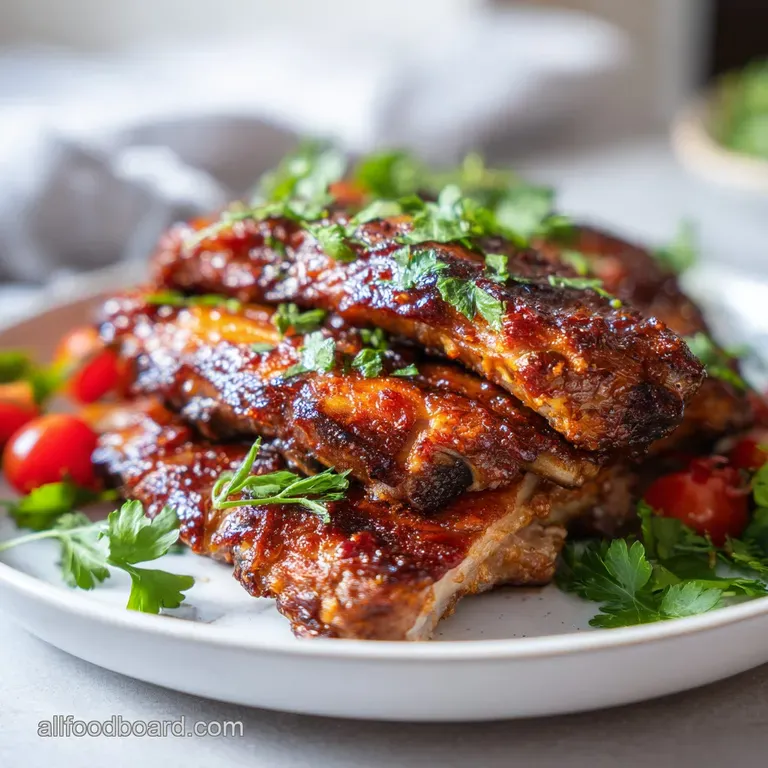
- Remove the silverskin (membrane) from the back of the ribs by prying up a corner with a butter knife and pulling it off with a paper towel for grip. Note: This is vital; the membrane is a barrier that prevents the marinade from reaching the meat.
- In a bowl, whisk together the apple cider vinegar, soy sauce, dark brown sugar, Dijon mustard, minced garlic, and liquid smoke to create the marinade.
- In a separate small bowl, combine the smoked paprika, black pepper, and cayenne pepper.
- Coat the ribs evenly with the dry spice rub, then place in a large container or vacuum bag. Pour the marinade over the ribs and refrigerate for 4 to 24 hours until the meat feels slightly tacky and darkens in color.
- Preheat your oven to 300°F (150°C). Prepare a large rimmed baking sheet with a wire rack or foil lining.
- Tightly wrap the marinated ribs in a double layer of extra wide heavy duty aluminum foil to create a sealed pouch, trapping the moisture.
- Place the foil pouches on the baking sheet and bake for 3 hours until the aroma of sweet garlic fills the kitchen and the meat is tender.
- Carefully open the foil pouches. Baste the ribs with the accumulated juices. Increase the oven temperature to 400°F or use the broiler for 15 minutes, basting frequently until a mahogany crust forms and the edges start to sizzle and char.
Handling Common Rib Roadblocks
Even with the best intentions, things can go sideways in the kitchen. Usually, it's a matter of heat control or timing. If you find your ribs aren't quite reaching that "pull apart" stage, it's usually because the internal temperature hasn't climbed high enough to melt the connective tissue.
Why Your Ribs Are Still Tough
If the meat is clinging stubbornly to the bone after three hours, you likely have a "low and slow" failure. This usually happens if the foil pouch wasn't sealed perfectly, allowing the steam to escape and drying out the meat before it could tenderize.
| Problem | Root Cause | Solution |
|---|---|---|
| Tough/Chewy Meat | Temperature was too low or time too short | Return to oven for 30 more minutes; check internal temp is at least 195°F. |
| Dry/Crumbly Meat | Overcooked or lost moisture | Next time, use double thick foil and ensure no steam escapes. |
| Burnt Surface | Sugar in marinade scorched | Move the oven rack lower or reduce broil time. Baste more often to cool the surface. |
Why Your Crust Is Pale
A lack of color usually means the oven wasn't hot enough during the final stage or you didn't baste enough. The "lacquer" effect is a result of multiple thin layers of sugar and fat drying out and caramelizing on top of each other. If you're craving that vibrant street food profile, you might love trying this Asian Zing marinade for your next wing night it uses a similar over high heat finishing technique.
Common Mistakes Checklist
- ✓ Never skip removing the membrane; it’s like trying to marinate through a plastic bag.
- ✓ Don't peek! Opening the foil pouch during the first three hours lets all the steam out and resets the "tenderizing clock."
- ✓ Pat the ribs dry with a paper towel before applying the dry rub to ensure the spices stick.
- ✓ Let the ribs rest for 10 minutes after the final broil to allow the juices to redistribute.
- ✓ Use heavy duty foil only; standard foil will leak and leave you with a mess and dry meat.
Adjusting for Different Batch Sizes
Scaling ribs is relatively straightforward since the cooking time is mostly determined by the thickness of a single rack rather than the total weight.
- For a Half Batch (1 rack): You can use a smaller baking sheet, but keep the cook time the same. Reduce the marinade ingredients by half, but keep the oven temp at 300°F.
- For a Double Batch (4 racks): You will need two large baking sheets. Do not stack the foil pouches on top of each other; they need air circulation. You may need to increase the total cook time by about 20 minutes to account for the extra mass in the oven.
- Baking 4 racks: If your oven is crowded, rotate the pans halfway through the 3 hour mark (top rack to bottom rack) to ensure even heating.
If you’re looking for a "Decision Shortcut" to customize your experience: If you want more heat, increase the cayenne pepper to 1.5 tsp. If you want maximum tenderness, extend the 300°F bake to 3.5 hours.
If you want a thicker glaze, whisk 1 tsp of cornstarch into the marinade juices before the final broil stage.
Debunking Common Rib Misconceptions
One of the biggest myths in the BBQ world is that "fall off-the bone" is the gold standard. In professional competitions, that's actually considered overcooked! The goal is "bite through" tenderness, where the meat comes off easily where you bite but stays on the bone otherwise.
However, for home cooks, "fall off-the bone" is usually the crowd favorite because it’s so satisfying.
Another myth is that you need a smoker for "real" ribs. While smoke adds a beautiful layer of flavor, the oven is actually a superior environment for controlling the breakdown of fat and collagen.
By using a touch of liquid smoke in our marinade, we get 90% of the flavor profile with 100% more consistency than a finicky backyard smoker might provide.
Finally,, don't believe that you can't marinate for too long. If you leave ribs in a high acid marinade (like one with lots of vinegar or citrus) for more than 24 hours, the acid will actually start to "cook" the meat, turning the texture mushy and grainy.
Stick to the 4 to 24 hour window for the best results.
Storage Guidelines and Zero Waste Ideas
Properly stored ribs are actually a fantastic candidate for meal prep because the flavors continue to develop as they sit.
- Fridge
- Store in an airtight container for up to 4 days.
- Freezer
- Wrap individual ribs or half racks tightly in foil and then a freezer bag for up to 3 months.
- Reheating
- Do not microwave if you can avoid it! It makes the meat rubbery. Instead, wrap them in foil with a splash of water or apple juice and heat in a 300°F oven for 15-20 minutes until warmed through.
Zero Waste Tip: Don't throw away those bones! If you have leftovers, the bones and any cartilaginous bits are packed with flavor. Toss them into a pot with some aromatics to make a "Smoky Pork Stock" that makes an incredible base for ramen, lentil soup, or a rich gravy.
Even the leftover marinade juices in the foil pouch can be strained and used as a base for a stir fry sauce.
Dynamic Visual Presentation Tactics
We eat with our eyes first, especially when it comes to sticky, lacquered meats. To get that restaurant quality look, don't just dump the ribs on a plate.
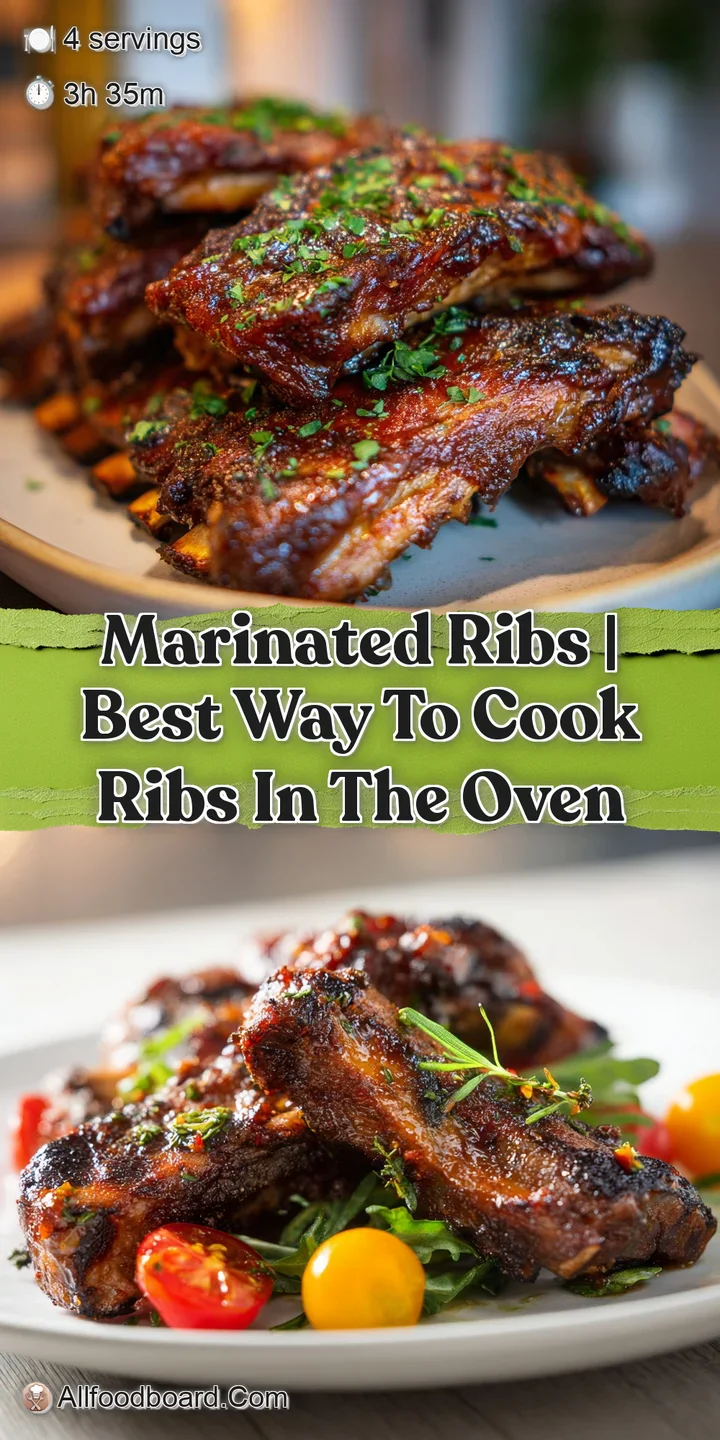
Start by slicing the ribs between the bones into individual portions. This shows off the juicy interior and makes them easier to eat. Arrange them in a "stacked" or "shingled" pattern on a dark platter to make that mahogany crust pop.
For the "Ultimate Pairing," I love serving these alongside a bright, acidic coleslaw or pickled red onions to cut through the richness of the pork. A sprinkle of toasted sesame seeds or thinly sliced green onions adds a fresh, vibrant contrast to the deep, dark colors of the glaze.
If you're feeling adventurous, a side of grilled corn with a lime chili butter provides a dynamic textural counterpoint to the velvety ribs. Always serve with plenty of napkins good ribs are a messy, beautiful experience.
Very High in Sodium
1280 mg 1280 mg of sodium (56% 56% of daily value)
The American Heart Association recommends limiting sodium intake to about 2,300mg per day, with an ideal limit of less than 1,500mg per day for most adults.
Tips to Reduce Sodium in Your Ribs
-
Swap Soy Sauce-20%
Replace the 0.25 cup of soy sauce with a low-sodium soy sauce or coconut aminos. This is the primary source of sodium in your recipe.
-
Dilute the Marinade-15%
Reduce the amount of apple cider vinegar and soy sauce by half, and replace the removed liquid with water. This will dilute the overall sodium concentration.
-
Emphasize Spices
Increase the amounts of smoked paprika, black pepper, and cayenne pepper. This will boost flavor without adding sodium, enhancing the overall taste profile.
-
Lighten the Sweetness-5%
Reduce the dark brown sugar by 1-2 tablespoons. While not a sodium source, it helps balance the flavors, and reducing it can make the other seasonings more prominent.
-
Fresh Garlic Power
Ensure you are using freshly minced garlic rather than garlic powder or salt. Fresh garlic provides potent flavor without contributing to sodium.
Recipe FAQs
What is the best thing to marinate ribs in?
Use a mixture of apple cider vinegar, soy sauce, dark brown sugar, Dijon mustard, minced garlic, and liquid smoke. This combination provides the perfect balance of acidity to tenderize and sugar to create a deep, caramelized flavor profile.
How long are you supposed to let ribs marinate for?
Refrigerate the ribs for 4 to 24 hours. This timeframe allows the marinade ingredients to fully penetrate the meat fibers and develop the best flavor.
What is the best way to cook marinated ribs?
Bake the ribs wrapped in a sealed heavy duty foil pouch at 300°F for 3 hours. After the initial slow cook, finish them by basting with the accumulated juices and broiling at 400°F for 15 minutes to achieve a mahogany crust. If you enjoy perfecting marinade techniques, apply this same flavor building logic to your other grilling projects.
What to soak your ribs in to make them tender?
Use apple cider vinegar as your primary tenderizing agent. The acidity breaks down the connective tissues effectively, especially when the ribs are sealed tightly in foil to lock in the steam during the 3-hour bake.
Do I really need to remove the silverskin membrane from the back of the ribs?
Yes, this is essential. The membrane acts as a barrier that prevents the marinade from reaching the meat, and it remains chewy and tough even after hours of cooking.
Is it true I can open the foil pouch to check on the ribs while they bake?
No, this is a common misconception. Opening the foil pouch during the first three hours releases all the trapped steam, which effectively resets the tenderizing process and will result in tougher meat.
How to reheat leftover ribs without drying them out?
Wrap the ribs in foil with a splash of water and heat them in a 300°F oven for 15 to 20 minutes. Avoid the microwave, as it tends to make the meat texture rubbery rather than succulent.
Oven Baked Marinated Ribs
Ingredients:
Instructions:
Nutrition Facts:
| Calories | 1361 calories |
|---|---|
| Protein | 83 g |
| Fat | 78 g |
| Carbs | 31 g |
| Fiber | 1 g |
| Sugar | 28 g |
| Sodium | 1280 mg |
