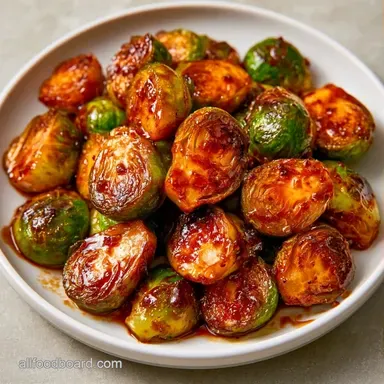
Roasted Maple Balsamic Brussels Sprouts
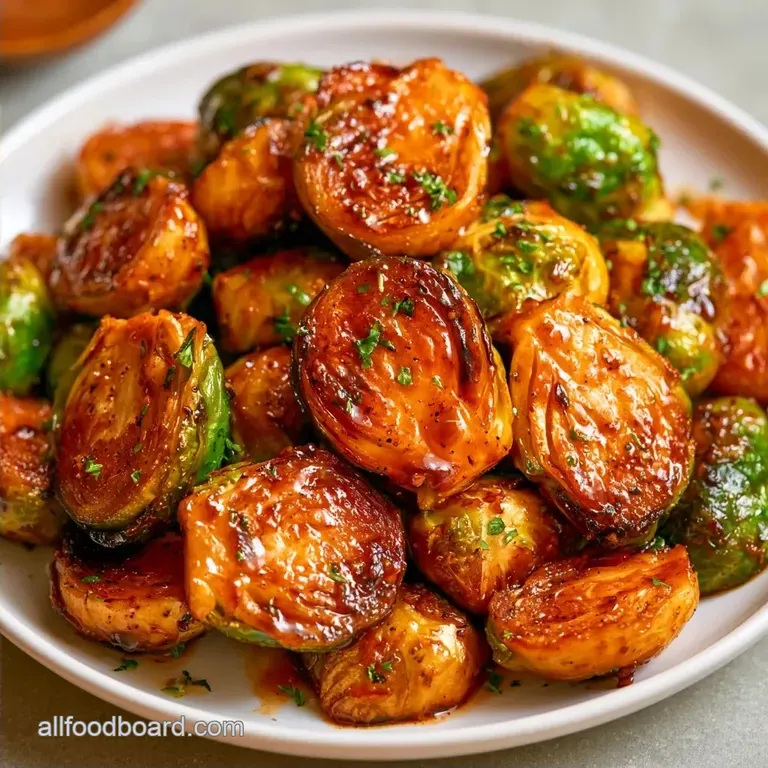
- Time: 10 min active + 25 min roasting
- Flavor/Texture Hook: Charred, mahogany edges with a sticky sweet glaze
- Perfect for: Plant based holiday sides or a vibrant weeknight dinner
- Maple Balsamic Brussels Sprouts
- What You'll Need For This
- The Right Tools For Roasting
- How To Roast Them Step-by-Step
- Avoiding Common Roasting Problems
- Ways To Swap Your Ingredients
- Adjusting The Batch Size
- Keeping Your Sprouts Fresh
- What To Serve With This
- Why Your Other Recipes Fail
- Recipe FAQs
- 📝 Recipe Card
Everything begins with that initial sizzle as the sprouts touch the hot pan. I still remember my first attempt; I tossed everything in the sauce from the start and ended up with a soggy, grey mess that smelled like an old gym bag. It was a total failure.
But once I realized that adding sugar and liquid too early kills any chance of a proper sear, everything changed.
I now rely on pure maple syrup for its rich, woody sweetness. While honey can be overly floral and brown sugar often tastes too much like molasses, maple syrup caramelizes at a rate that perfectly complements the sharp acidity of balsamic vinegar. It turns the sprouts into the most coveted dish at the dinner table.
You can expect a side that perfectly balances salt, acid, and sugar. These Maple Balsamic Brussels Sprouts transcend the usual vegetable side, tasting more like a decadent treat. It is a quick process that simply requires high heat and a small amount of patience.
Maple Balsamic Brussels Sprouts
This recipe focuses on a high contrast of flavors, pitting the bitterness of charred leaves against the sweetness of the syrup. If you usually find sprouts to be too "sulfury," this method solves that by prioritizing caramelization.
High Heat: Using a temperature of 400°F (200°C) quickly removes surface moisture, which is key to achieving those crispy edges.
Two Stage Cooking: By roasting first and adding the glaze at the end, you prevent the sugar from scorching before the sprouts are fully tender.
Cut Side Down: Arranging the sprouts flat against the pan ensures maximum heat contact, the only way to develop a deep brown crust.
Whether you use fresh sprouts or pre-cut options will impact the result. Fresh produce offers the best texture, though pre-trimmed bags are a convenient time saver.
| Option | Prep Time | Texture | Best For |
|---|---|---|---|
| Fresh Sprouts | 10 mins | Maximum crunch | Holiday meals |
| Pre cut/Trimmed | 2 mins | Slightly softer | Quick weeknights |
Now, let's examine how each ingredient functions inside the pan.
What You'll Need For This
Combining balsamic and maple syrup produces a glaze that clings to the sprouts instead of settling at the base of the pan.
| Ingredient | Purpose | Alternatives |
|---|---|---|
| Brussels sprouts | Main component | Cauliflower or Kale |
| Maple syrup | Caramelization | Honey (adds floral notes) |
| Balsamic vinegar | Acidic balance | Apple Cider Vinegar (more tart) |
| Olive oil | Heat conduction | Avocado oil (higher smoke point) |
For optimal results, choose a high grade balsamic vinegar with a syrupy consistency. If you are using a thinner variety, you may need to roast it for one more minute to ensure it thickens.
The Full List:
- 1.5 lb Brussels sprouts, trimmed and halved lengthwise
- 2 tbsp extra virgin olive oilThe goal: Ensures browning without scorching
- 1/2 tsp kosher salt
- 1/4 tsp cracked black pepper
- 3 tbsp pure maple syrupThe goal: Delivers a deep, woody sweetness
- 2 tbsp balsamic vinegarThe goal: Balances the sugar with a tangy edge
- 2 cloves garlic, minced
- 1/4 tsp red pepper flakesThe goal: Adds a hint of spice to counter the syrup
The Right Tools For Roasting
While you don't need high end equipment, a couple of tools make the process much smoother. A large, rimmed baking sheet is a must; if the pan is too small, the sprouts will overlap and steam instead of searing.
I always use parchment paper to keep the maple glaze from sticking to the metal, sparing me from scrubbing the pan for twenty minutes after dinner. A large mixing bowl is also useful for tossing the sprouts without accidentally knocking them onto the floor.
How To Roast Them step-by-step
Stick to these directions to achieve the perfect char. Since the timing is precise, ensure your glaze is prepared before the initial roasting phase ends.
Phase 1: High Heat Setup
- Set your oven to 400°F (200°C) and prepare a baking tray by lining it with parchment paper.
- In a big mixing bowl, toss the halved Brussels sprouts with olive oil, salt, and pepper until they are well coated. Note: A thin layer of oil on every leaf prevents them from drying out
- Arrange the sprouts on the tray with the cut sides facing downward.
Phase 2: The First Roast
- Bake for 15-20 minutes without moving them until the bottoms are charred and the edges turn deep golden brown.
- While the sprouts are in the oven, whisk the maple syrup, balsamic vinegar, minced garlic, and red pepper flakes together in a small bowl.
Phase 3: The Final Glaze
- Take the pan out of the oven, pour the glaze over the sprouts, and stir quickly with a spatula to coat.
- Return them to the oven for another 5-8 minutes until the glaze bubbles and reduces into a sticky coating.
Chef's Note: Embrace the char. Those blackened edges are where the most flavor is concentrated. As long as they aren't burnt through, you've hit the sweet spot.
Avoiding Common Roasting Problems
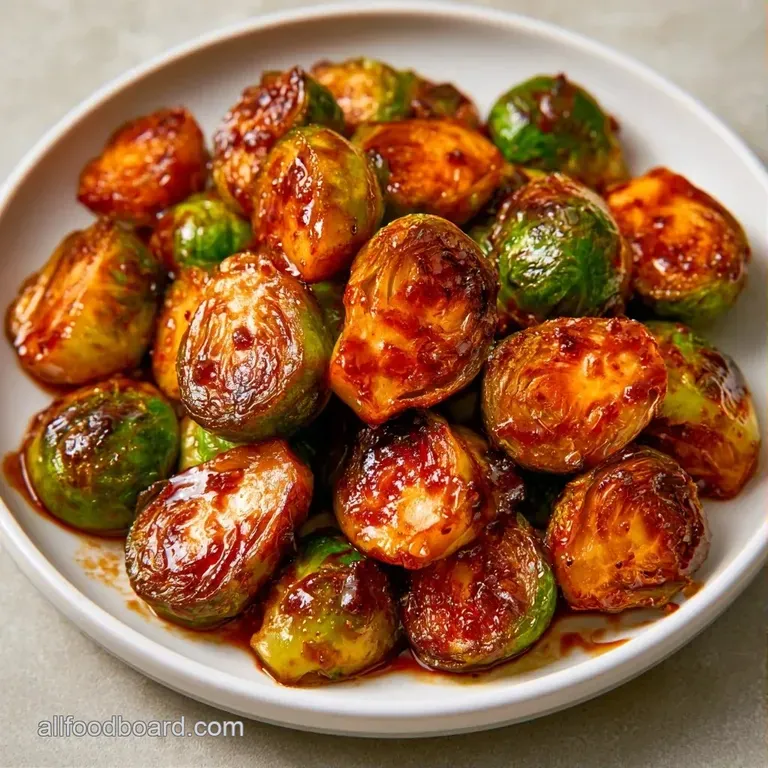
Even with a simple recipe, things can go sideways. Most issues with Maple Balsamic Brussels Sprouts come down to moisture and heat management.
Fixing Soggy Sprouts
Sogginess happens when the sprouts are too crowded. If they touch, they release steam and boil each other. Serious Eats' testing shows that giving each piece space prevents this gummy texture.
Saving A Burnt Glaze
If the glaze smells like burnt sugar, you've left them in too long during the final phase. The sugar in the syrup burns quickly. Pull them out the second the glaze looks glossy and thick.
Stopping The Cabbage Smell
That sulfur smell comes from overcooking the sprouts without enough heat to caramelize the sugars. Ensure your oven is fully preheated to 400°F before the pan goes in.
| Problem | Fix |
|---|---|
| Sprouts are mushy | Use a larger pan to avoid crowding |
| Glaze is too thin | Roast for 2 more minutes at the end |
| Bitter taste | Increase the maple syrup by 1 tbsp |
Ways To Swap Your Ingredients
Once you have the base down, you can play with the toppings. I love adding a handful of dried cranberries or some toasted walnuts during the last 5 minutes of roasting for extra texture.
If you want a savory kick, toss in some diced bacon or pancetta at the start of the roasting process. The rendered fat mixes with the olive oil and makes the Maple Balsamic Brussels Sprouts even richer. For a tangy finish, sprinkle some crumbled goat cheese over the top right before serving.
If you're looking for more plant based inspiration, these pair beautifully with an Autumn Harvest Bowl for a full meal.
Adjusting The Batch Size
Scaling this recipe requires a bit of care with the pan space and the glaze ratio.
Scaling Down (Half Batch): Use a smaller baking sheet and reduce the roasting time by about 20%. Since you're using fewer sprouts, they'll heat up faster. Beat one clove of garlic and use a half tablespoon of vinegar.
Scaling Up (Double Batch): Do not double the recipe in one pan. You'll end up with steamed vegetables. Use two separate baking sheets. Only increase the salt and red pepper flakes by 1.5x, as these flavors can become overpowering in larger quantities.
You might wonder how to adjust the result based on your goal. Use this guide to tweak the final dish.
| Goal | What to change |
|---|---|
| Extra Crispy | Roast for 5 more mins before glazing |
| More Tangy | Add 1 tsp apple cider vinegar to glaze |
| Milder Flavor | Use 1 clove of garlic instead of 2 |
Keeping Your Sprouts Fresh
These keep well in a sealed glass container in the cooler for about 3 to 4 days. The glaze will thicken as it cools, which is normal.
To reheat, avoid the microwave if you can. The microwave makes them soft. Instead, pop them back in the oven at 350°F for 5-10 minutes or use an air fryer at 375°F for 3 minutes. This brings back the crispiness of the edges.
To reduce waste, don't throw away the outer leaves that fall off during trimming. Toss them on the baking sheet with the rest of the sprouts. They turn into "sprout chips" that are the best part of the whole tray.
What To Serve With This
Since these are quite sweet and tangy, they need a neutral partner. I usually serve them alongside a roasted chicken or a thick slice of crusty French bread to soak up the extra glaze.
If you're doing a vegan feast, serve them over a bed of quinoa or a side of mashed cauliflower. The richness of the maple glaze makes them feel like a main event, but they really shine as a supporting act for a protein.
Why Your Other Recipes Fail
Most people treat Maple Balsamic Brussels Sprouts like a stir fry, adding the sauce at the beginning. This is a mistake because of the moisture trap.
When you add syrup and vinegar early, the water in the glaze prevents the sprout's surface from reaching the temperature needed for the Maillard reaction. You end up with a steamed vegetable rather than a roasted one.
Then there is the sugar combustion point. Maple syrup burns quickly. By waiting until the sprouts are already cooked and only glazing them for the final 5-8 minutes, you get the stickiness without the bitter, burnt taste. This simple change in timing is what makes the dish work.
Recipe FAQs
Do you put balsamic on Brussels sprouts before or after cooking?
Add the balsamic glaze after the sprouts have roasted for 15 20 minutes.
Tip: This prevents the sugar from burning before the vegetable is tender.
Is it true that maple syrup is too sweet for Brussels sprouts?
Surprisingly, no. The woody sweetness balances the bitter charred edges perfectly.
Tip: Use pure maple syrup rather than a substitute for the best caramelization.
What balsamic variety works best for this recipe?
A standard balsamic vinegar provides the necessary acidity and thickness.
Tip: Ensure the vinegar is well whisked with the garlic to avoid clumps.
How to prepare the maple glaze for these sprouts?
Whisk together maple syrup, balsamic vinegar, minced garlic, and red pepper flakes in a small bowl.
Tip: If you loved the sweet tart balance here, see how we use a similar acid technique in our classic strawberry pie.
Can adding the glaze at the start of roasting improve the texture?
False. Adding the glaze too early causes the sprouts to steam and become mushy.
Tip: Cut-side down roasting at 400°F is the secret to a charred bottom.
Why are my sprouts not getting crispy?
Overcrowding the baking sheet creates steam instead of roasting.
Tip: Spread them out so no sprouts are touching for maximum airflow.
What is the process to reheat leftovers?
Place them on a baking sheet and heat at 400°F for 5 minutes.
Tip: Avoid the microwave to keep the sticky glaze from becoming soggy.
Maple Balsamic Brussels Sprouts