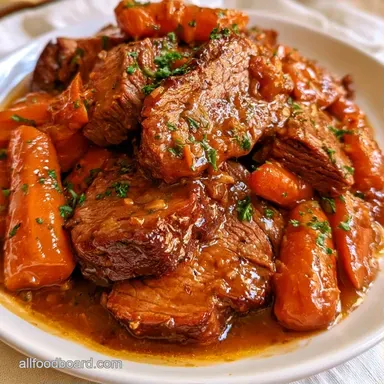
Traditional German Pot Roast: Sauerbraten
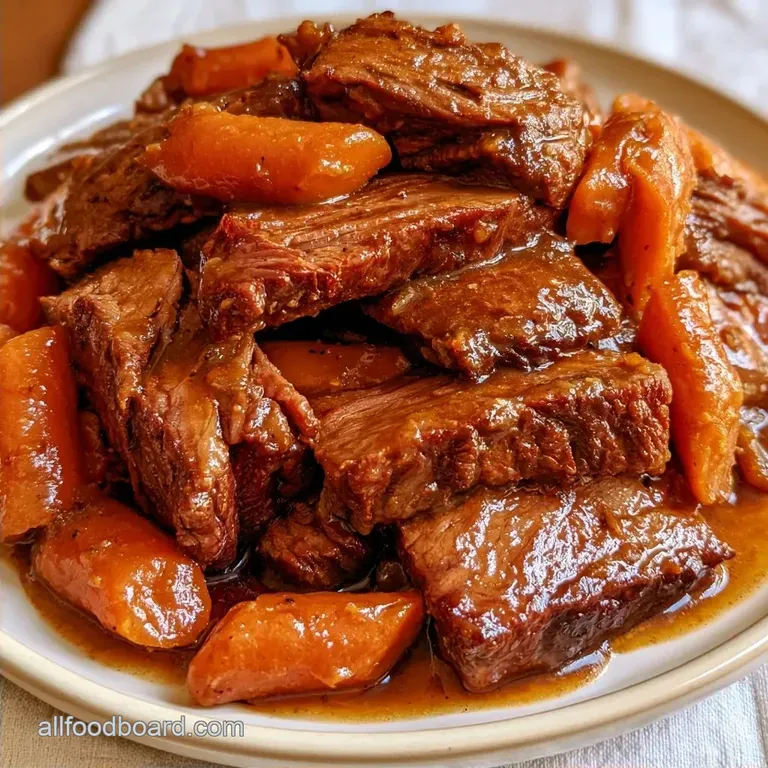
- Time: 20 min active + 24-72 hours marinating
- Flavor/Texture Hook: Tangy, rich gravy with meat that pulls apart with a fork
- Perfect for: Cold weather gatherings or a cozy family feast
The Real Deal German Pot Roast
The aroma of red wine vinegar and cloves is immediate when you open the fridge. It’s a sharp, pickle like scent, but it evolves completely once it hits the hot butter in the pan. I remember my first time making this; I was genuinely worried the meat would turn into a vinegar soaked sponge.
I almost reduced the amount of vinegar, but I decided to stick to the recipe.
By the time the meat came out of the oven, the "sour" quality of this German Pot Roast had disappeared, replaced by a deep, savory brightness that balanced the heavy richness of the beef. It's the kind of dish that fills the home with a cozy, welcoming scent that lures everyone into the kitchen.
This is no ordinary beef stew. We’re aiming for a distinct mahogany crust and a gravy thickened with gingersnaps a surprising technique that tastes incredible. It provides a blend of acidity and sweetness that you won't find in a standard roast.
Why It Actually Works
- The Vinegar Soak: The acid in the vinegar breaks down tough muscle fibers over a few days, making the meat tender before it even hits the heat.
- Gingersnap Thickening: The starch and molasses in the cookies thicken the sauce and counteract the sharp vinegar, creating a balanced gravy.
| Method | Time | Texture | Best For |
|---|---|---|---|
| Oven Braise | 3.5 hours | Consistent & Tender | Traditional flavor |
| Slow Cooker | 8 hours | Very Soft | Set and forget |
This slow process is what gives the dish its character. If you're in a hurry, you might prefer a slow cooker pot roast, but for the authentic tang, the marinating step is non negotiable.
Ingredient Deep Dive
I've found that the cut of meat is the most important part here. Using a chuck roast ensures there's enough fat and connective tissue to keep the meat moist during those long hours in the oven.
| Ingredient | Role | If You Don't Have It |
|---|---|---|
| Beef Chuck Roast | Main protein; adds richness | Bottom round (leaner, drier) |
| Red Wine Vinegar | Provides the signature tang | Apple cider vinegar (milder) |
| Gingersnap Cookies | Thickens and sweetens sauce | Brown sugar + cornstarch |
| German Mustard | Adds a spicy, pungent kick | Dijon mustard |
You can find German mustard at most specialty shops, but a strong Dijon works too. The key is that it needs to be a mustard with some "bite" to stand up to the beef.
What You'll Need
This recipe is straightforward and doesn't require specialized equipment. A heavy bottomed Dutch oven is the ideal choice for its consistent heat retention and ability to move directly from the stovetop into the oven.
- Dutch oven (5-7 quart)
- Non aluminum pot for marinating Note: Vinegar reacts with aluminum, which can leave a metallic taste
- Large mixing bowl
- Paper towels (for drying the meat)
- Fine mesh strainer or food processor (for the cookies)
The Cooking Process
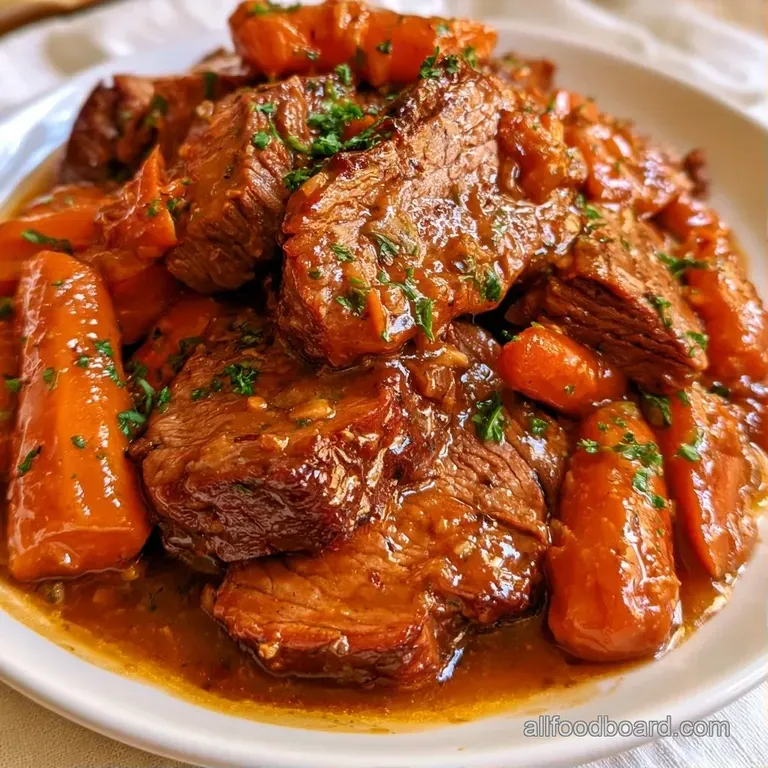
Phase 1: The Flavor Soak
In a non-aluminum pot, mix the red wine vinegar, water, diced carrots, onion, peppercorns, bay leaves, and cloves. Fully immerse the 3 lb beef chuck roast, cover, and refrigerate for 24 to 72 hours. Rotate the meat daily to ensure the marinade coats all surfaces.
Phase 2: Building the Crust
Take the roast out of the brine and pat it completely dry using paper towels. Note: Wet meat won't brown, it'll just steam. Melt 3 tbsp unsalted butter in a Dutch oven over medium heat. Sear all sides of the roast
Phase 3: The Slow Braise
Stir in 2 cups beef broth, 2 tbsp tomato paste, and 1 tbsp German mustard. Ensure the roast is partially submerged. Cover and place in the oven at 325°F (160°C). Roast for about 3.5 hours
Phase 4: Finishing the Sauce
Lift the meat out and place it on a plate. Whisk 6 8 crushed gingersnap cookies (powdered) into the remaining braising liquid. Simmer for several minutes
Phase 5: Adding the Veggies
Add the cabbage wedges and 3 large carrots, cut into chunks. Simmer in the liquid
Fixing Common Issues
Nailing the balance of a German Pot Roast can be a challenge the first time around. Most common issues involve the sauce's consistency or the marinade's acidity.
Sauce is Too Thin
This typically results from using too much broth or gingersnap cookies that aren't finely ground. While the flavor remains intact, the gravy won't cling to the meat properly.
Flavor is Overpoweringly Sour
If the sauce tastes too sharp, you likely need more cookie powder or a bit more simmering time. The sweetness from the gingersnaps is meant to balance out that vinegar punch.
Meat is Tough or Rubbery
This is almost always due to undercooking. If the beef doesn't pull apart easily, it needs more time in the heat. While USDA guidelines state a safe internal temperature of 145°F, a braise needs to reach roughly 200°F for the collagen to fully melt.
| Problem | Fix |
|---|---|
| Sauce too thin | Add 1-2 more crushed gingersnaps |
| Too sour | Simmer sauce longer or add a pinch of brown sugar |
| Meat is tough | Return to oven for another 30-60 mins |
Finally, if the sauce remains watery after adding the cookies, a small amount of cornstarch slurry can help you reach the desired thickness.
Dietary Adaptations
This German Pot Roast is a hearty classic, but it can easily be customized to suit different dietary needs.
- Keto Friendly: Omit the gingersnap cookies. Instead, use 1/2 tsp xanthan gum and a pinch of monk fruit sweetener or stevia to thicken and sweeten the sauce.
- The "Quick Start" Method: If you can't wait 24 hours, simmer the marinade components for 15 minutes, let them cool, and soak the meat for 4 hours. While it won't be quite as tender, it's a great alternative.
- Cabbage Free: Replace the cabbage with parsnips or rutabaga. These roots hold up well during the long cooking process and absorb the flavors perfectly.
For a modern twist on the traditional pairing, try serving the meat with a side of huckleberry sauce to add a sweet and tart contrast.
Preservation Secrets
This German Pot Roast is even more delicious the following day once the flavors have had more time to meld.
Place any leftovers in a closed container and keep them in the fridge for up to 3 days. Warm it up gently on the stove over medium low heat, adding a touch of beef broth to loosen the sauce.
For freezing, ensure the meat and sauce are completely cooled. Store for up to 3 months. Thaw in the fridge overnight and then reheat in the oven at 300°F.
Chef's Tip: Don't toss the remaining marinade in the pot. Strain it to use as a base for a zesty beef soup or use it to brine other meats.
How to Serve and Enjoy
The presentation of a German Pot Roast is all about the contrast between the dark meat and the bright vegetables.
Slice the roast into thick rounds and arrange them on a platter. Surround the meat with the braised cabbage and carrots. Pour the thickened, mahogany colored gravy over everything.
- - Potato Dumplings (Knödel)
- These are the traditional choice and act like sponges for the sauce.
- - Mashed Potatoes
- A great alternative if you can't find dumplings.
- - Red Cabbage
- Even though there's cabbage in the pot, a side of sweet and sour braised red cabbage adds a beautiful pop of color.
Decision Shortcut
- Extra tang? → add 1 tbsp more vinegar to the marinade
- Thicker gravy? → use 2 extra gingersnap cookies
- More depth? → add 1 tsp of smoked paprika during the sear
Cooking Myths
There are a few things people always say about roasts that just aren't true.
First, people claim that searing the meat "seals in the juices." It doesn't. You actually lose some moisture during the sear. However, we do it because the browning creates a complex flavor that you can't get from boiling or steaming.
Second, some believe that the vinegar will make the meat "mushy." While too much acid for too long can break down the fibers too far, 24-72 hours is the sweet spot. It creates a tender bite without losing the structure of the beef.
Trust me on this don't skip the drying step before searing. If the meat is damp, the butter will splatter, and you'll get a grey roast instead of a dark brown one. It's a mistake I made early on, and it's the difference between a bland meal and a great German Pot Roast.
Recipe FAQs
What cut of beef is used for this roast?
A 3 lb beef chuck roast is the ideal choice for this recipe.
Tip: Look for a piece with a good amount of marbling to ensure the meat stays juicy during the long braise.
How to achieve the signature tender texture?
Submerge the beef in a mixture of red wine vinegar, water, and aromatics for 24 to 72 hours.
Tip: Turn the meat once daily to ensure the marinade penetrates the roast evenly.
Is it true that a few hours of marinating is enough?
That's a myth. The beef requires a minimum of 24 hours to properly break down the tough muscle fibers.
Tip: Plan your meal ahead of time and start the soak up to three days before you intend to cook.
How to thicken the gravy using the traditional method?
Whisk crushed gingersnap cookie powder into the cooking liquid after removing the meat from the oven.
Tip: Grind the cookies into a very fine powder to prevent clumps and ensure a glossy sauce.
Can I substitute the red wine vinegar?
You can use another acidic base, but red wine vinegar is essential for the authentic tangy profile.
Tip: If you enjoy balancing sharp and rich flavors, see how we use a similar creamy tomato sauce approach to balance heat in other dishes.
Why is patting the meat dry essential before searing?
Removing surface moisture allows the beef to develop a deep, dark mahogany crust in the butter.
Tip: Use several paper towels to ensure the roast is bone dry, otherwise the meat will steam instead of brown.
Do the vegetables go in at the beginning of the braise?
Add cabbage wedges and carrot chunks to the sauce only after the meat is fork tender and removed.
Tip: Simmer them just until tender to prevent the vegetables from overcooking and turning into mush.
How to cook this roast in a slow cooker?
Transfer the seared meat and liquids to the pot and cook on low for 8 hours.
Tip: Still perform the initial sear in a Dutch oven to lock in the mahogany crust before transferring to the crock pot.
German Pot Roast Recipe