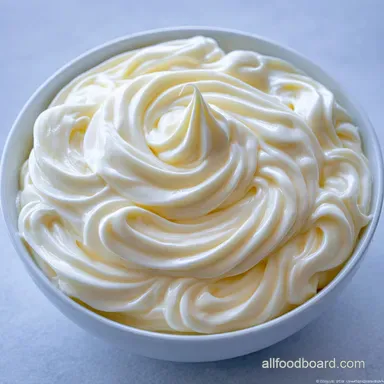
Homemade Mayonnaise: Thick and Velvety
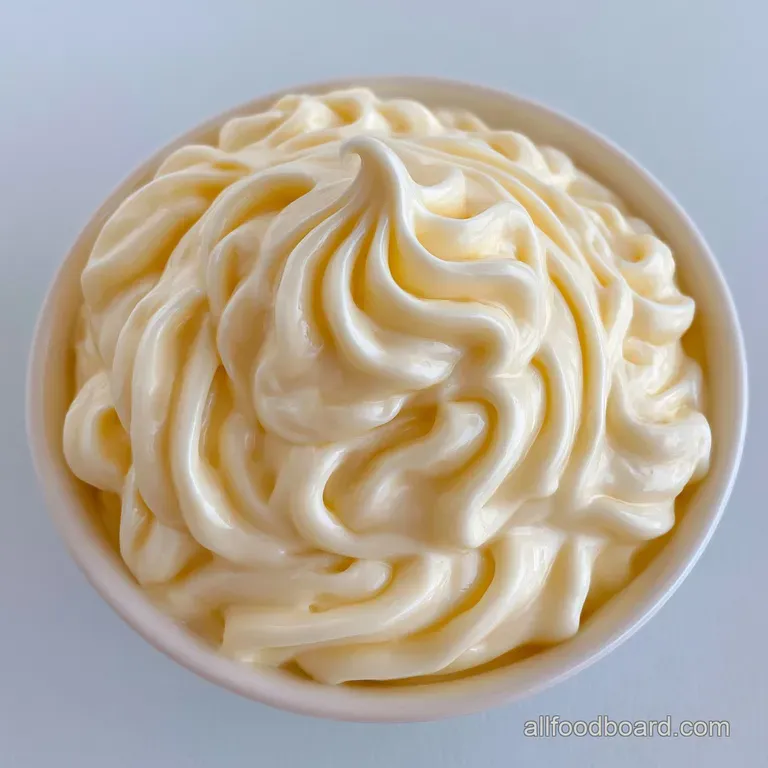
- Time:5 minutes active = Total 5 minutes
- Flavor/Texture Hook: Thick, velvety, and tangy
- Perfect for: Quick weeknight condiments, keto diets, or sandwich upgrades
- Easy Homemade Mayonnaise in Five Minutes
- Forget the Whisking Myths
- Component Analysis
- What Goes Inside
- The Basic Tool Kit
- Step by Step Guide
- Fixing Common Mayo Mishaps
- Troubleshooting Common Issues
- Customizing Your Flavors
- Adjusting Batch Sizes
- Debunking Kitchen Myths
- Keeping it Fresh
- Great Pairings and Sides
- Recipe FAQs
- 📝 Recipe Card
Easy Homemade Mayonnaise in Five Minutes
That high pitched whir of the immersion blender is the sound of victory. I remember the first time I tried to make this the "old way" with a whisk and a bowl. I spent twenty minutes dripping oil in, drop by drop, only for the whole thing to separate into a greasy soup right at the end.
I almost threw the bowl across the kitchen. It felt like a personal failure, but the truth is, the manual method is just tedious and prone to breaking.
Forget the idea that you need an hour of patience or a culinary degree to get this right. You don't need to stand there for ages praying to the emulsion gods. Once I switched to the blender jar method, everything changed.
This version of Homemade Mayonnaise is virtually foolproof as long as you follow the "stay still" rule.
Trust me on this, once you taste the difference between this and the store-bought jars, you'll never go back. It's a brighter, cleaner taste that doesn't have that weird metallic aftertaste from preservatives. We're talking about a rich, velvety spread that makes a simple piece of toast feel like a treat.
Let's crack on.
Forget the Whisking Myths
Most people think they need to slowly incorporate oil to prevent the sauce from splitting. While that's true for hand whisking, a blender does the work for you by creating thousands of tiny oil droplets in seconds.
- Rapid Binding
- The blender blades spin so fast they mechanically force the oil into the egg, creating an instant bond.
- Temperature Stability
- Using room temperature ingredients prevents the fat from seizing, which is why the egg shouldn't be cold.
- Acid Catalyst
- The lemon juice doesn't just add tang, it helps stabilize the protein bonds in the egg yolk.
- Oil Viscosity
- A neutral oil like avocado oil allows for a smoother blend without overwhelming the other flavors.
If you're curious about the deeper mechanics of how fats and liquids bond, Serious Eats has some great breakdowns on stable emulsions.
| Method | Time | Texture | Best For |
|---|---|---|---|
| Immersion Blender | 5 minutes | Very Thick/Smooth | Busy weeknights |
| Hand Whisking | 20 minutes | Airy/Lighter | Traditionalists |
| Food Processor | 10 minutes | Dense/Creamy | Large batches |
Right then, before we get into the gear, let's look at what's actually happening with the ingredients. It's not just about mixing things together; it's about how they interact.
Component Analysis
| Ingredient | Science Role | Pro Secret |
|---|---|---|
| Egg Yolk | Emulsifier | Use room temp for a faster bind |
| Lemon Juice | Stabilizer | Freshly squeezed is non negotiable |
| Avocado Oil | Lipid Base | Keeps the flavor neutral and clean |
| Dijon Mustard | Binding Aid | Adds a subtle depth and helps the oil stick |
What Goes Inside
I've found that using avocado oil is the secret to a keto homemade mayonnaise that doesn't taste like a salad dressing. It has a high smoke point and a neutral profile, so you actually taste the lemon and egg.
- 1 large (50g) room temperature egg Why this? Provides lecithin for the bond
- 1 tbsp (15ml) fresh lemon juice Why this? Cuts through the richness
- 1 tsp (5g) Dijon mustard Why this? Acts as a secondary emulsifier
- 1/4 tsp (1.5g) fine sea salt Why this? Enhances all other flavors
- 1/8 tsp (0.75g) white pepper Why this? Adds heat without black specks
- 1 cup (237ml) avocado oil Why this? Healthy fats, neutral taste
If you don't have avocado oil, you can use a light olive oil, but be careful. Some extra virgin oils can turn bitter when blended at high speeds.
| Original Ingredient | Substitute | Why It Works |
|---|---|---|
| Avocado Oil (1 cup) | Grapeseed Oil (1 cup) | Neutral flavor and similar viscosity |
| Lemon Juice (1 tbsp) | Apple Cider Vinegar (1 tbsp) | Similar acidity. Note: Adds a fruitier, fermented note |
| Dijon Mustard (1 tsp) | Yellow Mustard (1 tsp) | Basic emulsion aid. Note: Less complex flavor than Dijon |
| Egg (1 large) | Aquafaba (3 tbsp) | Chickpea water mimics egg proteins. Note: Thinner result |
Now, the gear. You don't need a fancy kitchen setup for a quick and simple homemade mayo. Just a few basics will do.
The Basic Tool Kit
The most critical piece of equipment here is the jar. You need a container that is just slightly wider than the head of your immersion blender. If the jar is too wide, the blender will just move the ingredients around instead of pulling them down into the blades.
I usually use a wide mouth Mason jar or the tall beaker that comes with the blender.
A standard immersion blender (like a KitchenAid or Ninja) is the engine. Make sure the blades are sharp and the guard is clean. You'll also want a small measuring spoon set for the salt and pepper, as a tiny bit too much white pepper can make the whole batch taste "dusty".
Step by step Guide
This is where most people mess up. The key is the order of operations. You aren't mixing these in a bowl and then blending; you're layering them.
- Pour the avocado oil into the bottom of a tall, narrow glass jar first. Note: This ensures the oil is ready to be pulled up
- Add the egg, lemon juice, mustard, salt, and pepper on top of the oil. Do not stir; allow the egg to settle completely at the bottom. Note: The egg must be the first thing the blades hit
- Place the immersion blender head firmly onto the bottom of the jar, ensuring the egg is completely covered.
- Turn the blender on high speed and hold it perfectly still for 15-20 seconds until a thick, white cream forms at the base and climbs up the sides of the blade.
- Slowly tilt and lift the blender head upward in a gradual motion to pull the remaining oil down into the emulsion until the entire mixture is uniform, opaque, and velvety.
Chef's Tip: If you're struggling to get it to start, try a "pulsing" motion for the first 3 seconds before holding it steady. This helps break the egg yolk membrane.
Fixing Common Mayo Mishaps
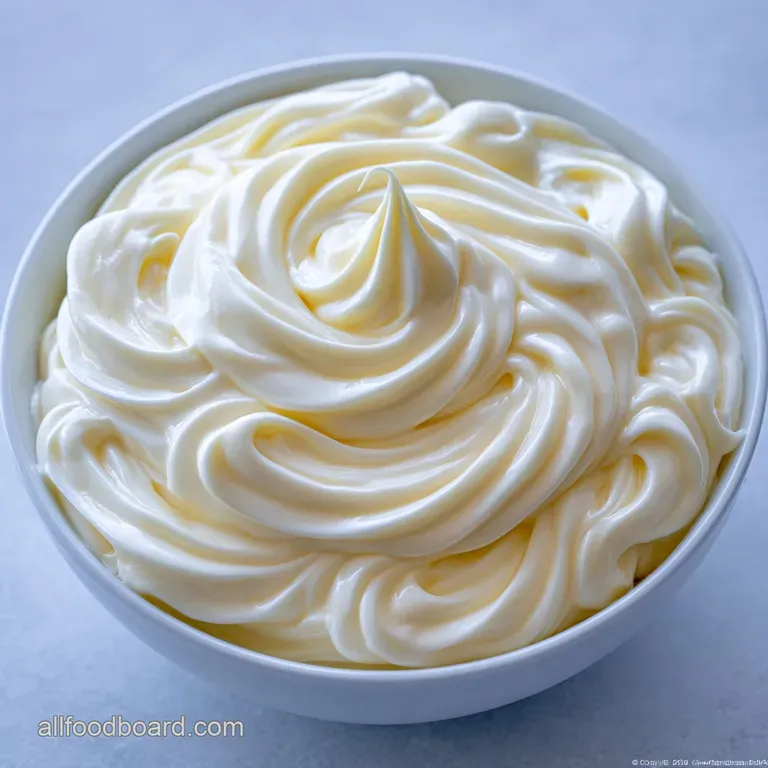
Even with a homemade mayonnaise recipe this simple, things can go sideways. Usually, it's because of temperature or movement.
Troubleshooting Common Issues
| Issue | Solution |
|---|---|
| Why Your Mayo Stayed Liquid | This usually happens if you lifted the blender too early. If the "white base" hasn't fully formed, the oil hasn't bound to the egg. It'll just look like a cloudy soup. |
| Why the Texture is Grainy | Graininess is often a sign of cold ingredients. If the egg was straight from the fridge, the oil can't integrate as smoothly, leading to tiny clumps of fat. |
| Why the Flavor is Too Sharp | Too much lemon juice or vinegar can actually break the emulsion if the ratio of fat to acid is off. It will taste great, but it won't be thick. |
Quick Fix Checklist:
- ✓ Egg is truly room temperature
- ✓ Blender head is flush against the bottom
- ✓ Oil is poured in first
- ✓ High speed used throughout
- ✓ Lifted the blender slowly
Customizing Your Flavors
Once you have the best homemade mayonnaise recipe down, you can use it as a base for a dozen other things. I love making a batch on Sundays and then splitting it into three small jars for the week.
Creating a Garlic Aioli
Just fold in two cloves of minced garlic and a pinch of smoked paprika. If you want it more intense, roast the garlic first until it's soft and sweet.
Crafting a Chipotle Mayo
Mix in a tablespoon of adobo sauce from a can of chipotle peppers. This is incredible on fish tacos or a turkey sandwich.
Optimizing for Keto
This version is already keto friendly since we use avocado oil. To keep it strictly low carb, avoid adding honey or maple syrup for "sweet" variants.
If you're looking for other ways to use this, it's a fantastic binder for my Classic Deviled Eggs recipe, giving the filling a much richer mouthfeel.
| Desired Result | Action | Impact |
|---|---|---|
| Tangier Taste | Add 1 tsp extra lemon | Brighter, sharper profile |
| Thicker Consistency | Reduce lemon by 1/2 tsp | Heavier, more spreadable |
| Lighter Color | Use 1 egg white instead of whole egg | Paler, less rich |
Adjusting Batch Sizes
Making a double batch of homemade mayonnaise in blender is tempting, but you have to be careful with the physics of the jar.
Scaling Down (1/2 Batch): If you only need a small amount, use a smaller, narrower jar. If you use the same large jar for a half batch, the blender head might not be able to create enough pressure to start the emulsion. Beat one egg in a cup first, then use half of it.
Scaling Up (2x-4x Batch): Don't just quadruple the ingredients in one go. Work in batches. If you put too much oil in a narrow jar, the blender will struggle to pull the top layers down, and you'll end up with a layer of oil floating on top.
Also, keep the salt to 1.5x when doubling; you can always add more, but you can't take it out.
Debunking Kitchen Myths
There are a lot of old school rules about how to make mayonnaise at home that just don't apply to modern tools.
The "Slow Drip" Myth: People say you must add oil one drop at a time. This is only for hand whisking. With an immersion blender, the sheer speed creates the emulsion regardless of how fast the oil enters the mix.
The "Olive Oil Only" Myth: Some claim only olive oil works. In reality, neutral oils like avocado oil are better because they don't have the strong, sometimes bitter taste that comes with high speed blending of EVOO.
The "Cold Egg" Myth: You'll see recipes that say cold eggs are fine. They aren't. According to USDA FoodData, fats behave differently at various temperatures, and room temp eggs ensure the oil incorporates without splitting.
Keeping it Fresh
Since this has no preservatives, you can't leave it on the counter. Put your Homemade Mayonnaise in a glass jar with a tight lid and keep it in the fridge. It will stay velvety and fresh for about 7 to 10 days.
If you see a thin layer of oil on top after a few days, don't worry. Just give it a quick stir with a spoon to bring it back together. You can't freeze this, as the emulsion will shatter and turn into a greasy mess once thawed.
Zero Waste Tip: Don't throw away the jar you used to make the mayo. If you have leftover avocado oil in the bottom of a bottle, use it for the base of your next batch.
Also, any "broken" mayo that didn't thicken can be used as a marinade for chicken or fish, the oil and acid are still there, they just aren't bonded.
Great Pairings and Sides
This spread is the secret weapon for any sandwich, but it really shines when paired with savory, salty foods. I love using it as a dip for homemade fries or as a base for a creamy coleslaw.
For a real feast, try serving this alongside some Traditional Potato Salad. The tanginess of the Homemade Mayonnaise cuts through the starch of the potatoes perfectly. You can even stir a bit of the mayo into the potato salad to give it a smoother, more professional finish.
Right then, you're all set. Once you stop fearing the "split" and trust the blender, you'll realize that making your own condiments is the easiest way to make a basic meal feel special. Just remember: hold it still, lift it slow, and keep those eggs at room temperature. Enjoy!
Recipe FAQs
How do I make homemade mayonnaise?
Pour avocado oil into a tall glass jar first. Add the egg, lemon juice, mustard, salt, and pepper, then blend on high with an immersion blender, holding it still for 20 seconds before slowly lifting.
Is it true that homemade mayonnaise is unsafe to eat?
No, this is a common misconception. It is safe for consumption as long as you use fresh eggs and store the final product in the refrigerator.
What ingredients are needed for this mayonnaise?
You need avocado oil, a room temperature egg, fresh lemon juice, Dijon mustard, fine sea salt, and white pepper. These specific components ensure a stable, creamy emulsion.
Can I use homemade mayonnaise on my skin for dryness?
No, do not apply this to your skin. This is a food product containing salt and acid that can irritate the skin or clog pores.
Why did my mayonnaise stay liquid?
You likely lifted the immersion blender too early. The oil only binds to the egg once a thick white cream forms at the base; lifting too soon prevents a stable emulsion.
Is it okay to use cold eggs for this recipe?
No, use room temperature eggs. Cold ingredients can prevent the oil from integrating smoothly, which often leads to a grainy texture.
What are the best ways to use homemade mayonnaise?
Use it as a rich base for sandwiches or creamy dips. It is the ideal binder for a classic egg salad.
Homemade Mayonnaise in 5 Minutes