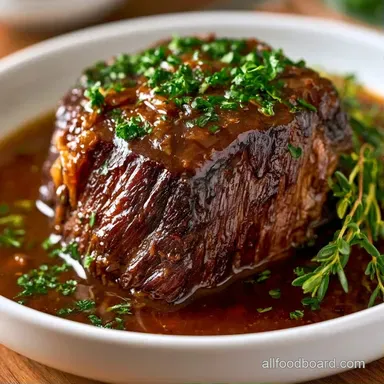
Classic Slow Cooker Pot Roast: Fork Tender
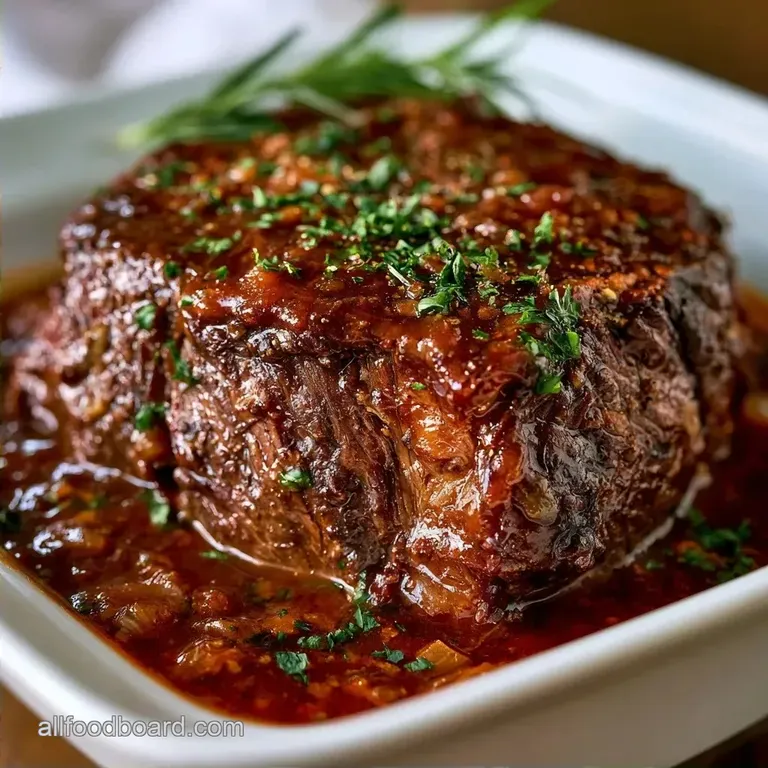
- Time:15 minutes active + 8 hours cooking = Total 8 hours 30 mins
- Flavor/Texture Hook: Fork tender beef with a silky, reduced glaze
- Perfect for: Cozy Sunday dinners or stress free meal prep
- Classic Slow Cooker Pot Roast
- Planning Your Cooking Flow
- The Secret To Tender Beef
- Essential Roast Ingredients
- Required Kitchen Gear
- Step By Step Process
- Solving Common Roast Issues
- Troubleshooting Common Issues
- Dietary Tweaks And Swaps
- Roast Myths Debunked
- Storage And Freezing Tips
- Plating Your Roast Beef
- Recipe FAQs
- 📝 Recipe Card
Classic Slow Cooker Pot Roast
That loud, aggressive sizzle when the beef hits the hot cast iron is where the magic starts. I remember the first time I tried to skip the searing step because I was in a rush. The meat cooked through, sure, but it looked grey and tasted flat. It was a huge letdown. Now, I never skip that deep browning process.
The smell of caramelized beef filling the kitchen is practically a signal to the rest of the house that something special is happening.
The real hero here is the chuck roast. I've tried using leaner cuts, but they just don't hold up. You need those ribbons of fat and connective tissue to melt down over eight hours. If you use a lean roast, you end up with something dry and woody.
With a chuck roast, you get that melt in-the mouth texture that makes this a true comfort food.
Trust me, this Classic Slow Cooker Pot Roast is all about patience. We're not just cooking meat; we're breaking down tough fibers into something buttery. By layering the vegetables underneath, they steam in the beef juices, soaking up all that savory goodness.
It's a simple process, but when you get the details right, it's a total winner for any family dinner.
Planning Your Cooking Flow
Getting this right is all about the timeline. I like to treat this as a three phase operation so I'm not rushing at the end.
First, you've got your prep and sear. This is the most active part of the day. It takes about 15 minutes to get everything seasoned and browned. Once the meat is seared and the veggies are layered, the hard part is over.
Next comes the long haul. The beef sits in the slow cooker for 8 hours. I usually set this up in the morning. It's the best feeling knowing that while I'm working or running errands, the house is slowly filling with a savory aroma.
Finally, there's the finish. You can't just pull the meat out and slice it immediately. It needs to rest for 15 minutes to keep those juices inside. While it rests, you can take the remaining liquid and simmer it on the stove for 10 minutes.
This turns a thin broth into a velvety glaze that ties everything together.
The Secret To Tender Beef
I used to think slow cookers just "cooked" food, but there's actually a bit of a trick to why this works.
Collagen Breakdown: The low heat slowly turns tough collagen into gelatin. This is what gives the meat that silky, succulent feel instead of being chewy.
Acidic Balance: Adding apple cider vinegar helps break down the muscle fibers. It doesn't make the roast taste like vinegar, but it adds a brightness that cuts through the heavy fat.
Vegetable Insulation: Placing the carrots and potatoes at the bottom creates a natural rack. This prevents the meat from boiling in its own juices and lets the heat circulate more evenly.
Moisture Retention: Using bone broth instead of regular stock adds more body to the sauce. The gelatin in the bone broth creates a richer mouthfeel in the final glaze.
| Method | Time | Texture | Best For |
|---|---|---|---|
| Slow Cooker | 8 hours | Velvety / Falling apart | Hands off family meals |
| Oven Braise | 3-4 hours | Firm but tender | Faster turnaround |
| Stovetop | 2-3 hours | More fibrous | Small batches |
Essential Roast Ingredients
To get that deep, savory flavor, you need a few specific items. Don't bother with low-fat alternatives here; the fat is where the flavor lives.
| Ingredient | Science Role | Pro Secret |
|---|---|---|
| Beef Chuck Roast | Primary Protein | Look for heavy white marbling |
| Apple Cider Vinegar | Fiber Tenderizer | Use raw, unfiltered for more depth |
| Tomato Paste | Umami Booster | Sauté it briefly for more sweetness |
| Bone Broth | Body & Richness | Low sodium lets you control the salt |
The Main Components
- 3 lb Beef Chuck Roast Why this? Best fat to lean ratio for slow cooking
- 2 tbsp Avocado Oil Why this? High smoke point for a hard sear
- 1 tsp Coarse Sea Salt Why this? Better crust formation than table salt
- 1 tsp Cracked Black Pepper Why this? Bold, spicy warmth
- 2 cups Low Sodium Beef Bone Broth Why this? Adds collagen for a thicker sauce
- 2 tbsp Apple Cider Vinegar Why this? Breaks down tough connective tissue
- 3 cloves Garlic, smashed Why this? Smashed cloves release more oils
- 1 tbsp Tomato Paste Why this? Deepens the color and savory notes
- 2 sprigs Fresh Rosemary Why this? Woody aroma that stands up to beef
- 3 sprigs Fresh Thyme Why this? Adds a subtle, earthy sweetness
- 1 lb Carrots, cut into 2 inch chunks Why this? Large chunks avoid turning to mush
- 1.5 lb Yukon Gold Potatoes, halved Why this? Holds shape better than Russets
- 1 large Yellow Onion, wedged Why this? Adds sweetness and aromatic base
Smart Swaps
| Original Ingredient | Substitute | Why It Works |
|---|---|---|
| Avocado Oil | Grapeseed Oil | Similar high smoke point. Note: Neutral taste |
| Yukon Gold Potatoes | Parsnips | Similar texture. Note: Adds a peppery, sweeter flavor |
| Beef Bone Broth | Beef Stock + 1 tsp Gelatin | Mimics the body. Note: Less rich than bone broth |
| Fresh Rosemary | Dried Rosemary (1 tsp) | Concentrated flavor. Note: Less aromatic than fresh |
Right then, once you've got your ingredients prepped, make sure your slow cooker is clean and ready. I always keep my cast iron skillet handy for the sear because it holds heat better than any other pan.
Required Kitchen Gear
You don't need a professional kitchen for this, but a few specific tools make it easier.
- Slow Cooker: A 6 quart model is usually the sweet spot for a 3 lb roast.
- Cast Iron Skillet: Essential for that deep, brown crust.
- Meat Thermometer: Useful if you're nervous about doneness, though time is the main guide here.
- Slotted Spoon: For moving the veggies without taking all the liquid.
- Paper Towels: Crucial for drying the meat before searing.
Step by step Process
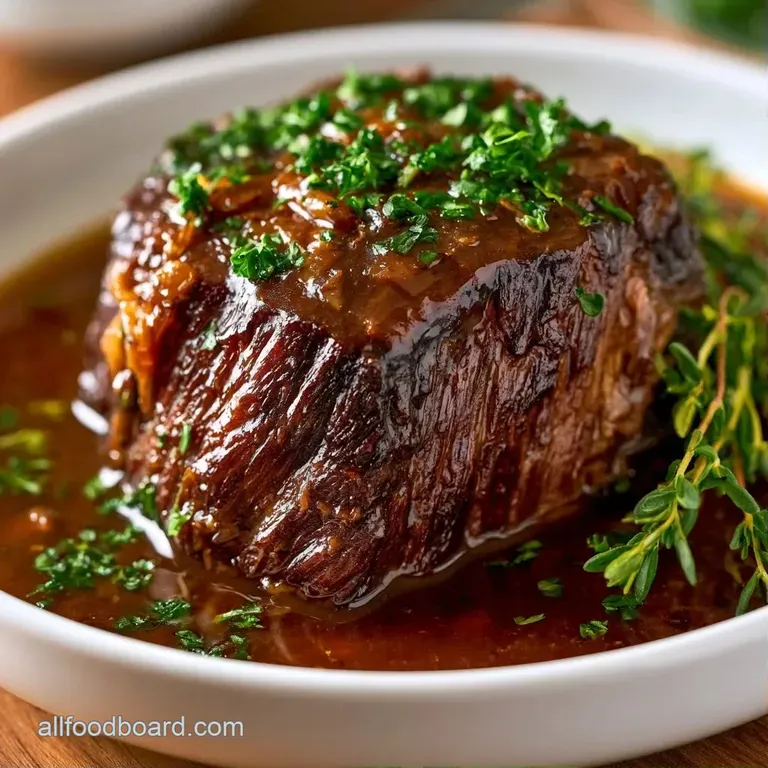
Let's crack on with the cooking. Remember to keep your heat steady and don't rush the browning phase.
- Pat the beef chuck roast completely dry with paper towels and season generously with salt and pepper. Note: Wet meat steams instead of searing
- Heat avocado oil in a cast iron skillet over medium high heat. Sear the meat for 4–5 minutes per side until a deep brown crust forms, then transfer to the slow cooker.
- Layer the potatoes, carrots, and onions at the bottom and sides of the slow cooker, placing the seared roast on top. Note: This protects the veggies from overcooking
- Whisk together the beef bone broth, apple cider vinegar, and tomato paste in a small bowl, then pour the mixture over the meat.
- Tuck the smashed garlic cloves and fresh herb sprigs into the pot. Cover and cook on Low for 8 hours.
- Remove the roast to a cutting board and let it rest for 15 minutes. Note: This lets the juices redistribute
- Use a slotted spoon to move vegetables to a platter. Optional: simmer the remaining liquid in a saucepan for 10 minutes until it thickens into a glossy glaze.
- Slice the beef against the grain and serve with the reduced glaze.
Chef's Tip: If you want an even deeper flavor, add a teaspoon of espresso powder to the broth mixture. It doesn't taste like coffee, but it makes the beef taste "beefier" and darker.
Solving Common Roast Issues
Even with a Classic Slow Cooker Pot Roast, things can occasionally go sideways. Most of the time, it's just a matter of heat or timing.
Troubleshooting Common Issues
| Issue | Solution |
|---|---|
| Why Your Meat is Tough | If the beef is rubbery, it usually means it hasn't cooked long enough. I've made this mistake before trying to pull it out at 6 hours because it looked done. |
| Why Your Sauce is Watery | This happens if the vegetables release too much moisture or if you used too much broth. The fix is simple: reduction. Pour the liquid into a pan and boil it down. |
| Why Your Veggies are Mushy | If the carrots are disintegrating, they were likely too small or placed directly under the meat where the heat is most intense. Stick to 2 inch chunks to ensure they stay intact. |
Common Mistakes Checklist
- ✓ Did you pat the meat dry? (Essential for the crust)
- ✓ Did you sear every single side? (Including the ends)
- ✓ Are the veggies on the bottom? (Prevents meat from boiling)
- ✓ Did you let it rest for 15 minutes? (Prevents juice loss)
- ✓ Did you slice against the grain? (Ensures tenderness)
Dietary Tweaks And Swaps
This recipe is naturally quite clean, but you can easily shift it to fit your needs.
For a low carb or keto version, simply swap the potatoes for cauliflower florets or radishes. Radishes are a secret weapon here; when slow cooked, they lose their bite and taste remarkably like potatoes. Since we're using a slow cooker, this approach is similar to how I handle my Champion Chili, where the long simmer time allows the flavors to meld without needing sugar or thickeners.
If you're following a Paleo or Whole30 plan, this recipe is already almost there. Just ensure your beef bone broth is additive free and avoid any cornstarch if you decide to thicken the sauce.
For those looking for a low sodium option, swap the beef bone broth for water with a splash of coconut aminos. You'll lose a bit of the richness, but the apple cider vinegar and garlic will still provide plenty of punch. If you find yourself with leftovers, you can shred the beef and stir it into a Hearty Spaghetti Sauce for a high protein twist on a classic pasta night.
Roast Myths Debunked
There are a few things people always say about pot roast that just aren't true.
Searing seals in juices. This is a classic myth. Searing doesn't create a waterproof seal; in fact, meat loses more moisture during the searing process. We sear for the flavor that's the Maillard reaction creating a savory crust not to keep the meat moist.
More liquid equals more tenderness. Actually, too much liquid can turn your roast into a boiled piece of beef. You only need enough liquid to reach about halfway up the roast. The meat and vegetables will release their own juices as they cook.
Storage And Freezing Tips
A Classic Slow Cooker Pot Roast is one of those rare dishes that actually tastes better the next day. The flavors have more time to settle and soak into the meat.
Fridge Storage: Store the beef, vegetables, and glaze in separate airtight containers. They'll stay fresh for 3-4 days. I recommend reheating the beef in a bit of the glaze on the stovetop to keep it from drying out.
Freezing: You can freeze the cooked roast and the glaze for up to 3 months. Freeze them in separate freezer bags. When you're ready to eat, thaw overnight in the fridge and gently warm in the oven at 150°C.
Zero Waste: Don't throw away the leftover cooking liquid if you didn't reduce it all. Strain it and use it as a base for a beef stew or to cook some quinoa or rice.
The fat that rises to the top of the pot can be chilled, scraped off, and used as "tallow" for frying potatoes it's an absolute flavor bomb.
Plating Your Roast Beef
To make this look as good as it tastes, avoid just dumping it on a plate.
Start by creating a bed of the carrots and potatoes on a large platter. Slice the beef into thick, generous slabs about 1 cm thick and lean them against the vegetables.
Spoon the reduced glaze over the top of the meat, letting it drip down the sides. Garnish with a few fresh sprigs of thyme or a sprinkle of chopped parsley for a pop of color. It turns a humble home cooked meal into something that looks like it came from a bistro.
If you're serving this for a crowd, I find it's easiest to put the platter in the center of the table and let everyone help themselves. It keeps the vibe relaxed and family friendly, which is exactly what a pot roast is all about. Right then, you're all set. Enjoy that velvety beef!
Recipe FAQs
How to cook a beef chuck roast in a crock pot?
Sear the meat in avocado oil first. Layer vegetables at the bottom, place the seared roast on top, pour over a mix of beef bone broth, apple cider vinegar, and tomato paste, and cook on Low for 8 hours.
How many hours does a pot roast take in a crock pot?
Cook on Low for 8 hours. This duration allows the collagen in the chuck roast to break down completely for a tender texture.
What is the secret to the best pot roast?
Pat the beef completely dry before searing. This prevents the meat from steaming and ensures a deep brown crust. If you enjoyed mastering this searing technique here, see how the same principle works in our Hearty Carne Guisada.
What's the best liquid for slow cooking roast?
Use a combination of beef bone broth, apple cider vinegar, and tomato paste. This mixture balances richness with acidity to tenderize the meat and flavor the vegetables.
Can you cook a pot roast in your crockpot overnight?
Yes, as long as it is set to Low. An 8-hour cook time is ideal for overnight preparation, ensuring the meat is fork tender by morning.
What are common mistakes with slow cooker roast?
Removing the meat too early. If the beef feels rubbery or tough, it hasn't cooked long enough for the connective tissues to melt.
Is it true that you can skip searing the meat to save time?
No, this is a common misconception. Searing is essential for developing the complex, caramelized flavors that define a classic pot roast.
Classic Slow Cooker Pot Roast