Ooey Gooey Butter Cake: Creamy and Custardy
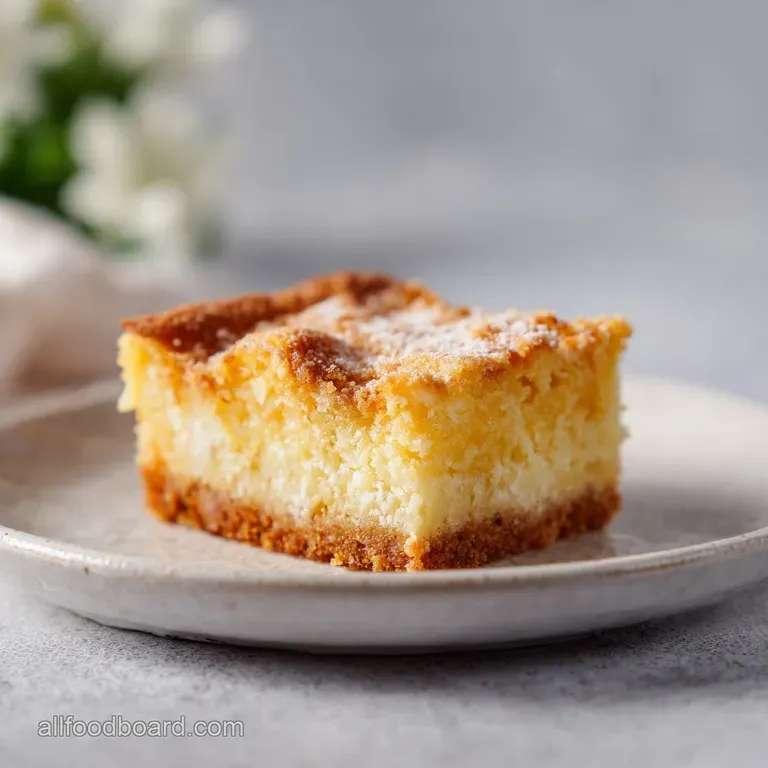
- Time: Active 15 minutes, Passive 40 minutes, Total 55 minutes
- Flavor/Texture Hook: A velvety, molten center contrasted by a thin, crackling sugar crust.
- Perfect for: Afternoon tea, rustic gatherings, or when you need a crowd-pleasing traybake.
- Master the Classic Ooey Gooey Butter Cake
- Understanding the Scientific Principles
- Component Analysis and Selection
- Selecting Your Essential Ingredients
- Preparing Your Kitchen Equipment
- Detailed Step by Step Instructions
- Troubleshooting Your Baking Results
- Adjusting Your Recipe Portions
- Exploring Flavorful Recipe Variations
- Debunking Common Butter Cake Myths
- Storage and Waste Prevention Tips
- Creative Plating and Serving Ideas
- Recipe FAQs
- 📝 Recipe Card
Master the Classic Ooey Gooey Butter Cake
Have you ever wondered why a simple baking mistake from the 1930s is still the most requested dessert at Midwestern potlucks? Legend has it that a St. Louis baker accidentally reversed the proportions of butter and flour, resulting in a flat, sticky mess that he simply couldn't throw away.
Instead of tossing it, he sold it by the square, and a legend was born. It is a testament to the fact that sometimes, the most rustic, unplanned moments in the kitchen yield the most evocative results.
When you pull this tray from the oven, the aroma of toasted butter and vanilla wafts through the house like a warm hug from childhood. There is something profoundly artistic about the way the top surface crinkles into a delicate, paper thin "shatter" layer, while the heart of the cake remains soft and almost liquid.
It is not quite a cake, not quite a cheesecake, and certainly not a brownie, it exists in a category of its own.
We are going to walk through the process of creating this flour dusted masterpiece from scratch using a few clever shortcuts that don't sacrifice that nostalgic flavor. Whether you are a seasoned baker or someone who just likes to lick the whisk, this recipe provides a foolproof path to a dessert that feels both humble and high end.
Let's get the oven preheated and dive into why this specific ratio of fat to sugar creates such a decadent bite.
Understanding the Scientific Principles
- Sugar Saturation: The high volume of powdered sugar (450g) does more than sweeten, it physically interferes with the protein bonds in the cream cheese, preventing the topping from setting into a firm block.
- Emulsification Stability: Using room temperature eggs and cream cheese ensures the fats and liquids bond perfectly, creating a velvety texture rather than a broken, greasy one.
- Structural Anchoring: The yellow cake mix base provides a dense, shortbread like foundation that supports the heavy, molten flood of the topping without becoming soggy.
- Thermal Momentum: Taking the cake out while it still has a "jiggle" is vital because carryover heat continues to cook the eggs for several minutes on the counter.
| Method | Time | Texture | Best For |
|---|---|---|---|
| The Fast Version | 55 minutes | Ultra gooey, soft | Quick weeknight cravings |
| The From Scratch | 1 hours 15 mins | More bready, yeast based | Traditional historical accuracy |
| The Cookie Prep | 45 minutes | Chewy edges, soft middle | Portability and bake sales |
Choosing the "fast" method using a yellow cake mix isn't just about saving time; it's about the specific crumb structure that commercial mixes provide. The emulsifiers in the mix help the butter base stay tender and "short" rather than turning into a hard biscuit.
This ensures every bite has that signature melt in-the mouth quality that defines a true St. Louis classic.
Component Analysis and Selection
| Ingredient | Science Role | Pro Secret |
|---|---|---|
| Cream Cheese | Provides the "goo" | Use full fat blocks only; low-fat versions contain too much water and won't set. |
| Salted Butter | Fat and flavor | Melt it slowly to avoid separating the milk solids, then cool it to room temperature. |
| Powdered Sugar | Texture and crust | Sift it twice to ensure the topping is glassy and smooth without any hidden lumps. |
Selecting Your Essential Ingredients
- 1 box (15.25 oz / 432g) yellow cake mix: Why this? Provides the structural foundation and classic nostalgic vanilla notes. (Substitute: 3 cups DIY cake mix)
- 1/2 cup (113g) salted butter, melted and cooled: Why this? The salt balances the intense sugar; cooling prevents scrambling the egg. (Substitute: Unsalted butter plus 1/4 tsp salt)
- 1 large egg, room temperature (for base): Why this? Binds the cake mix into a pressable dough. (Substitute: 1/4 cup applesauce)
- 8 oz (226g) cream cheese, softened: Why this? Creates the characteristic tang and molten center. (Substitute: Mascarpone for a richer flavor)
- 2 large eggs, room temperature (for topping): Why this? Provides lift and helps the custard layer set slightly. (Substitute: Egg substitute equivalent)
- 1 tsp vanilla extract: Why this? Rounds out the sweetness with floral depth. (Substitute: Vanilla bean paste)
- 3 3/4 cups (450g) powdered sugar: Why this? Creates the volume and the signature crackly top. (Substitute: Granulated sugar - Note: result will be grainier)
- 1/4 tsp fine sea salt: Why this? Sharpens the flavors and cuts through the richness. (Substitute: Kosher salt)
Preparing Your Kitchen Equipment
Before we start mixing, let's talk about the pan. For this specific recipe, a 9x13 inch metal baking pan is your best friend. Metal conducts heat more evenly than glass, which is crucial for getting those golden, slightly chewy edges while keeping the center molten.
I always line my pan with parchment paper, leaving a little overhang on the sides. This "sling" method allows you to lift the entire cake out once cooled, making those clean, photographic squares much easier to achieve.
You will also need an electric hand mixer. While you can technically whisk the topping by hand, you won't achieve the same level of aeration. We want the cream cheese to be whipped until it's light and fluffy before adding the sugar. This trapped air is what creates the thin, meringue like crust on top of the cake.
A stiff spatula is also handy for pressing the dough into the corners of the pan, making sure the base is level so the topping doesn't pool in one spot.
Detailed step-by-step Instructions
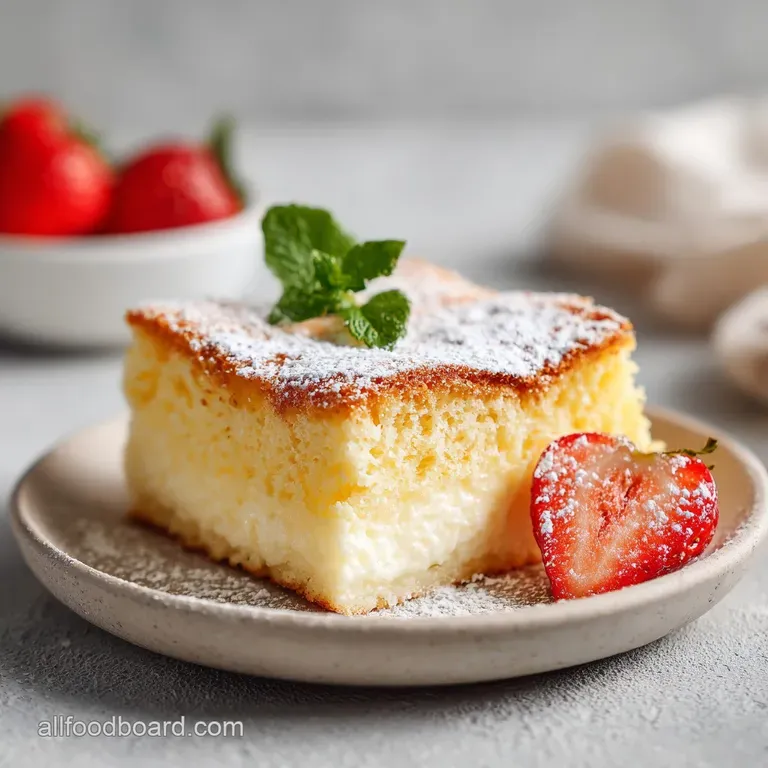
- Preheat your oven to 350°F (175°C). Line a 9x13 inch metal baking pan with parchment paper. Note: Parchment is better than grease alone for this sticky batter.
- In a large mixing bowl, combine the dry yellow cake mix, one egg, and the melted salted butter. Mix with a stiff spatula until a soft, dough like consistency forms.
- Press the dough evenly into the bottom of the prepared 9x13 pan. Use the bottom of a flat measuring cup until the crust is level and reaches the corners.
- In a separate bowl, use an electric hand mixer to beat the softened cream cheese until smooth and aerated, approximately 2 minutes.
- Add the remaining two eggs and vanilla extract to the cream cheese. Beat until fully incorporated and pale yellow.
- Reduce mixer speed to low and gradually add the powdered sugar and salt. Once the sugar is incorporated, increase speed to medium high and whip for 1 minute until glossy and thick.
- Pour the cream cheese mixture over the unbaked crust, spreading it to the edges with a spatula.
- Bake on the center rack for 38–42 minutes. The edges must be puffed and golden brown, but the center must still have a noticeable jiggle.
- Remove from oven and allow to cool completely in the pan. The center will set as it cools, so don't be tempted to slice it warm.
Troubleshooting Your Baking Results
The Center is Too Liquid
If your cake resembles a soup more than a custard after cooling, the culprit is usually underbaking or using eggs that were too small. The "jiggle" should look like set gelatin, not splashing water.
If this happens, you can try chilling the cake in the fridge for 4 hours; often, the fats will solidify enough to make it sliceable.
The Crust is Rock Hard
A common issue is over pressing the base or overbaking. The base should be pressed firmly but not packed like concrete. If the edges are getting dark before the center is done, your oven might be running hot. Next time, try moving the rack to the middle position or reducing the temperature by 25°F. For another cream cheese based treat with a different texture profile, you might enjoy these Oreo Cheesecake Cookie Bars.
| Problem | Root Cause | Solution |
|---|---|---|
| Grainy Topping | Sugar not dissolved | Sift sugar and beat for a full minute on high speed. |
| Greasy Surface | Butter was too hot | Let melted butter cool to room temperature before mixing. |
| Sunken Middle | Over whipping eggs | Stop mixing once eggs are just incorporated to avoid excess air. |
Common Mistakes Checklist
- ✓ Using cold cream cheese (results in tiny white lumps that won't melt).
- ✓ Baking until the center is firm (this turns the "goo" into a dry sponge).
- ✓ Forgetting the salt (the cake will taste flat and one dimensionally sweet).
- ✓ Slicing while warm (the molten layer will run everywhere).
- ✓ Not leveling the crust (causes uneven "goo" distribution).
Adjusting Your Recipe Portions
If you are baking for a smaller crowd, you can easily halve this recipe. Use an 8x8 inch square pan and reduce the baking time by about 5 to 8 minutes. When halving the eggs, beat one egg in a small bowl and use exactly half of it by weight or volume for the base.
For larger gatherings, doubling the recipe requires two separate 9x13 pans rather than one giant one, as the depth of the batter is crucial for the "goo" factor.
When scaling up, be careful with the vanilla and salt. You don't necessarily need to double them exactly; 1.5x the amount often provides a more balanced flavor profile in larger batches. If you are looking for more deep, comforting flavors to pair with a large spread, consider the fudgy richness of a Classic Mississippi Mud Pie to complement the buttery sweetness of this cake.
| Feature | Yellow Cake Mix | Homemade Flour/Sugar |
|---|---|---|
| Prep Time | 15 mins | 25 mins |
| Consistency | Consistent and plush | Can be dense if overmixed |
| Flavor | Traditional vanilla | More "buttery" and rich |
Exploring Flavorful Recipe Variations
- The Chocolate Blackout: Swap the yellow cake mix for a dark chocolate mix and add 1/2 cup of cocoa powder to the cream cheese topping.
- Lemon Zest Brightness: Add the zest of two lemons and 1 tablespoon of fresh juice to the topping to cut through the richness with acidity.
- Pumpkin Spice Twist: Fold 1/2 cup of pumpkin puree and 1 teaspoon of cinnamon into the cream cheese mixture for a seasonal variation.
| Original Ingredient | Substitute | Why It Works |
|---|---|---|
| Yellow Cake Mix | Chocolate Cake Mix | Changes flavor profile while maintaining structure. |
| Powdered Sugar | Swerve/Erythritol | Reduces sugar content. Note: Texture will be slightly less "shattery" on top. |
| Salted Butter | Browned Butter | Adds a nutty, toasted aroma that complements the vanilla. |
Debunking Common Butter Cake Myths
One common misconception is that the center of this cake is "underbaked" dough. In reality, the gooey layer is a stabilized custard. The high sugar and fat content from the cream cheese prevent the eggs from coagulating into a solid mass at standard baking temperatures.
It is perfectly safe to eat as long as the internal temperature has reached at least 160°F.
Another myth is that you must use a specific brand of cake mix. While some people swear by one over the other, any standard 15.25 oz mix will work. The magic is in the ratio of the added butter and cream cheese, not the brand on the box.
Also, skipping the salt in the topping because "there is already salt in the butter" is a mistake the extra pinch of sea salt is what makes the vanilla flavor truly pop.
Storage and Waste Prevention Tips
Storage Guidelines: This cake keeps remarkably well at room temperature for up to 3 days if kept in an airtight container. If your kitchen is particularly warm, move it to the fridge, where it will last for 1 week.
Note that the texture will become firmer when cold, so let a square sit on the counter for 20 minutes before eating to regain that "ooey gooey" feel.
Freezing Instructions: You can freeze individual squares by wrapping them tightly in plastic wrap and then foil. They will stay fresh for up to 3 months. To serve, thaw in the fridge overnight.
Zero Waste Tip: If you find yourself with the crust edges that some people find "too crunchy," don't toss them! Crumble the leftover edges over vanilla bean ice cream or fold them into a milkshake. The buttery, caramelized bits act like gourmet cake croutons.
Creative Plating and Serving Ideas
| Plating Level | Key Components | Visual Effect |
|---|---|---|
| Simple | Thick dusting of powdered sugar | Rustic, "homestyle" traybake look |
| Polished | Fresh raspberries and mint leaf | Vibrant color contrast against the pale cake |
| Restaurant | Salted caramel drizzle + sea salt | Sophisticated, intentional, and decadent |
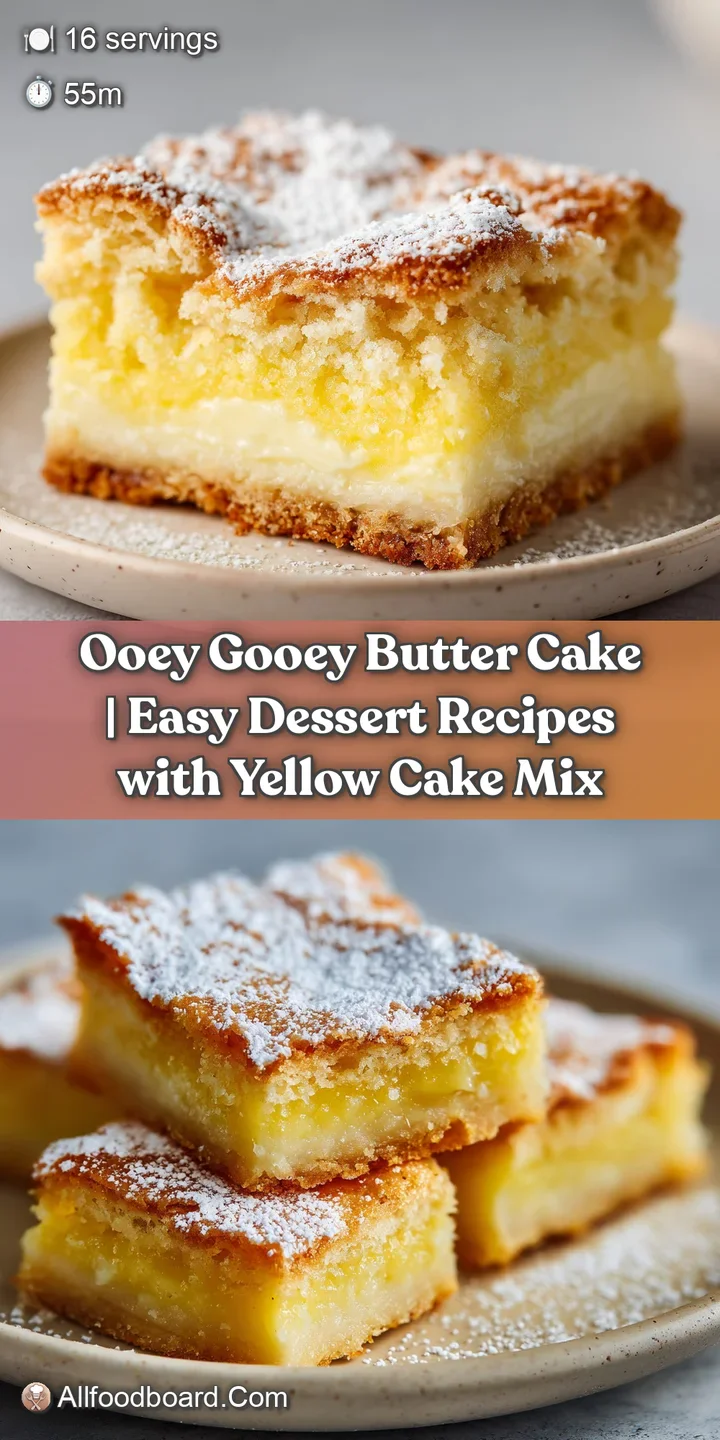
For a simple presentation, nothing beats a heavy snowfall of powdered sugar applied right before serving. It covers any cracks and gives it that classic "bakery window" aesthetic. If you want to take it to a polished level, serve a square with a handful of tart berries like raspberries or blackberries.
The acidity of the fruit balances the intense sweetness of the butter and sugar beautifully.
To reach restaurant level elegance, serve the cake slightly warm on a dark plate. Drizzle a thin line of salted caramel across the top and finish with a tiny pinch of flaky Maldon sea salt. This transforms a simple childhood favorite into a complex, adult friendly dessert.
The contrast between the warm, molten center and the cold, fresh berries makes every bite a sensory experience.
Recipe FAQs
What is another name for ooey gooey butter cake?
It is often called St. Louis butter cake. While many people use the terms interchangeably, the authentic regional version typically features a similar dense, buttery crust topped with a rich, cream cheese-infused custard layer.
Where can I buy Paula Deen Ooey Gooey Butter Cake?
You can purchase it directly through her official online store or branded retail partners. It is rarely available in standard grocery stores, so ordering through her website is the most reliable way to get an authentic version shipped to your door.
Is Neiman Marcus cake the same as Ooey Gooey Butter Cake?
No, this is a common misconception. The Neiman Marcus cake is a distinct recipe that relies on a different ratio of ingredients to achieve its signature dense, rich profile compared to this version, which prioritizes the specific gooey custard set provided by the cream cheese and powdered sugar
combination.
What are the ingredients in ooey gooey butter cake?
This recipe uses a yellow cake mix, melted salted butter, cream cheese, three large eggs, vanilla extract, powdered sugar, and a pinch of fine sea salt. These base components create both the structured bottom crust and the signature molten topping that defines the dessert.
How to ensure the center stays gooey after baking?
Pull the pan from the oven when the center still has a noticeable jiggle. If you bake the cake until it is completely firm, you will lose the signature texture; if you enjoyed mastering these specific sensory doneness cues here, apply them to other recipes to achieve consistent results.
How to store leftovers for the best texture?
Keep the cake in an airtight container at room temperature for up to 3 days. If your kitchen is warm, store it in the refrigerator for up to 1 week, but always let the squares sit on the counter for 20 minutes before serving to ensure the center returns to its ideal, soft consistency.
How to freeze squares for later use?
Wrap each square tightly in plastic wrap followed by a layer of aluminum foil. This double layer method prevents freezer burn, allowing the cake to remain fresh for up to 3 months before you thaw it in the refrigerator to serve.
Ooey Gooey Butter Cake
Ingredients:
Instructions:
Nutrition Facts:
| Calories | 322 kcal |
|---|---|
| Protein | 2.9 g |
| Fat | 14.1 g |
| Carbs | 49.2 g |
| Fiber | 0.4 g |
| Sugar | 39.5 g |
| Sodium | 308 mg |
