Hearty Turkey Soup with Egg Noodles and Vegetables
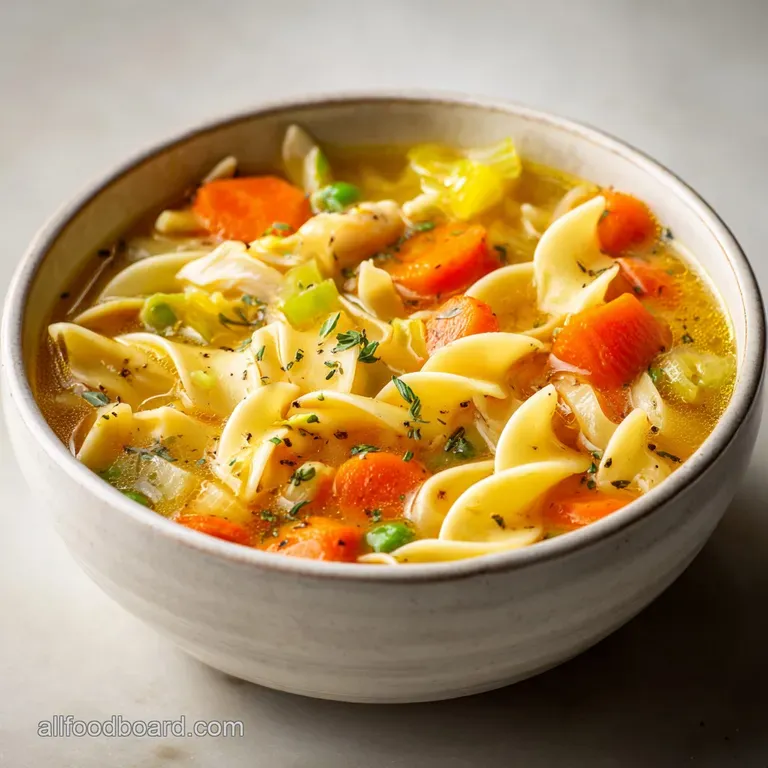
- Time: Active 15 minutes, Passive 30 minutes, Total 45 minutes
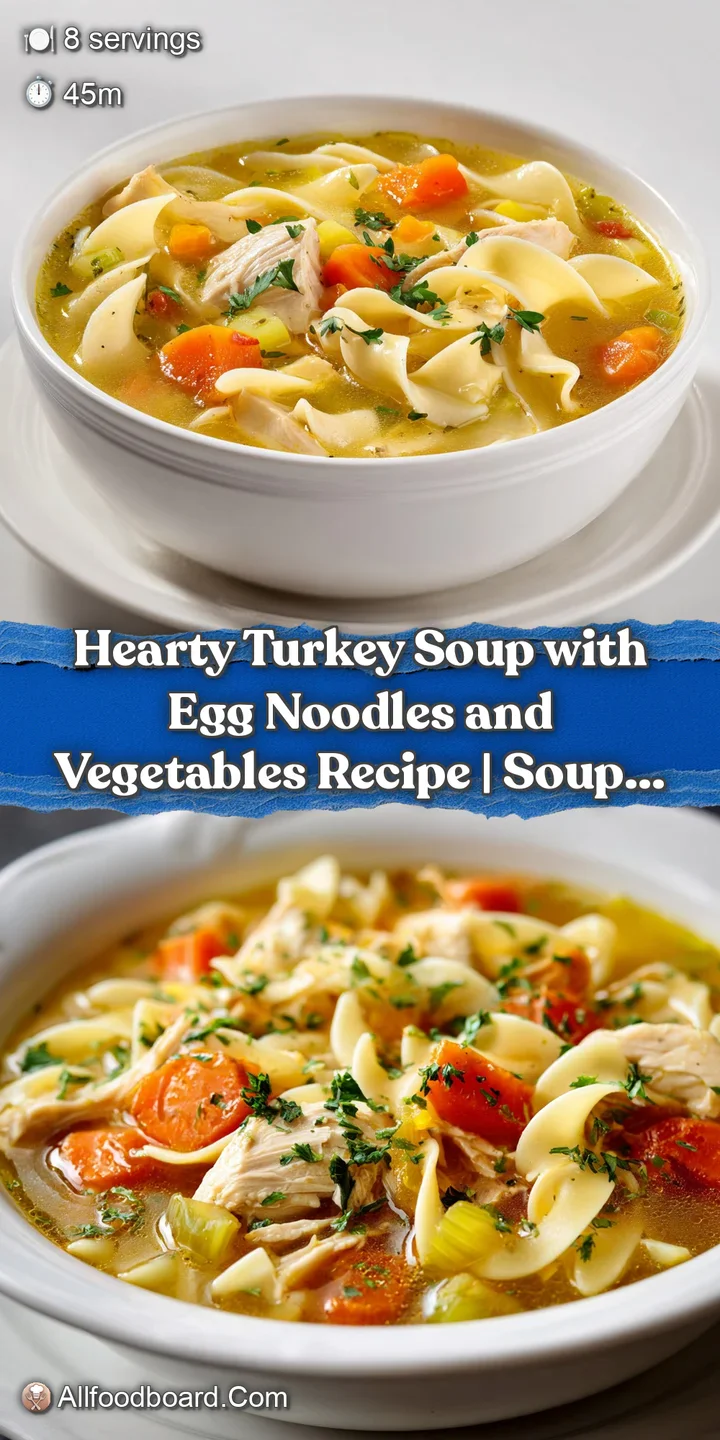
- Flavor/Texture Hook: Silky, savory broth with tender shredded turkey and chewy, wide egg noodles
- Perfect for: Post holiday recovery, chilly Sunday afternoons, or batch prep freezer meals
- The Culinary Logic Behind the Simmer
- Component Analysis for Better Broth
- The Essential Elements and Substitutions
- Necessary Kitchen Arsenal
- Step-by-Step Culinary Flow
- Troubleshooting and Refinement
- Adjusting the Yield
- Culinary Myths Debunked
- Preservation and Zero Waste
- Ways to Present and Pair
- Very High in Sodium
- Recipe FAQs
- 📝 Recipe Card
There is a specific, quiet magic that happens in a kitchen the day after a big feast. The house is still, the air carries a faint ghost of roasted sage, and the refrigerator is packed with the skeletal remains of a grand meal.
Growing up, my grandmother never saw a turkey carcass as "trash"; she saw it as the foundation for a week of nourishment. She would stand at the stove, humming a low tune, tossing bones into a pot with the same reverence some people give to fine silk.
This article features our absolute favorite Hearty Turkey Soup with Egg Noodles and Vegetables Recipe, born from those quiet mornings of kitchen alchemy where nothing was wasted and everything was gained.
In many cultures, the "stockpot" was the heartbeat of the home. Whether it was a Polish rosół or a classic American noodle soup, the philosophy remained the same: extract every ounce of life from the ingredients you have.
This isn't just about feeding a family; it is about the transition from the heavy, indulgent flavors of a roast to something light, bright, and restorative. I remember the first time I tried to make this myself I was so worried about the "exact" way to break down the bones.
I realized quickly that the soup doesn't want perfection; it wants heat, water, and time.
We are going to walk through how to take that leftover bird and turn it into a bowl of liquid gold. We aren't just reheating meat here; we are building layers of flavor starting with a 20 minute fortification of store-bought broth using the roasted bones.
It is a trick that bridges the gap between a 6 hour slow simmered stock and a quick weeknight meal. You get the depth of the marrow and the collagen without losing your entire afternoon to the stovetop.
The Culinary Logic Behind the Simmer
Understanding why this specific method works will help you adjust it to whatever you have in your crisper drawer. We aren't just boiling water; we are performing a series of rapid extractions.
By simmering the carcass in pre made broth, you are essentially "double stocking," which creates a richness that plain water simply cannot achieve in under an hour.
- Collagen Extraction: The 20 minute rapid boil of the carcass releases gelatin from the joints and connective tissues, giving the liquid a velvety mouthfeel.
- Aromatic Softening: Sautéing the mirepoix (onion, carrot, celery) in butter before adding liquid creates a flavor base through gentle caramelization that boiling alone misses.
- Starch Management: Adding the egg noodles directly to the pot at the end allows them to release just enough starch to slightly thicken the broth without making it cloudy.
- Flash Finishing: Stirring in frozen peas and fresh parsley at the very end preserves their vibrant green color and "pop" texture, preventing that mushy, overcooked cafeteria vibe.
| Noodle Type | Internal Texture | Cook Time | Visual Cue |
|---|---|---|---|
| Wide Egg Noodle | Tender but Chewy | 7-9 minutes | Pale yellow and doubled in size |
| Frozen Dumpling | Dense and Doughy | 12-15 minutes | Floats to the surface |
| Dried Rotini | Firm/Al Dente | 10-12 minutes | Ridges soften but hold shape |
Using the right noodle is half the battle when you want to keep things hearty. While you're waiting for that broth to fortify, you might find yourself thinking about other cozy meals. If you're in the mood for something with a bit more of a tomato base later this week, my Hearty Ground Turkey Goulash is a fantastic way to use up ground meat in a similar "one pot" fashion. But for today, we stay focused on the bird.
Component Analysis for Better Broth
Every ingredient in this pot has a specific job to do. We aren't just tossing things in for the sake of it; we are balancing fats, acids, and aromatics to create a cohesive profile.
| Ingredient | Science Role | Pro Secret |
|---|---|---|
| Turkey Carcass | Gelatin & Umami | Snap the larger bones before simmering to expose the marrow |
| Unsalted Butter | Fat Emulsification | Sautéing the garlic in butter prevents it from tasting "tinny" in the broth |
| Fresh Thyme | Volatile Oils | Rub the leaves between your palms before adding to "wake up" the oils |
| Frozen Peas | Sweetness Balance | Add them dead last; the residual heat is all they need to stay bright |
The carcass is the heavy lifter here. Even if it looks "picked clean," there is a wealth of flavor hidden in the neck, the back, and the wing tips. If you find your roasted bird was particularly seasoned with herbs like rosemary or sage, those flavors will carry over into your soup, adding an extra layer of complexity that store-bought stock can't replicate.
The Essential Elements and Substitutions
To make this Hearty Turkey Soup with Egg Noodles and Vegetables Recipe, you'll need the following items from your pantry and fridge. I've included a few substitutions because I know exactly what it's like to realize you're out of celery ten minutes into the process.
- 1 turkey carcass: From your roasted turkey. Why this? Provides the collagen and deep poultry flavor that defines the soup.
- Sub: 2 lbs of bone in chicken thighs if you don't have a turkey.
- 8 cups broth: Chicken or turkey. Why this? Acts as the liquid base for the fortification step.
- Sub: Vegetable broth, though the poultry flavor will be less intense.
- 2 bay leaves: Dried or fresh. Why this? Adds a subtle, herbal background note that cuts through the fat.
- Sub: A pinch of dried oregano.
- 1 tsp black peppercorns: Whole. Why this? Infuses heat without clouding the broth with ground pepper dust.
- Sub: 1/2 tsp ground white pepper added at the end.
- 2 tbsp unsalted butter: Why this? Provides a rich medium for sautéing the aromatics.
- Sub: Olive oil or avocado oil.
- 2 cups carrots: Peeled and sliced. Why this? Adds natural sweetness and vibrant color.
- Sub: Parsnips for an earthier, spicier sweetness.
- 1.5 cups celery: Sliced. Why this? Provides the "salty" aromatic base essential to soup.
- Sub: Fennel bulb for a slight licorice undertone.
- 1 large yellow onion: Diced. Why this? The foundational aromatic for savory depth.
- Sub: Leeks (white and light green parts only).
- 4 cloves garlic: Minced. Why this? Adds a sharp, pungent bite that mellows into sweetness.
- Sub: 1 tsp garlic powder added to the broth.
- 1 tbsp fresh thyme: Why this? The classic poultry herb that brightens the heavy meat flavors.
- Sub: 1 tsp dried thyme (add earlier with the onions).
- 4 cups cooked turkey meat: Shredded or cubed. Why this? The main protein source.
- Sub: Leftover rotisserie chicken.
- 8 oz wide egg noodles: Why this? Their soft, ruffled texture is the gold standard for comfort soup.
- Sub: Rotini or bowtie pasta.
- 1 cup frozen sweet peas: Why this? Adds a burst of fresh flavor and color at the finish.
- Sub: Frozen corn kernels.
- 1/4 cup fresh parsley: Chopped. Why this? Adds a clean, grassy finish to balance the salt.
- Sub: Fresh cilantro or chives.
| Fresh Ingredient | Shortcut Alternative | Impact on Final Dish |
|---|---|---|
| Whole Carcass | Turkey Bouillon Base | Less body/gelatin, but faster prep |
| Fresh Thyme | Dried Poultry Seasoning | More "herbal" and muted, less bright |
| Chopped Mirepoix | Frozen Soup Mix | Vegetables will be softer and less sweet |
If you are a fan of traditional methods, you might also appreciate Grandmas Homemade Chicken Soup, which follows a very similar philosophy of using bones to create a healing, deep broth. The techniques are almost identical, proving that good soup is a universal language.
Necessary Kitchen Arsenal
You don't need a professional kitchen, but a few specific tools will make this much easier.
- Large Stockpot: At least 8-10 quarts. You need enough room for the carcass to be fully submerged without the water splashing over.
- Fine Mesh Strainer: Essential for removing the peppercorns, bay leaves, and tiny bone fragments after the fortification step.
- Chef’s Knife: For getting those carrots and onions into uniform pieces so they cook evenly.
- Wooden Spoon: Ideal for scraping the bottom of the pot during the sauté phase to release any browned bits.
- Kitchen Tongues: To safely fish out the hot carcass before straining.
step-by-step Culinary Flow
Follow these steps exactly to ensure your Hearty Turkey Soup with Egg Noodles and Vegetables Recipe comes out perfectly clear and deeply flavorful.
1. The 20 Minute Fortification
Place the turkey carcass, 8 cups of store-bought broth, 2 bay leaves, and 1 tsp peppercorns into your large stockpot. Bring to a rapid boil, then reduce to a simmer for 20 minutes.
Note: This step "fortifies" the broth, pulling deep flavor and collagen from the bones that store-bought broth lacks on its own. After 20 minutes, remove the carcass with tongs and strain the liquid through a fine mesh sieve into a large bowl. Discard the solids.
2. Sauté the Aromatics
Wipe out the stockpot and place it back on the stove. Melt 2 tbsp butter over medium heat. Add 1 diced yellow onion, 2 cups sliced carrots, and 1.5 cups sliced celery. Cook for 6–8 minutes until the onions are translucent and the carrots have softened slightly.
Do not let them brown heavily; we want a sweet, clean base.
3. Infuse the Aromatics
Stir in 4 minced garlic cloves and 1 tbsp fresh thyme. Cook for exactly 1 minute until the air smells intensely of garlic and herbs. Pour the fortified turkey broth back into the pot, scraping the bottom to incorporate any butter and juices.
4. The Noodle Simmer
Bring the liquid to a gentle boil. Add the 8 oz of wide egg noodles and the 4 cups of shredded turkey meat. Simmer for 7-9 minutes until the noodles are tender but still have a slight bite (al dente). The noodles will continue to soften as the soup sits, so don't overcook them here.
5. The Finishing Touch
Turn off the heat. Stir in 1 cup of frozen sweet peas and 1/4 cup of chopped fresh parsley. The residual heat will cook the peas in about 60 seconds without turning them grey. Season with kosher salt and cracked black pepper.
Taste the broth twice—once for salt and once for pepper before serving hot in deep bowls.
Troubleshooting and Refinement
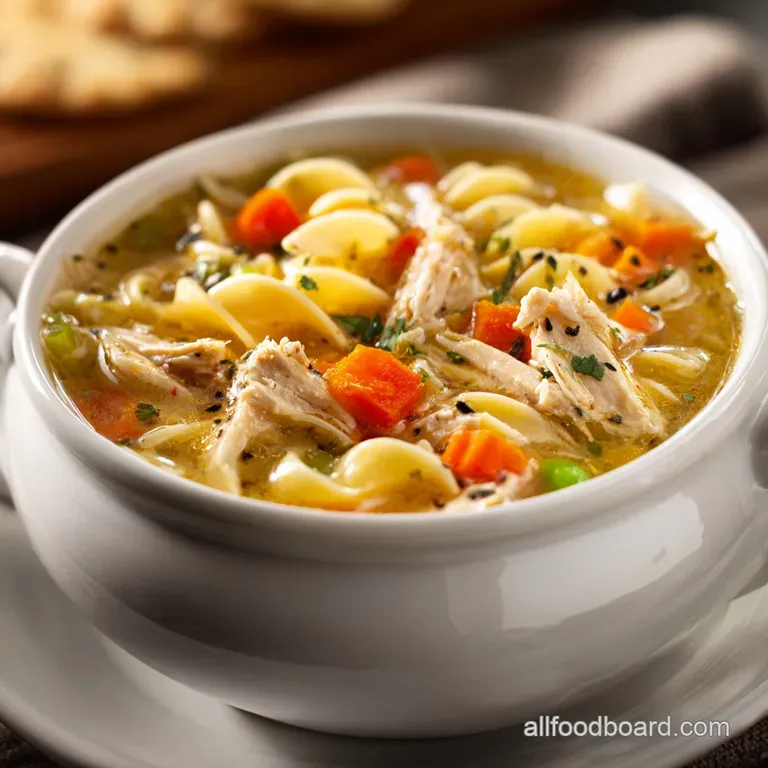
Even the simplest soups can hit a snag. Usually, it comes down to heat management or seasoning balance.
Why is my broth cloudy?
If the broth looks muddy rather than clear and golden, it usually means the carcass was boiled too violently during the fortification step. High heat emulsifies the fats and proteins into the water.
Why do my noodles disappear?
Egg noodles are notorious sponges. If you cook them too long or let the soup sit for hours before serving, they will absorb all the liquid and turn into a thick porridge.
| Problem | Root Cause | Solution |
|---|---|---|
| Greasy Broth | Too much skin on the carcass | Skim the fat off the top with a wide spoon after straining |
| Bland Flavor | Undersalted or old herbs | Add a splash of lemon juice or apple cider vinegar to brighten it |
| Mushy Carrots | Sautéed too long | Keep the sauté to 8 minutes; they finish cooking during the simmer |
Common Mistakes Checklist
- ✓ Never skip the fortification step; the carcass is where the soul of the soup lives.
- ✓ Strain the broth carefully to avoid biting into a whole peppercorn later.
- ✓ Keep the simmer gentle; a rolling boil will break the noodles apart.
- ✓ Don't add the peas until the heat is off to keep them bright green.
- ✓ If the soup gets too thick after sitting, add a splash of water when reheating.
Adjusting the Yield
Soup is one of the most forgiving dishes to scale, provided you keep the ratios of aromatics to liquid relatively consistent.
- Scaling DOWN (1/2 batch): Use a smaller pot. You'll likely need to break the carcass into smaller pieces to fit. Reduce the noodle cook time by 1 minute as the smaller volume of water loses heat faster.
- Scaling UP (2x batch): You will need two carcasses or a very large 12 quart pot. Increase the salt and spices to 1.5x initially, then taste and adjust. Do not double the black peppercorns, as they can become overwhelmingly bitter in large quantities.
- The Noodle Strategy: If you are making a massive batch for a crowd, cook the noodles separately in salted water and add them to the individual bowls. This prevents the leftovers from turning into a noodle brick in the fridge.
| Batch Size | Liquid Needed | Turkey Meat | Noodle Amount |
|---|---|---|---|
| 4 Servings | 4 cups | 2 cups | 4 oz |
| 8 Servings | 8 cups | 4 cups | 8 oz |
| 16 Servings | 16 cups | 8 cups | 16 oz |
Culinary Myths Debunked
Many people believe you need to simmer a carcass for 12 hours to get "real" stock. While a long simmer extracts more minerals, 20 minutes of rapid fortification in pre made broth actually captures the most aromatic, fresh turkey flavor without the "cooked to death" taste that long simmered stocks can develop.
Another common misconception is that you shouldn't use the skin. While you don't want a cup of grease, leaving some skin on the carcass during the fortification step adds essential fats that carry the flavor of the herbs.
You can always skim the excess oil off the top after the liquid has cooled slightly, but that initial fat infusion is vital for a "hearty" mouthfeel.
Preservation and Zero Waste
This soup is a leftover's best friend, but it does have a shelf life. Proper storage ensures those noodles don't turn into a science experiment.
- Storage: Keep the soup in an airtight container in the fridge for up to 4 days. If the noodles soak up all the broth, simply add a half cup of water or stock when you reheat it on the stove.
- Freezing: This soup freezes beautifully for up to 3 months, but only if you freeze it without the noodles. If you plan to freeze a portion, pull the liquid and meat out before adding the pasta. When you're ready to eat, boil fresh noodles in the thawed soup.
- Zero Waste Tip: Don't throw away those celery leaves! Chop them up along with the parsley and stir them in at the end. They have a concentrated celery flavor that adds a professional touch. Also, save your onion skins and carrot peels in a bag in the freezer for your next batch of "from scratch" vegetable stock.
Ways to Present and Pair
To truly enjoy your Hearty Turkey Soup with Egg Noodles and Vegetables Recipe, think about contrast. The soup is soft, warm, and salty, so it benefits from something crunchy or acidic on the side.
A thick slice of sourdough bread with salted butter is the classic choice. The tang of the sourdough cuts through the richness of the turkey broth. If you want something lighter, a simple green salad with a sharp lemon vinaigrette acts as a palate cleanser between spoonfuls of the savory soup.
For a bit of "chef y" flair, I like to add a tiny squeeze of fresh lemon juice to my individual bowl right before eating. It sounds strange, but that tiny hit of acid acts like a volume knob for all the other flavors, making the turkey taste "turkey er" and the herbs pop.
Trust me, once you try the lemon trick, you'll never go back to plain soup again. It turns a humble bowl of leftovers into something that feels like it belongs on a restaurant menu. Give it a stir, let the steam hit your face, and enjoy the best part of the holiday season.
Very High in Sodium
945 mg of sodium per serving (41% of daily value)
The American Heart Association recommends limiting sodium intake to no more than 2,300mg per day, with an ideal limit of less than 1,500mg per day for most adults.
Tips to Reduce Sodium
-
Choose Low-Sodium Broth-30%
Replace the 8 cups of high-quality chicken or turkey broth with low-sodium or no-salt added broth. This is the biggest contributor to sodium in this recipe.
-
Control Added Salt-25%
Significantly reduce or eliminate the kosher salt to taste. Taste the soup after adding other flavorful ingredients and only add salt if absolutely necessary, using a very small amount.
-
Boost Flavor with Herbs and Spices
Leverage the existing aromatic ingredients like bay leaves, black peppercorns, thyme, parsley, and the natural flavors from the turkey carcass. You can also add other fresh or dried herbs like rosemary or sage to enhance taste without sodium.
-
Emphasize Vegetable Flavors-5%
The natural sweetness and flavor of the carrots, celery, onion, and garlic will build a savory base. Ensure they are cooked until tender to maximize their flavor contribution.
-
Consider Umami Boosters-10%
Add ingredients like mushrooms (fresh or dried) or a splash of nutritional yeast to the broth base. These ingredients naturally provide a savory, umami flavor that can reduce the perceived need for salt.
Recipe FAQs
Is it necessary to boil the turkey carcass with the broth?
Yes, this step is essential for depth of flavor. Boiling the carcass in the broth for 20 minutes transforms standard store-bought liquid into a rich, professional grade stock base.
How to prevent the egg noodles from becoming mushy?
Cook the noodles for exactly 7 9 minutes. Testing them at the 7-minute mark ensures they remain al dente before you add the peas and parsley.
Is it true that I should sauté vegetables in water instead of butter?
No, this is a common misconception. Sautéing your onions, carrots, and celery in butter for 6 8 minutes is vital to properly sweating the aromatics and building a flavorful foundation for the soup.
How to keep the soup from tasting bland?
Season with kosher salt and cracked black pepper at the very end. If you enjoyed balancing those savory notes here, see how the same principle of layered seasoning works in our creamy potato soup to elevate the final profile.
How to store leftover turkey soup properly?
Transfer the soup to an airtight container once it has cooled to room temperature. Store it in the refrigerator for up to three days, but keep in mind that the egg noodles may absorb more liquid over time.
Is it okay to add the peas earlier in the cooking process?
No, add them only at the very end. Adding frozen peas too early will cause them to lose their bright color and become mushy instead of maintaining a fresh, sweet snap.
How to ensure the garlic does not burn during the sauté?
Stir the minced garlic constantly for exactly 1 minute. Because garlic scorches quickly, adding it only after the onions and celery have softened ensures it remains fragrant without turning bitter.
Hearty Turkey Noodle Soup
Ingredients:
Instructions:
Nutrition Facts:
| Calories | 298 kcal |
|---|---|
| Protein | 28.9 g |
| Fat | 6.2 g |
| Carbs | 29.6 g |
| Fiber | 3.1 g |
| Sugar | 4.8 g |
| Sodium | 945 mg |
