Olive Garden Pasta Fagioli: the Ultimate Copycat Recipe
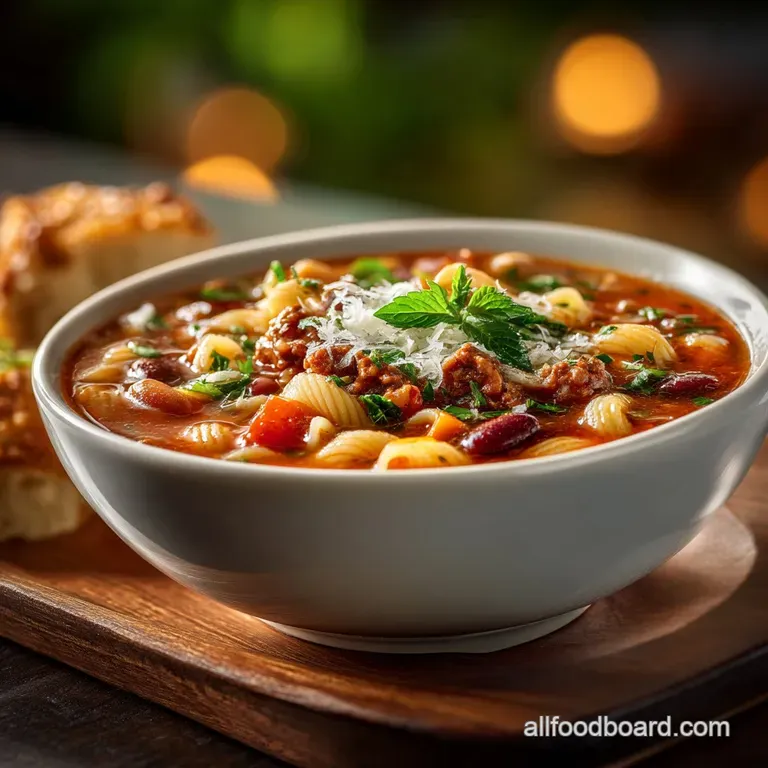
- The Ultimate Copycat: Hearty Olive Garden Pasta Fagioli Soup (A Classic Italian-American Hug in a Bowl)
- Capturing the Comfort: What Makes the Olive Garden Pasta Fagioli So Iconic?
- Achieving Authentic Flavor: The Science Behind This Copycat Soup
- Essential Components for Your Hearty Pasta Fagioli
- Sourcing and Preparing the Core Ingredients
- How to Cook the Ultimate Copycat Olive Garden Pasta Fagioli Soup
- Expert Tips for Perfect Pasta Fagioli Consistency
- Making the Most of Your Leftovers and Perfect Pairings
- Recipe FAQs
- 📝 Recipe Card
The Ultimate Copycat: Hearty Olive Garden Pasta Fagioli Soup (A Classic Italian American Hug in a Bowl)
When the cold hits, or even when you just need a serious, soul level comfort meal, nothing quite delivers like a giant bowl of soup. The first time I smelled this simmering on my stovetop, I instantly felt wrapped in a cozy, tomato scented blanket.
It’s warm, it’s hearty, and the balance of savoury meat, soft pasta, and tender beans is absolute perfection. This is the Olive Garden Pasta Fagioli —the soup that always beats the salad and breadsticks combo.
I know, I know. Eating out is fun, but shelling out $8 for a tiny bowl of soup that you can make for pennies at home? No thanks. This Olive Garden Pasta Fagioli recipe is a weeknight lifesaver because it uses pantry staples you likely already have canned tomatoes, dried beans, some broth, and a bit of pasta.
It comes together fast, keeps everyone full, and is honestly far better than the restaurant version.
Are you ready to stop driving to the mall just for soup? Good. We’re going to dive into the serious business of making the best Copycat Olive Garden Pasta Fagioli you have ever tasted.
Trust me when I say we are nailing the flavour profile, the texture, and the sheer volume of this glorious Italian American staple. Let’s get cooking!
Capturing the Comfort: What Makes the Olive Garden Pasta Fagioli So Iconic?
The genius of this dish is its simplicity, relying on old-world peasant cooking techniques applied to American convenience. It's fundamentally "pasta and beans," but the Olive Garden version adds a layer of richness that makes it a meal, not just a starter.
It’s the perfect blend of texture the creamy beans, the chewy pasta, the tiny bits of ground meat swimming in a savory, slightly sweet tomato broth. When you want that classic restaurant experience at home, nothing beats a perfect Olive Garden Pasta Fagioli .
Achieving Authentic Flavor: The Science Behind This Copycat Soup
We aren't just throwing ingredients into a pot and hoping for the best; we are building flavor layers. This is why some homemade soups taste flat, and others taste like they simmered all day. We need to respect the process, especially the initial browning and sweating stages.
The rich depth found in the best Olive Garden Pasta Fagioli comes directly from these steps.
Decoding the Hearty Italian American Classic (Defining "Pasta e Fagioli")
"Pasta e Fagioli" translates simply to "pasta and beans," and historically, it was a poverty dish designed to stretch cheap ingredients into a filling meal. In Italy, the recipe varies wildly by region; some are brothier, some are stew like, and they often omit meat entirely.
It’s rustic, economical, and beautifully nourishing. Our focus, however, is specifically on the Americanized version which defines the classic Homemade Pasta Fagioli Soup we all love.
The Olive Garden Difference: Defining the Signature Tomato Broth
The key difference in the Olive Garden interpretation is the broth: it’s tomato forward, but not acidic, and it’s slightly thickened. We achieve this by using both diced tomatoes (for texture) and tomato sauce/puree (for color and body). Crucially, we also use a secret weapon: mashed beans.
This starch release is what gives the texture of the Olive Garden Pasta Fagioli that specific velvety feel without being gloppy.
Why This Recipe Is Perfect for Hearty Weeknight Meals
This recipe requires only about 15 minutes of active chopping before you hand it over to the stovetop for simmering. It’s the definition of a dump and simmer meal, which is brilliant for busy people. It also makes a massive batch.
You can feed your family for two nights, or freeze half for later, securing your next cozy dinner before you even finish the first bowl of Easy Pasta Fagioli Recipe goodness.
Building Broth Depth: Mastering the Soffritto Technique
Soffritto is the Italian flavour base, consisting of finely diced onion, carrot, and celery. Don't rush this step! We are aiming for a slow, gentle sweat not a sizzle. Cooking these vegetables properly releases their aromatic oils and sugars, creating a sweet, foundational layer that makes the final Olive Garden Pasta Fagioli truly complex.
If you skip this or undercook it, your soup will taste watery.
The Bean Blend Secret: Kidney vs. Cannellini Texture Contrast
You need both beans, full stop. The Cannellini (white kidney) beans break down more easily and provide that gorgeous creaminess when mashed. The Dark Red Kidney beans hold their shape better, offering necessary heft and a textural contrast.
They are both essential for achieving the perfect consistency of the Best Pasta Fagioli Recipe . I tried making it with just one type once, and it tasted fine, but the texture was definitely lacking that signature thickness.
The Role of Ground Beef in Developing Savory Umami
Yes, the traditional Italian dish often skips the meat, but the Olive Garden Pasta Fagioli includes it, and it’s critical for depth. Lean ground beef adds a savory, salty dimension pure umami. It’s the reason this soup is classified as a hearty meal rather than a light soup.
Make sure you properly brown the meat and, this is critical , drain off the fat before adding the vegetables. You want flavour, not grease slicks floating on your delicious Olive Garden Pasta Fagioli Copycat .
Essential Components for Your Hearty Pasta Fagioli
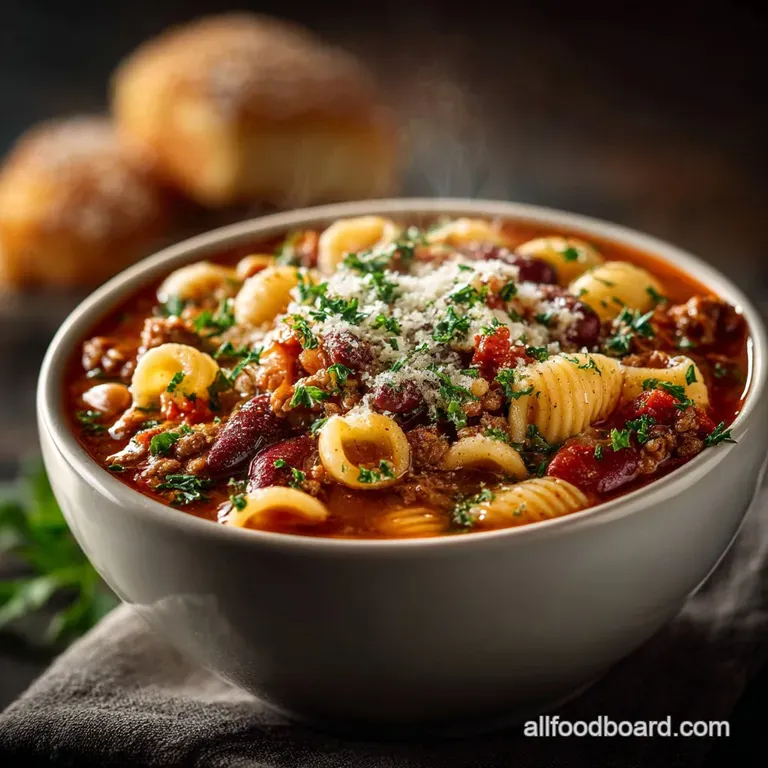
Think of the ingredients like building blocks. Each one plays a key role, and substituting too many will move you away from that coveted Olive Garden Pasta Fagioli flavour profile.
| Component | Role | Must Have Tip |
|---|---|---|
| Ground Beef | Savory bulk/Umami | Drain fat thoroughly after browning. |
| Soffritto | Flavor foundation | Dice vegetables finely and cook until soft. |
| Tomato Base | Colour & Acidity balance | Use both diced and pureed/sauce for texture. |
| Beans | Creaminess and substance | Mash a handful of Cannellini for thickness. |
| Ditalini | Texture/Classic look | Cook separately or add at the very end to prevent mush. |
Sourcing and Preparing the Core Ingredients
Selecting the Best Tomato Base and Seasonings
I always reach for canned diced tomatoes, preferably fire roasted if I can find them they just offer a deeper, smokier sweetness. However, the true champion here is the combination of diced tomatoes with plain tomato sauce or purée.
This mixture ensures the broth is rich red and flavorful, not chunky or watery. For seasoning, stick to the basics: oregano and thyme. That’s the classic Olive Garden Pasta Fagioli spice mixture. A little basil is fine at the end, but the main flavour comes from those two dried herbs.
Choosing the Right Small Pasta Shape (Ditalini or Elbows)
Ditalini, meaning "small thimbles," is the traditional and preferred pasta shape for this dish. Why? Because it’s small enough to be eaten easily with a spoon alongside the beans. If you can’t find Ditalini, go with small elbow macaroni or even orzo. The main rule is: keep it small and sturdy.
Avoid delicate pasta that will disintegrate in the simmering broth of your Olive Garden Pasta Fagioli .
Ingredient Swaps: Beans, Broth, and Aromatic Alternatives
I'm all about flexibility in the kitchen, especially if you’re staring down an empty pantry shelf.
- Beans: No Cannellini? Use Great Northern or Navy beans. They offer similar starches and tenderness. For Kidney beans, pinto beans will work in a pinch, though they are slightly softer.
- Broth: Chicken broth is traditional and lighter, but swapping it for beef broth will make your Homemade Pasta Fagioli Soup even more savory and robust. Use whatever you have.
- Aromatics: If you’re truly out of celery or carrots, don't panic. Substitute 1 tablespoon of dried vegetable flakes and soak them in a little water before adding them to the pot. It helps the flavour profile when creating your ultimate Copycat Olive Garden Pasta Fagioli .
Understanding the Importance of Quality Ground Meat
Since the meat provides a massive foundation of flavor, don't skimp here. A lean ground beef (85/15 or 90/10) works best. It provides flavour without rendering an overwhelming amount of fat, which would otherwise float unpleasantly on top of the final soup.
This isn't a chili; we want a clean, bright tomato broth supporting the beans and meat. If you want a slightly richer, more complex flavor, try subbing half of the beef for spicy or mild Italian sausage. The spices in the sausage really elevate this Easy Pasta Fagioli Recipe .
How to Cook the Ultimate Copycat Olive Garden Pasta Fagioli Soup
We break this down into three simple phases: building the foundation, slow simmering, and the final quick finish. Stick to these steps, and you’ll achieve that restaurant quality depth that defines the authentic Olive Garden Pasta Fagioli .
Phase 1: Browning the Ground Beef and Building the Flavor Base
Start with a large, heavy bottomed pot or a Dutch oven over medium high heat. Add your olive oil and then your ground beef. Break it up with a wooden spoon and cook until it is completely browned through. Now, grab a colander and drain off every last drop of grease.
This step makes all the difference in the final taste of your Olive Garden Pasta Fagioli . Return the meat to the pot and reduce the heat to medium. Add the diced onion, carrots, and celery.
Stir gently and sweat these vegetables for 8 to 10 minutes until they soften completely. They should be translucent, not browned or crisp. Then, stir in the minced garlic, oregano, and thyme. Cook for just one minute until you smell that nutty, pungent aroma. Do not burn the garlic!
Phase 2: Simmering for Deep Flavor Infusion (Adding Liquids and Spices)
It’s time to liquid up. Pour in the diced tomatoes, tomato sauce, and 6 cups of broth. Give it a good scrape along the bottom to pull up any browned bits that stuck (that’s free flavor, folks). Add the bay leaf.
Now, here is where we achieve that beautiful thickness that separates a good soup from a great one. Take about a half cup of your drained cannellini beans and mash them thoroughly using a fork, or even better, pulse them in a small food processor.
Add the mashed beans, along with the rest of the whole kidney and cannellini beans, to the pot. Stir everything together, bring it to a boil, then immediately drop the heat down to low. Cover and let this beautiful mixture simmer for 30 minutes.
This slow process allows the flavors to truly marry, resulting in the deep, comforting flavour of the original Olive Garden Pasta Fagioli .
Chef's Note: Thirty minutes is the minimum simmering time needed for the vegetables to fully contribute their flavor and for the bean starches to thicken the broth just enough.
Phase 3: The Final Addition (Pasta and Beans Timing)
After your soup has simmered and achieved flavour nirvana, it’s time for the pasta. Increase the heat slightly to maintain a gentle, rolling simmer. Add the cup of Ditalini pasta and cook until it is perfectly al dente , usually 6 to 8 minutes.
You need to stir frequently here to prevent the little pasta pieces from sticking to the bottom. Once the pasta is cooked, remove the bay leaf and taste everything. This final check is crucial for ensuring the Olive Garden Pasta Fagioli is perfectly balanced.
Checking and Adjusting Final Seasoning
Soups always need more salt than you think, especially when cooking with broth and beans. Start with a half teaspoon of salt and a quarter teaspoon of fresh cracked pepper. Stir, wait 30 seconds, and taste again. The salt level should make the tomato and beef flavors pop. If the soup tastes dull, add more salt.
If it tastes too acidic (which can happen with some canned tomatoes), stir in a pinch of sugar. Sometimes, I serve this alongside a hearty dish, perhaps the incredibly comforting [Marry Me Pasta Recipe: The Ultimate Creamy Comfort Food], but really, this soup stands alone as a complete meal.
Expert Tips for Perfect Pasta Fagioli Consistency
Consistency is everything. Nobody wants soup that's too thin or pasta that is disintegrating. Mastering the texture is key to replicating the signature feel of the Olive Garden Pasta Fagioli .
Preventing Mushy Pasta: The Al Dente Rule for Soup
Pasta continues to cook and absorb liquid even after the heat is off. This is the biggest failure point for any soup containing pasta! Cook the Ditalini only until it is al dente (still has a slight bite).
If you plan on having leftovers that you’ll refrigerate for more than a day, I highly recommend cooking the pasta completely separately and adding it to individual bowls before serving. This preserves the perfect ratio of broth to solids in your Olive Garden Pasta Fagioli .
Adjusting Broth Thickness: Troubleshooting Too Thin or Too Thick
If your soup is too thick maybe you let it simmer uncovered too long simply stir in an extra half cup of broth or water until it reaches your desired consistency. If it's too thin, you have a few options: either let it simmer uncovered for 10 minutes, or smash a few more of those cannellini beans against the side of the pot to release more starch.
Remember, that little bit of starch is what gives the best Olive Garden Pasta Fagioli its body.
Why Adding Water Later Might Be Necessary
As the pasta sits and swells, it naturally drinks up the broth. This is why leftovers of any pasta soup are always thicker the next day. Don't be afraid to splash in a little hot water or broth when reheating the Olive Garden Pasta Fagioli to bring it back to that perfect soupy consistency.
I made the mistake of trying to reheat a super thick batch once without adding liquid, and it was basically a bean stew. Delicious, but not what I was aiming for!
Making the Most of Your Leftovers and Perfect Pairings
This soup is fantastic for meal prepping. In fact, many soups taste even better the next day as the flavors truly meld. Knowing how to store and reheat properly ensures your hard work doesn't go to waste.
This hearty meal provides great Olive Garden Pasta Fagioli Nutrition as well, being packed with fiber and protein.
Storing Fresh Pasta Fagioli vs. Freezing Batches
If you plan to eat the leftovers within 3 4 days, store them in an airtight container in the fridge. If you used the separate pasta method (highly recommended), your broth will be perfect when you reheat it. If the pasta was cooked in the soup, expect it to be very thick; just add liquid when reheating.
For freezing, I recommend freezing the soup without the pasta. Once completely cooled, pour the soup into freezer safe containers, leaving an inch of headspace. It will keep for up to 3 months. When ready to serve, thaw, reheat, and cook fresh pasta to add at the end.
This is the secret to retaining the integrity of your delicious Olive Garden Pasta Fagioli .
Best Practices for Reheating Soup Without Sacrificing Texture
Always reheat soup slowly on the stovetop over medium low heat. Avoid the microwave if possible, as it can cause the ingredients to separate or the pasta to overcook into mush. As it warms, stir frequently and add a splash of water or broth to loosen the consistency.
You are looking for a gentle simmer, not a rolling boil. If you want a creamy soup, this slow reheating process is paramount for the best texture in your Olive Garden Pasta Fagioli .
Classic Italian American Sides to Complete the Meal
The absolute best way to serve this soup is with something buttery and carbohydrate rich for dipping. Garlic bread is the obvious winner, but let's be real the iconic Olive Garden breadsticks are the traditional accompaniment, right? You need something crisp to contrast the richness of the soup.
Another great side is a simple, crisp green salad with a tart vinaigrette. The bright acid cuts through the richness of the broth and the ground beef beautifully. Making this Olive Garden Pasta Fagioli truly feels like bringing the restaurant experience home, but with better quality and at a fraction of the cost.
This recipe for Olive Garden Pasta Fagioli really is one of the easiest, yet most satisfying, copycat meals you can make. It proves that simple ingredients, handled with a little patience and care, can create something truly extraordinary. Enjoy every spoonful!
Recipe FAQs
The pasta soaked up all the broth overnight. What should I do?
This is a very common issue with soups containing small pasta like ditalini, as they continue to absorb liquid even after cooling. When reheating leftovers, simply add ½ to 1 cup of extra beef or vegetable broth (or water) until the desired soupy consistency is reached.
To prevent this entirely in large batches, cook and store the pasta separately, adding it only right before serving.
Can I make this soup vegetarian or vegan?
Yes, this recipe adapts easily for plant based diets. Replace the ground beef with diced mushrooms, lentils, or a vegan Italian sausage substitute, ensuring to brown the substitute before adding the liquids for deep flavor. You must also swap the beef broth entirely for a rich vegetable broth to maintain a hearty base.
How long do leftovers last, and can I freeze the soup?
Leftovers store very well in an airtight container in the refrigerator for 3 to 4 days. While you can freeze the soup base (without the pasta), freezing the finished soup containing cooked ditalini is not recommended as the pasta becomes mushy and breaks down significantly upon thawing.
If planning to freeze, cook the pasta fresh when reheating the thawed base.
My soup seems too thin, how can I thicken the broth without adding flour?
The easiest method is to remove about ½ cup of the cooked beans (both kidney and cannellini) and mash them thoroughly with a fork until they form a thick paste. Stir this paste back into the simmering soup; the starch from the beans will naturally thicken the broth over 10 to 15 minutes.
Alternatively, you can use a small amount of concentrated tomato paste.
How can I achieve a richer, more complex tomato flavor in the broth?
For a deeper umami profile, stir in a tablespoon of tomato paste immediately after browning the beef and sautéing the aromatics (celery, carrots, onion). Allow the tomato paste to cook for two minutes until it darkens slightly, which caramelizes the sugars and concentrates the flavor.
You can also drop a discarded parmesan rind into the pot while simmering, removing it before serving.
Can I use dried beans instead of canned ones, and does it affect the flavor?
You can certainly use dried beans, and they often provide a superior texture and fresh flavor compared to canned. However, they require pre-soaking overnight and then boiling separately until tender (about 1.5 to 2 hours) before adding them to the soup base.
Using dried beans adds significantly to the prep time, so plan accordingly.
Can I make this soup gluten-free or low-carb?
To make it gluten-free, simply substitute traditional ditalini or elbow pasta with a gluten-free variety made from corn, rice, or legumes. For a low-carb alternative, omit the pasta entirely and replace it with fresh chopped spinach or zucchini noodles, adding them near the end of the cooking process.
Copycat Olive Garden Pasta Fagioli
Ingredients:
Instructions:
Nutrition Facts:
| Calories | 243 kcal |
|---|---|
| Protein | 15.0 g |
| Fat | 10.0 g |
| Carbs | 24.0 g |
