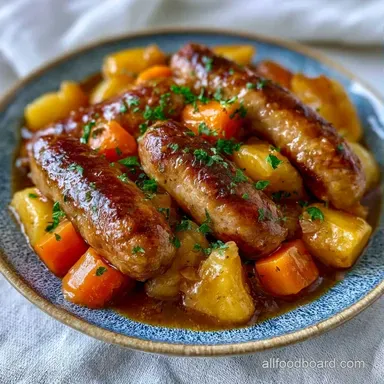
Slow Cooker Sausage Casserole with Potatoes and Gravy
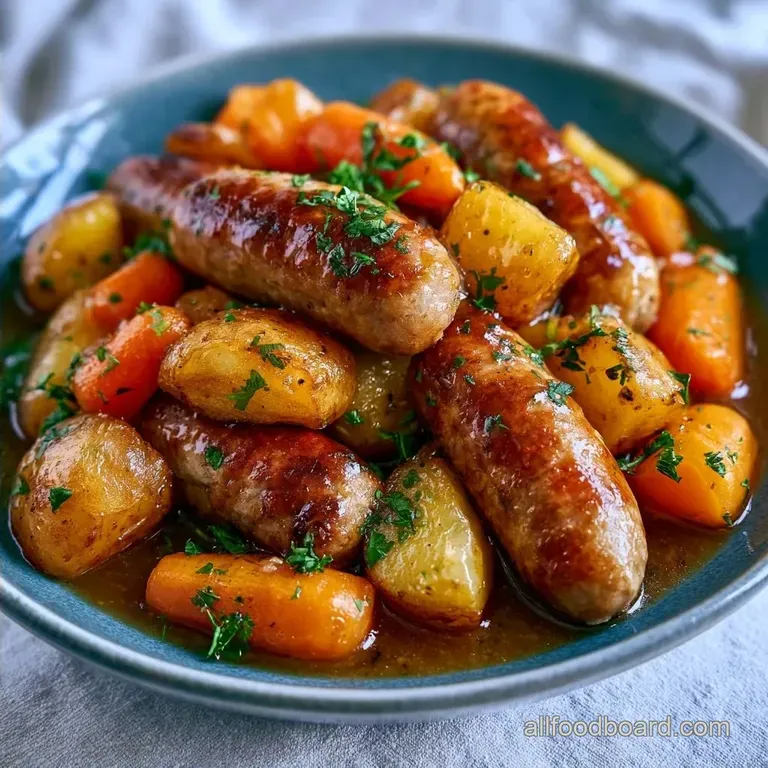
- Time:15 minutes active + 7 hours cooking = Total 7 hours 15 mins
- Flavor/Texture Hook: Mahogany crusted sausages with a thick, glossy gravy
- Perfect for: Busy weeknights or meal prep for a hungry family
The smell of pork sausages hitting a hot skillet is, for me, the smell of a successful Tuesday. There's that specific, aggressive sizzle when the fat begins to render, filling the kitchen with an aroma that practically screams "dinner is sorted." I remember the first time I tried a slow cooker version of this.
I was lazy and just dumped everything in raw. The result? Grey sausages and a thin, watery broth that tasted more like a sad soup than a hearty meal.
It was a total letdown. But that mistake taught me that the "slow" part of the cooker isn't a replacement for the high heat of a pan. Once I started searing the meat and sautéing the aromatics first, everything changed.
This Slow Cooker Sausage Casserole became my go to because it gives you that deep, roasted flavor without needing to hover over the stove for hours.
You can expect a dish where the potatoes are tender but hold their shape, and the gravy is thick enough to cling to your fork. It's the kind of homemade comfort food that feels like a hug in a bowl, especially when it's cold outside. We've focused on the hero ingredient here: the Yukon Gold potato.
Unlike Russets, which can disintegrate into mush over seven hours, Yukons keep their integrity and add a natural creaminess to the sauce.
Why This Works
Instead of a chemistry lesson, let's just talk about what's actually happening in the pot so you can tweak this with confidence.
- The Browning Effect: Searing the meat creates brown bits in the pan that dissolve into the sauce, giving the Slow Cooker Sausage Casserole a rich, dark color and savory depth.
- Starch Control: Yukon Gold potatoes release just enough starch to help the sauce, but not so much that the whole thing becomes a thick paste.
- Layered Cooking: Placing the root vegetables at the bottom protects them from overcooking while allowing the sausage juices to drip down and flavor them.
- Slurry Timing: Adding the cornstarch at the end ensures the gravy thickens quickly without burning or clumping during the long simmer.
| Method | Total Time | Texture | Best For |
|---|---|---|---|
| Slow Cooker | 7 hours 15 mins | Velvety & Tender | Set and forget meals |
| Stovetop | 1 hour 30 mins | Slightly Firmer | Quick cravings |
| Oven Bake | 2 hours | Roasted Edge | Crispy tops |
I've found that while the oven is great for a crust, the slow cooker version is simply more forgiving. It allows the flavors to meld in a way that's hard to replicate quickly. If you're in a rush, you might consider a Cheesy Kielbasa Potato Bake, but for a deep gravy, the slow cooker wins every time.
Ingredient Breakdown
Let's look at what's doing the heavy lifting in this recipe. Not every ingredient is just "filler" - they all have a job.
| Ingredient | Science Role | Pro Secret |
|---|---|---|
| Yukon Gold Potatoes | Texture Stabilizer | Cut them into 1.5 inch chunks to avoid mush |
| Tomato Paste | Umami Booster | Sauté it briefly if you want a sweeter taste |
| Beef Broth | Flavor Base | Use low sodium so you can control the salt |
| Cornstarch | Thickening Agent | Always mix with cold water first to avoid lumps |
What You'll Need
For this Slow Cooker Sausage Casserole, keep it simple. You don't need a professional kitchen, just a few basics that most of us already have in the drawers.
- Slow Cooker: A 6 quart model is usually best for this volume.
- Large Skillet: Cast iron is my preference for the best sear on the sausages.
- Whisk: Essential for getting that cornstarch slurry smooth.
- Chef's Knife: For those rough cut vegetables.
Chef Note: If you don't have a skillet, you can brown the sausages in the oven under a broiler for 5-8 minutes, though you'll miss out on those tasty pan drippings for the vegetables.
Ingredients & Substitutes
Here is exactly what you need. I've listed the main items and some swaps if your pantry is looking a bit bare.
- 1 lb pork sausages (Substitute: Italian sausages for a zesty kick) Why this? High fat content creates the base for the gravy
- 1 large yellow onion, roughly diced (Substitute: White onion) Why this? Provides a balanced, sweet aromatic base
- 3 cloves garlic, minced (Substitute: 1 tsp garlic powder) Why this? Adds a sharp, pungent depth
- 1 tbsp olive oil (Substitute: Butter) Why this? High smoke point for searing
- 1 lb Yukon Gold potatoes, 1.5 inch chunks (Substitute: Red potatoes) Why this? Holds shape better than Russets during long cooks
- 3 large carrots, thick rounds (Substitute: Parsnips) Why this? Adds sweetness and earthy color
- 1 cup frozen peas (Substitute: Frozen edamame) Why this? Adds a pop of color and freshness at the end
- 2 stalks celery, chopped (Substitute: Bok choy stems) Why this? Essential part of the aromatic "mirepoix"
- 2 cups beef broth, low sodium (Substitute: Chicken broth) Why this? Deep, savory liquid that anchors the dish
- 2 tbsp tomato paste (Substitute: 1 tbsp tomato concentrate) Why this? Thickens the sauce and adds a subtle tang
- 1 tbsp Worcestershire sauce (Substitute: Soy sauce) Why this? Complex fermented flavor that enhances the meat
- 1 tsp dried thyme (Substitute: Dried rosemary) Why this? Classic pairing with pork and root vegetables
- 1 tsp salt (Substitute: Sea salt) Why this? Enhances all other flavors
- 1/2 tsp black pepper (Substitute: White pepper) Why this? Provides a mild, warming heat
- 2 tbsp cornstarch (Substitute: Arrowroot powder) Why this? Creates a glossy, thick finish
- 2 tbsp cold water (Substitute: Cold broth) Why this? Necessary to activate the starch
| Original Ingredient | Substitute | Why It Works |
|---|---|---|
| Beef Broth (2 cups) | Chicken Broth (2 cups) | Lighter flavor. Note: Less richness than beef |
| Pork Sausages (1 lb) | Turkey Sausages (1 lb) | Leaner option. Note: May need extra oil for searing |
| Cornstarch (2 tbsp) | Flour (3 tbsp) | Common pantry item. Note: Gives a matte finish, not glossy |
When choosing your sausages, don't go for the lowest fat option. According to USDA FoodData, the fat in pork sausages is where much of the flavor is stored. If you use ultra lean sausages, the gravy will end up tasting thin and one dimensional.
Step by step Guide
Let's get this moving. I've broken this down into phases so you can manage your time. Total active prep is about 15 minutes, but the slow cooker does the heavy lifting for 7 hours.
Phase 1: The Flavor Foundation
- Heat olive oil in a skillet over medium high heat. Add sausages and sear until the skins are mahogany colored and crisp on all sides, then remove and set aside. Note: Don't crowd the pan or they'll steam instead of brown.
- In the same skillet, sauté the diced onions and celery for 3-4 minutes until softened, then stir in the minced garlic for 30 seconds until fragrant. Note: The brown bits left from the meat are gold - make sure the veggies scrape them up.
Phase 2: Strategic Layering
- Place the chopped potatoes and carrots at the bottom of the slow cooker. Note: Root veggies take longest to cook, so they go lowest.
- Pour the sautéed onion and garlic mixture over the root vegetables.
- Place the seared sausages on top of the vegetable bed. Note: This keeps the sausages from getting too mushy by sitting in the liquid.
Phase 3: The Slow Simmer
- Whisk together the beef broth, tomato paste, Worcestershire sauce, thyme, salt, and pepper, then pour the liquid over the sausages and vegetables.
- Cover and cook on Low for 7 hours (or High for 4 hours) until the potatoes are tender when pierced with a fork.
Phase 4: The Final Thickening
- Mix the cornstarch and cold water to create a slurry; stir into the casserole during the final 30 minutes of cooking until the gravy is glossy and thick.
- Stir in the frozen peas just before serving until they are bright green and heated through.
Fix Your Casserole
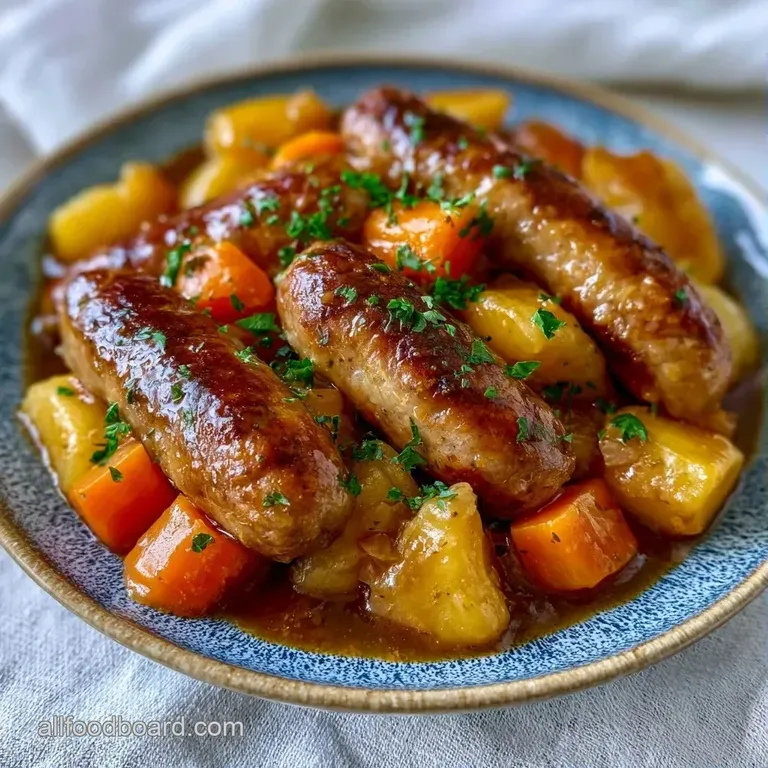
Even for experienced cooks, slow cooker meals can go sideways. Usually, it's a matter of liquid ratios or heat timing.
Why Your Gravy is Still Too Thin
If your sauce looks like soup, you likely didn't use enough cornstarch or you stirred it in too early. If it's still thin at the end, whisk an extra teaspoon of cornstarch into some cold water and stir it in on the High setting for 10 minutes.
The Vegetables are Mushy
This usually happens if you use Russet potatoes or cut the carrots too thin. To avoid this, stick to Yukon Golds and keep your chunks at least 1.5 inches. If they're already mushy, you can mash some of the potatoes into the sauce to make it even creamier.
The Sausages Burst
Sausages often split if they are boiled too aggressively. Searing them first creates a firmer skin that holds up better. Also, avoid stirring the pot too often; let the slow cooker do its thing.
| Problem | Root Cause | Solution |
|---|---|---|
| Bland taste | Not enough salt/sear | Add a splash of Worcestershire or salt at the end |
| Burnt edges | Low liquid level | Add 1/4 cup more broth next time |
| Grainy sauce | Cornstarch not mixed | Always dissolve starch in cold liquid first |
Common Mistakes Checklist:
- ✓ Did you sear the sausages? (Don't skip this!)
- ✓ Are the potatoes Yukon Gold? (Russets will dissolve)
- ✓ Did you use cold water for the slurry? (Hot water causes lumps)
- ✓ Did you add the peas at the very end? (Prevents them from turning brown)
- ✓ Did you leave the lid closed? (Opening it lets heat escape and adds 15-20 mins to cook time)
Customizing the Flavors
Once you've mastered the basic Slow Cooker Sausage Casserole, you can start playing with the profile. This is where it gets fun.
For a Zesty Apple Twist Pork and apple are a match made in heaven. Add one diced Granny Smith apple to the bottom of the pot with the carrots. The acidity cuts through the fat of the sausage and adds a bright, tart note to the gravy.
For a Mediterranean Profile Swap the thyme for dried oregano and add a handful of Kalamata olives and some sliced artichoke hearts. Use chicken broth instead of beef for a lighter, more coastal feel. This variation feels less like a winter stew and more like a spring meal.
For a Low Carb Alternative If you're skipping the potatoes, swap them for cauliflower florets and turnips. Note that cauliflower releases more water than potatoes, so reduce the beef broth by half a cup to prevent the sauce from becoming too runny. If you're looking for other cozy ideas, you might enjoy my Ground Turkey Goulash, which is equally filling.
For Extra Richness Stir in a tablespoon of Dijon mustard along with the cornstarch slurry. It adds a sharp, velvety tang that makes the dish taste more like a professional bistro meal than a home cooked stew.
Scaling the Recipe
When you need to feed a crowd or just yourself, you can't always just double everything. There's some logic to how liquids and heat work in a slow cooker.
Scaling Down (Half Batch) If you're making a smaller portion, use a 3 quart slow cooker if you have one. Reduce the cooking time by about 20% because a smaller mass of food heats up faster. If you only have one egg in a recipe (not applicable here, but a general tip), beat it first and use half.
Scaling Up (Double Batch) When doubling this Slow Cooker Sausage Casserole, don't double the salt and spices. Start with 1.5x the amount and taste at the end. Liquids also don't need to be doubled fully because there's less evaporation in a full pot; reduce the beef broth by about 10% to avoid a watery sauce.
Important Temperature Note If you're using a massive 8 quart cooker for a double batch, make sure you don't overfill it. Leave at least 2 inches of space at the top for the liquid to bubble without overflowing.
| Scale | Salt/Spice | Liquids | Time Adjustment |
|---|---|---|---|
| 1/2 Batch | 50% | 50% | -20% time |
| 2x Batch | 75-80% | 90% | Same time |
| 3x Batch | 80% | 80% | +1 hour on Low |
Truth About Casseroles
There are a few things people always say about slow cooking that just aren't true. Let's set the record straight.
The Searing Myth Many people believe that searing meat "locks in the juices." This is actually false. Moisture loss happens regardless of whether you sear or not. The real reason we sear the meat in this Slow Cooker Sausage Casserole is for the flavor.
The browning creates complex compounds that you simply cannot get from simmering alone.
The "Low is Always Better" Myth Some insist that the Low setting is the only way to get tender meat. While Low is great for very tough cuts, pork sausages are already processed and seasoned. They do just fine on High for 4 hours.
The choice depends on your schedule, not the quality of the meat.
The "More Liquid, Better Sauce" Myth It's tempting to fill the pot to the brim with broth, but slow cookers are sealed environments. Very little liquid evaporates. If you add too much, you'll spend an hour trying to thicken it at the end, and you'll dilute the flavor of the sausages.
Storage and Waste
Don't let a single bit of this meal go to waste. This dish actually tastes better the next day as the flavors continue to settle.
Fridge and Freezer Store leftovers in an airtight container in the fridge for up to 4 days. For the freezer, this casserole lasts about 3 months. To freeze, let it cool completely first. When reheating from frozen, thaw it in the fridge overnight and then warm it on the stove over medium low heat.
Reheating Tips Avoid the microwave if you can, as it can make the sausages rubbery. Instead, put the leftovers in a small pot with a splash of water or beef broth. Heat slowly until it bubbles. This restores the velvety texture of the gravy.
- Onion Skins
- Don't toss the clean onion skins and carrot ends. Keep them in a freezer bag and use them to make a homemade vegetable stock.
- Leftover Gravy
- If you have a bit of sauce left but no meat, use it as a base for a quick pot pie or pour it over some mashed potatoes.
- Sausage Trimmings
- If you have a few sausages left over from the pack, freeze them individually so you can toss them into a breakfast scramble.
Great Pairing Ideas
Since this Slow Cooker Sausage Casserole is so rich and savory, you want sides that provide a bit of contrast - think acidity or freshness.
The Fresh Balance A crisp green salad with a sharp lemon vinaigrette is the best companion here. The acid cuts through the richness of the pork and the starch of the potatoes, cleansing your palate between bites.
The Hearty Route If you're feeding a crowd that's genuinely starving, serve this over a bed of buttery mashed cauliflower or even some steamed white rice. The rice absorbs the extra gravy, making the meal stretch even further.
Something Crusty You can't have a gravy based dish without bread. A toasted sourdough baguette or a warm piece of garlic bread is essential for mopping up every last drop of that glossy sauce. For another comfort style side, you might enjoy my Authentic Louisiana Dirty Rice, which brings a completely different, spicy energy to the table.
Critical Sodium Level
1180 mg 1,180 mg of sodium per serving (51% 51% of daily value)
The American Heart Association recommends a daily sodium limit of no more than 2,300 mg, with an ideal limit of 1,500 mg for most adults.
Tips to Reduce Sodium
-
Swap the Broth-30%
Replace the low-sodium beef broth with homemade unsalted beef stock or water to significantly lower the base sodium content.
-
Choose Fresh Meats-25%
Substitute processed pork sausages for fresh pork loin or low-sodium sausage alternatives to avoid hidden preservatives.
-
Eliminate Added Salt-25%
Remove the 1 tsp of salt entirely; the natural flavors of the vegetables and meat will shine through.
-
Alternative Tang-20%
Replace the Worcestershire sauce with a splash of apple cider vinegar or lemon juice for a similar acidic punch without the salt.
-
Enhance with Herbs
Double the dried thyme or add fresh parsley and paprika to boost the flavor profile without adding any sodium.
Recipe FAQs
Is this a cheap and easy slow cooker recipe for lazy people?
Yes, it is highly affordable and requires minimal effort. With basic root vegetables and pork sausage, it costs very little per serving and only requires 15 minutes of active prep.
Can I use red potatoes instead of Yukon Gold?
Yes, red potatoes work well. They hold their shape better during long cooks, similar to the hearty vegetables used in our slow cooker pot roast.
Is it true that searing the sausages is optional in a slow cooker?
No, this is a common misconception. Searing creates the mahogany colored crust and deep flavor that prevents the sausages from tasting boiled.
How to thicken the gravy at the end?
Whisk cornstarch and cold water into a slurry. Stir this mixture into the casserole during the final 30 minutes of cooking to achieve a thick consistency.
Can I freeze the leftovers?
Yes, it lasts up to 3 months in the freezer. Let the casserole cool completely before transferring it to an airtight container.
Can this be cooked on High instead of Low?
Yes, it takes 4 hours on the High setting. If you are short on time, use High instead of the standard 7-hour Low setting.
When should I add the frozen peas?
Stir them in just before serving. Adding them at the very end keeps them bright green and prevents them from becoming mushy.
Slow Cooker Sausage Casserole with Gravy