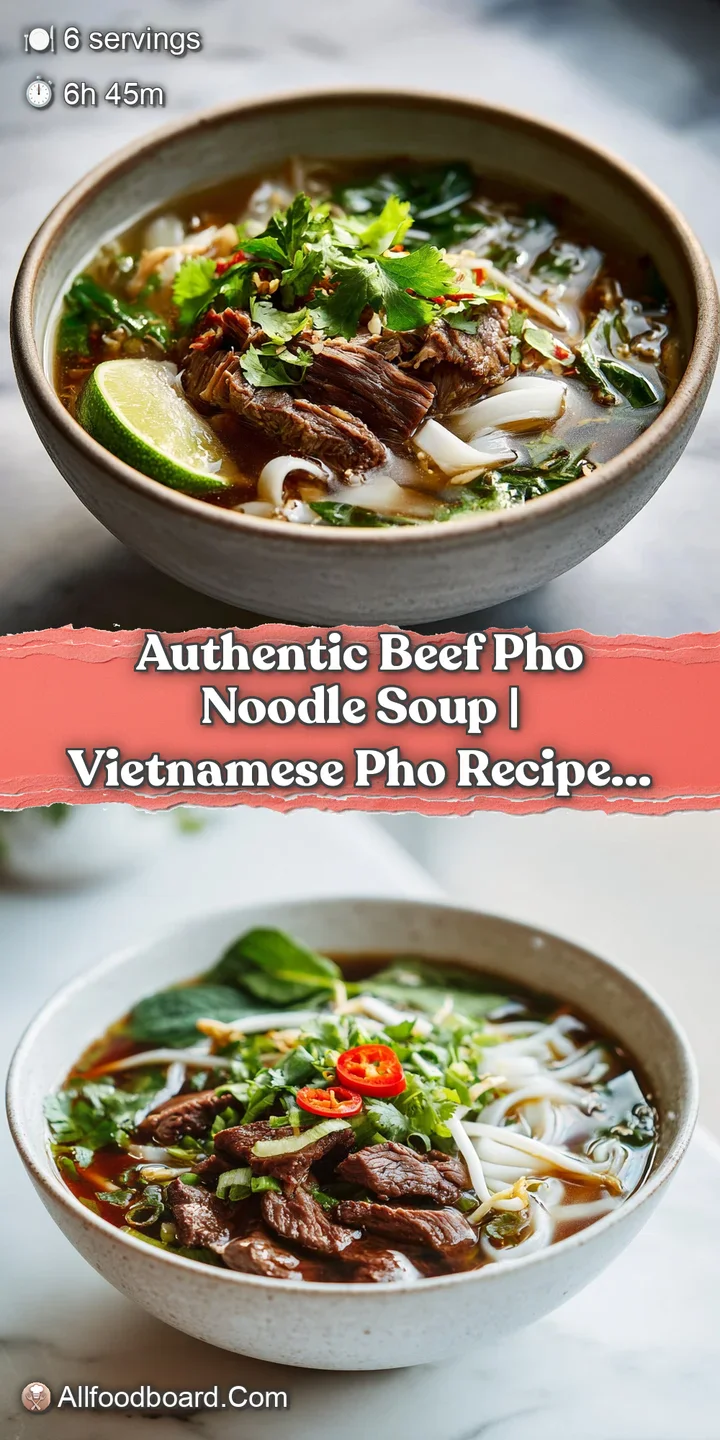
Authentic Beef Pho Noodle Soup
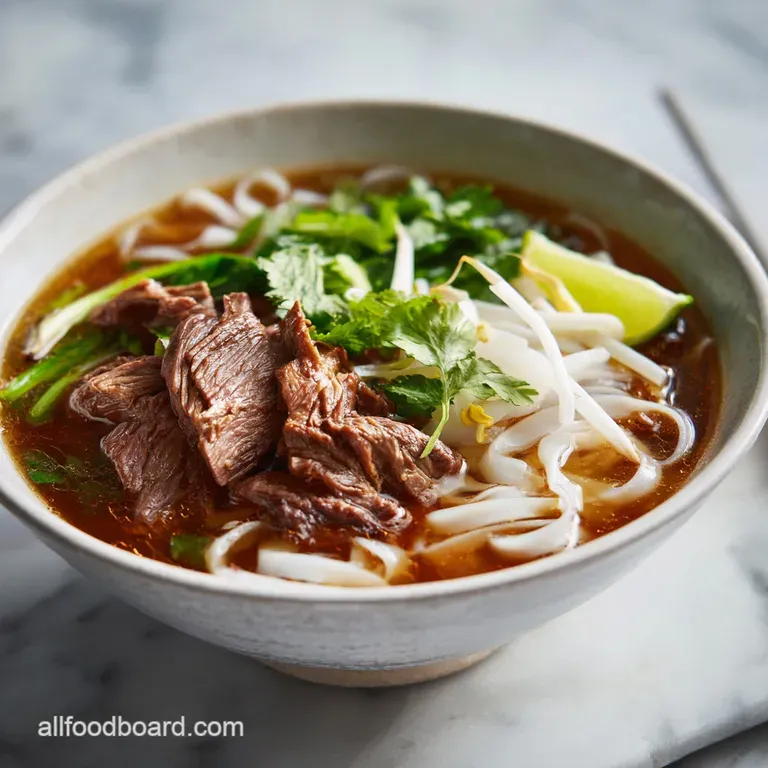
- Time: Active 45 minutes, Passive 360 minutes, Total 405 minutes
- Flavor/Texture Hook: Crystal clear, aromatic broth with velvety, flash cooked beef
- Perfect for: Weekend projects that yield enough liquid gold for a week of gourmet lunches
- The Magic of the Long Simmer
- Precision Checkpoints
- The Components of Liquid Gold
- Essential Kitchen Gear
- The Art of the Simmer
- Common Mistakes Checklist
- Troubleshooting the Broth
- Smart Scaling for Large Groups
- Debunking Broth Myths
- Storage and Zero Waste
- The Table Side Experience
- CRITICAL Sodium Alert
- Recipe FAQs
- 📝 Recipe Card
The Magic of the Long Simmer
The transformation of 5 lbs of beef bones into a clear, soul warming liquid is pure kitchen magic, but there are a few specific mechanisms that make it happen. It’s not just about boiling water; it’s about a controlled extraction of flavor that keeps the broth light but powerful.
- The Impurity Purge: Boiling the bones for exactly 20 minutes before the real simmer removes the "grey scum" and blood proteins that would otherwise make your broth cloudy and bitter.
- Aromatics Anchoring: Charring the ginger and onions over an open flame creates a smoky, caramelized base that acts as the backbone for the lighter spice notes.
- Gelatin Evolution: Simmering the knuckle bones for 6 hours breaks down collagen into gelatin, providing a silky mouthfeel that coats the tongue without being greasy.
- Spice Toasting: Dry toasting the star anise and cinnamon awakens the essential oils, ensuring the fragrance is dynamic rather than muted and dull.
Achieving a Crystal Clear Broth
To get that legendary clarity, you must resist the urge to let the pot reach a rolling boil once the "clean" water is in. A violent boil emulsifies the fat and remaining tiny particles back into the water, resulting in a murky, "muddy" appearance.
You want a "lazy bubble" just one or two bubbles breaking the surface every few seconds. This keeps the fat separate and floating on top, where you can easily skim it away, leaving the liquid underneath perfectly translucent.
Developing Deep Umami Layers
While the beef provides the body, the salt, fish sauce, and rock sugar create the "vibe." Traditional white sugar is too sharp and aggressive for this dish. Rock sugar (sugar candy) dissolves slowly and provides a mellow, rounded sweetness that balances the salty punch of the fish sauce.
It acts as a bridge between the savory beef and the aromatic spices, making the final profile feel complete rather than disjointed.
| Preparation Method | Total Time | Resulting Texture | Best For |
|---|---|---|---|
| Traditional Stovetop | 6 hours 45 mins | Crystal clear, silky | The ultimate authentic experience |
| Pressure Cooker | 1 hours 30 mins | Slightly richer, less clear | Fast weeknight cravings |
| Slow Cooker | 10 hours | Deeply infused, dark | Set it and forget it meal prep |
Getting the timing right is the difference between a bowl that's "okay" and one that is a religious experience. The beef chuck needs to come out early, around the 2 hour mark, because if it simmers for the full 6 hours, it will turn into stringy, flavorless mush.
We want it tender enough to slice but firm enough to hold its shape against the noodles.
Precision Checkpoints
To ensure your Pho Noodle Soup hits the mark every single time, keep these three numeric markers in mind while you're in the thick of it:
- The Blanch: 20 minutes at a rolling boil. Don't cut this short, as this is where all the "funk" from the bones is released.
- The Temperature: Keep the simmer between 195°F and 205°F. If you go higher, you'll lose clarity; if you go lower, you won't extract the gelatin.
- The Slicing: Freeze your raw sirloin for 30 minutes before slicing. This allows you to get those paper thin, translucent sheets that cook instantly when the broth hits them.
The Components of Liquid Gold
Every single ingredient in this pot has a specific job to do. We aren't just throwing things in a pot; we're orchestrating a symphony of flavors that relies on high-quality components.
| Ingredient | Science Role | Pro Secret |
|---|---|---|
| Beef Marrow Bones | Gelatin/Body | Look for "knuckle" bones for the highest collagen content. |
| Star Anise | Aroma Profile | Don't use more than 5 pods; too many will make the broth taste like medicine. |
| Fish Sauce | Salt/Umami | Use a high protein brand like Red Boat 40°N for a cleaner savory finish. |
| Yellow Rock Sugar | Flavor Balancer | It provides a "muffled" sweetness that doesn't overwhelm the beef. |
Selecting Your Elements
- 5 lbs beef marrow bones and knuckle bones: These are the foundation. Knuckles provide the "body" or gelatin, while marrow bones provide the rich beefy essence.
- 1 lb beef chuck or brisket: This provides the "cooked" meat topping and adds a deeper meaty flavor to the broth during its 2 hour stay.
- 6 quarts water: Use filtered water if possible, as it allows the subtle spice notes to shine without interference from chlorine.
- 2 large yellow onions: These provide the sweet, savory base. Halving and charring them is non negotiable.
- 4 inches fresh ginger: Charred ginger adds a spicy, earthy warmth that cuts through the richness of the beef.
- 1/4 cup premium fish sauce: This is your primary salt source. It adds a fermented depth that soy salt can't touch.
- 1 tbsp salt: To sharpen the initial flavor profile.
- 1 oz yellow rock sugar: For that signature mellow finish.
- Spice Sachet: 5 star anise pods, 1 cinnamon stick, 4 whole cloves, 1 tbsp coriander seeds, 1 black cardamom pod.
- 1.5 lbs dried small width rice sticks (Bánh Phở): These need to be hydrated just right to maintain a "chewy" bite.
- 0.5 lb beef sirloin or eye of round: Must be paper thin for the "raw" topping.
- The Garnishes: 2 cups fresh bean sprouts, 1 bunch Thai basil, 0.5 cup fresh cilantro, 2 limes, 3 Thai bird's eye chilies.
- The Finishing Sauces: 2 tbsp hoisin sauce, 1 tbsp sriracha.
Chef Tip: If you can't find black cardamom, don't substitute regular green cardamom. They are completely different flavors. Green is floral and bright, while black is smoky and camphorous. If you can't find black, just leave it out!
Essential Kitchen Gear
You don't need a professional kitchen, but having the right tools for a 6 hour simmer makes the process much smoother and safer.
- 12 Quart Stockpot: You need plenty of head space for 6 quarts of water plus 5 lbs of bones without it boiling over.
- Cast Iron Skillet: The best tool for charring the ginger and onions without ruining your non stick pans.
- Fine Mesh Sieve: Essential for that final strain to ensure no tiny bone fragments or spice bits end up in your bowl.
- Spice Sachet or Cheesecloth: This keeps the spices from floating around and getting lost, making it easier to pull them out if they start to get too strong.
- Spider Strainer: Perfect for blanching the noodles and lifting the bones out of the pot at the end.
The Art of the Simmer
Follow these steps with precision. The timing might seem long, but the actual hands on work is minimal. We are building a fortress of flavor here.
1. The "Cleanse"
Place the 5 lbs of beef marrow bones and the 1 lb of chuck in your large stockpot. Cover them completely with cold water and bring to a rolling boil. Let them boil vigorously for 20 minutes. You will see a lot of grey, foamy scum rise to the top - this is exactly what we want to get rid of.
After 20 minutes, drain the entire pot into the sink. Scrub each bone under cold running water to remove every bit of residue. Wash the pot thoroughly before starting the next step. Note: This ensures the final broth is clear and the flavor is "pure" beef.
2. The Char and Toast
While the bones are blanching, place your halved onions and ginger in a dry cast iron skillet over high heat. Cook them until the surfaces are blackened and fragrant, about 5-8 minutes per side. Don't be afraid of the char; that black "crust" is where the smoky sweetness lives.
In a separate small pan, toast your star anise, cinnamon, cloves, coriander seeds, and cardamom over medium heat for 2-3 minutes until you can smell the oils releasing. Put the toasted spices into a cheesecloth bag or sachet.
3. The Long Simmer
Return the scrubbed bones and chuck to the clean stockpot with 6 quarts of fresh water. Add the charred aromatics, the spice sachet, fish sauce, salt, and rock sugar. Bring it to a very gentle simmer. Keep it at this "lazy bubble" for 6 hours.
Periodically use a ladle to skim any fat or foam that rises to the surface. Note: Skimming fat keeps the broth light; leaving too much makes it heavy and greasy.
4. Harvesting the Chuck
After exactly 2 hours of simmering, remove the beef chuck from the pot. It should be tender but not falling apart. Submerge it in a bowl of ice water for 5 minutes to stop the cooking and prevent it from darkening, then wrap it in plastic and refrigerate.
This makes it much easier to slice thinly later. Continue simmering the bones for the remaining 4 hours.
5. The Final Seasoning
Once the 6 hours are up, remove the bones and discard them. Strain the broth through a fine mesh sieve into a clean pot. Taste it. It should be bold and slightly "over seasoned" because once you add the noodles and sprouts, the flavor will be diluted.
If it needs more punch, add a splash more fish sauce or a pinch of salt. Keep the broth at a rolling boil right before serving.
6. Noodle Preparation
Prepare the 1.5 lbs of rice sticks according to the package instructions (usually a 10-12 minute soak in hot water). They should be pliable but still have a bit of "snap." Divide them among six large, deep bowls.
Note: Never cook the noodles in the broth; they will release starch and make your beautiful liquid cloudy.
7. Bowl Assembly
Top the noodles with the sliced, chilled chuck and the paper thin raw sirloin slices. Arrange them in a single layer if possible. This is the moment of truth. Pour the boiling hot broth directly over the raw meat.
Watch as the heat cooks the beef instantly, turning it from bright red to a delicate pinkish tan.
8. Final Touches
Serve the bowls immediately with a side plate of bean sprouts, Thai basil, cilantro, lime wedges, and sliced Thai chilies. Let everyone customize their own bowl with hoisin and sriracha. Note: Squeeze the lime in last to keep the citrus notes bright and fresh.
Common Mistakes Checklist
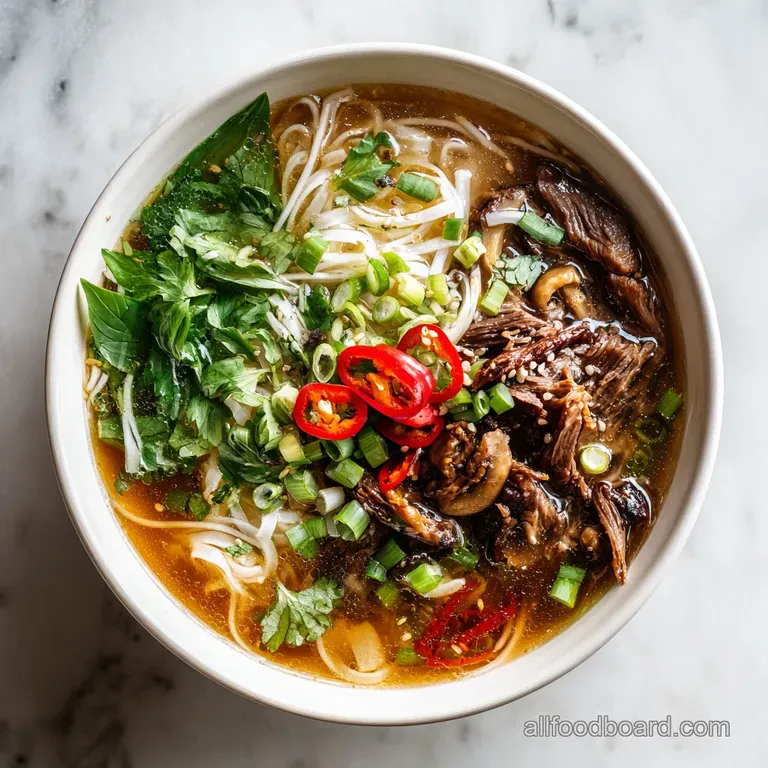
Even the most seasoned cooks can trip up on a few details. Use this checklist to stay on track:
- ✓ Did you wash the pot after blanching the bones? If not, the "scum" will stick to the sides and ruin the new water.
- ✓ Is your simmer too aggressive? Look for that "lazy bubble." If it looks like a jacuzzi, turn the heat down.
- ✓ Did you toast the spices? If you skip this, the broth will taste "raw" and the spice notes won't integrate.
- ✓ Is the meat sliced thin enough? If it's too thick, the broth won't be able to cook the raw sirloin, and you'll end up with chewy, undercooked beef.
- ✓ Are you serving it hot enough? The broth must be at a rolling boil when it hits the bowl to ensure the meat cooks and the noodles warm through.
Troubleshooting the Broth
| Problem | Root Cause | Solution |
|---|---|---|
| Broth is cloudy | The pot boiled too hard or bones weren't blanched. | Strain through a coffee filter or use an "egg white raft" to clear it. |
| Flavor is flat | Not enough salt or fish sauce to bridge the spices. | Add fish sauce 1 teaspoon at a time until the flavors "pop." |
| Spices are bitter | Cinnamon or cloves were left in too long. | Remove the spice sachet after 4 hours instead of 6. |
If Your Broth Looks Gray
This usually happens if the bones weren't scrubbed well enough after the initial 20 minute blanch. While it doesn't ruin the flavor, the aesthetics are a big part of the Pho Noodle Soup experience.
To fix this, you can simmer a few egg whites in the broth for 10 minutes; they will act like a magnet for impurities. Once the whites are cooked and have trapped the gray particles, simply strain the broth again.
If the Spices Overpower the Beef
Sometimes a specific batch of star anise or cloves is particularly potent. If the broth tastes more like "chai" than "beef," don't panic. You can dilute the broth with a little bit of high-quality beef stock or even water, then re season with fish sauce and rock sugar.
Next time, try putting the spice sachet in for only the last 3 hours of the simmer.
Smart Scaling for Large Groups
When you're scaling this Pho Noodle Soup up for a big party, you can't just double everything and hope for the best.
Scaling UP (2x - 4x): If you're making 12 quarts of broth, use 10 lbs of bones but only 1.5x the spices. Cinnamon and cloves are incredibly dominant and can easily take over a larger pot.
Use a larger pot (like a 20 quart stockpot) and ensure you have enough burner power to keep it at a consistent simmer.
Scaling DOWN (1/2): For a smaller 3 quart batch, use 2.5 lbs of bones. However, keep the aromatics (onion/ginger) the same size to ensure you still get that foundational depth.
You may need to reduce the simmer time by about 1 hour since there is less volume to process, but 5 hours is still the minimum for good gelatin extraction.
If you find yourself craving a different style, you might enjoy my Hearty Chicken and Egg Noodles which offers a similar comfort food vibe with a shorter prep time.
| Feature | Fresh Home Version | Restaurant/Shortcut |
|---|---|---|
| Broth Clarity | Crystal clear from blanching | Often slightly cloudy or oily |
| Spice Complexity | Multi layered and vibrant | Can be "one note" from concentrates |
| Meat Quality | Custom selected paper thin cuts | Often pre sliced and slightly oxidized |
Debunking Broth Myths
Myth: You should leave the fat on the broth for flavor. The truth is that while fat carries flavor, the "smell" of Pho comes from the spices and the meat. Too much fat coats the palate and actually prevents you from tasting the delicate cinnamon and star anise notes.
Skim the fat for a cleaner, more vibrant experience.
Myth: Sriracha should be squirted directly into the broth. In Vietnam, many purists argue that adding sriracha and hoisin directly to the bowl masks the hard work you put into the broth. Try dipping the meat into a small side dish of sauce instead, keeping the broth pure until the very end.
Myth: Any noodle will do. Rice sticks (Bánh Phở) are essential because they absorb just enough broth to become part of the dish. If you use wheat noodles, like in my Easy Homemade Spaetzle Noodles, the texture will be completely wrong for this specific flavor profile.
Storage and Zero Waste
Storage: This broth is a meal prep dream. It stays fresh in the fridge for up to 3 days. If you want to keep it longer, freeze the strained broth in heavy duty containers for up to 3 months. Always store the noodles and garnishes separately from the broth, or the noodles will turn into a soggy mess.
Zero Waste: Don't toss those onions and ginger! While they've given their all to the broth, you can actually blend the charred onions into a paste and use it as a base for a quick stir fry sauce later in the week.
The leftover beef bones can be simmered a second time (a technique called "remouillage") to create a lighter "white stock" for cooking rice or simpler soups.
The Table Side Experience
Serving Pho Noodle Soup is an interactive event. The bold flavors are dynamic because they change as you add the herbs and lime. Start by tasting the broth plain to appreciate the 6 hours of simmering.
Then, add the bean sprouts for crunch, the basil for anise like sweetness, and the lime to cut through the richness.
If you're looking for a perfect beverage pairing, a strong Vietnamese iced coffee with condensed milk provides a creamy, bitter contrast to the salty, aromatic soup. The combination of the hot, savory broth and the cold, sweet coffee is the ultimate global travel experience right at your dining table.
Trust me on this: once you've made this version from scratch, you'll never look at a "quick" soup the same way again. Right then, let's get those bones blanching!
CRITICAL Sodium Alert
2140 mg 2140 mg of sodium per serving (93% 93% of daily value)
The American Heart Association recommends limiting sodium intake to no more than 2,300 mg per day, with an ideal limit of 1,500 mg per day for most adults.
Tips to Reduce Sodium in Your Beef Noodle Soup
-
Choose Low-Sodium Fish Sauce-30%
The premium fish sauce is a significant sodium contributor. Opt for a low-sodium fish sauce or rinse regular fish sauce under water to reduce its sodium content before adding.
-
Halve the Added Salt-25%
The recipe calls for 1 tablespoon of salt. Reduce this to 1/2 tablespoon to significantly cut down on added sodium without drastically altering the flavor.
-
Use Low-Sodium Sauces-20%
Both hoisin sauce and sriracha can be high in sodium. Look for low-sodium versions of these condiments, or use them more sparingly.
-
Boost Flavor with Aromatics and Herbs
Increase the use of fresh ginger, onions, Thai basil, cilantro, and the warming spices (star anise, cinnamon, cloves, coriander, cardamom) to add complexity and depth of flavor, naturally reducing reliance on salt.
-
Control Chili Heat
While the Thai bird's eye chilies add heat, they do not contribute significant sodium. If you choose to use store-bought chili pastes or sauces for heat, ensure they are low-sodium options.
Recipe FAQs
What is the soup in pho made of?
It is a complex beef bone broth. The foundation is created by boiling beef marrow and knuckle bones with charred onion, fresh ginger, and a toasted spice blend of star anise, cinnamon, cloves, coriander, and black cardamom, seasoned with fish sauce and rock sugar.
Is pho good for high cholesterol?
It depends on how carefully you skim the fat. While it is a protein rich meal, you must skim the fat and impurities periodically during the 6-hour simmer to keep the broth light and lower in saturated fat.
Is pho good for IBS?
Use caution with the aromatics. Some individuals with IBS may find the concentrated onion and garlic flavors irritating, so consider adjusting the quantity of charred onion used in your batch.
What type of noodles are in pho?
The recipe requires dried small width rice sticks, known as Bánh Phở. These thin, translucent noodles are prepared according to package instructions before being added to your bowls.
How to ensure the raw sirloin is safe to eat?
Slice the beef paper thin and use a boiling hot broth. Pouring the broth while it is at a rolling boil over the meat provides the necessary temperature to cook the raw sirloin slices instantly upon contact. If you enjoy this method of gentle protein cooking, see how we use similar heat sensitive techniques in our shrimp fettuccine recipe.
Is it true I must boil the bones for hours?
Yes, this is necessary for the depth of flavor. You must simmer the marrow and knuckle bones for a full 6 hours to properly extract the collagen and minerals required for an authentic, rich broth.
How to prevent the broth from becoming cloudy?
Maintain a gentle "lazy bubble" simmer throughout the process. An aggressive boil causes impurities to emulsify into the liquid, so keep the heat low and strain the finished broth through a fine mesh sieve for crystal clear results.
Authentic Beef Pho Noodle Soup
Ingredients:
Instructions:
Nutrition Facts:
| Calories | 762 kcal |
|---|---|
| Protein | 39 g |
| Fat | 24 g |
| Carbs | 98 g |
| Fiber | 4 g |
| Sugar | 8 g |
| Sodium | 2140 mg |
