Scalloped Potatoes: Velvety Tender Comfort Food

- The Comfort Food Icon: What Makes This Dish Essential
- The Science of Perfect Scalloped Potatoes: Texture and Flavor Stability
- Essential Components for Decadent Potatoes
- Crafting the Perfect Layers: Method Overview
- Achieving Velvety Perfection: Expert Secrets and Troubleshooting
- Make-Ahead Prep and Handling Leftovers
- Pairing Suggestions for Your Ultimate Side Dish
- More Secrets to Mastering Homemade Scalloped Potatoes
- Recipe FAQs
- 📝 Recipe Card
The Comfort Food Icon: What Makes This Dish Essential
There are very few smells in this world that are as deeply comforting as a pan of hot, bubbly dairy, rich with nutmeg, caramelizing the edges of impossibly tender spuds. It’s the scent memory of every Sunday roast I’ve ever loved.
You pull that dish from the oven, and the sound of the thick, molten sauce barely clinging to the potatoes is just pure magic. This is the truth about Scalloped Potatoes .
I know, I know it sounds complicated, but I promise you this recipe for Scalloped Potatoes is actually incredibly forgiving once you master the simple Béchamel. It uses pantry staples, it's cheap, and the prep time is totally manageable even on a chaotic weeknight.
This creamy golden casserole is the ultimate lifesaver for making any simple meal feel instantly fancy.
We are diving deep today, friend. We’re covering the rookie mistakes I made a decade ago (hello, watery potato soup!) and focusing on the three non-negotiables that guarantee a spectacular, velvety pan of homemade Scalloped Potatoes every single time.
Let's crack on and make something amazing.
The Science of Perfect Scalloped Potatoes: Texture and Flavor Stability
So many recipes just tell you what to do, but not why . I want you to understand the logic behind this classic preparation because that’s the difference between a good dish and an absolute stunner of a potato bake.
Making perfect Scalloped Potatoes involves managing starch and moisture balance.
Dauphinoise vs. Scalloped: Understanding the Classic Difference
This is a classic argument, isn't it? Technically, Pommes Dauphinoise uses cream or milk, but often relies on the potato starch thickening the dish naturally. They are generally uncheesed.
Our Scalloped Potatoes recipe is the Americanized version, utilizing a pre-made roux based Béchamel sauce. This roux is your insurance policy; it stabilizes the sauce, making it far less likely to curdle or break during the long, slow bake.
The Importance of Uniform Potato Slicing
This is the single biggest factor in recipe failure, hands down. If you have thick slices and thin slices mixed together, the thin ones will turn to mush while the thick ones remain crunchy and undercooked.
Invest in a mandoline —it is the quickest way to guarantee every slice of potato is exactly 2mm thick, ensuring they all cook simultaneously. If you're going to make a great dish, you need great tools.
Why a Roux Based Sauce Guarantees Success
The classic Béchamel sauce, made from equal parts butter and flour (the roux), provides the necessary structure. As the sauce bakes and the potatoes release moisture, the starch granules in the flour absorb that liquid and swell up.
This gives you that luscious, fudgy, non-runny texture that defines truly perfect Scalloped Potatoes . No one likes a watery mess on their plate.
Selecting the Right Starch: Waxy vs. Russet Potatoes
For the best results, use medium starch potatoes like Yukon Gold. Russet potatoes are high starch, which means they absorb a ton of liquid; they risk turning your dish into something closer to a mashed potato casserole if not carefully monitored.
Waxy potatoes (like Red Bliss) hold their shape beautifully but don't release enough starch to blend smoothly, leaving the sauce slightly loose. Yukon Golds hit the sweet spot for these Scalloped Potatoes .
The Role of Nutmeg in Classic Béchamel
Nutmeg is not optional in Béchamel; it is essential. A tiny whisper of freshly grated nutmeg cuts the richness of the dairy and adds a warmth that balances the whole dish. Without it, your sauce tastes flat and heavy. Trust me, it doesn't taste like Christmas it just tastes balanced.
Preventing a Watery Mess: The Roux Ratio
The mistake I always made when learning how to make Scalloped Potatoes was making a thin Béchamel. The potatoes release moisture as they cook, so your initial sauce needs to be thick enough to compensate for that added liquid.
We use a generous 4 tablespoons of butter and flour for every 4 cups of liquid, creating a robust, stable roux.
Essential Components for Decadent Potatoes
The brilliance of this dish is that it requires only a handful of super simple ingredients. You don't need fancy stuff; you just need quality items and precise technique. These homemade Scalloped Potatoes prove that simple can be spectacular.
Potato Varieties and Preparation Notes
As mentioned, Yukon Golds are my go-to. They are creamy, hold their shape relatively well, and have beautiful colour. Make sure you peel them no one wants tough skin in their velvety casserole.
After slicing, a quick rinse under cold water removes the excess surface starch that can sometimes lead to an overly gummy texture, then pat them dry.
Dairy Choices: Cream, Milk, and Fat Content
Use full fat dairy. I know diet culture tells us to use skim milk, but this is comfort food. Lower fat products are mostly water, and when water and low-fat proteins are baked for an hour, they separate and curdle.
We use whole milk and heavy cream (double cream) to ensure a high fat ratio and a silky smooth result for our creamy Scalloped Potatoes .
Flour and Butter Ratios for the Silky Sauce
The magic 1:1 ratio of butter to flour (by volume) is the cornerstone of the roux. Melt the butter first, then whisk the flour in quickly. Cook the roux for a minute or two until it smells like cooked pastry. This ensures you cook out the raw flour flavour, which is absolutely vital before adding the milk.
Quick Substitutions for Dietary Adjustments
Sometimes you just don't have exactly what the recipe calls for, and that's okay. Here are some quick swaps so you can still enjoy your Scalloped Potatoes .
| Ingredient | Substitute | Why it Works |
|---|---|---|
| Yukon Gold | Russet or Red Potatoes | Adjust cooking time slightly; Russets may need more liquid. |
| Heavy Cream | Half and Half + 1 Tbsp extra butter | Boosts fat content, mimics richness. |
| Whole Milk | Evaporated Milk (Diluted 1:1 with water) | High fat/protein content stabilizes the sauce. |
| Nutmeg | Pinch of Mace | Closest flavour profile, subtle spice. |
Crafting the Perfect Layers: Method Overview
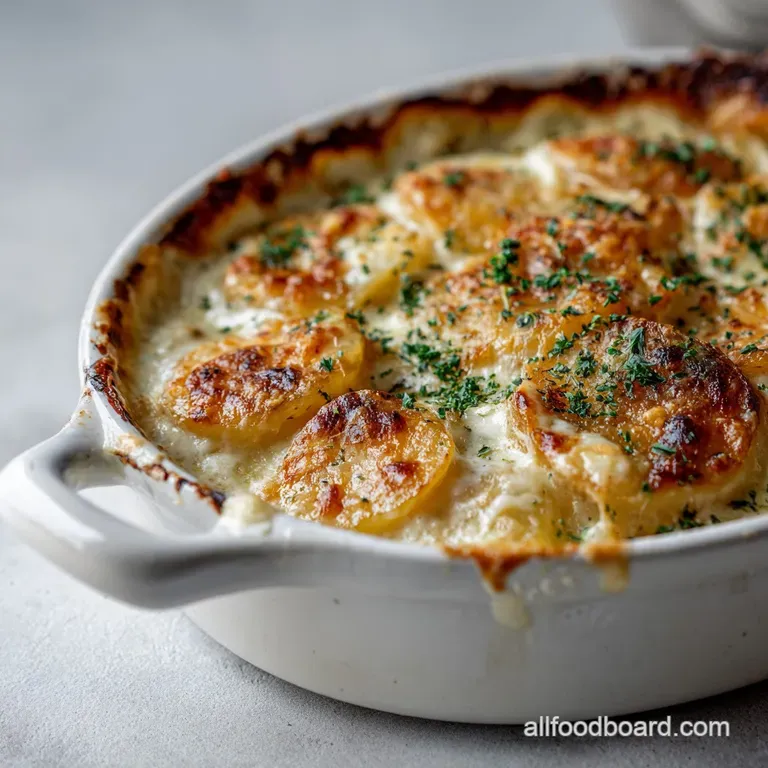
Once the slicing is done and the sauce is built, the rest is just assembly. Making perfect homemade Scalloped Potatoes is actually deeply satisfying because you are truly creating architecture out of simple ingredients.
Equipment Checklist: Mandoline, Dish, and Saucepan
Seriously, the mandoline is my best friend for this. It saves time and prevents slicing anxiety. You need a sturdy 9x13 ceramic or glass baking dish; ceramic conducts heat gently, which is ideal for this long, slow bake.
Finally, a good whisk and a heavy bottomed saucepan for the Béchamel are essential for avoiding lumps.
Building the Béchamel Base: step-by-step Sauce Guide
Start low and slow. Melt your butter, whisk in the flour until it resembles wet sand, and cook it until it stops smelling dusty. Then, add the warm milk— warm is critical! Whisk constantly as you pour, eliminating any lumps immediately.
Simmer until it coats the back of a spoon thickly, then remove it from the heat and stir in the cream and all your seasonings. The sauce should taste slightly over seasoned at this stage because the potatoes will mute the flavour.
Layering Technique: Maximizing Creamy Coverage
Here’s a trick that separates the amateurs from the pros: coat the potatoes in the sauce before layering. Instead of slicing and stacking, drop the dried slices directly into the warm Béchamel and toss them gently with your hands or a spoon.
This ensures every single potato edge is coated and seasoned before it hits the pan. Then, layer them neatly, overlapping them like roof tiles. This prevents large gaps and ensures the structure holds when serving.
Oven Temperature and Baking Time Management
We bake Scalloped Potatoes at a moderate 350°F (180°C). The trick is the two-stage bake. The first 45 minutes are covered with foil. That foil traps the steam, which gently cooks the potatoes through and ensures they become meltingly tender.
Removing the foil for the last 15– 20 minutes lets the top bubble and turn that gorgeous, irresistible golden brown.
Achieving Velvety Perfection: Expert Secrets and Troubleshooting
I have had my fair share of baking disasters. Once, I forgot to add the roux and just poured seasoned milk over the potatoes. That was definitely potato soup, not Scalloped Potatoes . Learning from those moments is how you nail the recipe every time.
The Salt Test: Seasoning the Potatoes and Sauce Separately
Potatoes are flavour sponges; they need salt! You must season the sauce adequately, but don't stop there. When you are layering the coated potatoes into the dish, sprinkle each layer lightly with an extra pinch of kosher salt and pepper.
This guarantees deep seasoning throughout the whole casserole, not just on the surface. This is non-negotiable for flavor intensity.
Troubleshooting: Why Your Sauce Broke or Curdled
Curdling almost always happens for one of two reasons: either your heat was too high during the Béchamel process, or you used low-fat dairy. If your sauce looks split (fat separating from liquid) after the bake, let it rest longer. Sometimes, the residual heat will help re-emulsify it.
If it’s truly broken, try stirring in a tablespoon of cold cream to shock it back together, though this works better before baking. Always use full fat dairy to avoid curdling, especially when making cheesy Scalloped Potatoes variations.
Achieving that Golden Brown Crust
If your potatoes are tender but the top isn't brown enough, crank the heat up to 400°F (200°C) for the last five minutes of baking, or use the broiler for 60 seconds. Watch it like a hawk though! Burnt dairy is a bitter tragedy.
If you're going for a cheesy potato gratin finish, add that cheese when you remove the foil, ensuring a perfectly melted, golden top.
Chef's Note: If you want a truly magnificent crust, brush the top layer of potatoes with a little extra melted butter before the uncovered bake. It encourages deeper caramelization.
Preparing the Dish 24 Hours in Advance
Can you make these ahead? Yes, mostly! You can do all the slicing and the sauce prep the day before. Prepare the sauce, cover it tightly, and refrigerate. Slice the potatoes, toss them in a bowl of cold water (or buttermilk if you have it) to prevent browning, and refrigerate those too. Assemble and bake the next day.
I do not recommend assembling the full dish unbaked and letting it sit overnight, as the raw potatoes will absorb too much liquid and swell, resulting in a dense, mushy final texture.
make-ahead Prep and Handling Leftovers
Properly storing and reheating creamy side dishes like these ultimate homemade Scalloped Potatoes is just as important as the cooking process itself. No one wants food poisoning from improperly handled dairy!
Refrigeration and Reheating Scalloped Potatoes Safely
Once the dish has cooled completely (within two hours of cooking), cover it tightly with plastic wrap and foil and refrigerate. It will happily keep for up to 3 4 days. To reheat, you have a couple of options.
For large amounts, preheat the oven to 325°F (160°C), cover the dish loosely with foil, and bake for 20– 30 minutes until piping hot throughout. For smaller servings, a microwave works fine, but you lose the lovely crust.
Can You Freeze Creamy Potato Dishes?
This is where I usually say no, but I know some people try anyway! While the potatoes themselves freeze okay, rich dairy sauces like Béchamel often separate, becoming grainy and weeping liquid upon thawing.
If you must freeze your Scalloped Potatoes , bake them fully, let them cool, cut them into individual portions, wrap them tightly, and freeze for up to 2 months. Be aware that the texture will likely be slightly mealier and the sauce thinner upon reheating.
Pairing Suggestions for Your Ultimate Side Dish
These rich, satisfying Scalloped Potatoes pair beautifully with lean proteins and anything that provides a slight tang or fresh bitterness to cut through the richness.
Think about texture contrast. If you're serving something rich, you need something light and crunchy next to it. For example, pair this dish with a crisp salad or maybe something that has a similar oven baked feel but a different flavour profile, like my Crispy Air Fryer Potatoes: The Ultimate Shaker Method for Roasties . They offer a wonderful, crunchy alternative texture.
This is truly one of the most versatile side dishes imaginable. You could serve it with absolutely anything, but it’s a non-negotiable for Thanksgiving, Christmas, or any grand feast. If you want another great potato option for a fancy dinner, check out my recipe for Twice Baked Potatoes Recipe: Ultimate Creamy, Crispy Jacket Spuds .
More Secrets to Mastering Homemade Scalloped Potatoes
Let's address a few more high level points that truly refine the process of making incredible Scalloped Potatoes . These are the small details that elevate your cooking from good to exceptional.
Why Pre-cooking the Potatoes is a Disaster
Some older or faster recipes suggest par-boiling the potato slices before baking. I strongly advise against this when making classic Scalloped Potatoes . Why? Because we rely heavily on the natural starch released by the raw potatoes to help thicken and bind the Béchamel sauce.
Par-boiling washes away this crucial starch, leaving you with a higher chance of a watery, separated final dish. Plus, if you sliced them thinly enough (2mm!), they definitely don't need a head start.
The Role of Temperature in the Béchamel
We talked about adding warm milk to the hot roux, but temperature management matters throughout the assembly, especially for rich, cheesy Scalloped Potatoes .
When you mix the sliced potatoes into the warm Béchamel, the slight heat activates the starches on the surface of the potatoes immediately. This ensures better binding during the bake and guarantees a supremely creamy texture. Don't let your Béchamel cool completely before combining it with the spuds!
Getting That Signature Creamy Texture
The hallmark of great, easy Scalloped Potatoes is that perfect texture tender, not mushy, and surrounded by a sauce that holds its shape. If your potatoes aren't tender after the initial 45 minute covered bake, they need more time under the foil.
Don't jump straight to the browning stage if they are still firm, or you will end up with dry tops and hard middles. Patience is key when creating the ultimate, rich Scalloped Potatoes experience.
Final Seasoning Check: Acid Balance
Because this dish is intensely rich full of cream, butter, and starch it benefits hugely from a final sprinkle of acid right before serving, even though it's not traditional.
Try a small drizzle of high-quality sherry vinegar or a squeeze of fresh lemon juice over the entire dish right after the 15 minute rest. This brightness is the secret weapon that truly balances the decadent richness of the glorious, golden brown Scalloped Potatoes .
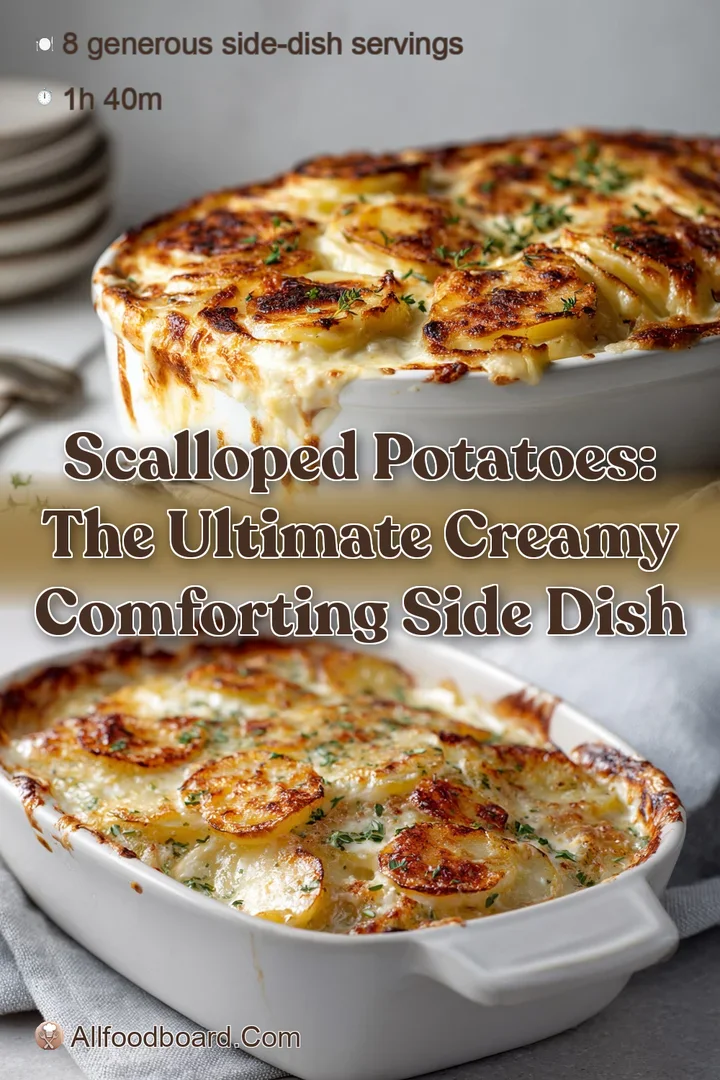
This comprehensive guide should give you everything you need to bake the most stunning, stable, and deeply flavourful Scalloped Potatoes of your life. Get ready to impress everyone at the dinner table with this foolproof recipe for the perfect creamy potato casserole.
Recipe FAQs
Why did my scalloped potatoes turn out watery instead of creamy?
A watery consistency is usually caused by using low-fat milk or slicing the potatoes too thickly, preventing them from fully absorbing the sauce. Ensure you are using whole milk or heavy cream, and guarantee the potato slices are no thicker than 1/8 inch so the starches properly bind the liquid.
Which type of potato is best for achieving that perfect tender texture?
Waxy potatoes, such as Yukon Gold, are highly recommended because they hold their shape well during the long cooking time and release less starch than Russets. This prevents the overall dish from turning into an overly dense or gloppy mess while still absorbing the rich Béchamel sauce beautifully.
Can I assemble the scalloped potatoes ahead of time?
Yes, you can assemble the dish completely up to 24 hours in advance and store it tightly covered in the refrigerator. However, make sure to let the casserole sit at room temperature for about 30 minutes before placing it in the oven to ensure even cooking and to prevent the sauce from cracking due to sudden temperature changes.
Is it necessary to pre-cook the potatoes before layering them?
No, pre-cooking the potatoes is usually unnecessary and often results in a mushy final product. Provided your slices are thin (1/8 inch), they will soften completely within the 60 75 minute covered baking time as they simmer gently in the hot Béchamel.
How can I turn this into a cheesy potato gratin?
To transition this to a gratin, incorporate about 1 cup of finely grated Gruyère or sharp white Cheddar directly into your Béchamel sauce. Additionally, reserve 1/2 cup of cheese to sprinkle over the top during the last 15 minutes of baking for a golden brown, bubbly crust.
Why did my creamy sauce curdle or separate during baking?
Sauce separation usually occurs if the dish is cooked at too high a temperature or if there were sudden temperature shifts when cold milk was introduced to the hot roux. Ensure you use whole milk, avoid aggressive boiling, and check that the sauce is fully bound before pouring it over the potatoes.
Can I freeze leftover scalloped potatoes?
Freezing is generally not recommended for dishes made with a roux based white sauce, as the sauce tends to separate and become grainy upon thawing and reheating. If you must freeze, ensure the dish is slightly undercooked, and reheat it slowly from frozen, covered, at a low temperature to minimize textural compromise.
Ultimate Creamy Scalloped Potatoes
Ingredients:
Instructions:
Nutrition Facts:
| Calories | 415 kcal |
|---|---|
| Fat | 27.5 g |
| Fiber | 3 g |
