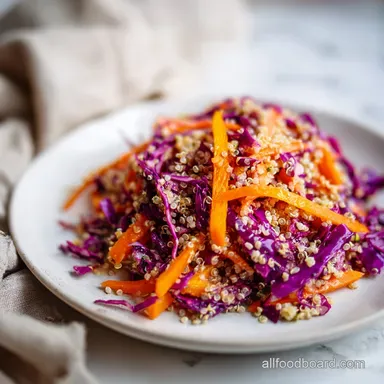
Thai Quinoa Salad: Crunchy and Fresh
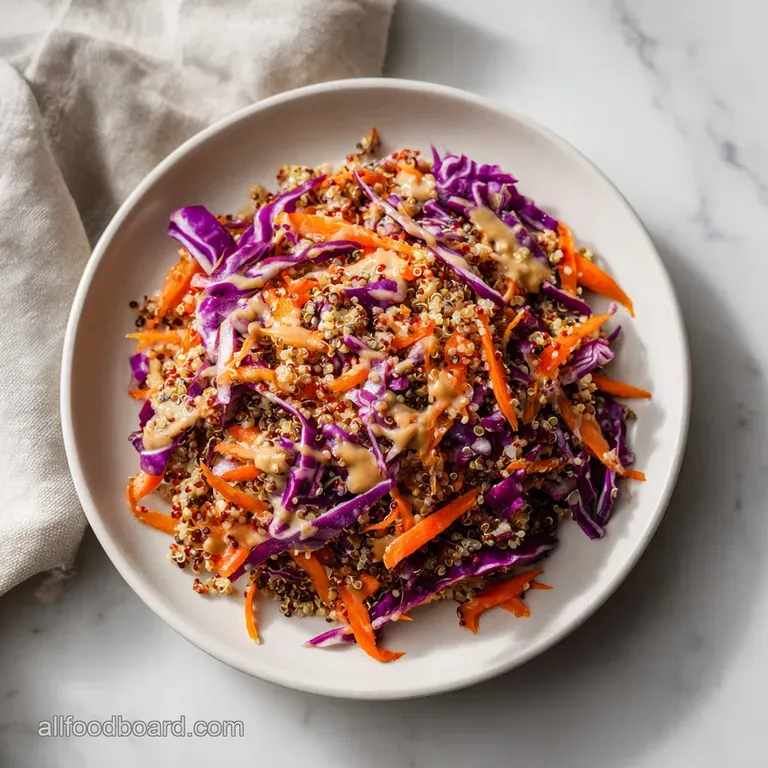
- Time: 15 min active + 15 min cook + 5 min resting = Total 35 minutes
- Flavor/Texture Hook: Velvety peanut dressing paired with a shatter crisp vegetable mix
- Perfect for: High protein weekday lunches or a vibrant meal prep option
- Thai Quinoa Salad with Crunchy Vegetables and Peanut Dressing
- The Secret to Better Quinoa
- Quick Recipe Specifications
- Essential Ingredient List
- Required Kitchen Tools
- Step-by-Step Assembly
- Fixing Common Salad Issues
- Troubleshooting Common Issues
- Adjusting the Portion Size
- Ingredient Deep Dive
- Grain Myths
- Storage and Waste Tips
- Serving and Enjoying
- Recipe FAQs
- 📝 Recipe Card
Thai Quinoa Salad with Crunchy Vegetables and Peanut Dressing
Ever noticed how quinoa can sometimes have this weird, soapy aftertaste that ruins a whole meal? It's not your fault, and it's not the grain's fault, it's just a little bit of nature's defense mechanism.
I remember my first attempt at a grain bowl where I skipped the rinse, and it tasted like I'd dressed my lunch in dish soap. I almost threw the whole thing out, but a quick splash of lime juice saved it, sparking my obsession with high acid, bold flavored Asian fusion.
Discover the perfect recipe for Thai Quinoa Salad with Crunchy Vegetables and Peanut Dressing. This dish is all about the friction between the creamy, salty dressing and the aggressive crunch of raw red cabbage and carrots. It's the kind of meal that wakes up your palate, reminding me of the dynamic stalls in Chiang Mai where every bite is a fight between sweet, sour, and salty.
We aren't doing "subtle" here. We're going for a bold, fragrance heavy experience that feels light but keeps you full. You'll get that velvety mouthfeel from the peanut butter, but it's immediately countered by the zing of fresh ginger and lime.
Trust me, once you experience the contrast of the chilled vegetables against the nutty quinoa, you'll never go back to boring salads.
The Secret to Better Quinoa
Right then, let's talk about why this actually works. Most people treat quinoa like rice, but it's actually a seed, and it behaves differently. To get that light, airy texture instead of a mushy clump, you need to handle the moisture and the surface chemistry correctly.
Saponin Removal: Rinsing the grain strips away the bitter, soapy outer coating. This ensures the nutty flavor shines through without any chemical interference.
Steam Finishing: Letting the pot sit covered for 5 minutes after the heat is off allows the remaining moisture to redistribute. This is what creates those distinct, fluffy grains instead of a sticky mass.
Acidic Balance: The lime juice in the dressing doesn't just add flavor, it breaks down the perceived heaviness of the peanut butter. It keeps the salad feeling bright and zesty rather than cloying.
Texture Layering: By combining soft quinoa with raw, shredded cabbage, we create a "shatter" effect in every bite. This prevents the palate from getting bored.
While most of us stick to the stove, you can actually change how you cook the grain to alter the final result.
| Method | Time | Texture | Best For |
|---|---|---|---|
| Stovetop | 15 min | Fluffy & Distinct | Classic salads |
| Oven | 35 min | Nuttier & Drier | Meal prep batches |
| Rice Cooker | 12 min | Softer & Plump | Quick weekday meals |
The stovetop method is my go to for this recipe because it gives me total control over the simmer, ensuring the grains don't overcook into a paste.
Quick Recipe Specifications
When you're prepping this, keep your eye on the clock and the textures. The goal is a balance of temperatures, where the quinoa is cooled enough not to wilt the cabbage but still holds onto its fragrance.
For a balanced flavor profile, remember the "Thai Triangle": Salt (soy), Sweet (maple syrup), and Sour (lime). If the dressing feels too heavy, a tiny bit more lime juice usually fixes it.
For maximum crunch retention, do not dress the salad until you're ready to eat, or the salt in the soy sauce will draw water out of the cucumbers and cabbage.
- - Sweet
- Maple syrup and natural carrot sugars.
- - Savory
- Soy sauce and roasted peanuts.
- - Acid
- Fresh lime juice.
- - Heat
- Grated ginger.
- - Crunch
- Red cabbage, carrots, and peanuts.
- - Creamy
- Smooth peanut butter.
Essential Ingredient List
I've picked these specific ingredients because they provide the most dynamic contrast. Don't be tempted to use low-fat peanut butter, as the fats are what carry the flavor of the ginger and sesame oil.
- 1 cup (170g) uncooked quinoa Why this? High protein base with a neutral, nutty taste
- 2 cups (480ml) water
- 1/2 tsp (3g) salt
- 2 cups (150g) shredded red cabbage Why this? Provides a sturdy, peppery crunch
- 1 cup (130g) shredded carrots
- 1 cup (100g) sliced red bell pepper
- 1 cup (100g) sliced cucumber
- 1/2 cup (30g) sliced green onions
- 1/2 cup (15g) fresh cilantro, chopped
- 1/4 cup (30g) roasted peanuts, crushed Why this? Adds a toasted, woody depth
- 1/3 cup (85g) creamy peanut butter Why this? The velvety anchor for the sauce
- 2 tbsp (30ml) soy sauce
- 1 tbsp (15ml) maple syrup
- 1 tbsp (15ml) lime juice
- 1 tsp (5ml) sesame oil
- 1 tsp (5g) freshly grated ginger
- 2 tbsp (30ml) warm water
If you're looking for a different way to use these flavors, my Thai peanut chicken wraps use a similar flavor profile but with a warm protein.
| Original Ingredient | Substitute | Why It Works |
|---|---|---|
| Quinoa | Brown Rice | Similar heartiness. Note: Higher carb, lower protein than quinoa |
| Maple Syrup | Honey | Similar viscosity and sweetness. Note: Slightly more floral notes |
| Soy Sauce | Tamari | gluten-free alternative. Note: Almost identical flavor profile |
| Peanut Butter | Almond Butter | Great nut free alternative. Note: Lighter, less "sticky" than peanut butter |
Adding a bit of warm water to the dressing is the secret move. It thins the peanut butter just enough so it coats the grains instead of clumping into a thick paste.
Required Kitchen Tools
You don't need a professional kitchen for this, but a few specific tools make the prep way faster. I use a fine mesh strainer for the quinoa, otherwise, those tiny seeds end up all over my sink.
For the vegetables, a mandoline slicer is a huge help if you want those paper thin ribbons of cabbage and carrots. If you don't have one, a sharp chef's knife and some patience will do. For the dressing, a small glass jar is better than a bowl because you can shake it vigorously to emulsify the oil and peanut butter.
I also suggest using a large mixing bowl with plenty of room. This isn't a "stir" kind of salad, it's a "toss" kind of salad. You need space to fold in the cilantro and peanuts without crushing the delicate cucumber slices.
Step-by-step Assembly
Let's crack on. This is a fast process, but the order of operations matters to keep the textures from becoming a soggy mess.
Phase 1: Preparing the Grain
- Place quinoa in a fine mesh strainer and rinse under cold water for 30 seconds. Note: This removes the bitter saponins
- Combine rinsed quinoa, water, and salt in a saucepan. Bring to a boil, then reduce heat to low, cover, and simmer for 15 minutes until the water is fully absorbed and grains look translucent.
- Remove quinoa from heat and let it sit, covered, for 5 minutes. Fluff with a fork and spread on a plate to cool slightly. Note: This prevents the heat from wilting your raw vegetables
Phase 2: Assembling the Crunch
- Prepare the cabbage, carrots, peppers, and cucumbers by slicing or shredding as specified in the list.
- In a large bowl, toss the cooled quinoa with the shredded red cabbage, carrots, red bell pepper, cucumber, and green onions.
- Fold in the chopped cilantro. Note: Be gentle here so you don't bruise the leaves
Phase 3: Emulsifying the Dressing
- In a small whisk or jar, combine creamy peanut butter, soy sauce, maple syrup, lime juice, sesame oil, and grated ginger. Whisk until smooth, adding warm water 1 tablespoon at a time until the sauce is velvety and pours easily.
- Pour the dressing over the salad, toss gently to coat, and top with crushed roasted peanuts just before serving.
Chef's Note: To get an extra layer of depth, toast your crushed peanuts in a dry pan for 2 minutes until they smell fragrant before adding them to the top.
Fixing Common Salad Issues
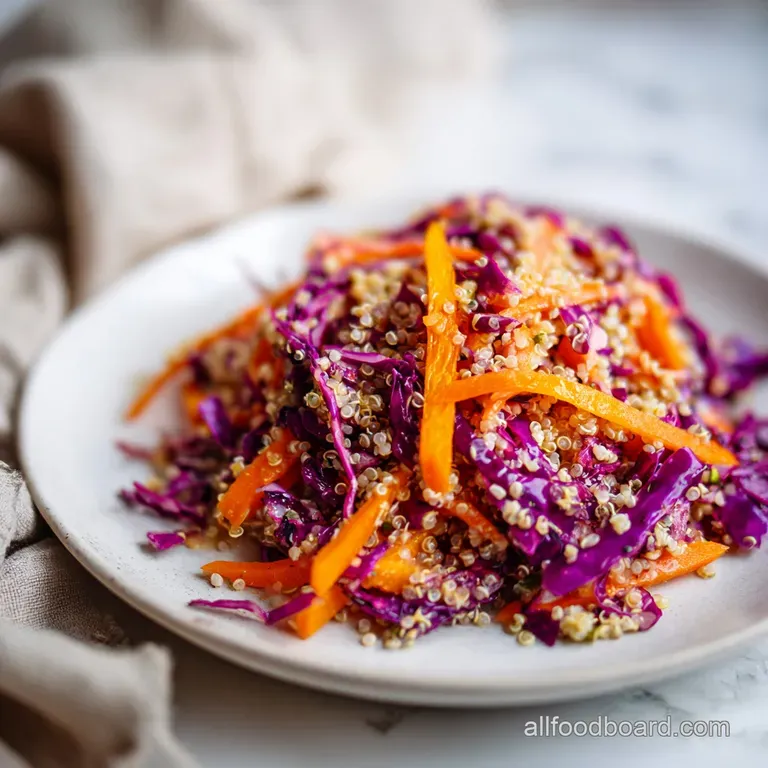
The biggest enemy of this recipe is moisture. Because we're using raw vegetables and a salt based dressing, the salad can turn into a soup if you're not careful.
Troubleshooting Common Issues
| Issue | Solution |
|---|---|
| Why Your Dressing is Too Thick | Peanut butter varies wildly in thickness depending on the brand. If your sauce feels like a paste, you haven't added enough warm water. Keep adding it a teaspoon at a time until it reaches a consisten |
| Why the Quinoa is Too Bitter | If you still taste bitterness, you likely didn't rinse the quinoa long enough or the water you used for simmering had a strong mineral taste. You can fix this by adding an extra squeeze of lime juice |
| Why the Salad Becomes Soggy | This happens when the dressing is added too early. The salt in the soy sauce pulls water out of the cucumbers and cabbage via osmosis. Only toss the salad right before it hits the table. |
Common Mistakes Checklist:
- ✓ Did you rinse the quinoa for a full 30 seconds?
- ✓ Is the quinoa cooled before mixing with vegetables?
- ✓ Did you use warm water for the dressing emulsion?
- ✓ Are the peanuts added only at the very end?
- ✓ Did you whisk the ginger thoroughly so there are no clumps?
Adjusting the Portion Size
If you're making this for a crowd or just for yourself, you can't always just double everything. Some flavors, like sesame oil and ginger, can become overwhelming if scaled linearly.
Scaling Down (½ batch): Use a smaller saucepan for the quinoa so the water doesn't evaporate too quickly. Reduce the simmering time by about 2 minutes and check for doneness.
For the dressing, beat one small egg (if using a mayo based version) or simply halve the peanut butter and soy sauce exactly.
Scaling Up (2x-4x batch): Increase the quinoa and vegetables linearly, but only increase the salt and sesame oil by 1.5x initially. Taste the dressing before adding the full amount of ginger, as too much can make the sauce taste "sharp." Work in batches when tossing the salad to ensure every grain is coated without crushing the vegetables.
For those who prefer a different protein heavy base, you might enjoy my grilled shrimp bowl which also uses a bright, citrusy sauce.
| Goal | Adjustment | Result |
|---|---|---|
| More Protein | Add edamame or tofu | Heartier meal, more satiety |
| Less Salt | Swap soy for coconut aminos | Milder, slightly sweeter taste |
| Extra Heat | Add Sriracha or chili flakes | Spicy kick to balance the peanut |
Ingredient Deep Dive
Understanding the role of each component helps you tweak the recipe on the fly. If you change one thing, you need to know what else to adjust to keep the balance.
| Ingredient | Science Role | Pro Secret |
|---|---|---|
| Lime Juice | Acid/Brightener | Use a microplane for the zest to double the aroma |
| Peanut Butter | Fat/Binder | Use "natural" brands for a cleaner, bolder nut taste |
| Quinoa | Protein Structure | Toast the dry grain for 2 mins before boiling for depth |
| Maple Syrup | Sugar/Viscosity | Use grade A dark for a more caramel like sweetness |
When you're experimenting, remember that the fat in the peanut butter acts as a carrier for the aromatic ginger and sesame oil. Without enough fat, those flavors will taste disconnected rather than integrated.
Grain Myths
There are a few common misconceptions about quinoa that often lead people to cook it incorrectly. Let's clear those up.
Myth: Quinoa is a grain. Actually, quinoa is a pseudocereal, meaning it's a seed that we treat like a grain. This is why it has a higher protein content and a different structure than rice or farro.
Myth: Rinsing removes the flavor. Some people fear that rinsing quinoa washes away the taste. In reality, you're removing saponins, which are bitter compounds. Rinsing actually unlocks the true, nutty flavor of the seed.
Myth: You need a 2:1 water ratio for every brand. While 2 cups of water to 1 cup of quinoa is the standard, different brands and altitudes change the evaporation rate. Always trust the visual cue (translucent grains) over the timer.
Storage and Waste Tips
This salad is a meal prep dream, provided you store the components separately. If you mix everything and leave it in the fridge, the cabbage will lose its shatter and become limp.
Fridge Storage: Store the cooked quinoa in one container and the chopped vegetables in another for up to 4 days. Keep the peanut dressing in a sealed jar. When you're ready to eat, toss them together. This keeps the textures dynamic.
Freezing: You can freeze cooked quinoa for up to 3 months. However, do not freeze the assembled salad or the raw vegetables, as they will turn to mush upon thawing. Thaw the quinoa in the microwave or overnight in the fridge before assembling.
Zero Waste Tips:
- Cabbage Cores: Don't toss the hard core of the red cabbage. Finely dice it and add it to a stir fry or a soup for extra texture.
- Carrot Tops: If you buy carrots with the greens, blend them into a pesto with garlic and olive oil.
- Peanut Scraps: Use any leftover peanut dressing as a dip for raw celery or apple slices.
Serving and Enjoying
To truly appreciate the contrasts in this Thai Quinoa Salad with Crunchy Vegetables and Peanut Dressing, serve it chilled. The cold temperature makes the crunch of the cabbage more pronounced and the peanut dressing feel more refreshing.
I love serving this as a main lunch, but it also works as a side dish. It pairs beautifully with my fresh spring rolls for a full blown Asian inspired spread. If you want to add more protein, top the salad with grilled shrimp or sliced tofu.
Plate it in a wide, shallow bowl rather than a deep one. This allows you to see the vibrant colors of the red cabbage and orange carrots, and it ensures you get a bit of everything in every spoonful. Top with a final sprinkle of crushed peanuts and a few extra cilantro leaves for that professional, street food finish.
Recipe FAQs
What can I use a Thai style peanut dressing for?
It works best as a savory sweet glaze or dressing. Use it for cold grain salads, dipping fresh spring rolls, or drizzling over grilled proteins. If you enjoyed the flavor balance here, see how we use a similar zest in our zesty Thai chicken.
What dressing goes best with quinoa salad?
Creamy peanut dressing is the ideal choice. The fat from the peanut butter coats the grains, while the lime juice provides a necessary acidic contrast to the density of the quinoa.
What is the secret to a good Thai salad?
Balance the four key flavor profiles: salty, sweet, sour, and pungent. This recipe achieves this by combining soy sauce, maple syrup, lime juice, and fresh ginger.
What are common quinoa salad mistakes?
Skipping the rinse and mixing components too early are the most frequent errors. Failing to rinse quinoa leaves a bitter taste, and dressing the salad hours in advance makes the cabbage limp.
Can I make the dressing spicier?
No, this specific recipe does not include hot peppers. You can increase the amount of freshly grated ginger to add a sharper, more pungent bite to the sauce.
How to prevent the salad from becoming soggy?
Store the cooked quinoa, chopped vegetables, and dressing in separate containers. Toss them together only immediately before serving to maintain the crunch of the cucumber and cabbage.
How to remove the bitter taste from quinoa?
Rinse the quinoa in a fine mesh strainer under cold water for 30 seconds. If bitterness remains after cooking, stir in an extra squeeze of lime juice to neutralize the flavor.
Thai Quinoa Salad in 30 Minutes