Shrimp and Grits: Creamy and Southern Style
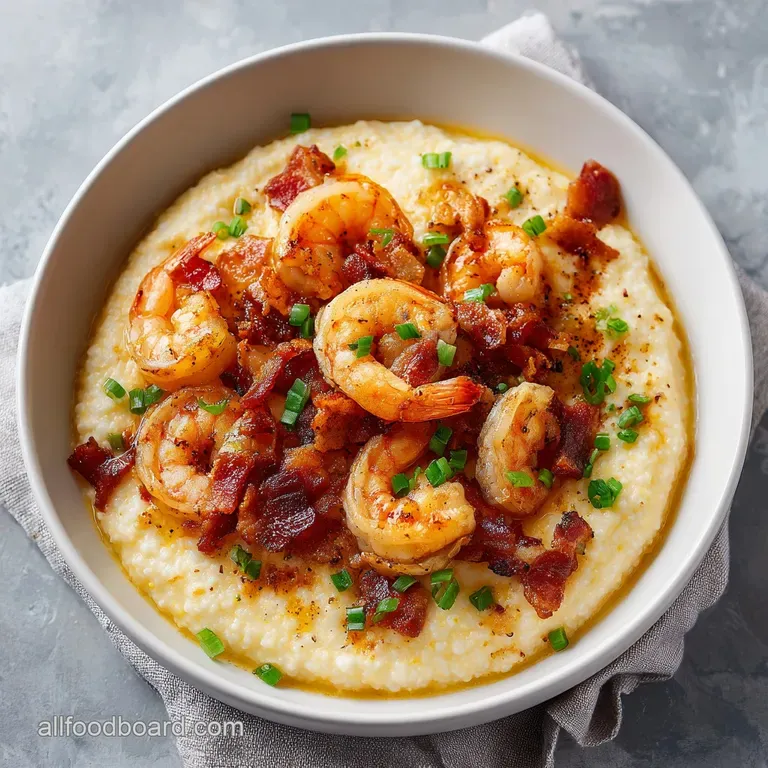
- Time: Active 15 minutes, Passive 15 minutes, Total 30 minutes
- Flavor/Texture Hook: Velvety, buttery grits topped with snappy, Cajun spiced shrimp and a glossy pan gravy
- Perfect for: A comforting family weekend brunch or a quick, impressive weeknight dinner
- Mastering the Classic Shrimp and Grits for Family Dinner
- Important Stats for Your Perfect Meal
- Analyzing Your Key Recipe Components
- Essential Elements and Simple Substitutes
- Necessary Tools for Stovetop Success
- Achieving the Perfect Velvety Texture
- Precision Checkpoints for the Cook
- Preventing Common Pitfalls and Ensuring Success
- Creative Twists and Easy Ingredient Swaps
- Adjusting the Recipe Size CorrectLY
- Keeping Your Leftovers Fresh and Flavorful
- Side Dishes to Round Out the Meal
- Debunking Common Kitchen Beliefs
- Very High in Sodium
- Recipe FAQs
- 📝 Recipe Card
Mastering the Classic Shrimp and Grits for Family Dinner
Did you know that this iconic Southern staple actually started as a humble breakfast for seasonal fishermen in the Lowcountry? Long before it was a star on trendy brunch menus, it was just a simple, filling way to start the day using whatever was fresh off the boat and a scoop of ground corn.
It makes you realize that the best food doesn't need to be complicated, it just needs to be honest. When I first tried making this at home, I was terrified of ending up with a bowl of gritty, flavorless mush, but I quickly learned that the secret is all in the liquid ratio and that final whisk of cold butter.
There is something so satisfying about the way the heavy skillet sizzles when those shrimp hit the rendered bacon fat. You get that spicy, smoky aroma wafting through the kitchen, and it immediately draws everyone to the table.
I used to think I needed a hundred different spices, but honestly, a good Cajun blend and the fond left in the pan do all the heavy lifting. We are going to walk through how to get that signature glossy sauce without any heavy creams or weird thickeners, just pure technique and a little patience.
I have made my fair share of mistakes with this one, like the time I accidentally used pre shredded cheese that just turned into a clumpy, oily mess. Trust me, you'll want to grate your own white cheddar for this.
It is one of those small steps that changes the entire texture from "okay" to "velvety." We are aiming for a dish that feels like a warm hug but looks like something you would pay forty dollars for at a restaurant. Let's get into how we make that happen in just 30 minutes.
Important Stats for Your Perfect Meal
Starch Suspension: Whisking the grits into boiling liquid prevents them from clumping together immediately.
Fat Integration: Using both broth and milk provides a balance of savory depth and creamy mouthfeel without being too heavy.
Emulsion Stability: Adding cold butter to the warm pan gravy at the very end creates a silky, stable sauce that won't break.
Carryover Cooking: Removing the shrimp just as they turn pink ensures they stay snappy rather than becoming rubbery.
| Cooking Goal | Target Internal Temp | Visual Indicator | Texture Check |
|---|---|---|---|
| Perfectly Seared Shrimp | 145°F | Opaque pink and curled into a "C" shape | Snappy and firm, not rubbery |
| Velvety Grits | 212°F (Boil) | Slow, thick bubbles like a lava lamp | Smooth with a slight bite (al dente) |
| Glossy Pan Gravy | N/A | Liquid coats the back of a spoon | Silky and coats the shrimp evenly |
Getting the texture right is the biggest hurdle for most home cooks, but once you understand how the starch in the corn interacts with the fats in the milk and butter, it becomes second nature. If the grits look too thick, a splash of warm broth fixes it instantly.
If the sauce looks too thin, just let it simmer for another minute before you whisk in that cold butter. It is a very forgiving process once you know what to look for visually.
Analyzing Your Key Recipe Components
| Ingredient | Science Role | Pro Secret |
|---|---|---|
| Quick Grits | Provides the starch base for thickening | Whisk constantly for the first 2 mins to stop lumps |
| Cold Butter | Creates a stable fat in-water emulsion | Keep it in the fridge until the very last second |
| White Cheddar | Adds fat and sharp acidity | Grate it fresh so the starch coating doesn't ruin the melt |
Choosing the right type of corn is the first step to success. While some people swear by the long cooking versions, I find that quick grits work beautifully for a 30 minute weeknight meal as long as you treat them with respect.
You might be tempted to use just water to cook them, but you would be missing out on a massive flavor opportunity. The combination of chicken broth and whole milk creates a base that is already seasoned from the inside out.
Essential Elements and Simple Substitutes
- 1 cup quick grits: These are ground finer than stone ground but coarser than instant. Why this? They cook in 15 minutes while maintaining a great texture.
- Substitute: Stone ground grits (Note: Increase liquid by 1 cup and cook for 45 minutes).
- 2 cups low sodium chicken broth: This provides the savory backbone for the base. Why this? Using broth adds more depth than plain water ever could.
- Substitute: Vegetable broth (Same ratio, slightly sweeter profile).
- 2 cups whole milk: This gives the grits their signature creamy, rich texture. Why this? The fat in whole milk creates a smoother mouthfeel.
- Substitute: Heavy cream diluted with water (Richer result, more calories).
- 4 tbsp unsalted butter: Used in the grits for richness and shine. Why this? Controls the salt level while adding a nutty flavor.
- Substitute: Ghee (Higher smoke point, deeper toasted flavor).
- 1.5 cups sharp white cheddar cheese: Grated fresh for the best melt. Why this? Provides a sharp contrast to the sweet shrimp.
- Substitute: Sharp yellow cheddar (Same texture, slightly different color).
- 1/2 tsp fine sea salt: Enhances all the other flavors. Why this? Dissolves more evenly than coarse kosher salt.
- Substitute: Table salt (Use 1/4 tsp to avoid over salting).
- 1 lb large shrimp: Peeled and deveined with tails on or off. Why this? Large shrimp stay juicy during a over high heat sear.
- Substitute: Scallops (Sear 2 mins per side for a similar vibe).
- 4 slices thick cut bacon: The source of our smoky cooking fat. Why this? Thick cut provides more rendered fat and better texture.
- Substitute: Pancetta (Saltier, less smoky profile).
- 1 tbsp Cajun seasoning: Our primary flavor builder for the shrimp. Why this? A one stop shop for heat, herbs, and garlic flavors.
- Substitute: Old Bay seasoning (More celery salt forward, less heat).
- 2 cloves garlic: Freshly minced for the pan sauce. Why this? Fresh garlic releases oils that jarred garlic lacks.
- Substitute: Garlic powder (Use 1/2 tsp, add with the Cajun spice).
- 1/2 cup chicken stock: For deglazing the flavorful bits from the pan. Why this? Loosens the fond to create the "gravy."
- Substitute: Dry white wine (Adds acidity and brightness).
- 1 tbsp fresh lemon juice: Cuts through the richness of the cheese. Why this? Brightens the entire dish right before serving.
- Substitute: Apple cider vinegar (Tangy but less citrusy).
- 2 tbsp cold unsalted butter: Added at the end for the sauce. Why this? Essential for "monter au beurre" to thicken the sauce.
- Substitute: Cold margarine (Won't be as rich but works for emulsion).
- 1/4 cup scallions: Thinly sliced for a fresh, oniony crunch. Why this? Adds color and a raw bite to finish.
- Substitute: Fresh chives (Milder, more delicate flavor).
Necessary Tools for Stovetop Success
You really don't need a kitchen full of gadgets to pull this off. Since we are focusing on a minimal tools approach, a solid medium saucepan and a large skillet are your best friends here.
I prefer a cast iron or a heavy stainless steel skillet for the shrimp because they hold onto heat so well, giving you that beautiful golden sear without overcooking the inside.
A whisk is non negotiable for the grits. If you try to use a spoon, you will end up with pockets of dry corn that never hydrate properly. Think of it like making a gravy; you want constant motion for the first few minutes. Beyond that, a simple slotted spoon for the bacon and a citrus juicer are all you need.
If you don't have a juicer, just squeeze the lemon through your hand to catch the seeds.
Achieving the Perfect Velvety Texture
Phase 1: The Velvet Base
- In a medium saucepan, bring 2 cups chicken broth and 2 cups milk to a gentle boil over medium high heat. Note: Watch closely as milk can boil over very quickly once it starts.
- Slowly whisk in the 1 cup of quick grits and 1/2 tsp sea salt in a steady stream. Note: This prevents clumps from forming as the starch begins to swell.
- Reduce heat to low, cover the pan, and simmer for 12–15 minutes until the liquid is absorbed and grits are tender. Whisk them every few minutes to keep them from sticking to the bottom.
- Once the grits are cooked, remove from heat and fold in 4 tablespoons of butter and 1.5 cups of shredded white cheddar cheese until completely melted and glossy. Keep the lid on to stay warm while you finish the rest.
Phase 2: Rendering and Searing
- While your grits are simmering, place a large skillet over medium high heat and add the 4 slices of diced bacon.
- Cook the bacon until crispy and deep mahogany in color, usually about 5-7 minutes.
- Use a slotted spoon to remove the bacon bits to a paper towel lined plate, but leave that golden rendered fat in the pan. This is where the flavor lives!
- Toss your 1 lb of shrimp with the 1 tbsp of Cajun seasoning until evenly coated.
- Place the shrimp in the hot skillet in a single layer and sear for 1-2 minutes per side until they turn opaque pink and curl slightly. Remove them promptly so they don't get tough.
Phase 3: The Pan Gravy Finish
- Add the 2 cloves of minced garlic to the remaining fat in the skillet and sauté for 30 seconds until fragrant but not browned.
- Pour in the 1/2 cup chicken stock and 1 tbsp lemon juice, using a spatula to scrape up all the brown bits (fond) from the bottom.
- Simmer the liquid for about 2-3 minutes until it has reduced by half and looks slightly thickened.
- Turn the heat to low and whisk in the 2 tablespoons of cold cubed butter, one piece at a time, until the sauce is thick, shiny, and emulsified.
- Stir the cooked shrimp and crispy bacon back into the sauce just to coat them.
- Spoon the cheesy grits into wide bowls, top with the shrimp and gravy mixture, and garnish with 1/4 cup of sliced scallions.
Chef's Note: To ensure your shrimp don't steam, make sure the pan is hot enough that you hear a loud sizzle the moment they touch the fat. If the pan is too cold, they will release their juices and turn grey.
Precision Checkpoints for the Cook
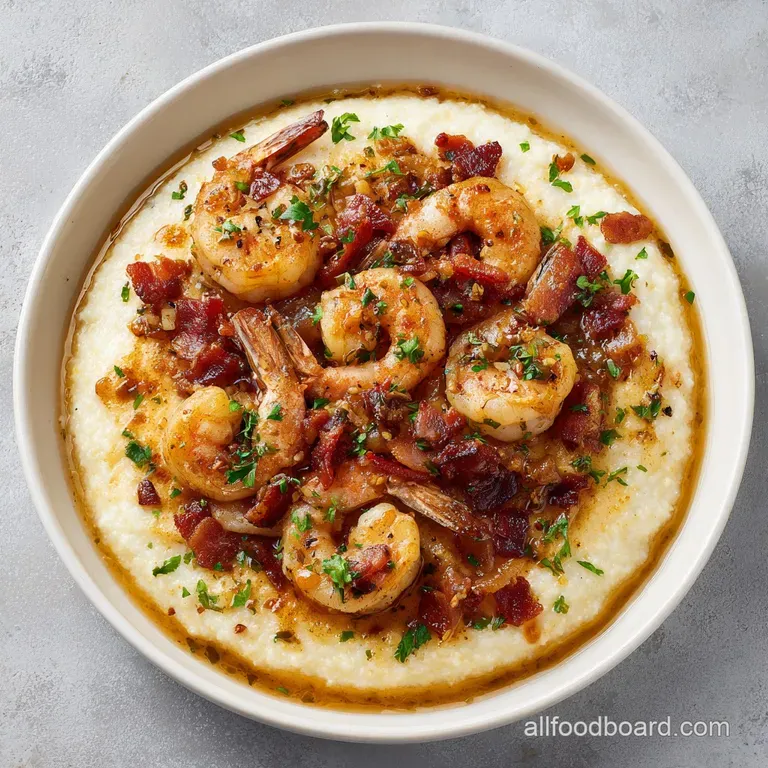
- Liquid Level: At the 10 minute mark, your grits should look like thick porridge. If they look like a solid block, whisk in 2 tablespoons of warm milk immediately.
- Shrimp Shape: Watch the curl. A loose "C" means they are perfectly done. A tight "O" means they have been on the heat too long and will be chewy.
- Sauce Reduction: When reducing the stock, wait until the bubbles get larger and slower. This indicates the water has evaporated and the flavors are concentrated.
Preventing Common Pitfalls and Ensuring Success
Why Your Grits are Lumpy
Lumpy grits usually happen right at the start. If you dump the dry grits into the boiling liquid all at once, the outer starch on the grains gelatinizes instantly, creating a waterproof shell around a dry center. To fix this, you must whisk in a slow, steady stream.
If you already have lumps, try using an immersion blender for ten seconds to smooth them out before they finish cooking.
Why Your Sauce Broke
If your pan gravy looks oily or separated instead of creamy, the heat was likely too high when you added the butter. Emulsions are delicate balances of fat and water. If the liquid is boiling, the fat in the butter will just melt and float on top.
Always turn the heat down to low or even off before whisking in that final cold butter to ensure a glossy finish.
| Problem | Root Cause | Solution |
|---|---|---|
| Gritty texture | Grits didn't hydrate fully | Add 1/4 cup broth and simmer covered for 5 extra mins |
| Rubbery shrimp | Overcooked during the sear | Remove from pan the moment they lose their translucency |
| Bland base | Under seasoned cooking liquid | Always use broth and salt the water before adding grits |
Common Mistakes Checklist
- ✓ Pat the shrimp dry with paper towels before seasoning (moisture prevents a good sear).
- ✓ Whisk the grits immediately upon adding to the pot to break up surface tension.
- ✓ Keep the final butter cubes in the freezer for 5 minutes before adding to the sauce.
- ✓ Don't skip the deglazing step; those brown bits are the source of all the umami.
- ✓ Grate your cheese by hand to avoid the gritty mouthfeel of cellulose coated shreds.
Creative Twists and Easy Ingredient Swaps
If you are looking for a different texture, you can actually bake the grits instead of doing them on the stovetop. While the stovetop is faster and allows for better moisture control, the oven method is great if you are hosting a big group and need the burner space.
Just keep in mind that baked grits tend to be more like a casserole or a souffle than a creamy porridge.
| Feature | Stovetop Method | Oven Method |
|---|---|---|
| Texture | Creamy, velvety, and pourable | Firm, set, and almost cake like |
| Attention | Requires frequent whisking | Set it and forget it |
| Time | 15 minutes of active cooking | 45 minutes of passive baking |
For a Coastal Lowcountry Twist
To get that deep, traditional flavor often found in South Carolina, try adding a splash of Worcestershire sauce to your pan gravy along with the garlic. You can also swap the chicken stock for a bit of clam juice to lean into the briny, oceanic notes. It pairs beautifully with a classic shrimp scampi if you want to serve a seafood feast.
If You Want X, Do Y
- If you want more heat: Double the Cajun seasoning and add a dash of cayenne to the grits.
- If you want it richer: Replace 1 cup of the milk with heavy cream and use extra sharp cheddar.
- If you want a lighter version: Use all chicken broth (skip the milk) and reduce the cheese by half.
Adjusting the Recipe Size CorrectLY
When you are scaling this dish down for a solo dinner, remember that evaporation happens faster in a smaller pot. You might need to add an extra tablespoon or two of liquid toward the end of the grits' cooking time to keep them from becoming a brick.
For half a batch, use a small 1 quart saucepan and reduce the heat slightly so the milk doesn't scorch.
Scaling up for a crowd is easy, but you must work in batches for the shrimp. If you crowd 2 pounds of shrimp into one skillet, the temperature will drop, and they will boil in their own juices rather than searing. Cook the shrimp in two or three batches, keeping the finished ones on a warm plate.
For the spices and salt, start with 1.5x the amount instead of a full double, then taste and adjust. Spices can sometimes become overwhelming when doubled exactly.
Keeping Your Leftovers Fresh and Flavorful
Storage: You can keep leftover shrimp and grits in the fridge for up to 3 days. However, the grits will firm up significantly as they cool because the starch sets. I recommend storing the grits and the shrimp mixture in separate airtight containers if possible.
This prevents the shrimp from becoming overcooked when you try to reheat the dense grits.
Zero Waste: Don't throw away those shrimp shells! If you bought peel on shrimp, toss the shells into a small pot with some water, a celery stalk, and some peppercorns. Simmer for 20 minutes to make a quick shrimp stock that you can freeze for your next seafood risotto or soup.
If you have leftover grits, you can spread them in a pan, let them chill until firm, then cut them into squares and pan fry them in butter the next morning for "grits cakes."
Reheating: To get that creamy texture back, add a splash of milk or broth to the grits before microwaving or heating on the stove. Whisk vigorously as they warm up to break up the set starch. The shrimp should be added at the very last second just to warm through so they don't turn into rubber balls.
Side Dishes to Round Out the Meal
This dish is quite rich on its own, so I usually look for sides that offer a bit of acidity or crunch to balance things out. A simple vinegar based coleslaw or some quick pickled red onions can cut through the heavy cheddar and bacon fat perfectly.
If you want something more substantial, a piece of crusty sourdough bread is essential for mopping up every last drop of that lemon butter pan gravy.
If you are a fan of the base but want to try a more traditional approach next time, you can dive into the world of stone ground grits which offer a much heartier, corn forward flavor profile. For a lighter vegetable side, roasted asparagus with a squeeze of lemon mimics the brightness in the shrimp sauce.
Debunking Common Kitchen Beliefs
Myth 1: You must soak grits overnight. While some people think soaking stone ground grits helps them cook faster, it really isn't necessary for quick grits. Because they are ground more finely, they hydrate perfectly well within the 15 minute simmer time without any prior soaking.
In fact, soaking can sometimes lead to a mushy texture rather than a creamy one.
Myth 2: Grits are the same thing as Polenta. Though they are both made from ground corn, they come from different varieties. Polenta is typically made from flint corn, which holds its shape and has a toothier bite.
Grits are usually made from dent corn, which has a higher starch content, resulting in the silky, porridge like consistency we are looking for in this recipe.
Myth 3: Adding oil to the water prevents sticking. This is a common trick for pasta, but it doesn't work for grits. The oil will just float on top of the liquid and won't interact with the corn at all.
The only real way to prevent sticking is to use a heavy bottomed pot and whisk frequently to keep the grains in motion while they release their starches.

Very High in Sodium
1145 mg 1145 mg (50% 50%)
The American Heart Association recommends no more than 2,300mg of sodium per day for most adults, with an ideal limit of 1,500mg.
Tips to Reduce Sodium
-
Swap Chicken Broth-30%
Replace the 2 cups of low sodium chicken broth with no-salt added chicken broth. This will significantly cut down on hidden sodium.
-
Crisp Bacon Separately-25%
Cook the 4 slices of thick cut bacon separately until crisp. Discard most of the rendered fat, reserving only a tablespoon or two for sautéing the garlic and shrimp, instead of using all the bacon fat.
-
Reduce Added Salt-25%
Cut the 1/2 tsp of fine sea salt in half or omit it entirely, as the Cajun seasoning and cheese will contribute significant flavor and sodium.
-
Choose Lower Sodium Cheese-15%
Opt for a reduced sodium sharp white cheddar cheese. While still flavorful, it can offer a noticeable sodium reduction.
-
Boost Flavor with Herbs & Spices
Enhance the flavor of your grits and shrimp by generously using fresh herbs like parsley, chives, or additional garlic and black pepper. Explore salt free spice blends.
-
Flavor with Citrus-5%
Increase the fresh lemon juice to 2 tablespoons. The acidity will brighten the flavors and make the dish taste more vibrant without added salt.
Recipe FAQs
What goes in shrimp and grits?
The base consists of quick grits cooked in chicken broth and whole milk. It is finished with sharp white cheddar, butter, and topped with Cajun seasoned shrimp and crispy bacon bits.
What makes Bobby Flay's shrimp and grits special?
His version emphasizes deep, bold flavors through the use of bacon fat and deglazing. If you enjoyed the spicy creamy sauce technique used to build layers of umami here, you will find similar flavor balancing principles applied in his signature style.
What are grits made of?
Grits are made from stone ground corn. They are essentially a porridge made by boiling these ground kernels until they reach a soft, creamy consistency.
What is usually served with shrimp and grits?
Fresh scallions are the traditional garnish. Because the dish is already rich with cheddar and bacon, it is typically served as a standalone, hearty meal.
How to get the perfect texture for the grits?
Whisk the grits immediately after adding them to the boiling liquid. This breaks up surface tension and prevents lumps, ensuring a smooth, creamy final texture.
How to ensure the shrimp sears properly?
Pat the shrimp completely dry with paper towels before applying your Cajun seasoning. Excess moisture creates steam instead of a sear, which prevents the shrimp from developing a nice, flavorful crust.
Is it true I should use pre-shredded cheese to save time?
No, this is a common misconception. Pre-shredded cheese contains cellulose to prevent clumping, which will prevent it from melting smoothly and result in a gritty mouthfeel in your finished grits.
Southern Shrimp And Grits
Ingredients:
Instructions:
Nutrition Facts:
| Calories | 722 kcal |
|---|---|
| Protein | 46.2 g |
| Fat | 42.1 g |
| Carbs | 38.4 g |
| Fiber | 1.8 g |
| Sugar | 7.9 g |
| Sodium | 1145 mg |
