Crab Cakes: Restaurant Style with Lemon Butter Sauce
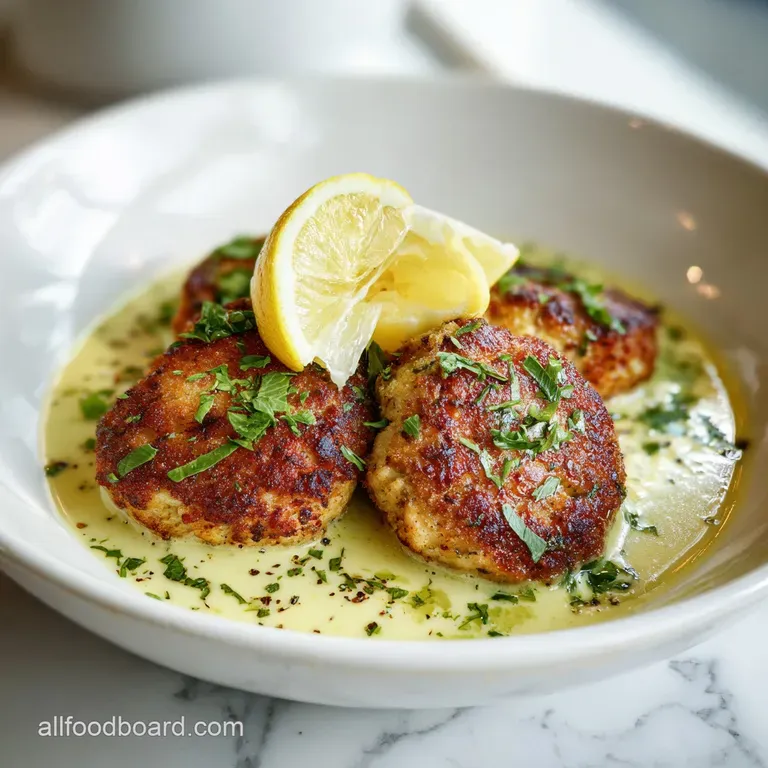
- Time: Active 15 minutes, Passive 12 minutes, Total 27 minutes
- Flavor/Texture Hook: Sweet, jumbo crab lumps encased in a mahogany crust with a velvety, zesty finish.
- Perfect for: Anniversary dinners, impressive hosting, or a luxury weeknight treat.
- Achieve a Perfect Crab Cake with Lemon Butter Sauce
- Essential Recipe Specs and Preparation Guidelines
- The Secret to a Shimmering Emulsion
- Selecting Premium Ingredients for Maximum Flavor
- Streamlined Tools for a Stress Free Process
- The Step by Step Method for Flawless Results
- Pro Solutions for Common Cooking Issues
- Simple Ways to Adapt This Recipe
- Optimal Storage and Reheating Methods
- The Best Ways to Plate and Serve
- Recipe FAQs
- 📝 Recipe Card
Achieve a Perfect Crab Cake with Lemon Butter Sauce
Long before it became a staple of high end white tablecloth steakhouses, the crab cake was a humble necessity born along the mist covered shores of the Chesapeake Bay. For generations of Maryland families, this dish was a way to stretch a prized catch into a filling meal, traditionally mixed with whatever crackers were in the pantry and a heavy hand of local spices.
Discover the ultimate Ruth's Chris Crab Cake with Lemon Butter Sauce, a single sensational recipe you'll want to make again and again.
When you walk into a room where these are being prepared, the first thing that hits you isn't just the seafood; it's the aroma of toasted butter and the sharp, nostril tingling scent of Old Bay. I remember sitting in a small, weathered shack near Annapolis years ago, watching an old cook move with practiced rhythm.
There was no deep fryer in sight just a hot oven and a heavy tray. That first bite was a revelation; the outside didn't just crunch, it shattered, revealing huge, snowy white lumps of crab that hadn't been pulverized into a paste.
This recipe is designed to bring that exact sensory experience into your kitchen. We’re moving away from the "bread heavy" fillers that plague so many frozen versions and focusing on the crab itself.
You’re going to learn how to keep those lumps intact while creating a sauce that is so silky it feels like liquid gold. We aren't just making dinner; we're honoring a coastal tradition that celebrates the sweet, clean flavor of the sea.
Essential Recipe Specs and Preparation Guidelines
Before we get our hands messy, we need to look at the roadmap. Cooking seafood is often an exercise in restraint. Because crab is already "cooked" when you buy it, our job isn't to cook it again, but rather to heat it through while creating a structural bond that won't fail when the fork hits the plate.
Most people rush this process and end up with a pile of loose meat. We are going to use temperature as our primary tool to ensure every patty stays together.
| Method | Time | Texture | Best For |
|---|---|---|---|
| High Broil | 12 minutes | Deep mahogany, uniform crisp | Health conscious, restaurant look |
| Pan Sear | 8 minutes | Random crispy bits, buttery | Rustic, home style crunch |
| Air Fry | 10 minutes | All over dry crunch | Convenience, minimal cleanup |
Choosing the right method depends on your equipment, but for that authentic Ruth's Chris finish, the broiler is your best friend. It provides intense top down heat that mimics the industrial salamanders used in professional kitchens.
This creates a "sizzling" crust without the need to flip the cakes, which is usually the moment they fall apart in a skillet. If you've struggled with your cakes disintegrating in the pan, switching to the broiler will be a total turning point for your kitchen confidence.
The Secret to a Shimmering Emulsion
Many home cooks wonder why restaurant sauces are so much smoother than the ones made at home. The answer lies in the way we handle fat and acid. In this recipe, we are using a technique that relies on the physical state of the butter to create a thick, pourable velvet that won't separate.
- The Cold Fat Principle: By whisking chilled butter into a warm reduction, the fat melts slowly enough to be "trapped" by the liquid.
- Starch Hydration: Allowing the crushed saltines to sit with the egg for just a few minutes lets them soak up moisture, turning them into a "glue" rather than just crumbs.
- Flash Chill Stability: Cold temperatures tighten the proteins in the egg and the fats in the mayonnaise, acting like a temporary cement before the heat sets the structure.
- Acid Reduction: Simmering the lemon juice and wine concentrates the flavors, ensuring the sauce is bright enough to cut through the richness of the jumbo lump meat.
| Ingredient | Science Role | Pro Secret |
|---|---|---|
| Jumbo Lump Crab | Structural base | Drain for 10 mins to prevent "soggy bottom" cakes. |
| Egg & Mayo | Protein binder | Whisk until frothy to incorporate air for a lighter texture. |
| Saltine Crackers | Moisture wick | Hand crush to keep varying sizes; this creates better "grip." |
| Chilled Butter | Emulsion fat | Use butter straight from the fridge to prevent the sauce from breaking. |
Using cold butter is the most important part of the lemon butter sauce. If the butter is room temperature, it will melt too quickly and turn into a puddle of oil. We want the milk solids to stay suspended, which gives the sauce its signature opaque, creamy appearance.
Selecting Premium Ingredients for Maximum Flavor
When you’re making a Crab Cake with Lemon Butter Sauce, there is nowhere for low quality ingredients to hide. Since the ingredient list is short, each component has to carry its own weight.
I always tell my friends to think of the crab as the "star" and everything else as the "supporting cast." If the star is having a bad day, the whole show falls apart.
- 1 lb Jumbo Lump Crab Meat: This is the "king" of crab cuts. It consists of the large muscles connected to the swimming legs. It’s sweet, flaky, and expensive, so handle it like it's made of glass.
- 1/2 cup Saltine crackers: These provide a neutral, salty crunch.
- Substitute: Panko breadcrumbs. Why this? Panko is crunchier but less "buttery" than traditional saltines.
- 1 large Egg: The primary protein binder.
- Substitute: 1/4 cup heavy cream. Why this? Makes a softer, almost mousse like cake but is harder to flip.
- 2 tbsp Mayonnaise: Adds moisture and fat.
- Substitute: Plain Greek yogurt. Why this? Adds a sharper tang but slightly less richness.
- 1 tsp Dijon mustard: Acts as a natural emulsifier for the binder.
- 1 tsp Old Bay seasoning: The quintessential Maryland flavor.
- 1/4 tsp Cayenne pepper: Just enough to provide a back of-the throat hum.
- 1 tbsp Fresh parsley: For a pop of color and herbal freshness.
- 1/2 cup Unsalted butter: Must be chilled and cubed.
- Substitute: Salted butter (reduce sea salt elsewhere). Why this? Adds a deeper savory note but less control over seasoning.
- 2 tbsp Freshly squeezed lemon juice: Bottled juice lacks the bright volatile oils we need.
- 1 tbsp Dry white wine: Use a Pinot Grigio or Sauvignon Blanc.
- Substitute: White grape juice + a splash of vinegar. Why this? Mimics the acidity without the alcohol content.
- 1/8 tsp Sea salt: To sharpen the flavors.
- 1/8 tsp White pepper: Provides heat without the black specks, keeping the sauce pristine.
For a variation that leans into a different profile, you might try a Lemon cream sauce recipe if you prefer something with more body than a traditional butter reduction. However, for the classic Chris Crab Cake with Lemon Butter Sauce experience, the wine and butter method is unbeatable.
Streamlined Tools for a Stress Free Process
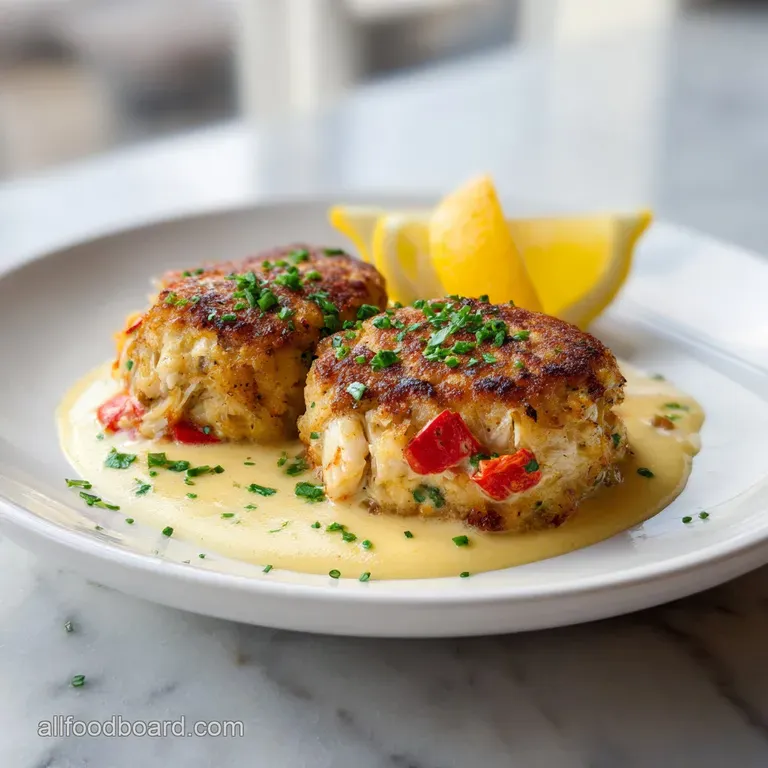
You don't need a kitchen full of gadgets to pull this off. In fact, the less you "over work" the mixture, the better the result. A minimal approach actually helps preserve the integrity of those expensive crab lumps.
- Silicone Spatula: Essential for folding. A metal spoon will chop up the crab, but silicone slides around the lumps gently.
- Parchment Lined Tray: Prevents the cakes from sticking to the pan, which is the #1 reason they break apart.
- Small Saucepan: For the lemon butter sauce. A heavy bottomed pan is best to distribute heat evenly so the wine doesn't scorch.
- Whisk: Use a wire whisk to incorporate the butter cubes rapidly.
- Mixing Bowl: A large glass bowl allows you to see if you’ve missed any pockets of dry crackers at the bottom.
If you don't have a broiler, a heavy cast iron skillet can work, but you'll need to be extremely careful when flipping. The goal with these tools is to touch the food as little as possible. The more you "fidget" with a crab cake, the more likely it is to become a "crab scramble."
The step-by-step Method for Flawless Results
Now, let's get into the rhythm of the kitchen. This is where the magic happens. Remember to work gently; we want the crab cakes to feel light and airy, not packed tight like a burger patty.
- Inspect the crab. Gently pick through the 1 lb jumbo lump crab meat to remove any stray shells or cartilage, taking care not to break the large lumps. Note: Using your fingers is better than a fork here so you can "feel" the shells.
- Create the emulsion. In a large glass mixing bowl, whisk together the beaten egg, 2 tbsp mayonnaise, 1 tsp Dijon mustard, 1 tsp Old Bay seasoning, and chopped parsley until a smooth emulsion forms.
- Fold the base. Add the crab meat and 1/2 cup crushed saltines to the bowl. Using a silicone spatula, gently fold the ingredients together until just combined.
- Form the patties. Shape the mixture into four 1 inch thick patties. Don't press them too hard; you want them just barely holding their shape.
- The flash chill. Place the patties on a parchment lined tray and put them in the freezer for 10 minutes. Until the binder feels firm to the touch.
- Fire the broiler. Preheat your broiler to high. Position the oven rack about 6 inches from the heat source.
- The mahogany broil. Broil the cakes for 10–12 minutes until the exterior reaches a deep mahogany color and a sizzling crust forms.
- Reduce the liquids. While the cakes cook, simmer 2 tbsp lemon juice and 1 tbsp white wine in a small saucepan over medium heat until reduced by half.
- Whisk in the velvet. Remove from heat and vigorously whisk in the 1/2 cup chilled butter cubes one at a time. Until the sauce is thick, glossy, and opaque.
- Final seasoning. Stir in the sea salt and white pepper, then immediately pour the warm sauce over the hot crab cakes and serve.
The "flash chill" step is the one most people skip, but it's the secret to that steakhouse structural integrity. It allows the starches in the crackers to fully hydrate and the fats to solidify, meaning they won't spread out like pancakes the moment they hit the heat.
Pro Solutions for Common Cooking Issues
Even with the best ingredients, things can go sideways. Seafood is temperamental, and sauces are sensitive to heat. If you find yourself staring at a broken sauce or a crumbling cake, don't panic. Most of these issues are easily fixed if you catch them early.
Recovering from a Broken Butter Sauce
A broken sauce looks like yellow oil with white flecks floating in it. This happens if the pan was too hot or if you added the butter too quickly. To fix it, remove the pan from the heat entirely. Add a single teaspoon of cold water or a splash of cold cream and whisk like your life depends on it.
The cold liquid helps re stabilize the emulsion. If that doesn't work, you can start with a fresh teaspoon of warm lemon juice in a clean bowl and slowly whisk the broken sauce into it bit by bit.
Fixing Disintegrating Crab Patties
If you notice the cakes are falling apart as you move them to the tray, your mixture might be too dry, or the crab lumps might be too large and dry to stick. Add one extra teaspoon of mayonnaise to the mix. The extra fat acts as a lubricant and a glue. Also, ensure you aren't skipping that 10 minute freezer rest.
Cold is the "glue" of the professional kitchen.
| Problem | Root Cause | Solution |
|---|---|---|
| Crumbling Cakes | Too little binder or dry meat | Add 1 tsp mayo; ensure 10 min flash chill. |
| Oily Butter Sauce | Heat was too high | Whisk in 1 tsp cold water off heat to re emulsify. |
| Soggy Bottoms | Crab wasn't drained | Drain crab in a mesh sieve for 10 mins before mixing. |
Common Mistakes Checklist:
- ✓ Never over mix the crab; stop the moment the crackers look damp.
- ✓ Don't use a lid; the steam will turn the crust into mush.
- ✓ Avoid low-fat mayonnaise; the water content will make the cakes fall apart.
- ✓ Preheat the broiler for at least 5 minutes so the heat is intense and immediate.
- ✓ Use a thin metal spatula (like a fish turner) to lift the cakes to the plate.
Simple Ways to Adapt This Recipe
We all have that one friend who can't do gluten or the cousin who wants everything extra spicy. The beauty of the Crab Cake with Lemon Butter Sauce is its versatility. You can tweak the flavor profile without destroying the core of the dish.
Going gluten-free
Replacing the saltines with gluten-free crackers is a seamless swap. However, because gluten-free starches can sometimes be more absorbent, you may need to add an extra half teaspoon of mayonnaise to keep the cakes from becoming "bready" and dry.
I've also had great success using crushed pork rinds for a zero carb, keto friendly version that adds a unique savory depth.
Adding a Spicy Kick
If the cayenne isn't enough for you, try adding a teaspoon of finely diced pickled jalapeños or a dash of habanero based hot sauce to the egg mixture. The vinegar in the hot sauce actually helps brighten the crab, while the heat lingers on the palate.
Just be careful not to overwhelm the delicate sweetness of the jumbo lump meat. You want a "tingle," not a "burn."
If you’re looking for a different protein to pair with this sauce, you might consider how it works with Pan seared scallops. The lemon butter sauce for crab cakes is almost identical to what you’d use for high end scallops, making it a great multi purpose skill to have in your back pocket.
Optimal Storage and Reheating Methods
Seafood is best enjoyed immediately, but if you find yourself with leftovers, you can still save the day. The key is to avoid the microwave at all costs. Microwaves turn the delicate crab proteins into rubber and make the saltines soggy.
- Fridge: Store in an airtight container for up to 2 days.
- Freezer: You can freeze the un cooked patties for up to 3 months. Wrap them individually in plastic wrap and then foil. To cook, thaw in the fridge overnight before broiling.
- Reheating: Use a toaster oven or a standard oven at 350°F (180°C). Place the cake on a wire rack over a baking sheet. This allows hot air to circulate around the cake, crisping the bottom and top simultaneously. It usually takes about 8-10 minutes to heat through.
- Zero Waste Tip: Don't throw away the liquid from the crab tin! If you’re making a seafood risotto or a chowder later in the week, that "crab juice" is concentrated flavor gold. You can also use any broken bits of crab to fold into an omelet the next morning.
The Best Ways to Plate and Serve
Presentation is half the battle when you're serving something this luxurious. At a steakhouse, these are often served on a "sizzling" plate with a pool of the lemon butter sauce at the bottom. At home, I like to serve them on a warm white plate with a simple garnish of fresh chives or a sprig of parsley.
Pair these with something light and acidic to balance the richness. A simple arugula salad with a vinaigrette or some blanched asparagus works wonders. If you want to go full "celebration mode," a glass of crisp Chardonnay or a dry sparkling wine provides the perfect bubbles to cut through the buttery sauce.
"Searing meat seals in the juices" is a myth that won't die, and people often apply it to crab cakes too. In reality, the "crust" we create is purely for flavor and texture. The moisture stays inside because we don't overcook the delicate meat, not because the mahogany exterior acts as a waterproof shield.
Another myth is that you need "fancy" breadcrumbs. Honestly, the cheap saltines from the back of your pantry provide a better, more nostalgic flavor that lets the crab be the hero.
Right then, you're ready to hit the kitchen. Just remember: handle the crab like it's a secret, keep the butter cold, and don't be afraid of the high heat of the broiler. You've got this! Trust me, once you see that mahogany crust sizzling under the coils, you'll never go back to the restaurant version again.
Enjoy every buttery, flaky bite of your homemade Chris Crab Cake with Lemon Butter Sauce!

Recipe FAQs
How to keep the jumbo lump crab meat from breaking apart?
Use a silicone spatula to fold the ingredients with minimal movement. Gently combining the crab with the binder ensures the large lumps remain intact rather than turning into a paste.
Why is it necessary to flash chill the crab cakes before cooking?
This step firms up the binder so the cakes maintain their shape under the broiler. Placing the patties in the freezer for 10 minutes creates a structural integrity that prevents them from falling apart during the high heat searing process.
Is it true I can substitute the saltine crackers with breadcrumbs?
No, this is a common misconception. Saltine crackers provide a specific salinity and texture that breadcrumbs cannot replicate, and our ingredient list relies exclusively on the crushed crackers for the structure of these cakes.
How to achieve the signature mahogany crust without burning the crab?
Set your broiler to high and keep a close watch during the 10 12 minute cook time. The intense direct heat from the broiler develops the deep, sizzling crust while heating the interior through without overcooking the delicate seafood.
How to make the lemon butter sauce stable?
Whisk in the chilled butter cubes one at a time after removing the reduced lemon juice and wine from the heat. If you enjoyed mastering this emulsification, you will find the same logic of temperature control and fat incorporation applies to many classic pan sauces.
Can I prepare the mixture ahead of time?
Yes, you can form the patties and store them in the refrigerator until ready to broil. Just remember to complete the 10-minute flash chill step right before you move them to the oven to ensure they hold together perfectly.
How to ensure the sauce stays creamy and doesn't break?
Keep the saucepan off the heat while whisking in the cold butter. The residual heat will melt the butter into the wine and lemon reduction, creating a velvety finish that will not separate as long as you continue to whisk vigorously.
Restaurant Style Crab Cakes
Ingredients:
Instructions:
Nutrition Facts:
| Calories | 431 kcal |
|---|---|
| Protein | 23g |
| Fat | 33g |
| Carbs | 11g |
| Fiber | 1g |
| Sugar | 1g |
| Sodium | 560mg |
