The Grandmamas Legacy Lasagna Rich Ragu Silky Béchamel and Homemade Perfection
- Unveiling the Secrets to Truly Authentic Homemade Lasagna
- Why This Recipe Triumphs Over Store-Bought Imposters
- Curating the Quintessential Components for Rich Flavor
- Sourcing Superior Ingredients for Your Lasagna Assembly
- Step-by-Step Mastery: Constructing the Ultimate Homemade Lasagna
- The Alchemy of Assembly: From Prep to Pan
- Pro-Tips for Elevating Your Baked Pasta Experience
- Post-Bake Care and Storage Strategies
- Frequently Asked Questions
- 📝 Recipe Card
Unveiling the Secrets to Truly Authentic Homemade Lasagna
There is perhaps no dish in the Italian culinary canon that evokes more warmth, family, and celebratory feeling than a perfectly executed lasagna. This isn't just food; it's tradition layered between tender pasta sheets.
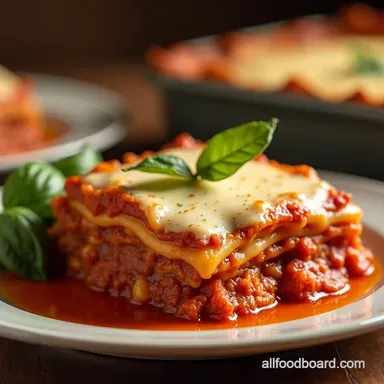
Forget those fast-food imitations; we are here to embark on crafting The Grandmama’s Legacy Lasagna: Rich Ragu, Silky Béchamel, and Homemade Perfection .
This substantial undertaking requires patience, but the rewards, a deeply savoury, robust, and utterly soul-satisfying centerpiece, are immeasurable. Achieving the Best Classic Lasagna Recipe requires attention to three core elements: a deeply reduced meat sauce, a velvety smooth white sauce, and precisely balanced layers.
Why This Recipe Triumphs Over store-bought Imposters
Many believe making lasagna is simply stacking ingredients, but the difference between a good version and the Ultimate Homemade Lasagna lies entirely in the foundational components. store-bought versions often rely on shortcuts that result in a watery texture or flat flavour.
Our method insists on slow cooking the meat sauce until it clings beautifully to the spoon, ensuring every bite of your Homemade Lasagna is packed with concentrated flavour.
Setting the Stage: The Soul of Sunday Dinner
This dish is designed for company, for holidays, or for those quiet Sunday afternoons when you want the house to smell like an Italian nonna’s kitchen. While this is categorized as a Medium difficulty dish, the challenge isn't in technical complexity; it’s in the time commitment required for the ragu to truly marry its flavours over several slow-simmering hours.
This commitment is what transforms simple ground meat and tomatoes into a magnificent Homemade Lasagna Sauce .
A Deep Dive into Layered Perfection
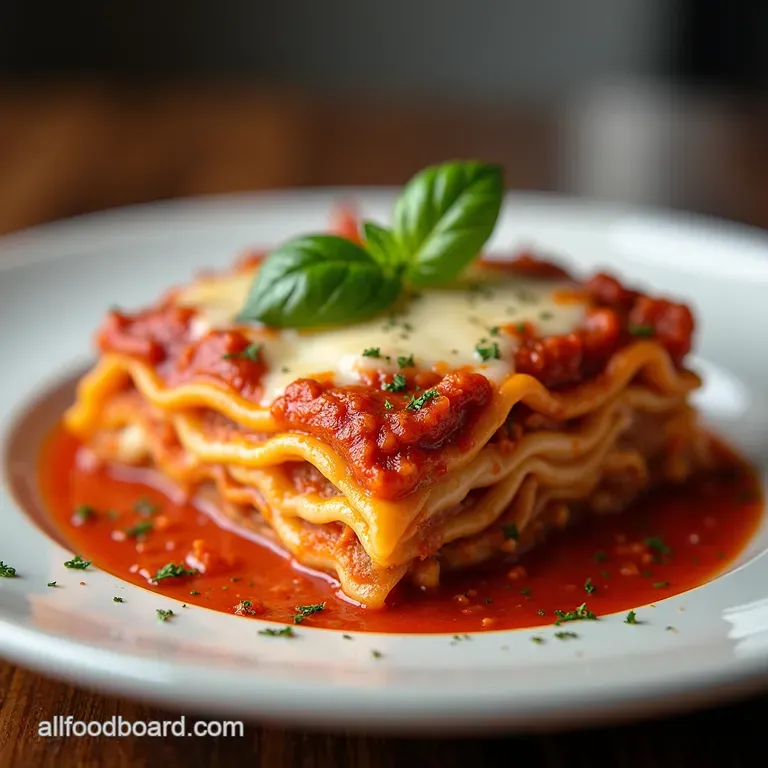
What makes this dish structurally sound and texturally supreme? It’s the interplay between the meaty, acidic ragu and the creamy, neutralising béchamel. Many traditional recipes rely solely on mozzarella and ricotta, but incorporating a luxurious béchamel (white sauce) prevents the dish from drying out and provides a luxurious mouthfeel, making this approach the standard for the Ricotta Cheese Lasagna elevated by European technique.
Essential Tools for Mastering Italian Comfort Food
To execute this masterwork properly, you’ll need a few heavy hitters in your kitchen arsenal. The most crucial is a large, heavy-bottomed Dutch oven or stockpot. This ensures even heat distribution for the initial soffritto and, critically, allows the ragu to simmer gently for 2.5 to 3 hours without scorching the bottom.
You will also need a sturdy whisk for achieving a perfectly smooth, lump-free béchamel, and, of course, a standard 9x13 inch baking dish to house your creation.
Curating the Quintessential Components for Rich Flavor
Every ingredient plays a distinct role in this symphony of flavour. Our Homemade Lasagna Recipe builds flavour in stages, beginning with the slow-cooked meat sauce and culminating in the cheeses.
The goal is richness balanced by acidity, ensuring that while the dish is hearty, it never feels heavy.
Sourcing Superior Ingredients for Your Lasagna Assembly
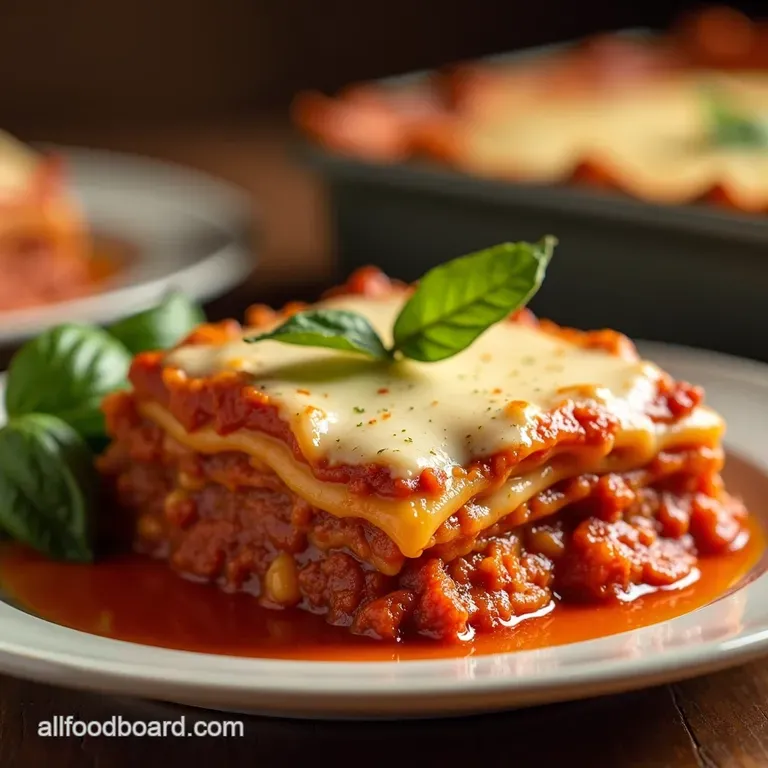
To create a genuinely transcendent Homemade Lasagna With Ricotta , the quality of your inputs matters deeply. For the 8 generous servings this recipe yields, aim for ingredients that sing, not just sit quietly on the plate.
The Unforgettable Ragu: Meat and Marinara Must-Haves
For the ragu, we balance 1 lb of ground beef (ideally 80/20 for necessary fat) with 1 lb of ground pork or Italian sausage (casings removed). This mix provides the essential depth.
Start by sweating down a classic soffritto —finely diced yellow onion, carrots, and celery, in good quality extra virgin olive oil until softened. After browning the meat and deglazing the pot with a half-cup of dry red wine, the tomatoes come in.
Opt for high-quality crushed San Marzano tomatoes for their natural sweetness and lower acidity, supplemented by a can of drained diced tomatoes for texture, along with beef or chicken stock to aid in that long, slow simmer.
Crafting the Creamy Centre: Silky Béchamel Breakdown
While many skip this step in favour of simply using more ricotta, the béchamel sauce is the secret to avoiding a dry final product. To create this velvety sauce, you start with a simple white roux: melting four tablespoons of butter, whisking in an equal amount of flour, and cooking it for a minute before gradually incorporating three cups of warmed whole milk.
The final touch, and this is non-negotiable for achieving the Best Classic Lasagna Recipe —is a quarter teaspoon of freshly grated nutmeg. This subtle spice elevates the richness beyond expectation.
Choosing Your Pasta: Fresh vs. Dried Sheets
The discussion of Homemade Lasagna Noodles can be polarizing. While making pasta from scratch offers the tenderest bite, for this substantial dish, oven-ready noodles are a tremendous time-saver and perform beautifully, provided your sauces are suitably moist.
If you opt for dried sheets, ensure you boil them al dente —about two minutes shy of the package directions, as they will finish cooking in the oven.
The Cheeses That Define Quality Ricotta Layers
The cheese blend is where you build structure and tang. We use a 15 oz container of whole milk ricotta cheese, mixed with a lightly beaten egg (to bind it), fresh parsley, and Parmesan. This mixture is dolloped strategically between the ragu layers.
Complementing this is the mozzarella; use a full pound of low-moisture mozzarella, ideally shredded fresh from a block, as pre-shredded varieties contain anti-caking agents that inhibit melting into that perfect, stretchy blanket.
Related Recipes Worth Trying
- The Sizzling Showstopper Authentic Homemade Chicken Fajitas — Nail the perfect Chicken Fajitas Recipe every time with this foolproof guide Get tender flavourful chicken and perfectly charred veg in under an hour
- Ultimate Creamy Broccoli Rice Casserole Recipe Homemade Comfort — Ditch the canned soup This Easy Broccoli Rice Casserole uses a homemade cheddar sauce for pure comfort Guaranteed silky texture Get the recipe now
- The Chip Shop Champion Perfect DoubleFried Homemade French Fries — Tired of soggy chips Master the Best Homemade French Fries using the secret doublefry technique for a shatteringly crisp exterior and fluffy interior
Step-by-step Mastery: Constructing the Ultimate Homemade Lasagna
This journey unfolds across three distinct phases: building the foundational ragu, preparing the creamy sauces, and the careful art of assembly. The total process takes about four hours, but much of that is passive simmering or baking time for this truly Simple Homemade Lasagna structure.
The Alchemy of Assembly: From Prep to Pan
Slow Simmer Secrets: Building the Deep Ragu Base
Begin by setting your soffritto, onion, carrot, celery, to soften gently in olive oil for about eight minutes. Introduce the minced garlic for the final minute before adding the ground meat.
Once the beef and pork are browned and drained, deglaze the pot with the red wine, scraping up all those flavourful browned bits. Add your tomatoes and stock, then reduce the heat to its lowest setting. Cover partially and allow this ragu to cook for at least two and a half hours, stirring occasionally.
The sauce must be thick enough to hold its shape on a spoon.
Whipping Up the Velvety Béchamel Sauce
While the ragu simmers, turn your attention to the béchamel. Melt the butter over medium heat, whisk in the flour vigorously to create a smooth roux, and cook for one minute.
Slowly incorporate the warm milk, whisking constantly until the sauce thickens enough to coat the back of a spoon, about five to eight minutes. Season with salt and that essential grating of nutmeg, then set aside. Separately, combine your ricotta, egg, Parmesan, and parsley.
Layering Technique Demystified: The Precision Build
Preheat your oven to 375° F ( 190° C). Lightly grease your 9x13 inch dish. The very first layer must be a thin coating of ragu to prevent the pasta from sticking.
Then, you establish the sequence: Pasta sheets, followed by one-third of the ricotta mixture (dolloped evenly), one-quarter of the ragu, and one-quarter of the béchamel. Sprinkle over one-third of the mozzarella. Repeat this sequence twice more.
The final layer is a top sheet of pasta, covered entirely with the remaining béchamel and topped generously with the last of the mozzarella and extra Parmesan.
Baking Rituals: Achieving Golden Perfection
Cover the entire dish tightly with foil and bake for 30 minutes. This allows the internal heat to thoroughly cook the pasta and meld the flavours without burning the top.
After 30 minutes, remove the foil and continue baking for another 15 to 20 minutes, until the cheese is bubbling, beautifully golden brown, and irresistible.
Pro-Tips for Elevating Your Baked Pasta Experience
Troubleshooting Common Lasagna Pitfalls (No Watery Middles!)
The most common failing in homemade lasagna is sogginess. This is almost always caused by insufficient sauce reduction or skipping the ricotta binding agent. Ensure your ragu is thick, it should feel dense, not liquid. Also, ensure your ricotta is well-drained if it seems excessively wet before mixing in the egg.
Creative Twists: Incorporating Spinach and Artichoke Variations
For a delightful variation on the Ricotta Cheese Lasagna , you can introduce greens. Sauté a large amount of fresh spinach until wilted, squeeze out every drop of moisture, and fold it directly into your seasoned ricotta mixture. This adds colour, nutrition, and another layer of texture.
The Essential Resting Period: Why Patience Pays Off
I cannot stress this enough: You must allow your Homemade Lasagna to rest for a minimum of 15 minutes after it exits the oven. During this time, the layers reabsorb any excess moisture and firm up, allowing you to slice into clean, discernible layers rather than a glorious, but messy, puddle.
This resting period is key to achieving structural integrity.
Freezing Instructions for Future Weeknight Wins
This dish freezes exceptionally well. You have two options: freeze it baked or unbaked. For unbaked lasagna, assemble completely, cover tightly with two layers of plastic wrap and then foil, and freeze flat.
When ready to bake, thaw overnight in the fridge, then add about 15 minutes to the covered baking time. If freezing already baked, allow it to cool completely, wrap tightly, and reheat in the oven covered at 350° F ( 175° C) until heated through.
Post-Bake Care and Storage Strategies
Leftovers of this glorious Homemade Lasagna keep wonderfully well. Stored in an airtight container in the refrigerator, it remains delicious for three to four days.
Reheat individual slices in the microwave or bake the whole pan covered for 20 minutes at 350° F until piping hot.
Frequently Asked Questions
My Homemade Lasagna always ends up looking a bit watery; what’s the secret to those firm, beautiful layers?
Ah, the dreaded soggy bottom! The main culprit is usually a sauce that’s too thin. You must ensure your ragu simmers for the full 2.5 hours until it’s thick enough to coat the back of a spoon, like a very thick stew.
Also, never skip the mandatory 15-minute rest after baking; this gives the sauces time to properly set up.
Do I really need to make a béchamel sauce, or can I just use more ricotta for my Homemade Lasagna?
While you absolutely can skip it, the béchamel is what gives this lasagna its authentic, silky texture and luxurious mouthfeel, balancing the acidity of the tomatoes. The ricotta layer tends to be heavier; the béchamel melts down beautifully, acting as a creamy glue between the pasta and the meat sauce.
Can I make the ragu ahead of time to save time on the day I want to bake this?
That’s a brilliant idea! In fact, like most great Italian sauces, the ragu tastes even better the next day once the flavours have had time to properly meld. You can make the ragu up to three days ahead, cooling it completely before storing it in the fridge, or even freezing it for future use.
I’m short on time, can I use oven-ready noodles instead of boiling pasta, and what cheese should I avoid?
Oven-ready noodles are perfectly acceptable in a pinch, provided your ragu and béchamel are slightly runnier than usual so they have enough liquid to absorb while baking. However, avoid using pre-shredded mozzarella; it contains anti-caking agents that prevent it from melting into that glorious, gooey cheese pull we’re after.
What’s the best way to freeze leftover lasagna, and how should I reheat it?
Lasagna freezes famously well, which is brilliant for a busy cook! Cool the baked portion completely, cover it tightly with a double layer of cling film and foil, and freeze for up to three months.
To reheat, thaw it overnight in the fridge, then bake covered at 350°F (175°C) until piping hot throughout, usually about 45 minutes.
The Best Homemade Lasagna Rich Ragu Silky Béchamel