Egg Noodles
- Time: Active 20 minutes, Passive 35 minutes, Total 55 minutes
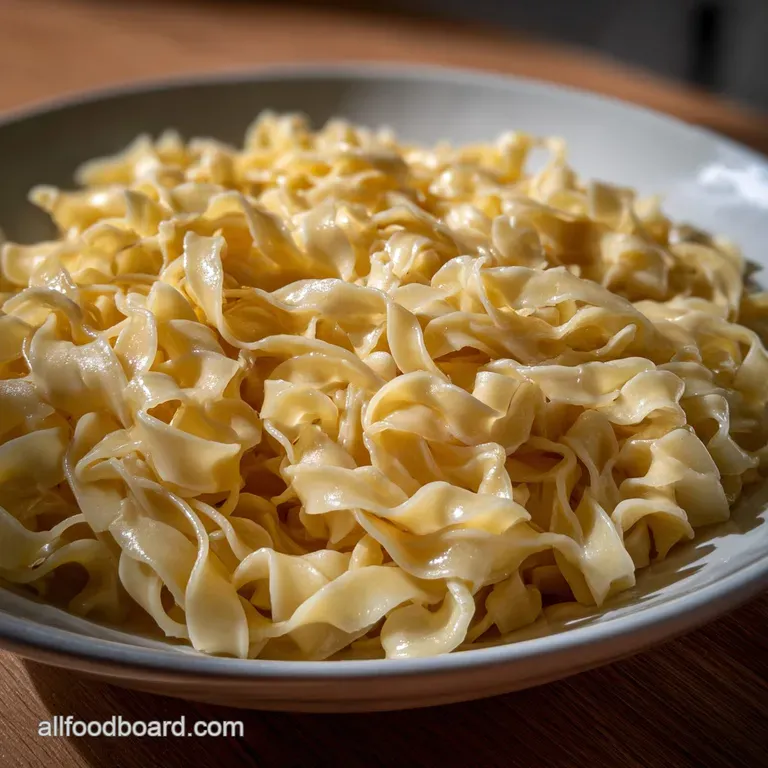
- Flavor/Texture Hook: Rich, springy, and buttery yellow ribbons
- Perfect for: Sunday roasts, comfort soups, or a rainy day kitchen project
- Creating a Silky Bite with Egg Noodles
- Vital Statistics for Your Next Kitchen Adventure
- The Essential Building Blocks for Golden Ribbons
- Basic Tools Needed for a Successful Dough
- Moving from Flour Pile to Finished Ribbons
- Solving Typical Texture and Stickiness Problems
- Adapting the Dough for Diverse Dietary Preferences
- Keeping Your Handmade Pasta Fresh and Tasty
- Styling Your Bowl for Maximum Table Appeal
- Egg Noodles FAQs
- 📝 Recipe Card
Creating a Silky Bite with Egg Noodles
Have you ever stood over a steaming pot of soup and felt like something was missing? I used to buy those bags of dried pasta, thinking they were fine, until I finally bit into a real, chewy, golden homemade ribbon. The difference isn't just noticeable, it's a total shift in how you'll view comfort food.
I remember my first attempt at this. I was so impatient that I skipped the resting phase, and I ended up fighting the dough for twenty minutes. It kept snapping back like a rubber band. Once I learned to just walk away and let the flour do its thing, everything changed.
Now, making these is my favorite way to decompress on a Sunday afternoon.
We aren't just making pasta here, we are making memories. These noodles carry a weight and a richness that you simply cannot get from a factory. Whether you are tossing them in butter or dropping them into a Chicken and Egg Noodle recipe, you'll taste the effort in every single bite.
Vital Statistics for Your Next Kitchen Adventure
Before you start clearing off your counter space, it's helpful to know exactly what you're getting into. This isn't a "set it and forget it" situation, but it's also not as difficult as some people make it out to be. You just need a little patience and a heavy hand with the rolling pin.
The Science of Why it Works: Kneading develops a strong gluten network that gives the dough its signature springy resistance. The high ratio of egg yolks provides fat and lecithin, creating a rich, velvety mouthfeel that flour alone cannot achieve.
| Feature | Classic Homemade | Fast Dried |
|---|---|---|
| Texture | Springy and supple | Firm and brittle |
| Color | Deep golden yellow | Pale cream |
| Best For | Hearty stews and soups | Quick weeknight sides |
If you find yourself in a rush and realize you don't want to spend time rolling and cutting today, you might prefer a Homemade Spaetzle Noodles Recipe. That version is much faster because you drop the batter directly into the water, skipping the kneading and resting entirely.
The Essential Building Blocks for Golden Ribbons
When it comes to the components of this dish, quality really does matter. Since there are so few elements, each one has to pull its weight. I always reach for the freshest eggs I can find because the color of the yolks directly impacts how "sunny" your finished noodles look.
| Ingredient | Science Role | Pro Secret |
|---|---|---|
| All purpose flour | Provides gluten structure | Weigh it for accuracy |
| Egg Yolks | Adds fat and emulsification | Use room temp for easier mixing |
| Whole Milk | Softens the protein bonds | Cold milk slows gluten, use room temp |
For the Golden Dough
To get that perfect texture, we use a mix of 270g all purpose flour and a heavy dose of eggs. Specifically, you will need 2 large eggs plus 3 large egg yolks. This yolk heavy ratio is what separates a "meh" noodle from a "wow" noodle.
Why this? Extra yolks add fat, making the noodles tender rather than tough.
We also include 1 tsp fine sea salt for seasoning the dough from the inside out and 1.5 tbsp whole milk to add just enough moisture to bring the flour together. I also like to add 1 tsp olive oil directly into the dough to help it stay supple during the rolling process.
For the Cooking Liquid
You'll need a large pot with 4 liters water. It sounds like a lot, but noodles need room to dance. If the pot is too small, the starch will turn the water into a thick sludge, and your noodles will end up gummy. Season this water heavily, like the sea, so the noodles absorb flavor as they cook.
Basic Tools Needed for a Successful Dough
You don't need a fancy Italian pasta machine to make great Egg Noodles, though it certainly makes the rolling easier. I usually just use a heavy wooden rolling pin and a very sharp knife. If you have a bench scraper, that's a huge plus for cleaning up the floury bits afterward.
Chef Tip: If you don't have a rolling pin, a clean wine bottle works in a pinch. Just make sure to remove the label so you don't get paper bits in your dough.
For cutting, a pizza cutter is actually my secret weapon. It glides through the dough much faster than a knife and gives you those perfectly straight "wide" noodle edges. If you're feeling fancy, a fluted pastry wheel can give the edges a pretty ruffled look that catches more sauce.
Moving from Flour Pile to Finished Ribbons
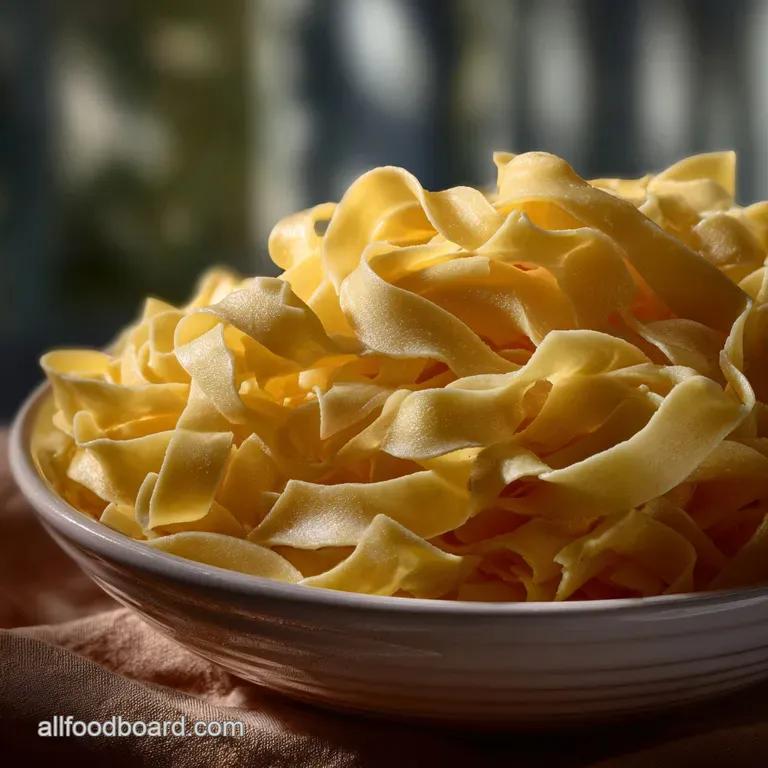
Making this dough is a tactile experience. Don't be afraid to get your hands messy. The transition from a pile of dry powder to a smooth, elastic ball is one of the most satisfying things in the kitchen.
- Create the Volcano. Pile your 270g flour on a clean counter and make a wide, deep well in the center. Note: This prevents the eggs from running all over your kitchen floor.
- Add the Wet Ingredients. Pour your 2 eggs, 3 yolks, 1.5 tbsp milk, 1 tsp salt, and 1 tsp olive oil into the center of the well.
- Whisk Gently. Use a fork to whisk the eggs in the center, slowly pulling flour from the inner walls of the volcano until a thick paste forms.
- Incorporate the Rest. Fold the remaining flour into the center until a shaggy, messy ball of dough starts to come together.
- Knead with Intent. Push the dough away with the heel of your hand, fold it back, and turn. Do this for about 10 minutes until the dough feels smooth and bounces back when poked.
- The Essential Rest. Wrap the dough tightly in plastic and let it sit at room temperature for at least 30 minutes. Note: This allows the gluten to relax so you can actually roll it out.
- Roll it Thin. Divide the dough in half and roll it out on a floured surface until you can almost see the shadow of your hand through it (about 2mm thick).
- Slice the Ribbons. Dust the surface with flour, roll the sheet up loosely like a cigar, and slice with a sharp knife into your desired width.
- The Rapid Boil. Drop the noodles into 4 liters of boiling salted water and cook for 2 to 5 minutes until they float to the surface and feel tender but firm.
- Drain and Toss. Drain the noodles immediately and toss with a little butter or oil to prevent them from sticking together.
If you are looking for an even more traditional approach without any tools at all, you might enjoy the Nonnas Knead homemade recipe which focuses on the old school hand tearing techniques.
Solving Typical Texture and Stickiness Problems
The biggest hurdle for most people is the moisture balance. Humidity in your kitchen can change how much flour you actually need. If it's a rainy day, you might find your dough is a sticky mess even after following the recipe exactly.
Why Your Noodles Are Mushy
Usually, this happens because the water wasn't at a rolling boil when the noodles went in. If the water is just simmering, the starch on the outside of the noodle dissolves into the water before the heat can set the proteins. Always wait for big, aggressive bubbles before dropping them in.
Why Your Dough Is Too Dry
If the dough is crumbling and won't form a ball, you likely measured your flour by volume rather than weight. Flour can pack down in a measuring cup, giving you much more than you need. Add milk, one teaspoon at a time, until the dough just barely comes together.
| Problem | Root Cause | Solution |
|---|---|---|
| Sticky Dough | Excess moisture or humidity | Add 1 tbsp flour at a time while kneading |
| Tough Noodles | Over kneaded or under rested | Let dough rest for a full 30-45 minutes |
| Clumping in Pot | Not enough water or no stirring | Use 4 liters water and stir immediately |
Common Mistakes Checklist
- ✓ Pat your hands with flour frequently if the dough feels tacky.
- ✓ Never skip the 30 minute rest - it is the difference between easy rolling and a workout.
- ✓ Shake off excess flour from the cut noodles before boiling to keep the water clear.
- ✓ Use a very large pot; overcrowding is the number one cause of gummy pasta.
- ✓ Taste a noodle at the 2 minute mark; fresh pasta cooks significantly faster than dried.
Adapting the Dough for Diverse Dietary Preferences
While the classic recipe is hard to beat, sometimes you need to tweak things for your family. If you want a heartier, nuttier flavor, you can swap out 100g of the all purpose flour for whole wheat flour. Just be aware that whole wheat absorbs more liquid, so you might need an extra splash of milk.
To make these into Vietnamese style Mì Trứng, you would typically add a tiny pinch of turmeric to the flour for a vibrant yellow color and ensure you slice them very thinly. These are fantastic in a clear savory broth with sliced pork.
| Original Ingredient | Substitute | Why It Works |
|---|---|---|
| Whole Milk | Water | Provides moisture without the extra fat. Note: Result is slightly less tender |
| All Purpose Flour | 00 Flour | Finer grind creates a silkier texture. Note: Dough is easier to roll thin |
| Olive Oil | Vegetable Oil | Neutral flavor profile. Note: Keeps dough supple without the olive scent |
If you are cooking for a crowd, scaling this recipe is simple. For a double batch, I recommend doubling the eggs and salt, but only increase the milk by about 1x. You can always add more liquid later, but it is hard to fix a dough that has become a soup.
If you are making a massive amount, work in batches so the dough doesn't dry out on the counter.
Keeping Your Handmade Pasta Fresh and Tasty
Fresh Egg Noodles are best eaten the day they are made, but life happens. If you have leftovers or want to prep ahead, you have a few options. The fridge is fine for a day or two, but the freezer is actually your best friend here.
For fridge storage, toss the uncooked, cut noodles in plenty of flour and store them in an airtight bag for up to 2 days. If you want to freeze them, lay the floured noodles out on a baking sheet in a single layer. Once they are frozen solid, transfer them to a freezer bag. They will keep for up to 3 months.
Don't thaw them - just drop the frozen nests directly into boiling water.
Don't let those little scrap ends go to waste! I always collect the odd shaped bits and fry them in a little butter and cinnamon sugar for a quick "chef's snack" while the main batch boils. You can also dry the scraps completely and pulse them in a blender to make fresh breadcrumbs for your next casserole.
Styling Your Bowl for Maximum Table Appeal
Presentation is everything when you've put in the work of hand rolling dough. I love serving these in shallow wide bowls rather than deep ones. It lets the long, golden ribbons spread out so you can see the texture.
- The Herb Garnish. A heavy sprinkle of fresh flat leaf parsley or chives adds a pop of green against the yellow noodles.
- The Glossy Finish. Right before serving, toss the noodles with a tablespoon of high-quality butter or a drizzle of extra virgin olive oil.
- Black Pepper. A generous crack of fresh black pepper cuts through the richness of the egg yolks beautifully.
If you are serving these as a side dish, try pairing them with something that has a lot of sauce, like a beef stroganoff or a creamy mushroom gravy. The ridges and slight roughness of the handmade noodles are "sauce magnets," grabbing onto every drop of flavor.
For a lighter touch, they are also incredible when tossed with just a bit of lemon zest and grated Parmesan cheese.
One final trick I love: if you're serving these in a soup, cook the noodles separately and add them to the bowls just before pouring the hot broth over. This prevents the noodles from soaking up all the liquid and becoming bloated while the pot sits on the table.
Trust me, your future self will thank you for that perfectly al dente bite!
Egg Noodles FAQs
How are egg noodles different from pasta?
Egg noodles contain eggs, while most dried pasta does not. This gives egg noodles a richer flavor, a tender texture, and a distinctive yellow hue.
Are egg noodles better for you than pasta?
Not necessarily, but they offer a different nutritional profile. Egg noodles are higher in protein and fat due to the eggs, which can contribute to a more satisfying feel. However, both are primarily carbohydrate sources.
What are egg noodles made of?
Egg noodles are primarily made from flour, eggs, and water. Some recipes may also include salt and oil. The ratio of eggs to flour is key to their characteristic richness and color.
Why are egg noodles so high in carbs?
The main ingredient in egg noodles, like most pasta, is flour, which is carbohydrate rich. This is the primary source of their carbohydrate content, providing energy.
Can I substitute egg noodles with regular pasta?
Yes, for many dishes you can, but expect texture and flavor differences. Regular pasta will be firmer and lack the richness that eggs impart to egg noodles, so they might not perform identically in delicate sauces or broths.
How do I cook fresh egg noodles?
Boil fresh egg noodles in generously salted water for 2-5 minutes until they float. They cook much faster than dried pasta, so watch them closely to avoid overcooking and a mushy texture.
Are egg noodles a good choice for soup?
Yes, absolutely. Their tender yet resilient texture and rich flavor make them an excellent addition to hearty soups, providing a comforting and satisfying element.
Egg Noodles
Ingredients:
Instructions:
Nutrition Facts:
| Calories | 269 calories |
|---|---|
| Protein | 9.9 g |
| Fat | 6.2 g |
| Carbs | 41.8 g |
| Fiber | 1.5 g |
| Sugar | 0.4 g |
| Sodium | 465 mg |
