The Ultimate Silky Smooth Classic Hummus Proper Mediterranean Creaminess at Home
- Unlocking the Secret to Truly Superior Classic Hummus Recipes
- Why This Creamy Hummus Outshines Every Store-Bought Tub
- The Essential Pantry Lineup for Perfect Creamy Hummus
- Selecting Your Foundation: Chickpeas, Tahini, and the Liquid Component
- The Step-by-Step Method for Achieving Whipped Perfection
- Processing Techniques: Blending for Unprecedented Smoothness
- Elevating Your Presentation: Garnishes and Serving Suggestions
- Troubleshooting and Storage Secrets for Long-Lasting Freshness
- Recipe FAQs
- 📝 Recipe Card
Unlocking the Secret to Truly Superior Classic Hummus Recipes
Welcome to the definitive guide to mastering hummus. If your homemade efforts have ever resulted in something closer to thick paste than cloud like silk, you’re in the right place.
We are moving beyond the average dip and delving into the techniques that elevate this Middle Eastern staple from good to utterly unforgettable. Mastering this foundation is key, as it provides the blueprint for exploring countless Hummus Recipes Variations later on.
Forget mediocre supermarket tubs; today, we create the Best Ever Hummus Recipe .
Why This Creamy Hummus Outshines Every store-bought Tub
The difference between standard hummus and truly exceptional hummus lies entirely in technique, not just ingredients. store-bought versions often skimp on quality tahini or rush the blending process, leading to a denser, sometimes grainy final product.
Our mission today is to replicate that impossibly smooth texture found in the finest Levantine establishments. This focus on refinement is what makes these Hummus Recipes Easy to master once you understand the critical steps.
Setting the Benchmark: Our Signature 'No Flop' Hummus Standard
We are aiming for a yield of about two cups of dip, serving 4 to 6 people generously. This recipe uses standard pantry items but insists on a dedication to process. The resulting dish is bright, nutty, and so creamy it almost floats off the spoon.
It’s the perfect anchor for any gathering, establishing itself as one of the premier Healthy Party Food Recipes you can offer.
Demystifying the Magic: The Science Behind Ultimate Smoothness
The secret sauce? It’s actually a combination of temperature and mechanical action. We employ two non-negotiable techniques: using ice-cold water during the final blend to create an airy emulsion, and ensuring our chickpeas are cooked to the point of near disintegration.
This rigorous preparation ensures that even when utilizing Hummus Recipes With Canned Chickpeas , we can achieve near perfect smoothness.
A Quick Look at the Journey Ahead in Our Hummus Recipes Collection
While our immediate goal is the silkiest smooth classic, remember that this base is where the magic begins. Once you’ve mastered this, exploring Different Hummus Recipes —from spicy twists to herb infused delights becomes intuitive.
Consider this the Rosetta Stone for all future explorations in Hummus Recipe Flavors .
The Essential Pantry Lineup for Perfect Creamy Hummus
Creating this masterpiece requires thoughtful selection of your core components. While the ingredient list is short (chickpeas, tahini, lemon, garlic, salt), the quality of those few items dictates 90% of your success.
We need roughly 1 cup of dried chickpeas, or one standard 15-ounce can for a quicker preparation time.
Selecting Your Foundation: Chickpeas, Tahini, and the Liquid Component
For the best texture, we need fully softened legumes. If you choose the dry route, overnight soaking is mandatory. However, for speed, we can certainly proceed with Hummus Recipes Without Tahini substitutes sometimes, but for this classic recipe, tahini is essential.
We will need about 1/2 cup of high-quality, runny tahini, 1/4 cup of freshly squeezed lemon juice, one small garlic clove, and 1/2 teaspoon of fine sea salt. The liquid component for achieving that ethereal texture will be simple ice water or ice cubes.
Mastering the Texture: The Role of Ice-Cold Water and Baking Soda
When working with canned chickpeas, adding 1 teaspoon of baking soda to the cooking water significantly helps break down the skins and the structure of the bean, leading to a softer result, even if you are simply simmering the cans contents briefly.
The ice-cold water, added during the final blending stage, works by physically agitating and cooling the mixture, incorporating air and creating a lighter, more voluminous final product.
Sourcing the Best Tahini: A Non-Negotiable Ingredient Spotlight
Do not compromise on your tahini. Good tahini should pour easily, be light beige, and taste slightly sweet and nutty, not overly bitter or oily. If your tahini is thick and pasty straight from the jar, it will result in heavy hummus.
Thin, high-quality tahini is the backbone of rich flavour and superior mouthfeel in all Hummus Recipes .
Precise Measurements for Peak Flavor Balance
While we can eyeball herbs and spices in later variations, the classic requires precision. The ratio of tahini to lemon juice is crucial too much lemon and it tastes sharp; too little, and it lacks necessary brightness.
Always measure your lemon juice precisely at 1/4 cup for the stated quantity of chickpeas to ensure the optimal balance against the rich, earthy tahini.
Related Recipes Worth Trying
- Creamy Cilantro Jalapeno Hummus Recipe Homemade Flavor — Forget bland storebought dips This homemade Cilantro Jalapeno Hummus recipe delivers vibrant smoky heat and incredible smoothness Perfect for your next platter
- The Ultimate Roasted Garlic Tomato Soup Recipes — Upgrade your dinner with this velvety roasted garlic tomato soup An easy healthy soup recipe that beats the tinned stuff every time Find the full recipe here
- Light Airy Cottage Cheese Mousse Recipes No Bake — Discover the best cottage cheese mousse recipes This simple lemonberry swirl is highprotein unbelievably light and perfect for healthy dessert cravings
The step-by-step Method for Achieving Whipped Perfection
This process is divided into three strategic phases: preparing the chickpeas to maximize softness, creating the flavour emulsion, and the final, vigorous whipping. This structured approach ensures every element is optimized before they meet in the processor.
Processing Techniques: Blending for Unprecedented Smoothness
We use a food processor for this task, as it handles the volume and the required processing time better than most blenders. Remember, this isn't a five minute job; achieving true silkiness takes commitment.
Prepping the Chickpeas: Softening for Melt-in-Your Mouth Results
If starting with canned chickpeas, drain and rinse them thoroughly. The magic step here is to simmer them in water with 1 teaspoon of baking soda for about 15 to 20 minutes until they are extremely soft you should be able to easily crush them between your fingers.
After draining, gently rubbing them between two dry towels helps remove many of the stubborn skins, though this is optional for a faster version.
The Tahini Emulsification Trick: Creating the Base Flavor Cloud
This is arguably the most important step outside of blending time. In the food processor, combine your 1/2 cup of tahini, 1/4 cup of lemon juice, the single garlic clove, and salt. Process this mixture for a full two minutes, scraping the sides.
You will notice the mixture thicken dramatically and turn pale; this is the tahini emulsifying with the acid, creating a lighter, fluffier base that prevents the final hummus from becoming dense.
The Final Whirl: Integrating the Remaining Elements Seamlessly
Now, add your warm, softened chickpeas to the tahini base. Process this for 3 to 4 minutes, scraping frequently. Finally, with the motor running, begin slowly drizzling in the ice-cold water (about 1/2 cup) or drop in a few ice cubes.
Continue processing for another 4 to 6 minutes until the mixture has transformed into a pale, whipped, and utterly smooth dip. Taste and adjust salt or lemon as needed.
Elevating Your Presentation: Garnishes and Serving Suggestions
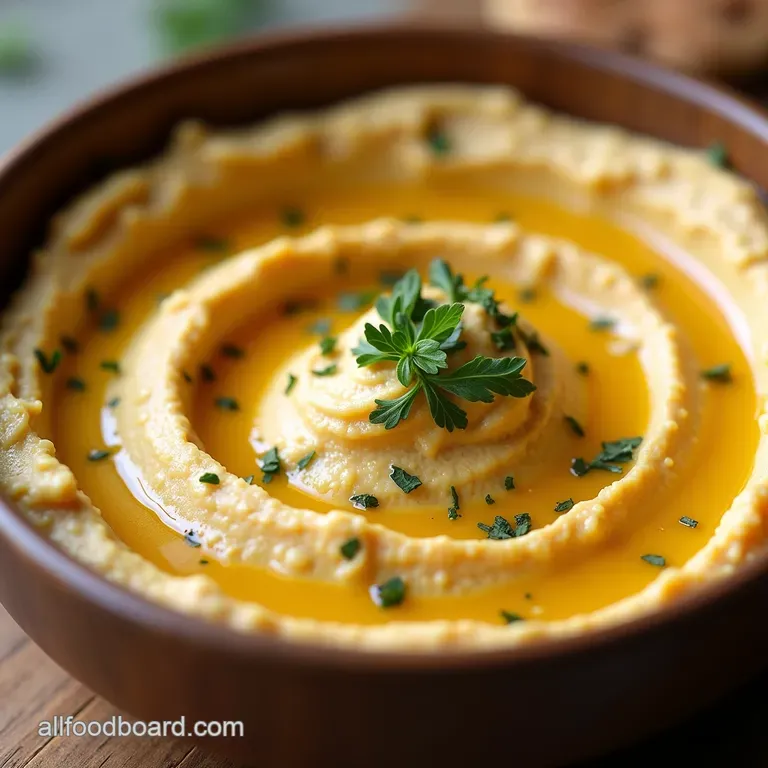
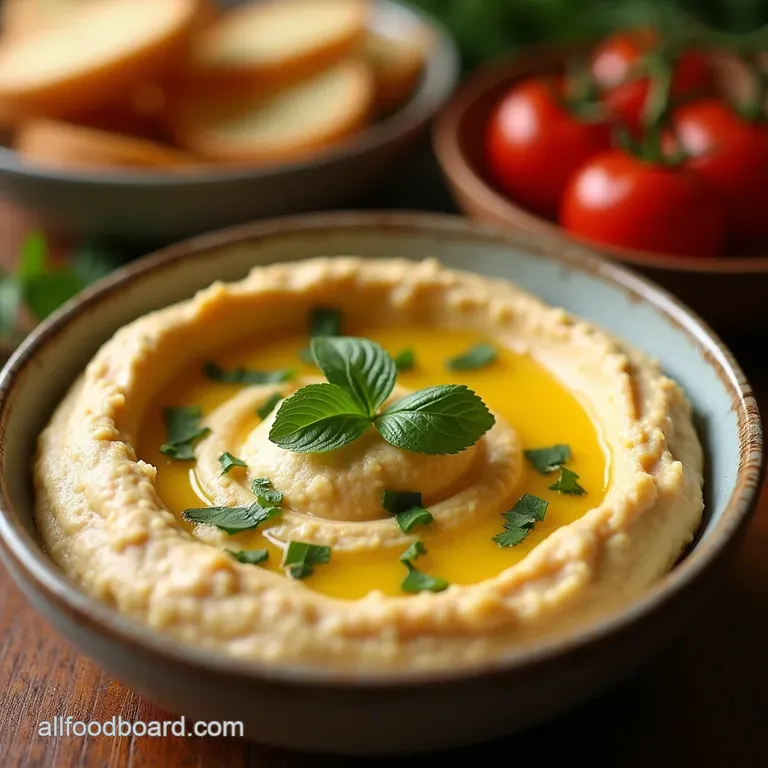
Once the hummus has chilled for at least 30 minutes to firm up slightly and allow the flavours to marry, it’s time to present it. Spoon it into a shallow serving dish and use the back of a spoon to create gentle swirls, forming a well in the centre.
Fill this divot generously with high-quality extra virgin olive oil. A final dusting of smoked paprika or a sprinkle of bright sumac adds a welcome visual contrast and tang. This plated beauty is ready to serve alongside warm pita or crusty bread.
Troubleshooting and Storage Secrets for Long Lasting Freshness
Even expert cooks face hurdles. If your hummus is too thick, add a splash more cold water while blending. If it tastes bland, it usually needs salt or more lemon juice, not more garlic.
While this recipe is designed to be quick enough for weeknight preparation, learning how to store it properly is crucial for longevity.
Advanced Tips from the Kitchen: Avoiding Common Hummus Pitfalls
The number one pitfall is rushing the processing time. If you stop blending when it still looks slightly grainy, it will never achieve that restaurant quality. Another common mistake is using room temperature water; it won't create the necessary thermal shock to whip the mixture properly.
Extending the Life of Your Homemade Hummus: Proper Refrigeration
Store your finished hummus in an airtight container in the refrigerator. Due to the fresh lemon juice, it maintains excellent flavour for about 5 to 7 days. Always top with a thin layer of olive oil before sealing the lid; this creates a barrier that helps prevent drying out and maintains freshness.
The Gateway to Variation: Simple Swaps for Your Next Hummus Recipes Batch
Once you feel confident with this creamy standard, you are ready for experimentation. Consider adding roasted garlic instead of raw for a milder flavour, or perhaps you’re ready to explore a Balsamic Hummus Recipe by replacing half the lemon juice with high-quality aged balsamic vinegar.
These simple modifications demonstrate how versatile these Hummus Recipes truly are, moving beyond the classic to explore exciting new dimensions.

Recipe FAQs
Why is my homemade hummus grainy instead of creamy like in the recipe?
Ah, the dreaded graininess it's usually down to not blending long enough or using undercooked chickpeas. Make sure your chickpeas are genuinely soft; if using canned, simmering them with a pinch of baking soda helps break down the skins.
Crucially, you must blend the tahini and lemon juice first, and then add ice-cold water while processing to achieve that silky, airy emulsion.
What's the secret to making the best classic Hummus Recipes taste authentic?
The secret, mate, lies in two things: quality tahini and ice-cold water. Cheap, thick tahini will give you a bitter, heavy result, so invest in good, runny stuff. Then, that final addition of ice water or cubes while the machine is running whips air into the mixture, creating the light, cloud like texture you get at a proper Middle Eastern spot.
Can I make these Hummus Recipes ahead of time, and how should I store them?
Absolutely, hummus is brilliant for batch cooking! It actually tastes better the next day once the flavours have properly married. Store it in an airtight container in the fridge for up to five days; it will firm up when chilled.
Before serving, let it sit on the counter for about 15 minutes to soften up a bit, then swirl in your olive oil.
I hate the taste of raw garlic can I use less, or should I prepare it differently?
Garlic can certainly hijack the flavour if you’re not careful! For a softer, subtler taste, try roasting the clove first until it’s caramelized and sweet it blends in beautifully without that harsh bite.
Alternatively, use only half a clove, or soak the raw clove in the lemon juice for 10 minutes before blending to mellow its edge.
I don't have a food processor; what other kit can I use for these Hummus Recipes?
While a food processor is ideal for the texture, a high powered blender will do the trick if you work in smaller batches. If neither is available, a powerful stick (immersion) blender can work, but you'll need a deep, narrow container, and you'll have to stop and scrape down the sides constantly.
Be prepared to blend for significantly longer to get close to that silky finish!
Are these hummus recipes suitable for vegans, and what are the main nutritional benefits?
Yes, this classic recipe is entirely plant based and vegan, being naturally free of dairy or eggs. Its main nutritional perks come from the chickpeas, offering great plant based protein and fibre, while the tahini provides essential healthy fats and minerals like calcium.
It’s a cracking, wholesome dip that beats reaching for those crisps!
Creamy Classic Hummus
Ingredients:
Instructions:
Nutrition Facts:
| Calories | 647 kcal |
|---|---|
| Protein | 7.1 g |
| Fat | 7.4 g |
| Carbs | 40.0 g |
| Fiber | 17.4 g |
| Sodium | 17055 mg |
