Chicken Fried Steak with Gravy
- Time: Active 20 minutes, Passive 15 minutes, Total 35 minutes
- Flavor/Texture Hook: Shatter crisp exterior with tender meat and velvety pepper gravy
- Perfect for: Weekend family dinners and cozy Southern style comfort cravings
- Mastering the Chicken Fried Steak with Gravy Recipe
- Why This Recipe Works
- Deconstructing the Essential Components
- Preparing Your Shopping List
- Essential Kitchen Tools
- Crafting the Perfect Steak
- Fix Common Cooking Mistakes
- Tasty Ingredient Substitutions
- Adjusting the Recipe Size
- Debunking Cooking Myths
- Keeping Your Leftovers Fresh
- Serving with Style
- Recipe FAQs
- 📝 Recipe Card
Mastering the Chicken Fried Steak with Gravy Recipe
You've probably heard that you need a professional grade deep fryer or a secret laboratory of ingredients to get that perfect, craggy crust on a steak. Honestly, forget everything you've heard about needing fancy equipment.
I spent years thinking my home stove just couldn't handle the heat, but the truth is much simpler. It isn't about the gear, it's about the chemistry of the crust and the patience of the cook.
When you drop that breaded steak into the skillet, you want to hear a specific rhythm of popping oil. Not a violent, aggressive splatter that sends you running for a lid, but a steady, rhythmic sizzle that tells you the moisture is evaporating and the starch is setting.
That sound is the promise of a dinner that will have everyone reaching for seconds. This isn't just a meal, it's a sensory experience that starts the moment the black pepper hits the hot flour.
Most people assume the secret to a great steak is just more oil, but that's a mistake I made for a long time. Too much oil actually makes the breading soggy because it can't maintain a consistent temperature when the cold meat hits the pan.
We are going to use just enough avocado oil to get that shallow fry golden hue without drowning the flavor. Trust me on this, once you nail the resting step, you'll never go back to the old way of frying.
Why This Recipe Works
Getting the breading to stick to a steak is the ultimate kitchen challenge, but we’ve got a few tricks to make it foolproof. It’s all about creating layers that bond together on a molecular level before they even touch the heat.
- Hydration Bond: Letting the breaded steaks rest for 10 minutes allows the buttermilk and egg to soak into the flour, creating a glue like paste that anchors the crust to the meat.
- Starch Expansion: The addition of cornstarch to the flour mix creates a more brittle, "shatter" texture because cornstarch doesn't develop gluten like wheat flour does.
- Chemical Leavening: Baking powder creates tiny carbon dioxide bubbles when it hits the hot oil, which lifts the breading slightly and prevents it from becoming a dense, leaden brick.
- Thermal Stability: Using avocado oil provides a high smoke point, meaning we can hit that 175°C target without the oil breaking down or smelling burnt.
- Carryover Control: Frying to an internal temperature of 63°C (145°F) ensures the beef stays juicy, as the heat will continue to rise slightly while the steak rests on the wire rack.
| Thickness | Internal Temp | Rest Time | Visual Cue |
|---|---|---|---|
| 1 cm (Thin) | 63°C (145°F) | 3 mins | Deep golden, firm crust |
| 1.5 cm (Standard) | 63°C (145°F) | 5 mins | Bubbling oil slows down |
| 2 cm (Thick) | 63°C (145°F) | 5 mins | Steam vents through crust |
This timing is crucial because cube steak is already tenderized, so overcooking it will lead to a dry, mealy texture. We want that perfect balance where the meat provides a soft contrast to the crunch of the exterior.
The rest time on the wire rack is non negotiable, as it prevents the bottom of the steak from getting soggy in its own steam.
Deconstructing the Essential Components
The magic of this dish lies in how very basic ingredients work together to create something much greater than the sum of its parts. We aren't just using flour and milk; we are building a structural masterpiece of flavor.
| Component | Science Role | Pro Secret |
|---|---|---|
| Cube Steak | Provides high surface area for breading to grip | Pat it dry with paper towels before seasoning for better adhesion. |
| Buttermilk | Lactic acid tenderizes the meat fibers | Use full fat buttermilk for a thicker egg wash that holds more flour. |
| Baking Powder | Creates micro pockets of air | Never skip this if you want that "shatter" crunch instead of a hard shell. |
| Coarse Pepper | Adds textural "bite" and floral heat | Toast the pepper in the dry pan for 30 seconds before adding to the gravy. |
When selecting your meat, look for cube steak that has been evenly tenderized by the butcher. If there are large untenderized spots, the meat will curl up in the pan and cause the breading to crack and peel away. You want a flat, uniform piece of protein that lays perfectly in the skillet.
Preparing Your Shopping List
Before you head to the shop, let's look at what you'll need. This recipe is designed for family friendly budgets, using everyday ingredients you can find at any local grocery store.
- 4 pieces (680g) Cube Steak: This is the heart of the dish. Why this? It is pre tenderized, making it cook quickly and stay soft.
- 2 cups (250g) All Purpose Flour: The base for our crust and our gravy. Why this? Provides the protein structure needed for a sturdy breading.
- 1/2 cup (60g) Cornstarch: Our secret weapon for crispness. Why this? Lowers the overall gluten content for a more delicate crunch.
- 1/2 cup (120ml) Buttermilk: For the egg wash. Why this? The acidity helps the breading stick and adds a slight tang.
- 1/2 cup (120ml) Avocado Oil: For frying. Why this? Has a very high smoke point, preventing a "burnt" flavor.
- 2 cups (475ml) 2% Milk: For the velvety gravy. Why this? Provides enough fat for creaminess without being overly heavy.
- Seasonings: Fine sea salt, garlic powder, and lots of black pepper.
| Original Ingredient | Substitute | Why It Works |
|---|---|---|
| Buttermilk | 120ml Milk + 1 tsp Lemon Juice | The acid curdles the milk, mimicking buttermilk's thickness. |
| Avocado Oil | Grapeseed or Vegetable Oil | Both have high smoke points suitable for shallow frying. |
| 2% Milk | Whole Milk | Makes a much richer, thicker gravy. Note: Increase whisking time. |
If you are a fan of traditional Southern flavors, you might also consider making a batch of Classic Chicken Gravy as a backup or to serve alongside mashed potatoes. While the white gravy in this recipe is the gold standard for chicken fried steak, having options never hurts when feeding a hungry family.
Essential Kitchen Tools
You don't need a lot of gear, but the right pan makes all the difference in the world. I recommend a large cast iron skillet if you have one. Cast iron holds onto heat better than stainless steel, which means when you drop that cold steak into the oil, the temperature doesn't plummet.
If you don't have cast iron, a heavy bottomed non stick or stainless steel pan will work, but you'll need to be more diligent about monitoring the oil temperature. You will also need two shallow bowls for your dredging station. I like to use pie tins or wide pasta bowls.
Finally, a wire cooling rack set over a baking sheet is essential for both resting the raw breaded meat and draining the cooked steaks. Never drain them on paper towels, or you'll end up with a soggy bottom.
Crafting the Perfect Steak
Let's get into the flow of the kitchen. This is a 35 minute process, and timing is everything. Keep your workspace organized so you aren't hunting for a whisk while the oil is smoking.
- Season the meat. Take your 680g of cube steak and season both sides with the sea salt, garlic powder, and 1 tsp of the black pepper. Press the spices into the meat with your fingers so they don't just fall off.
- Set up the station. In bowl one, whisk the flour, cornstarch, and baking powder. In bowl two, whisk the 2 eggs and the buttermilk.
- Perform the double dredge. Dip a steak into the flour, then the egg wash, then back into the flour. Press firmly! You want a thick, dry coating.
- The mandatory rest. Lay the steaks on a wire rack for 10 minutes. Note: This is the most important step for keeping the breading attached.
- Heat the oil. Add the avocado oil to your skillet and bring it to 175°C.
- Fry to perfection. Place the steaks in the oil. Cook for 3-4 minutes per side. until deep golden brown and the internal temp is 63°C.
- Drain. Move the steaks back to the wire rack.
- Make the roux. Pour off all but 3 tbsp of the oil. Whisk in 3 tbsp of the leftover flour mix. Cook for 1 minute until it smells nutty.
- Build the gravy. Slowly whisk in the milk and the remaining coarse pepper.
- Simmer and serve. Keep whisking over medium heat until the gravy coats the back of a spoon. Pour it over the steaks and eat immediately.
For a complete meal, I often serve this alongside some greens or a Whole Roasted Chicken if I'm hosting a larger Sunday dinner and want multiple protein options on the table. The gravy works beautifully on almost anything it touches.
Fix Common Cooking Mistakes
Even experienced cooks run into trouble with fried foods. The most common heartbreak is seeing that beautiful crust fall off the moment you slice into it. It feels like a personal failure, but it's usually just a simple mechanical error in the dredging process.
Why Your Breading Falls Off
If your crust is separating from the meat, it’s usually because the meat was too wet before you started or you didn't let it rest after breading. Moisture trapped between the meat and the flour turns into steam, creating an air pocket that pushes the crust away.
Always pat the meat dry first, and never skip that 10 minute rest on the wire rack.
Why Your Gravy Is Lumpy
Lumpy gravy happens when you add the milk too fast or your heat is too high. If the roux (the flour and oil mixture) is too hot when the cold milk hits it, the flour particles seize up into little balls.
The fix is to add the milk a splash at a time, whisking vigorously until a paste forms, then gradually adding the rest of the liquid.
| Problem | Root Cause | Solution |
|---|---|---|
| Greasy Crust | Oil temperature was too low | Wait until the oil hits 175°C before adding meat. |
| Burnt Flour Taste | Roux cooked too long or too high | Keep roux at medium heat; stop when it smells like toasted bread. |
| Tough Meat | Overcooked or poor tenderization | Check temp at 145°F (63°C) and use quality cube steak. |
Common Mistakes Checklist
- ✓ Pat the cube steak completely dry before seasoning (ensures the first flour layer sticks).
- ✓ Ensure the oil returns to 175°C between batches (prevents sogginess).
- ✓ Don't overcrowd the pan; fry only two steaks at a time.
- ✓ Use a wire rack for draining, never a flat plate or paper towels.
- ✓ Whisk the gravy constantly to prevent the bottom from scorching.
Tasty Ingredient Substitutions
If you want to change things up or don't have certain items on hand, this recipe is surprisingly flexible. You can adjust the spice level or the type of dairy to suit your pantry.
For the Tenderized Steaks
If you can't find cube steak, you can buy round steak or even flank steak and tenderize it yourself using a meat mallet. The key is to pound it until it is about 1 cm thick and covered in indentations. This physical breakdown of the muscle fibers is what makes "chicken fried" steak possible with tougher cuts of beef.
For the Signature Breading
While all purpose flour is the standard, some folks love adding a handful of fine breadcrumbs or even crushed crackers to the mix for extra texture. If you want a bit more kick, add a teaspoon of cayenne pepper or smoked paprika to the flour mixture. It won't be "traditional," but it will be delicious.
| Premium | Budget | Flavor Impact | Savings |
|---|---|---|---|
| Avocado Oil | Vegetable Oil | Very minimal; slightly less "clean" finish | Save $5-7 |
| Heavy Cream | 2% Milk | Cream is much thicker and more decadent | Save $2-3 |
| Fresh Black Pepper | Pre ground Pepper | Fresh has much more floral, spicy punch | Save $1 |
If you are looking for a completely different flavor profile but love the crunch, you might enjoy trying Homemade Hibachi Chicken on another night. It uses different frying techniques but satisfies that same craving for a savory, seared protein.
Adjusting the Recipe Size
Scaling this recipe is fairly straightforward because the ingredients are mostly ratios. However, there are a few things to keep in mind so you don't end up with a mess.
Cutting the recipe in half When making just two steaks, you can cut the ingredients exactly in half. Use a smaller skillet to save on oil, but keep the cooking times the same. Since you're using half an egg, just whisk one egg and use about half of the liquid.
You will still need the full 10 minute rest time for the breading to set properly.
Doubling the recipe If you're feeding a crowd (8 servings), do not double the salt or the spices exactly. Start with 1.5 times the amount and taste your flour mixture.
You will need to work in batches, so keep a warm oven (90°C) ready with a wire rack inside to keep the finished steaks crispy while you fry the rest. You will likely need to wipe out the pan and start with fresh oil halfway through, as the bits of fallen flour will start to burn and turn the oil bitter.
Debunking Cooking Myths
There is a lot of "grandma's wisdom" out there that actually makes the process harder than it needs to be. Let's clear up a few of those misconceptions.
- Myth: Searing "seals in" juices. This is simply not true. Searing creates flavor through browning, but moisture loss happens based on internal temperature. The breading is what actually helps retain moisture by providing a physical barrier.
- Myth: You must use lard for authentic flavor. While lard is traditional, avocado oil or high-quality vegetable oils provide a much cleaner flavor and a higher smoke point, making them safer and more consistent for the modern home cook.
- Myth: The gravy must be made with water. Some old school recipes use water, but milk provides the protein and fat needed for that signature velvety texture. Water gravy often ends up looking gray and unappealing.
Keeping Your Leftovers Fresh
Chicken fried steak is definitely best eaten fresh, but if you have extras, you don't have to toss them. The goal is to revive that crunch without drying out the beef.
Storage Guidelines Keep your steaks and gravy in separate airtight containers in the fridge for up to 3 days. Do not pour the gravy over the steaks before storing, or the breading will turn into a mushy paste that no amount of reheating can save.
I don't recommend freezing the cooked steaks, as the breading often separates during the thawing process.
Zero Waste Tips If you have leftover gravy but no steak, it makes an incredible topping for breakfast biscuits or even over a bowl of thick cut fries. Leftover steak can be sliced thin and used in a breakfast sandwich with a fried egg. If you have extra seasoned flour, don't throw it away!
It can be used as a base for a savory pie crust or to thicken a beef stew later in the week.
Serving with Style
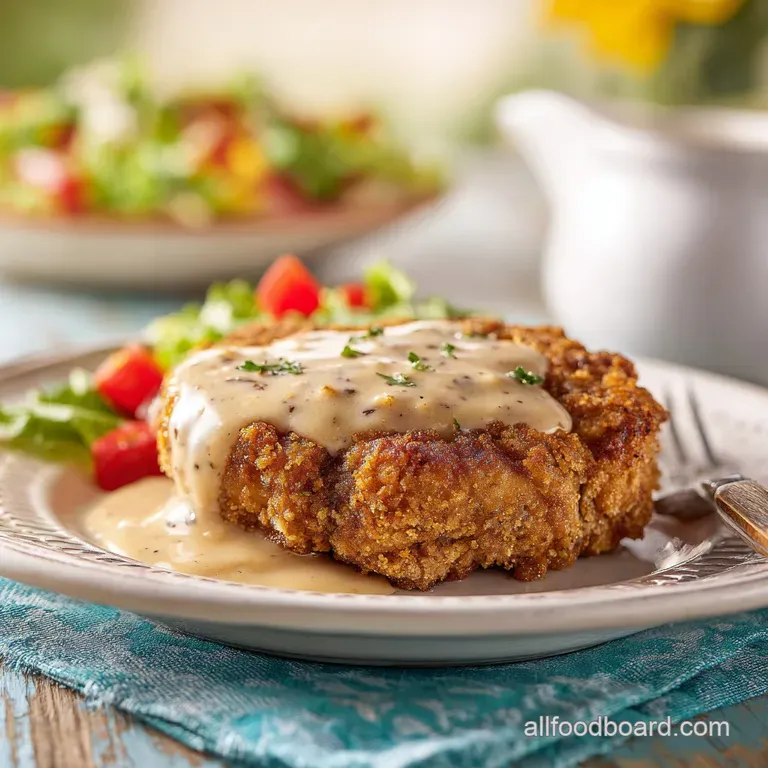
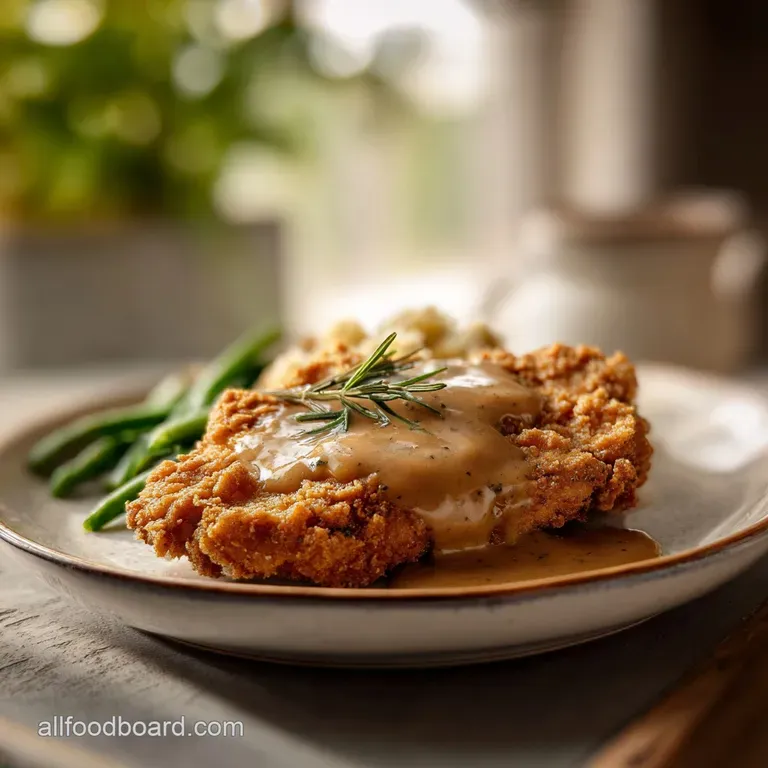
When it's time to plate, I like to keep it simple. A large, white plate makes the golden brown of the steak and the creamy white of the gravy pop. Place the steak down first, and only ladle the gravy over half of it. This lets your guests see that beautiful, craggy crust you worked so hard to create.
A sprinkle of fresh parsley or an extra crack of black pepper on top adds a touch of freshness to a very heavy, comforting dish. Serve it with a side of mashed potatoes (more gravy!) or some buttery green beans to cut through the richness. The beauty of the chicken fried steak with gravy recipe is that it feels like a celebration of home cooking every time it hits the table. Enjoy every crunchy, peppery bite!

Recipe FAQs
What kind of gravy do you use on chicken fried steak?
Use a traditional cream based pepper gravy. This is made by whisking seasoned flour into the leftover skillet drippings to create a roux, then slowly incorporating milk and coarse black pepper until it reaches a velvety consistency.
What is the secret to tender chicken fried steak?
Use high-quality cube steak and maintain proper fry temperatures. Cooking the steak at 350°F (175°C) for 3-4 minutes per side ensures the meat remains tender while the exterior reaches a golden, crispy finish. If you enjoyed mastering the sensory doneness cues here, apply them to other seared proteins for consistent results.
What is the coating on chicken fried steak?
The coating is a double dredged flour and cornstarch blend. Steaks are coated in a mix of flour, cornstarch, and baking powder, dipped into an egg and buttermilk wash, and then returned to the flour mixture for a thick, textured crust.
How do you keep batter from falling off chicken fried steak?
Let the breaded steaks rest on a wire rack for 10 minutes before frying. This hydration period allows the flour to bond firmly with the egg wash and meat surface, ensuring the crust stays intact during the frying process.
Is it true I should use a deep fryer to get a better crust?
No, this is a common misconception. A large cast iron skillet is ideal for this recipe, provided you maintain an oil temperature of 350°F (175°C) to ensure a crisp, golden crust without sogginess.
How to avoid a raw flour taste in the gravy?
Cook the flour and drippings mixture for one full minute before adding milk. This step toasts the starch, removing the raw flour flavor and establishing the base for a smooth, thickened sauce.
How to ensure the breading is thick and craggy?
Press the steaks firmly into the flour mixture during the final dredging step. This action forces the coating to adhere deeply to the egg wash, creating the signature craggy surface that makes the crust so satisfyingly crispy.
Classic Chicken Fried Steak
Ingredients:
Instructions:
Nutrition Facts:
| Calories | 594 kcal |
|---|---|
| Protein | 45.8 g |
| Fat | 29.8 g |
| Carbs | 34.5 g |
| Fiber | 1.2 g |
| Sugar | 6.4 g |
| Sodium | 745 mg |
