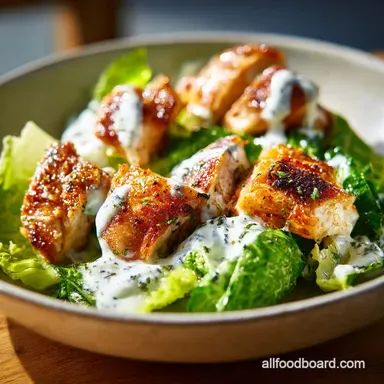
Homemade Chicken Caesar Salad: Pan-Seared
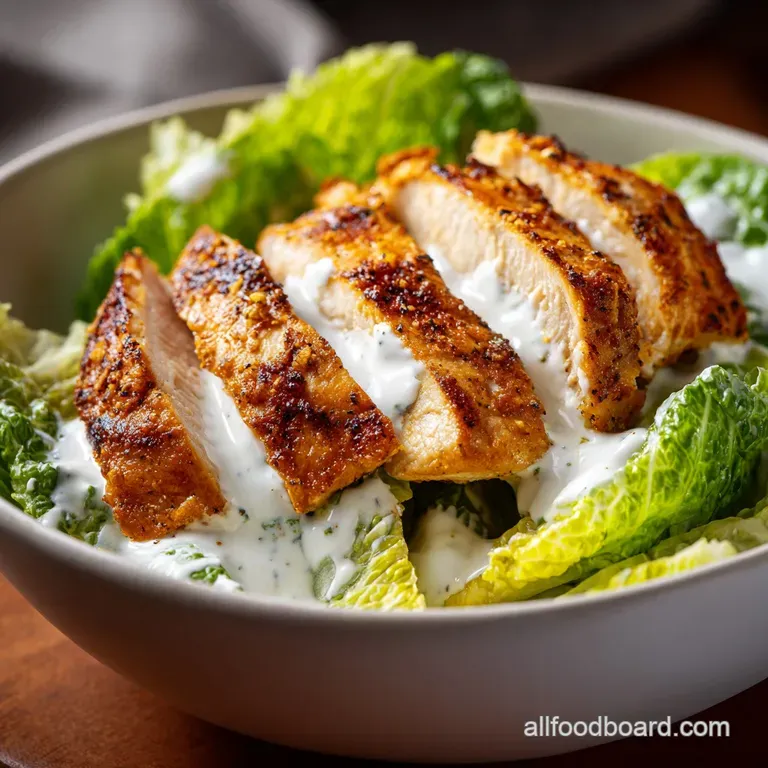
- Time: 10 min prep + 15 min cook = Total 25 mins
- Flavor/Texture Hook: Shattering croutons, juicy seared chicken, and a tangy, creamy dressing
- Perfect for: A quick weeknight dinner or an impressive lunch for guests
- The secret to a better chicken caesar salad recipe
- Component analysis for flavor
- The building blocks
- Equipment needed
- Bringing it together
- What can go wrong (and how to fix it)
- Troubleshooting Common Issues
- Adjusting the batch size
- Caesar myths debunked
- Storage guidelines and zero waste
- Serving suggestions
- High in Sodium
- Recipe FAQs
- 📝 Recipe Card
That sound when the chicken breasts hit a screaming hot cast iron skillet - that immediate, loud sizzle - is the sound of a great meal starting. I remember the first time I tried to host a "fancy" lunch for my sisters. I bought the pre bagged Caesar kit, the kind with the little plastic packet of dressing.
It was fine, but it lacked that punch, that depth of flavor you get at a real steakhouse. Everything felt a bit muted and the lettuce was already starting to wilt under the weight of a dressing that tasted mostly like preservatives.
I decided to stop cheating and actually make it from scratch. I spent an entire afternoon obsessing over the ratio of lemon to garlic and trying to get the croutons to a specific shade of gold. It's funny how such a "simple" dish can actually be quite technical when you want it to be truly great.
Once I realized that using sourdough for the croutons and a high-quality mayo base for the dressing removed the stress of raw egg emulsions, everything clicked.
Now, this chicken caesar salad recipe is my go to when I want something that feels like a treat but doesn't require a culinary degree. We're talking about the contrast of warm, savory chicken against cold, crisp Romaine, all tied together by a dressing that's velvety and sharp.
It's a balance of temperatures and textures that just works every single time.
The secret to a better chicken caesar salad recipe
Fat Stabilization: Using a mayonnaise base instead of raw egg yolks provides a stable emulsion that won't break, keeping the dressing velvety even if the temperature shifts.
Sourdough Structure: The denser crumb of sourdough allows the bread to absorb melted butter and olive oil without becoming greasy, resulting in a crouton that can shatter rather than crumble.
Carryover Cooking: Letting the chicken rest for 5 minutes allows the fibers to relax and reabsorb juices, ensuring the meat stays moist instead of leaking all over the lettuce.
Acid Balance: Fresh lemon juice cuts through the richness of the Parmesan and mayo, brightening the entire dish and preventing it from feeling too heavy.
| Feature | Fresh Homemade Approach | store-bought Shortcut | Impact on Final Dish |
|---|---|---|---|
| Dressing | Small batch emulsion | Processed bottle | Homemade has a sharper, fresher garlic punch |
| Croutons | Toasted sourdough | Pre packaged cubes | Sourdough provides a deeper, nuttier flavor |
| Chicken | Pan seared breasts | Pre cooked strips | Fresh searing adds a caramelized crust (umami) |
Component analysis for flavor
| Ingredient | Science Role | Pro Secret |
|---|---|---|
| Anchovy Paste | Umami Booster | Don't fear the fish; it disappears into a savory "background" saltiness |
| Lemon Juice | pH Regulator | Use a room temperature lemon for maximum juice yield |
| Parmesan Cheese | Salt & Texture | Grate it yourself for a smoother melt into the dressing |
| Romaine Hearts | Structural Base | Soak in ice water for 10 mins then spin dry for maximum crunch |
The building blocks
For the chicken and seasoning: - 1.5 lbs boneless skinless chicken breasts Why this? Lean protein that sears well and slices cleanly - 2 tbsp olive oil Why this? High smoke point for the skillet - 1 tsp kosher salt Why this? Coarse
Grains for even seasoning - 1/2 tsp cracked black pepper Why this? Adds a woody, floral heat
For the velvety dressing: - 1/2 cup mayonnaise Why this? Ensures a stable, creamy emulsion - 1 tbsp fresh lemon juice Why this? Brightens the heavy fats - 1 tsp Worcestershire sauce Why this? Adds complex fermented depth - 2
Tsp anchovy paste Why this? The essential savory backbone - 1 clove garlic, minced Why this? Fresh punch over powdered versions - 1/4 cup grated Parmesan cheese Why this? Adds salt and thickness - 1 tbsp water
Why this? Adjusts the viscosity for better coating
For the shattering croutons: - 3 cups sourdough bread, cubed Why this? Better structure than white bread - 2 tbsp unsalted butter, melted Why this? Classic richness and browning - 1 tbsp olive oil Why this? Prevents butter from
Burning at 375°F - 1/2 tsp garlic powder Why this? Even distribution of flavor - 1/4 tsp salt Why this? Enhances the sourdough tang
For the assembly: - 2 large Romaine hearts, chopped Why this? The only lettuce with the right "snap" - 1/2 cup shaved Parmesan cheese Why this? Visual appeal and concentrated flavor - Extra cracked black pepper for garnish
Smart Substitution Table
| Original Ingredient | Substitute | Why It Works |
|---|---|---|
| Anchovy Paste (2 tsp) | Capers (1 tbsp, minced) | Briny and salty. Note: Lacks the deep umami of fish |
| Mayonnaise (1/2 cup) | Greek Yogurt (1/2 cup) | High protein, creamy. Note: Much tangier, less rich |
| Sourdough Bread | Ciabatta or French Bread | Similar crust/crumb. Note: Less "tang" than sourdough |
| Romaine Hearts | Little Gem or Cos Lettuce | Similar crunch. Note: Smaller leaves, slightly sweeter |
If you're feeling adventurous and want to change the protein, you can use grilled shrimp or even salmon. But for the quintessential chicken caesar salad recipe, those seared breasts are non negotiable. If you love the flavor of the dressing but want a different side, my Cheesy Breadsticks recipe is a fantastic way to round out the meal.
Equipment needed
You don't need a professional kitchen, but a few specific tools make this way easier. A cast iron skillet is my top recommendation for the chicken. It holds heat better than stainless steel, which means you get that deep brown crust without overcooking the center.
If you don't have one, a heavy bottomed non stick pan will do the trick, though you might have to sear in smaller batches.
For the dressing, a small whisk and a bowl are fine, but if you're in a rush, a mini blender or an immersion blender is brilliant. It forces the garlic and anchovy paste to integrate perfectly into the mayo, leaving you with a completely smooth, velvety texture.
Finally,, a large salad bowl is essential. You need enough room to toss the Romaine without bruising the leaves. If the bowl is too small, you'll end up crushing the lettuce, and you'll lose that signature "snap" that makes a chicken caesar salad recipe successful.
Bringing it together
Phase 1: The Quick Sear Chicken
First, pat the chicken breasts completely dry with paper towels. This is the one step most people skip, but if the meat is damp, it will steam instead of sear, and you'll lose that golden crust. Rub them generously with olive oil, kosher salt, and cracked black pepper.
Heat your cast iron skillet over medium high heat. You'll know it's ready when a drop of water dances and evaporates instantly. Carefully place the chicken in the pan. Sear for 6–8 minutes per side until the internal temperature reaches 165°F (74°C).
Don't keep flipping them; let them sit to develop that brown crust. Once done, move them to a plate and let the meat rest for 5 minutes. This keeps the juices inside.
Phase 2: The 2 Minute Dressing
While the chicken rests, let's handle the dressing. In a small bowl or blender, combine the mayonnaise, fresh lemon juice, Worcestershire sauce, anchovy paste, and minced garlic. Whisk vigorously until the mixture is smooth and looks uniform.
Fold in the grated Parmesan cheese. Now, check the consistency. If it feels too thick or "gloppy," whisk in the water one tablespoon at a time. You want a dressing that clings to the lettuce but still flows easily. For a deeper dive into the base of this sauce, you can check out this classic Caesar dressing guide.
Phase 3: The Shattering Croutons
Preheat your oven to 375°F (190°C). Toss your sourdough cubes in a bowl with the melted butter, olive oil, garlic powder, and salt. Make sure every cube is lightly coated - this ensures they all brown evenly.
Spread the croutons on a baking sheet in a single layer. Toast for 8–10 minutes, shaking the pan halfway through, until they are golden brown and feel hard to the touch. Let them cool for a few minutes; they actually get crispier as they cool down.
Phase 4: The Final Assembly
Place your chopped Romaine in that large bowl. Drizzle only half of the dressing over the greens and toss gently. You want the leaves coated, not swimming in sauce.
Slice the rested chicken into strips and lay them across the top of the greens. Scatter the golden sourdough croutons over the chicken. Finally, finish the dish with a generous sprinkle of shaved Parmesan and some freshly cracked black pepper.
What can go wrong (and how to fix it)
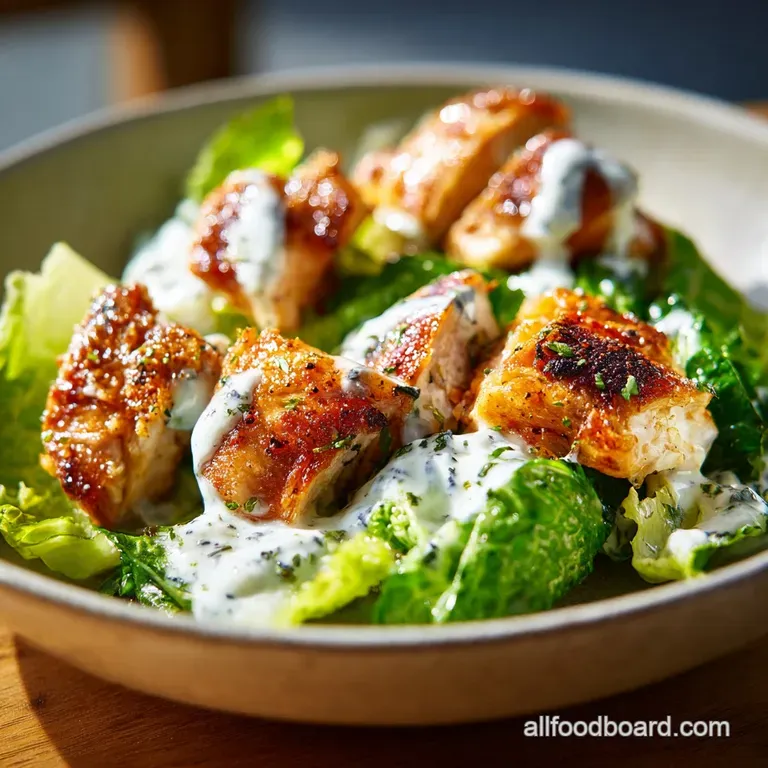
Troubleshooting Common Issues
| Issue | Solution |
|---|---|
| Why your chicken is dry | Overcooking is the biggest enemy here. Because chicken breasts vary in thickness, the thin end often dries out before the thick part is safe to eat. If this happens, you're likely cooking on too high |
| Why your dressing separated | Since we're using a mayo base, separation is rare, but it can happen if you add too much lemon juice too quickly or if the ingredients were at wildly different temperatures. If it looks split, whisk i |
| Why your croutons are soggy | Sogginess usually comes from two things: overcrowding the pan or adding the dressing too early. If the croutons are too close together, they steam instead of toast. Also, never toss the croutons into |
Common Mistakes Checklist
- ✓ Did you pat the chicken dry before searing?
- ✓ Did you let the meat rest before slicing?
- ✓ Are the croutons in a single layer on the pan?
- ✓ Did you use fresh lemon juice instead of bottled?
- ✓ Is the lettuce spun completely dry?
Adjusting the batch size
Scaling a chicken caesar salad recipe is pretty straightforward, but there are a few traps to avoid. If you're cutting the recipe in half for a solo lunch, remember that the chicken will cook slightly faster because there's more room in the pan.
I'd suggest reducing the sear time by about a minute per side, but always trust the thermometer over the clock.
When doubling or tripling for a party, don't just double the garlic and salt. Spices and aromatics don't always scale linearly. I recommend increasing the salt and garlic to about 1.5x the original amount first, then tasting the dressing and adding more if it feels muted.
Most importantly, do not crowd the chicken pan. If you try to sear 3 lbs of chicken in one skillet, the temperature will drop, the meat will release juices, and you'll end up boiling the chicken in its own grey liquid. Work in batches to maintain that over high heat sizzle.
| Goal | Action | Result |
|---|---|---|
| Light Lunch | 1/2 ingredients, smaller pan | Faster cook time, same flavor |
| Dinner Party | 2x-3x ingredients, batch sear | Maximum crust, avoids steaming |
| Low Calorie | Swap mayo for Greek yogurt | Tangier taste, lower fat |
Caesar myths debunked
You've probably heard that a "real" Caesar salad must be made with raw egg yolks. While that's the traditional way, it's not the only way. Modern mayonnaise is essentially a stable emulsion of oil and egg, meaning you get the same creamy texture and rich flavor without the risk of salmonella or the stress of the dressing "breaking" while you whisk.
Another common myth is that searing meat "seals in the juices." This is actually a misconception. Searing creates a crust (the Maillard reaction) that adds an incredible depth of savory flavor, but it doesn't actually act as a waterproof barrier.
The moisture loss happens regardless of the sear, which is why resting the meat is the only way to truly keep the chicken juicy.
Finally, some people think you can use any lettuce. Trust me, don't do it. Iceberg is too watery and lacks flavor, and spinach is too soft. Romaine is the only choice because its sturdy ribs provide the structural integrity needed to hold up the heavy dressing and warm chicken without collapsing.
Storage guidelines and zero waste
If you have leftovers, the golden rule is: Store components separately. Put the sliced chicken in one container, the dressing in a jar, and the croutons in an airtight bag. The Romaine can stay in a container with a paper towel to absorb excess moisture.
This ensures that when you assemble your next meal, the lettuce is still crisp and the croutons still shatter.
The chicken and dressing will keep in the fridge for up to 3 days. I wouldn't recommend freezing the salad, obviously, but you can freeze the seared chicken breasts for up to 2 months. Just thaw them in the fridge overnight and give them a quick flash sear in a pan to wake up the flavors.
For zero waste, don't throw away those sourdough ends or the "heels" of the loaf. They actually make the best croutons because they're denser. Also, if you have leftover dressing, it makes an incredible dip for raw carrots or a base for a chicken salad sandwich.
If you have a few Romaine leaves left over, chop them up and throw them into a smoothie or a wrap.
Serving suggestions
To make this chicken caesar salad recipe feel like a restaurant experience, focus on the presentation. Instead of just mixing everything in a bowl, try plating the Romaine on a wide platter. Arrange the sliced chicken in a fan pattern across the top and scatter the croutons and shaved Parmesan haphazardly.
For a more filling meal, I love serving this with a side of garlic butter breadsticks. The warmth of the bread complements the cold crispness of the salad. If you're serving this as a light lunch, a chilled glass of sparkling water with a lemon wedge is all you need to cut through the richness of the dressing.
If you want to pivot this into a "healthy" version, you can swap the sourdough for roasted chickpeas and use grilled chicken breast instead of pan seared. But if you're looking for the full, indulgent experience, stick to the classic method.
The combination of the savory, salty, and tangy elements is what makes this specific chicken caesar salad recipe a timeless favorite.
High in Sodium
1120 mg 1,120 mg of sodium per serving (49% 49% of daily value)
The American Heart Association recommends a daily limit of 2,300mg of sodium for most adults to maintain heart health.
Tips to Reduce Sodium
-
Limit Anchovy Paste-25%
Reduce the anchovy paste to 1 tsp or substitute with low-sodium soy sauce to keep the umami flavor while cutting salt.
-
Omit Added Salt-25%
Remove both the kosher salt and the salt used in the breadcrumbs, as the cheese and anchovies provide plenty of seasoning.
-
Swap Worcestershire-20%
Use a low-sodium version of Worcestershire sauce or replace it with a small splash of balsamic vinegar.
-
Reduce Parmesan Cheese-15%
Use half the amount of grated and shaved Parmesan, or substitute with a small amount of nutritional yeast for a similar nutty flavor.
-
Boost Aromatics
Add more lemon zest, fresh cracked black pepper, or smoked paprika to enhance the taste without increasing sodium.
Recipe FAQs
What ingredients are in a chicken Caesar salad?
Chicken breasts, Romaine, and a creamy dressing. The dressing consists of mayonnaise, lemon juice, Worcestershire sauce, anchovy paste, garlic, and Parmesan, served with sourdough croutons.
Is Caesar salad okay for diabetics?
Yes, but monitor the croutons and dressing portions. Focus on the Romaine and protein for fiber and satiety, as the sourdough and mayo base contribute more carbohydrates and fats.
What to put on chicken for Caesar salad?
Rub with olive oil, salt, and pepper. This simple seasoning allows the chicken to sear beautifully without masking the bold flavors of the anchovy garlic dressing.
What are common Caesar salad mistakes?
Overcooking the chicken and dressing the greens too early. Searing chicken past 165°F leads to dryness, while tossing Romaine in dressing too far in advance causes wilting.
How to keep the salad from getting soggy?
Store components separately. Keep the sliced chicken, dressing, and croutons in individual containers and place a paper towel with the Romaine to absorb excess moisture.
Is it true you must use raw egg yolks for Caesar dressing?
No, this is a common misconception. A mayonnaise base provides the same creamy stability and rich flavor without the safety risks or effort of using raw eggs.
Can I use a different protein instead of chicken?
Yes, shrimp or grilled salmon are excellent alternatives. If you appreciate the zesty, bright flavors here, you will enjoy the same profile in our lemon caper chicken.
Chicken Caesar Salad Recipe for 4