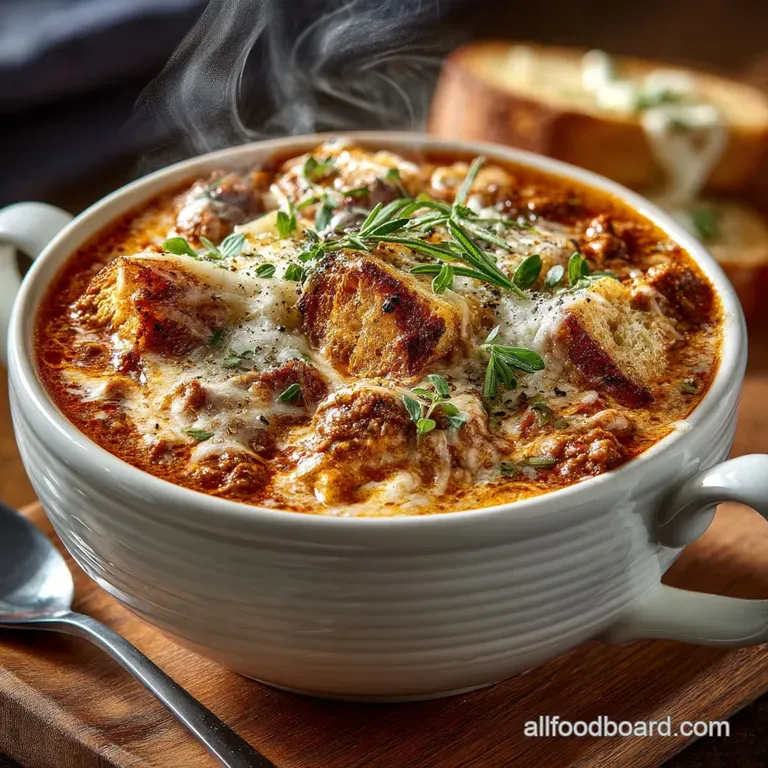
The Big Hug in a Bowl Rich Cheesy Lasagna Soup
- Why Ditch the Baking Dish? The Appeal of Deconstructed Comfort
- Sourcing Your Culinary Components: What You Need for the Best Lasagna Soup
- Layering Flavor, Not Pasta: Mastering the Cooking Method
- Expert Troubleshooting and Advanced Techniques
- Customizing Your Bowl: Delicious Swaps and Dietary Adaptations
- Recipe FAQs
- 📝 Recipe Card
Why Ditch the Baking Dish? The Appeal of Deconstructed Comfort
Lasagna is, without question, the king of comfort food rich, layered, and deeply satisfying. Yet, the reality of assembling, baking, and waiting for a massive pan to cool often relegates it to weekend status.
Enter Lasagna Soup: the ingenious solution that transforms this complex, layered casserole into a comforting, ready-in-an-hour meal. This deconstructed approach preserves every single element of flavor the savory meat ragu, the sweet tomato base, the tender noodles, and the essential creamy cheese layer but serves it in a bowl, eliminating the tedious work of stacking and lengthy baking time.
It is a genuine soul warming experience, built from the bottom up, just like its oven baked cousin, but designed for modern efficiency.
Is Lasagna Soup Really Easier? Time vs. Flavor
While the idea of a quick version of an Italian classic might seem too good to be true, this Quick Lasagne Soup Recipe genuinely simplifies the process. Traditional lasagna demands nearly two hours of active time, plus cooling.
This lasagna soup recipe easy approach, however, cuts the total commitment down to just 1 hour and 5 minutes. The complexity rating of "Medium" reflects the necessary active chopping of the soffritto (onion, carrot, celery) and the timing required to manage the soup base, pasta, and ricotta topping simultaneously.
The majority of the cooking phase involves simple simmering, allowing the depth of flavor to build passively. This makes it an ideal candidate for a satisfying Weeknight Lasagna Soup , delivering maximum flavor returns for minimal effort.
The Flavor Profile: What Makes This Soup Taste Identical to Lasagna?
The authentic taste of this soup is achieved by meticulously replicating the classic lasagna components within a broth. The foundation is a deeply developed meat ragu made with Italian sausage (or ground beef) browned until caramelized, giving the necessary savory richness.
This is combined with a dual tomato base crushed and diced seasoned heavily with oregano, basil, and a crucial splash of balsamic vinegar for brightness and depth. The final, non-negotiable component is the cheesy element.
We skip stirring ricotta directly into the broth, which can make the soup muddy, and instead prepare a vibrant, herbed ricotta and Parmesan blend, which melts beautifully into each spoonful, providing that distinct, creamy tang essential to true lasagna flavor.
Sourcing Your Culinary Components: What You Need for the Best Lasagna Soup
A truly magnificent soup starts with high-quality, carefully selected lasagna soup ingredients . Unlike a standard brothy soup, this recipe relies on a dense, hearty texture, so precision in sourcing the base components is key.
Essential Pantry Staples for the Rich Ragu Base
The foundation of flavor is established by the classic Italian soffritto —a finely diced mixture of yellow onion, carrots, and celery, sautéed until perfectly translucent.
This step alone takes 8– 10 minutes and should not be rushed, as it establishes the savory backbone of the broth. We use 1 lb of Italian sausage, casings removed, for optimal richness, though a Soup With Ground Beef (specifically 85/15 lean ratio) is an acceptable substitution, provided you compensate with extra seasoning like fennel seed.
Crucial for the sauce's body are the concentrated flavors: two minutes of cooking tomato paste until it darkens, and the addition of balsamic vinegar to deglaze the pot, which unlocks browned flavor particles stuck to the bottom.
Finally, six cups of robust chicken or beef stock carry these flavors forward during the long simmer.
The Secret to Creaminess: Building the Herbed Ricotta Topping
You cannot have lasagna without creamy cheese. To recreate this crucial texture without sacrificing the soup’s clean body, we prepare the ricotta topping separately. This rich mixture requires one cup of whole milk ricotta cheese, which should ideally be drained slightly if it appears watery, combined with half a cup of freshly grated Parmesan, finely chopped fresh basil, and parsley.
This is essentially the creamy, herby filling of a traditional baked lasagna, kept cold until serving. This chilled, seasoned mixture melts beautifully into the hot broth upon serving, delivering bursts of fresh flavor and creamy texture right where they belong.
Necessary Kitchen Gear for a Streamlined Cook
While the process is simple, the sheer volume of the Lasagna Soup necessitates the correct vessel. A sturdy 6-8 quart Dutch Oven or a large stock pot is essential to accommodate the 1.4 liters of liquid, the meat, and the expanding pasta.
Beyond that, standard equipment includes a sharp chef’s knife and cutting board for the significant amount of vegetable prep, and a small mixing bowl for the ricotta topping.
Related Recipes Worth Trying
- Silky Hungarian Cottage Cheese Soup Recipe Easy Comfort Food — Looking for unique Cottage Cheese Soup Recipes This easy Hungarianstyle soup uses cottage cheese for a velvety tangy texture thats lighter than cream Try...
- Foolproof Crockpot Italian Meatball Soup Recipe Slow Cooker Comfort — Whip up this utterly foolproof Crockpot Italian Meatball Soupa hearty slow cooker gem brimming with tender meatballs and rich broth Perfect for a cosy...
- Best Slow Cooker Thai Coconut Chicken Soup Tom Kha Style — Make the best Slow Cooker Thai Coconut Chicken Soup This Tom Kha style recipe is ridiculously easy comfort food that tastes like it simmered all day Get the...
Layering Flavor, Not Pasta: Mastering the Cooking Method
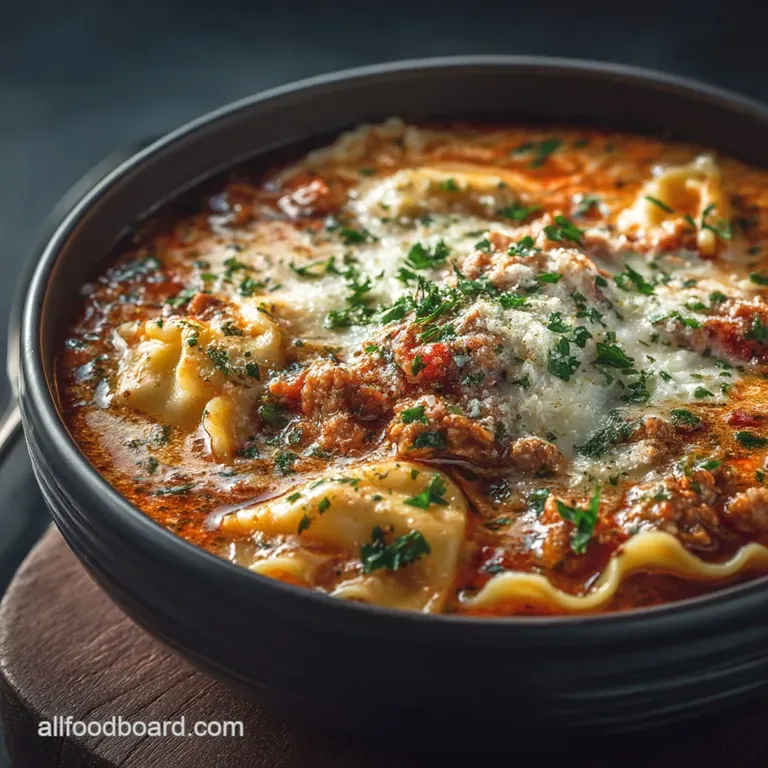
The stovetop method focuses on sequential flavor development, ensuring the finished product tastes like it simmered all day, even though the active cook time is only 45 minutes.
Developing the Deep Umami: Browning the Meat and Aromatics
We begin by gently sautéing the diced soffritto in olive oil until the vegetables are tender and translucent, achieving softness without browning. Once the aromatics are softened, minced garlic, dried oregano, and basil are added for one minute, releasing their volatile oils.
Next, the 1 lb of Italian sausage is added, broken up, and cooked thoroughly over medium high heat for 5– 7 minutes. Draining the excess grease after browning the meat prevents the final soup from having an oily mouthfeel.
Finally, stirring in the tomato paste and letting it cook until slightly darkened is key this caramelization is vital for profound tomato depth.
Simmering Perfection: Achieving the Ideal Sauce Consistency
After the meat is browned, the pot is deglazed with balsamic vinegar, scraping up those caramelized bits. Then, the liquid components the crushed and diced tomatoes, the six cups of stock, and the bay leaf are introduced.
Bringing the mixture to a boil and immediately dropping it to a low simmer allows the distinct flavors of the Lasagna Soup Recipe With Sausage to marry. This 20-minute covered simmer time is non-negotiable; it ensures the herbs fully bloom and the depth of the meat ragu permeates the entire broth.
Cooking the Noodles: When and How to Add Your Broken Lasagna Sheets
Timing the pasta is the most critical step to prevent a gummy texture. Once the soup base has simmered for 20 minutes, increase the heat slightly and add the 6 sheets of lasagna noodles, which have been broken into rough 1 inch pieces.
It is vital to stir frequently during this phase to prevent the dense pasta from sinking and sticking to the bottom of the pot. The noodles need approximately 8– 10 minutes to cook until they reach a perfect al dente stage tender, but still offering a slight bite.
Immediately remove the bay leaf once the pasta is cooked.
Finishing Touches: Stirring in the Cheese and Final Seasoning
The soup is now ready for service. Unlike many other recipes, we do not stir the rich dairy into the main pot, which preserves the texture of the broth for potential leftovers. Instead, ladle the hot, hearty soup directly into individual bowls.
Top each serving with a generous spoonful of the previously prepared, chilled herbed ricotta topping. A sprinkle of shredded mozzarella can be added over the ricotta; the ambient heat of the Lasagna Soup will melt it slightly, creating a beautiful, gooey cheese pull identical to baked lasagna.
Expert Troubleshooting and Advanced Techniques
The most common pitfall when making this hearty dish is dealing with the pasta's absorption rate. To avoid a bowl of "lasagna porridge," remember to cook the noodles only until al dente , as they will continue to soften in the hot broth.
If you are preparing this specifically for meal prepping, the superior technique is to cook the lasagna sheets in a separate pot of salted water, drain them, and add them to the soup only in the final moments of reheating or just before serving.
For a truly professional depth, consider using homemade beef or chicken stock instead of store-bought, as the flavor of the liquid base is paramount in this recipe.
Customizing Your Bowl: Delicious Swaps and Dietary Adaptations
This adaptable recipe lends itself perfectly to various schedules and preferences, including methods that bypass the stovetop entirely.
Common Questions: My Lasagna Soup is Too Thick (or Too Thin)!
If the soup becomes overly thick often the result of evaporation during a rapid simmer or the pasta absorbing too much liquid simply thin it out by stirring in a half cup of extra stock or water until the desired consistency is achieved.
If the soup is too thin, try removing the lid during the last 10 minutes of the initial 20-minute simmer to allow some liquid to evaporate and the sauce to reduce slightly.
Making Ahead and Storage Solutions for Leftovers
Leftovers of this Lasagna Soup store beautifully for up to four days in an airtight container in the refrigerator. However, as noted, the pasta will continue to swell and absorb the broth over time.
If you prefer your pasta firmer, store the cooked noodles separately from the meat and tomato base, combining them only when reheating. For those who utilize appliances, this entire Slow Cooker Ground Beef Lasagna Soup Recipe base can be adapted by browning the meat and aromatics first, transferring them to the slow cooker with the liquid, and cooking on low for 6– 8 hours.
Add the broken lasagna noodles during the final 30 minutes. Similarly, making lasagna soup instant pot style requires pressure cooking the base for about 10 minutes, followed by a manual release, and then adding the noodles on the Sauté function until cooked through.
Plant Based Power: Making a Vegetarian Lasagna Soup
A robust, meatless version is easily achieved by substituting the Italian sausage with one cup of cooked brown lentils. For depth that mimics the savory umami of meat, sauté sliced mushrooms with the soffritto and stir in one tablespoon of smoked paprika alongside the herbs.
Ensure you use vegetable stock instead of chicken or beef stock, and the creamy ricotta topping can remain as is, or substitute with a high-quality vegan cashew ricotta.
Calculating the Comfort: Understanding Nutritional Breakdown
This hearty meal is designed for comfort, not deprivation. Based on using 85/15 ground meat and low-sodium stock, one generous serving (1/6th of the recipe) typically falls within the 450 550 kcal range. It provides a substantial amount of protein (around 30g) and fiber, making it a filling main course.
Note that the fat content (25-35g) is highly variable depending on the cut of Italian sausage or ground beef used, offering an easy way to adjust the nutritional profile if necessary.

Recipe FAQs
I’m planning on batch cooking this. How do I stop the lasagna noodles from turning into a big lump of stodgy sadness?
Managing the pasta is the key to brilliant leftovers. If you know you'll have soup remaining, it’s best to cook the lasagna noodles separately until they are just shy of al dente (firm to the bite). Store the rich soup base and the cooked pasta separately in the fridge.
Then, when you reheat a portion, simply combine the hot soup with a scoop of the noodles. This ensures the pasta absorbs the delicious liquid upon serving, not while sitting around overnight like a greedy toddler, leaving you with that perfect soup texture every time.
Is Lasagna Soup suitable for freezing, or will the texture go a bit strange?
Yes, Lasagna Soup is excellent for freezing, but there's a vital caveat: leave the noodles out entirely before you stick it in the icebox! The dense, tomato based meat broth freezes beautifully for up to three months.
When you want to serve it, simply thaw the base, bring it to a simmer, and cook fresh broken lasagna pieces right in the pot. This little bit of forward thinking prevents the pasta from becoming chalky and ensures the texture remains spot-on.
I’m catering for a veggie friend. Can I easily make this recipe meat free?
Absolutely, this recipe transitions brilliantly into a hearty vegetarian delight! Simply swap the Italian sausage for a mix of meaty mushrooms (like portobello), brown or green lentils, and high-quality vegetable stock.
To replace the savoury depth that meat provides, stir in a teaspoon of smoked paprika or a tablespoon of soy sauce (Umami is your friend here!) during the simmering stage. The rich tomato base and creamy ricotta ensure you won’t miss the meat one bit.
Do I have to use the herbed ricotta topping, and can I prep it ahead of time?
While the soup itself is tasty, the herbed ricotta is truly the element that elevates it from a hearty stew to a proper Lasagna experience it provides the cool, creamy, cheesy contrast essential to the dish. Don't skip it if you want the full flavour profile!
Luckily, the topping is entirely fuss free and brilliant for prepping ahead. You can mix the ricotta, Parmesan, and herbs together up to 24 hours in advance and keep it covered in the fridge; just give it a quick stir before serving time.
Help! My soup seems a bit too thick, almost like a stew. What should I do?
Don't fret; it's common for soup with pasta to thicken up quickly, especially if the starch has released or the sauce has reduced heavily. The simplest fix is to adjust the liquid right before serving.
Keep a kettle of hot water or extra stock handy and stir in half a cup at a time until the soup achieves the consistency you prefer. Remember that it will continue to thicken slightly as it cools in the bowl, so aim for a loose, ladle able consistency.
Cheesy Weeknight Lasagna Soup
Ingredients:
Instructions:
Nutrition Facts:
| Calories | 1840 kcal |
|---|---|
| Protein | 28.3 g |
| Fat | 18.5 g |
| Carbs | 102.1 g |
| Fiber | 35.2 g |
| Sodium | 913 mg |
