Homemade Clam Chowder Recipe
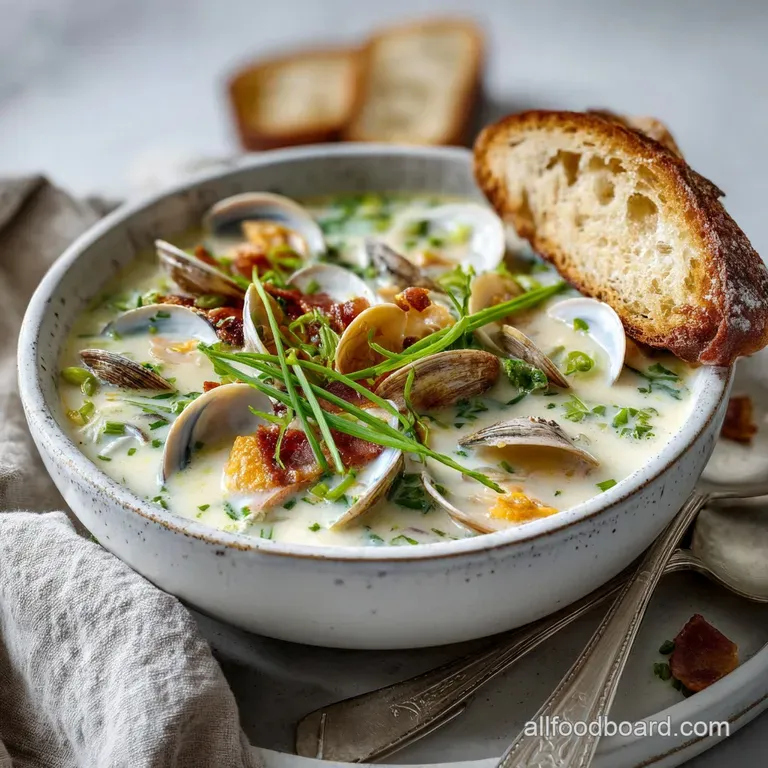
- Time: Active 20 minutes, Passive 30 minutes, Total 50 minutes
- Flavor/Texture Hook: Silky cream base with tender, bite-sized potatoes
- Perfect for: Cozy weekend lunches or impressive family dinners
- Making the Best Homemade Clam Chowder
- Why This Briny Bowl Works
- Standard Specs for Chowder Success
- Elements Needed for Briny Success
- Essential Tools for Smooth Cooking
- Steps to Crafting Your Chowder
- Fixing Common Chowder Texture Issues
- Creative Ways to Personalize Flavor
- Myths About Chowder Cooking
- Storage and Reheating for Leftovers
- Clam Chowder FAQs
- 📝 Recipe Card
Making the Best Homemade Clam Chowder
It started with a splash. Not the ocean kind, but the "oops, I dumped the clam juice down the sink" kind. I was twenty, living in a tiny apartment, and trying to impress my now husband. I thought I could just use water and a bouillon cube. Spoiler alert: it tasted like salty sadness and wet potatoes.
That mistake taught me the first rule of this kitchen: the liquid is where the soul of the dish lives.
Now, when I make this, the aroma hits you before you even walk into the kitchen. It is that smoky, salty scent of bacon rendering down while the onions soften into a translucent sweetness. It is the sound of the heavy pot lid rattling just a bit as the broth simmers.
This isn't just soup; it is a warm hug in a bowl that actually tastes like the sea, not a salt lick. We’ve all had those chowders that look like library paste, and we are not doing that today.
We are going for a texture that is velvety but still has those distinct bites of potato that haven’t turned to mush. It is rich, it is creamy, and honestly, it is better than what you would find at a wharf side tourist trap.
We’ll be using a mix of fresh and canned clams to get that deep flavor without spending three hours scrubbing shells. Trust me, once you see how those little bits of bacon play off the briny clams, you will never look at a tin of "condensed" soup the same way again.
Why This Briny Bowl Works
The secret to a bowl that disappears in minutes isn't magic, it's chemistry. We are manipulating starch and fat to create a suspended emulsion that stays smooth even after it cools down a bit on the table. If you've ever had a chowder separate into oily puddles, you know why these steps matter.
- Starch Synergism: Using two types of potatoes ensures a thick base and firm bites. The Russet falls apart to naturally thicken the broth, while the Yukon Gold stays buttery and intact.
- Sequential Infusion: Sautéing the aromatics in bacon fat and butter creates a fat soluble flavor base. This ensures the thyme and garlic scents are carried through every spoonful of cream.
- The Brine Balance: Combining bottled clam juice with the liquid from the cans provides a consistent salt level. This prevents the "flat" taste often found in home versions that rely only on water or chicken stock.
- Carryover Softening: Adding the fresh Littlenecks at the very end prevents them from turning into rubber. The residual heat of the thickened base is enough to pop them open perfectly.
| Cooking Method | Total Time | Texture Outcome | Best For |
|---|---|---|---|
| Stovetop | 50 minutes | Silky and controlled | Everyday family dinner |
| Dutch Oven (Oven) | 1 hours 10 mins | Deeply caramelized veg | Maximum depth of flavor |
| Slow Cooker | 6 hours | Very soft potatoes | Hands off meal prep |
Cooking on the stovetop allows you to monitor the thickening of the flour and butter roux in real time. This is my preferred way because you can see exactly when the raw flour smell vanishes and that nutty aroma takes over.
If you choose the oven method, you will get a bit more browning on the onions, but you have to be careful not to let the dairy scorch at the edges.
Standard Specs for Chowder Success
Getting the consistency right is about more than just tossing things in a pot. You want a liquid that coats the back of a spoon without feeling heavy or gluey. It is a delicate balance between the flour you add and the natural starches released by those Russet potatoes as they simmer.
| Ingredient | Science Role | Pro Secret |
|---|---|---|
| Russet Potato | Starch Release | Dice these smaller (1/4 inch) so they dissolve slightly and thicken the broth. |
| Half and Half | Fat Emulsion | Add this at the very end off the heat to prevent the proteins from curdling. |
| Clam Liquor | Umami Base | Never rinse your canned clams; that "cloudy" water is packed with concentrated sea flavor. |
| Bacon Fat | Flavor Carrier | Render the bacon slowly from a cold pan to get the most liquid gold for your roux. |
When you are choosing your clams, the mix is vital. The canned ones provide the "meat" in every bite, while the fresh Littlenecks add that "wow" factor and a fresh hit of ocean air. If you can't find fresh clams, don't sweat it. You can double the canned amount, but you’ll miss out on that beautiful presentation.
Just make sure you are using high-quality bottled juice, as it's the backbone of the whole thing.
Elements Needed for Briny Success
Gathering your ingredients beforehand is the only way to cook without stress. This recipe moves fast once the roux starts, so have everything chopped and ready. If you love this coastal vibe, you might also like my Clam Chowder Recipe which is a New England staple with a slightly different flavor profile.
- 3 cans (6.5 oz each) chopped clams: Reserve all the liquid. Why this? Provides consistent clam flavor in every spoonful.
- Substitute: 1 lb chopped fresh clams if you have the time to steam them first.
- 3 cups total clam juice: Use 2 cups bottled plus the liquid from your cans. Why this? Essential for that authentic, deep sea salinity.
- Substitute: Fish stock or a very light chicken bone broth.
- 1 lb fresh Littleneck clams: Scrub these well under cold water. Why this? Adds visual appeal and fresh, sweet briny notes.
- Substitute: Extra canned clams (one 6.5 oz can).
- 4 oz thick cut bacon: Dice this into small lardons. Why this? The smoke cuts through the richness of the cream.
- Substitute: Salt pork or pancetta for a different salt profile.
- 2 tbsp unsalted butter: Used for sautéing. Why this? Adds a rounded, milky flavor that bacon fat alone lacks.
- Substitute: Ghee or a neutral oil like avocado oil.
- 2 stalks celery & 1 large white onion: Minced finely. Why this? The classic aromatic base for any great soup.
- Substitute: Leeks (white parts only) for a sweeter, milder flavor.
- 3 cloves garlic: Minced. Why this? Adds a subtle punch that brightens the heavy cream.
- Substitute: 1 tsp garlic powder added to the flour.
- 2 large Yukon Gold potatoes: 1/2 inch cubes. Why this? They hold their shape and provide a waxy, buttery bite.
- Substitute: Red bliss potatoes.
- 1 large Russet potato: 1/4 inch cubes. Why this? High starch content helps thicken the soup naturally.
- Substitute: An extra half cup of instant potato flakes in a pinch.
- 1 tsp dried thyme & 1 bay leaf: Why this? Thyme and clams are a match made in heaven.
- Substitute: Fresh thyme (use 1 tbsp) or a pinch of marjoram.
- 1/4 cup all purpose flour: Why this? The thickening agent that creates the velvety mouthfeel.
- Substitute: Cornstarch (use 2 tbsp mixed with water) for a gluten-free option.
- 1.5 cups half and half: Why this? Richer than milk but lighter than heavy cream.
- Substitute: Whole milk mixed with a splash of heavy cream.
- Fresh cracked black pepper & 1/4 cup fresh parsley: Why this? Parsley adds a needed flash of green and freshness.
- Substitute: Fresh chives or green onions for the garnish.
Essential Tools for Smooth Cooking
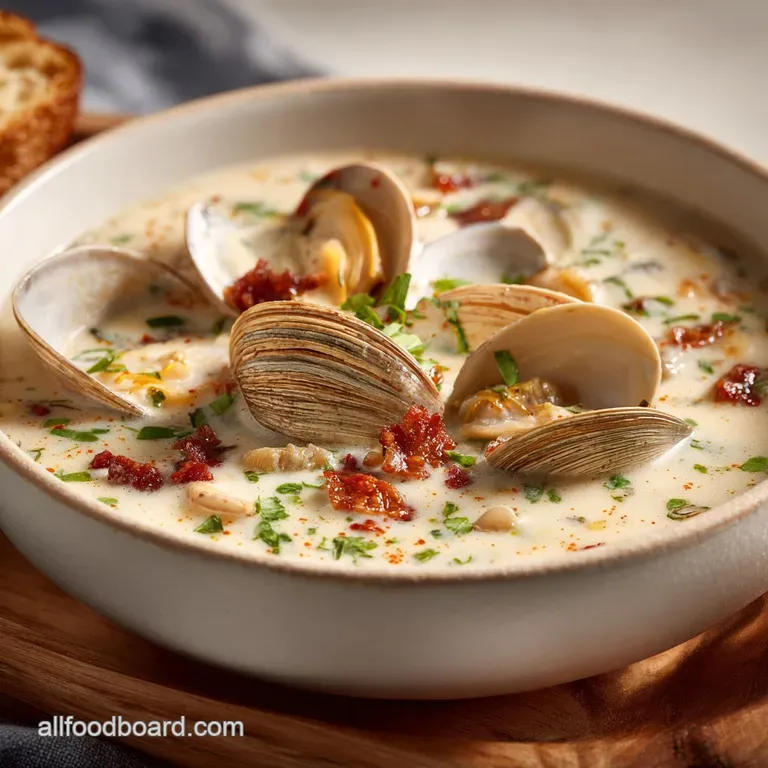
You don't need a professional kitchen to pull this off, but a few specific tools make the process much smoother. I've made this in a thin stainless steel pot before, and let me tell you, the bottom scorched so fast I spent an hour scrubbing it later.
A heavy bottomed Dutch oven, like a Lodge or Le Creuset, is your best friend here. It distributes heat evenly, which is crucial when you are simmering milk and flour. You will also want a sturdy whisk for incorporating the flour into the fat. This prevents those dreaded "flour bombs" that ruin the texture.
Finally,, a good vegetable peeler and a sharp chef's knife will make quick work of those potatoes. If your potatoes are all different sizes, they will cook at different rates, leaving some hard and some like mush.
Chef's Tip: Freeze your bacon for 10 minutes before dicing. It makes it much easier to get those perfect, even little squares that render out beautifully.
Steps to Crafting Your Chowder
1. Render and Sauté
Place your diced bacon in a cold Dutch oven. Turn the heat to medium and let the fat slowly melt away until the bacon is crispy and golden. Remove the bacon with a slotted spoon and set it aside on a paper towel. Add the 2 tbsp unsalted butter to the remaining bacon fat.
Once it's foaming, toss in your onion and celery. Sauté for about 5 to 7 minutes until the onions are translucent and fragrant, but not browned.
2. Create the Base
Stir in the minced garlic and dried thyme, cooking for just 1 minute until you can smell the garlic clearly. Sprinkle the 1/4 cup all purpose flour over the vegetables. Whisk constantly for 2 minutes. This "cooks out" the raw flour taste.
Slowly pour in the reserved clam liquid and the bottled clam juice, whisking the whole time to ensure no lumps form. Note: This creates a stable emulsion that won't break later.
3. The Low and Slow Simmer
Add your cubed Yukon Gold and Russet potatoes along with the bay leaf. Bring the mixture to a gentle boil, then immediately reduce the heat to low. Cover the pot partially. Simmer for 15 to 20 minutes until the potatoes are fork tender.
You should see the Russet cubes starting to soften at the edges, which is exactly what we want for that natural thickening.
4. The Gentle Finish
Gently fold in the chopped clams from the cans. If you are using the 1 lb fresh Littleneck clams, nestle them into the liquid now. Cover the pot and cook for 5 to 8 minutes until the fresh clams have popped open wide. Discard any fresh clams that refuse to open.
Turn the heat to the lowest setting or off entirely.
5. Creaming and Seasoning
Pour in the 1.5 cups half and half. Stir gently so you don't break the tender potatoes. Let the soup sit for 2 or 3 minutes to allow the cream to warm through. Do not let it boil at this stage, or the dairy might separate. Remove the bay leaf.
Season with a generous amount of fresh cracked black pepper. Since the clam juice and bacon are salty, taste it first before adding any extra salt.
6. Serving the Masterpiece
Ladle the hot chowder into warmed bowls. Make sure everyone gets a fresh Littleneck clam on top for the look. Sprinkle with the reserved crispy bacon bits and a handful of fresh chopped parsley. Serve immediately with oyster crackers or a thick slice of sourdough bread.
Fixing Common Chowder Texture Issues
Even the best cooks run into trouble sometimes. The most common heartbreak with chowder is the texture. If it's too thin, it feels like watery milk; if it's too thick, it's like eating wallpaper paste. Finding that middle ground is all about heat control and timing.
Why Your Chowder Turned Grainy
This usually happens for two reasons: the flour didn't cook long enough in the fat, or the dairy boiled too hard. When flour isn't fully hydrated and cooked in fat (the roux stage), it stays as tiny dry particles that feel like sand on your tongue.
If the heat is too high when you add the half and half, the proteins in the milk can clump together, creating a curdled look.
Why Your Chowder Is Too Thin
If your soup looks like a thin broth, you might not have simmered it long enough for the Russet potatoes to do their job. You can fix this by taking a ladle of the soup (potatoes and all) and blending it, then stirring it back in. This releases all the starch at once and thickens the pot instantly.
| Problem | Root Cause | Solution |
|---|---|---|
| Broken Sauce | Boiling after adding dairy | Remove from heat and whisk in a splash of cold cream to stabilize. |
| Bland Flavor | Not enough acidity or salt | Add a tiny squeeze of lemon juice or a dash of Worcestershire sauce. |
| Tough Clams | Overcooked the seafood | Always add clams at the very end; they only need a few minutes of heat. |
Common Mistakes Checklist
- ✓ Scrub fresh clams under cold running water to remove every bit of sand.
- ✓ Don't skip the Russet potato; it is the "secret" thickener that makes it feel homemade.
- ✓ Add the cream off the heat to ensure a velvety, smooth finish every time.
- ✓ Use a heavy bottomed pot to prevent the flour and milk from scorching on the bottom.
- ✓ Never boil the soup once the clams are in; they turn to rubber in seconds.
Creative Ways to Personalize Flavor
Once you've mastered the basic technique, you can start playing with the ingredients. Some people love a "Hatteras" style which is much clearer, but we are sticking to the creamy comfort here. For another decadent treat, try my My Favorite Creamy recipe which uses oysters for a more refined flavor.
The Crock Pot Clam Chowder Recipe Adaptation
To make this in a slow cooker, add everything except the flour, butter, cream, and clams to the pot. Cook on low for 6 hours. Thirty minutes before serving, make a quick roux on the stove with the flour and butter, whisk in a bit of the hot slow cooker liquid, then pour it all back in with the clams and cream.
This gives you that slow simmered potato texture with a perfectly thickened base.
The Mediterranean Twist
If you want something a bit lighter, swap the bacon for chorizo and add a pinch of smoked paprika. Replace half of the clam juice with a dry white wine like Pinot Grigio. This version feels a bit more like a summer stew and pairs beautifully with a crisp salad.
| Servings | Clams (Canned) | Clam Juice | Half and Half |
|---|---|---|---|
| 2 People | 1 can | 1 cup | 1/2 cup |
| 6 People | 3 cans | 3 cups | 1.5 cups |
| 12 People | 6 cans | 6 cups | 3 cups |
When scaling up for a crowd, remember that the liquids shouldn't double perfectly. Start with about 10% less liquid than the math suggests, then add more at the end if it's too thick. For those summer nights when corn is in season, try this Creamy Corn Chowder Recipe for a sweeter take on the classic.
Myths About Chowder Cooking
One huge myth is that you must use fresh clams for a "real" chowder. Honestly, that is a lot of work for a weeknight dinner. Canned clams are processed immediately after being caught, which locks in that sea flavor. Using the liquid from the can is actually a pro move because it's essentially concentrated clam essence.
Another misconception is that the "New England" way is the only way. While the cream base is iconic, the real hallmark of a chowder is the chunky texture of the potatoes and seafood. Searing the meat does not "seal in juices" either; it just creates the Maillard reaction that adds that smoky depth we love.
Don't worry about being a "purist" worry about the flavor in the bowl.
Storage and Reheating for Leftovers
Chowder actually tastes better the next day because the flavors have time to marry, but you have to be careful with the dairy. Store leftovers in an airtight container in the fridge for up to 3 days. When reheating, do it slowly over low heat on the stove.
If you use a microwave, use 50% power and stir every 30 seconds to prevent the cream from "popping" and separating.
I don't recommend freezing this specific recipe. Potatoes tend to turn grainy and mealy when frozen in a dairy based soup. If you absolutely must freeze it, do so before adding the cream and fresh clams.
To reduce waste, use any leftover celery leaves as a garnish alongside the parsley they have a wonderful, bright celery punch that most people just throw away! If you have extra clam juice, freeze it in ice cube trays to add a boost of flavor to your next shrimp scampi or white wine pasta sauce.

Clam Chowder FAQs
What three ingredients must a chowder have to be considered a chowder?
Potatoes, cream/milk, and the primary seafood. A true chowder must contain chunky potatoes to provide texture and starch, a dairy or milk based liquid, and the namesake ingredient, which in this case is clams.
What are the ingredients in clam chowder?
Bacon, aromatics, two types of potatoes, clam juice, canned clams, fresh Littleneck clams, thyme, flour, butter, half and half, and parsley. The bacon fat creates the flavor base, the potatoes break down slightly to thicken the broth, and the dual clam sources ensure both depth and freshness.
What common clam chowder mistakes should I avoid?
Boiling the chowder after adding dairy or boiling the fresh clams too long. Dairy separates when it boils hard, leading to a grainy texture, and fresh clams will turn rubbery if cooked for more than eight minutes in the simmering broth.
What enhances the flavor of clam chowder?
Rendered bacon fat and using a combination of canned and fresh clams. The smoky fat carries the flavor of the aromatics, and pairing the concentrated brine of canned clams with the sweet freshness of whole clams provides complexity.
Is it true I must use heavy cream instead of half and half?
No, this is a common misconception. Half and half provides enough fat for a rich texture without becoming overly heavy, which can happen with straight heavy cream, especially when reheating.
How to thicken clam chowder if the potatoes didn't break down enough?
Ladle out one cup of the broth and soft potatoes, blend it until smooth, and whisk it back into the main pot. This technique instantly releases the starch from the blended potatoes to thicken the soup without adding more flour, which can make the flavor gluey.
Can I make a vegetarian version of this chowder?
Yes, by substituting the clam components with mushroom stock and seaweed. You can achieve deep umami by sautéing dried shiitake mushrooms in the bacon fat substitute and adding a piece of kombu to the simmering liquid for that briny, oceanic quality; if you master this, you might also enjoy the
flavor balancing principles in our Exploring Mid-Atlantic Cuisine recipe.
Best Clam Chowder Recipe
Ingredients:
Instructions:
Nutrition Facts:
| Calories | 312 kcal |
|---|---|
| Protein | 16.4 g |
| Fat | 14.2 g |
| Carbs | 29.5 g |
| Fiber | 2.8 g |
| Sugar | 4.1 g |
| Sodium | 745 mg |
