Air Fryer Baked Potato: Crispy and Fluffy
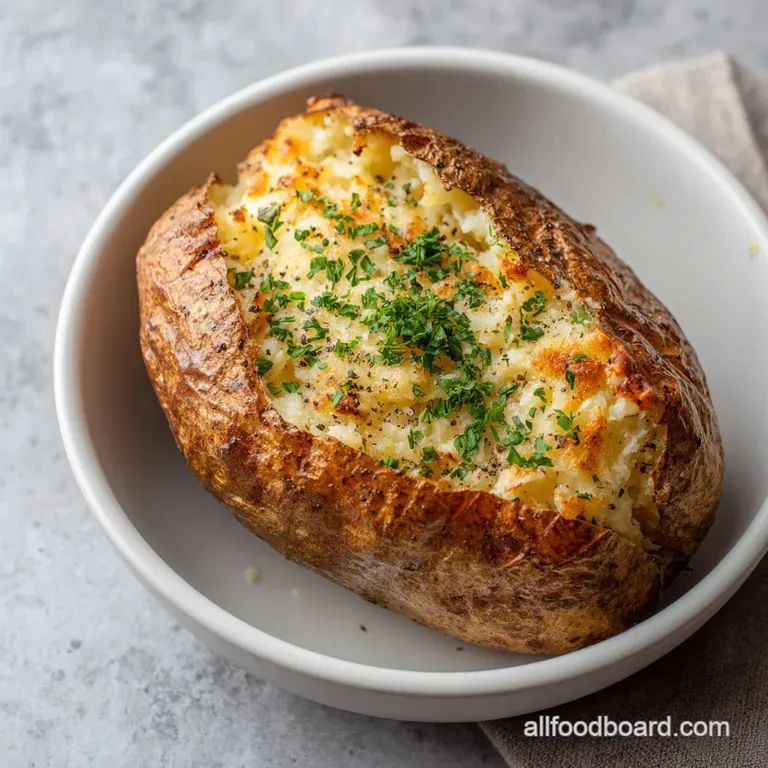
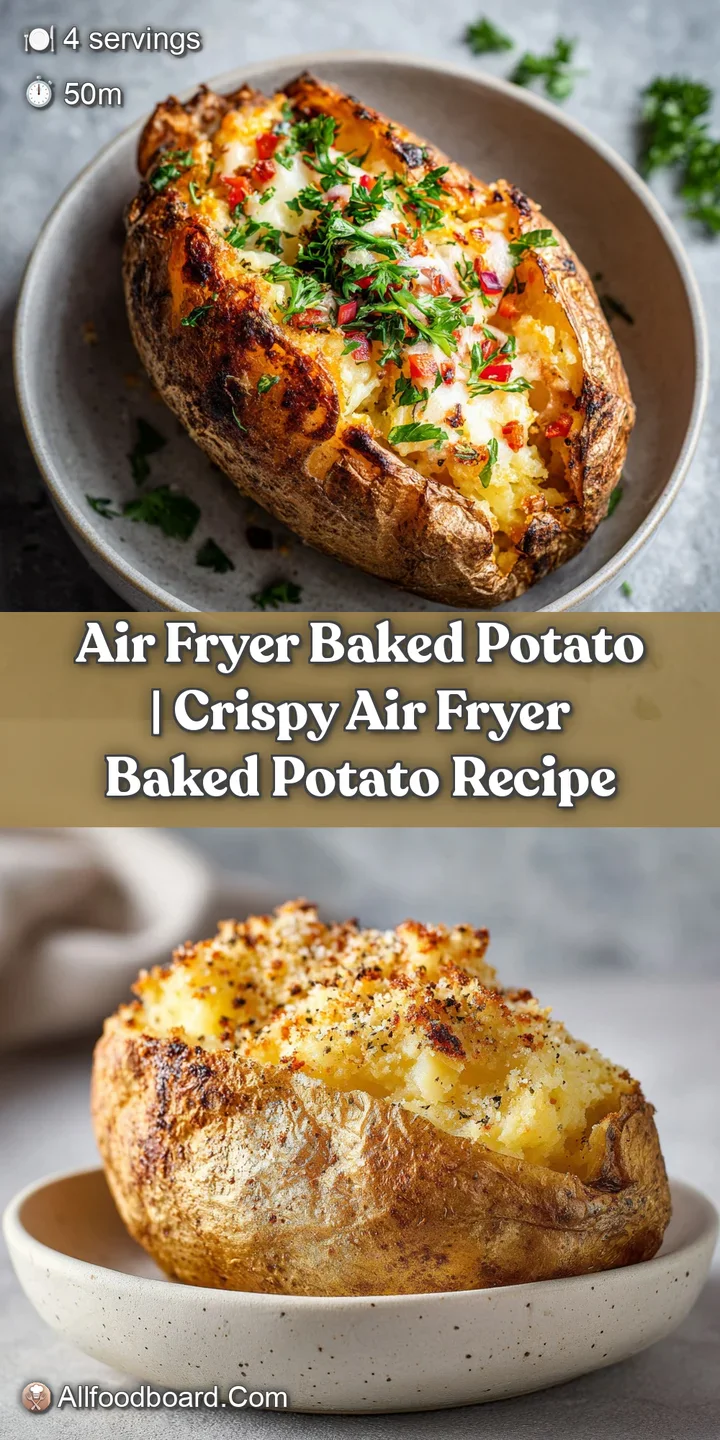
- Time: Active 5 minutes, Passive 45 minutes, Total 50 minutes
- Flavor/Texture Hook: Shatter crisp salty skin with a velvety, steaming center
- Perfect for: Stress free weeknight sides or meal prep foundations
- Mastering the Ultimate Air Fryer Baked Potato
- The Secret Physics of Crispy Skin
- Numerical Success for Fluffy Potatoes
- Pantry Elements for Best Flavor
- Necessary Gear for Maximum Airflow
- Detailed Steps for Golden Spuds
- Pro Tricks and Hidden Pitfalls
- Creative Flavor and Texture Swaps
- Smart Storage and Leftover Ideas
- Ideal Sides and Pairing Options
- Very High in Sodium
- Recipe FAQs
- 📝 Recipe Card
Mastering the Ultimate Air Fryer Baked Potato
There is a specific sound that happens when you take a knife to a truly successful spud a high pitched crack that signals the skin has reached peak dehydration. I remember the first time I tried this in my cramped first apartment, where the oven was basically a glorified bread box that ran ten degrees cold and leaked heat like a sieve.
I shoved a single Russet into a tiny basket fryer, hoping for the best, and when I pulled it out forty five minutes later, I realized I’d never go back to the "classic" way again.
The magic isn't just in the speed, though saving fifteen minutes is a nice perk for anyone who’s ever stood in a kitchen at 6:00 PM wondering when dinner will actually happen. It’s about the focused air movement.
While an oven lazily surrounds the potato with heat, the air fryer acts like a miniature wind tunnel, whipping hot air around the skin to fry it in its own oils. This creates a mahogany colored crust that acts as a structural vault, locking in every drop of moisture inside the potato flesh.
We’ve all suffered through those sad, leathery skins or the "microwave and pray" method that leaves you with a gummy, dense center. This recipe fixes that by treating the potato skin like a delicacy and the interior like a science project.
You aren’t just heating a vegetable; you’re engineering a contrast of textures that makes a simple root vegetable feel like a luxury. Let’s get into how we make that happen without the usual guesswork.
The Secret Physics of Crispy Skin
The reason an Air Fryer Baked Potato outperforms almost any other method boils down to moisture management and the Maillard reaction. In a standard oven, moisture escaping the potato often lingers near the surface, creating a steaming effect that softens the skin.
The air fryer’s high velocity fan strips that moisture away instantly. This allows the sea salt and olive oil to fuse into a seasoned crust that is significantly more flavorful than a naked, oven-roasted spud.
- Evaporative Cooling
- As the potato heats, water moves from the center to the surface. If that water isn't removed, the skin stays soft and "boiled" in texture.
- Convection Efficiency
- The rapid air movement ensures that every millimeter of the potato surface reaches the same temperature simultaneously, preventing hot spots.
- Starch Retrogradation
- Cooling the potato slightly after cooking allows the starches to firm up just enough to create that "fluffy" mouthfeel rather than a "mushy" one.
- Surface Tension
- Rubbing oil into the skin before the heat hits creates a barrier that helps the skin fry rather than bake, leading to that coveted shatter effect.
| Method | Total Time | Skin Texture | Interior Consistency | Best For |
|---|---|---|---|---|
| Air Fryer | 50 minutes | Shatter crisp | Like a cloud | Peak texture |
| Standard Oven | 1 hours 10 mins | Leathery | Fluffy | Large batches |
| Microwave | 10 minutes | Soggy/Soft | Dense/Gummy | Absolute emergencies |
When you compare these side-by-side, the air fryer consistently wins on the "pleasure of the crunch" factor. Compared to traditional baked potatoes in oven, the air fryer model manages to keep the skin thin and brittle rather than thick and chewy. It’s the difference between a high end steakhouse side and a cafeteria tray staple.
Numerical Success for Fluffy Potatoes
To get this right every single time, we need to focus on a few specific checkpoints. Weight and temperature are our friends here. If you use potatoes that are too small, they turn into rocks; too large, and the center stays raw while the outside burns.
We are aiming for medium Russets, roughly the size of a standard computer mouse, which typically weigh in around 225g each. This size allows the heat to penetrate at the exact rate needed to crisp the skin without over drying the core.
| Component | Science Role | Pro Secret |
|---|---|---|
| Russet Potato | High starch content | Scrub with cold water to tighten the skin cells |
| Sea Salt | Draws out moisture | Use fine grain to maximize surface contact area |
| Extra Virgin Olive Oil | Heat conductor | Massage it in deeply to fill every skin pore |
A common mistake is skipping the "piercing" phase. Those tiny holes act as exhaust vents. Without them, the pressure builds up inside the starch cells, and you risk a potato "explosion" which is a nightmare to clean out of the heating element of your fryer.
It also allows the interior to stay light, as the steam can escape rather than compressing the potato flesh from the inside out.
Pantry Elements for Best Flavor
You don't need a long shopping list, but the quality of these few items makes a massive difference in the final "sizzle."
- 4 medium Russet potatoes (225g each): Why this? Russets have the high starch required for a mealy, fluffy interior. (Substitute: Yukon Gold for a waxier, buttery texture).
- 15 ml extra virgin olive oil: Why this? It provides the fat needed to "fry" the skin in the hot air. (Substitute: Avocado oil for a higher smoke point).
- 10 g fine sea salt: Why this? Fine salt sticks better to the oiled skin than chunky kosher salt. (Substitute: Celery salt for a savory, herbaceous kick).
- 2 g cracked black pepper: Why this? Adds a sharp bite to the earthy skin flavor. (Substitute: White pepper for a more subtle heat).
- 1 g garlic powder: Why this? Toasts beautifully in the fryer for a nutty, savory aroma. (Substitute: Onion powder for a sweeter profile).
Chef's Tip: If you really want to go the extra mile, toss your salt and garlic powder in a mortar and pestle for thirty seconds. This breaks the salt down even further, creating a "seasoning dust" that coats every microscopic nook of the potato skin for a more uniform flavor.
Necessary Gear for Maximum Airflow
To make a truly great Air Fryer Baked Potato, your equipment needs to breathe. If you have a basket style fryer, you're in luck the deep walls help circulate the air vertically. If you're using a toaster oven style air fryer, make sure you use the wire rack, not a solid baking sheet.
A solid sheet blocks the air from reaching the bottom of the potato, leaving you with a "soggy bottom" that ruins the experience.
You will also need a pair of silicone tipped tongs. We are flipping these potatoes at the 25 minute mark, and the skins will be delicate as the oil begins to bubble. Metal tongs can tear the skin, letting precious steam escape prematurely. Finally, an instant read thermometer is your best insurance policy.
We are looking for an internal temperature of 205°F (96°C). At this specific temperature, the starches have fully gelatinized, but they haven't started to dry out and turn into a "potato desert."
Detailed Steps for Golden Spuds
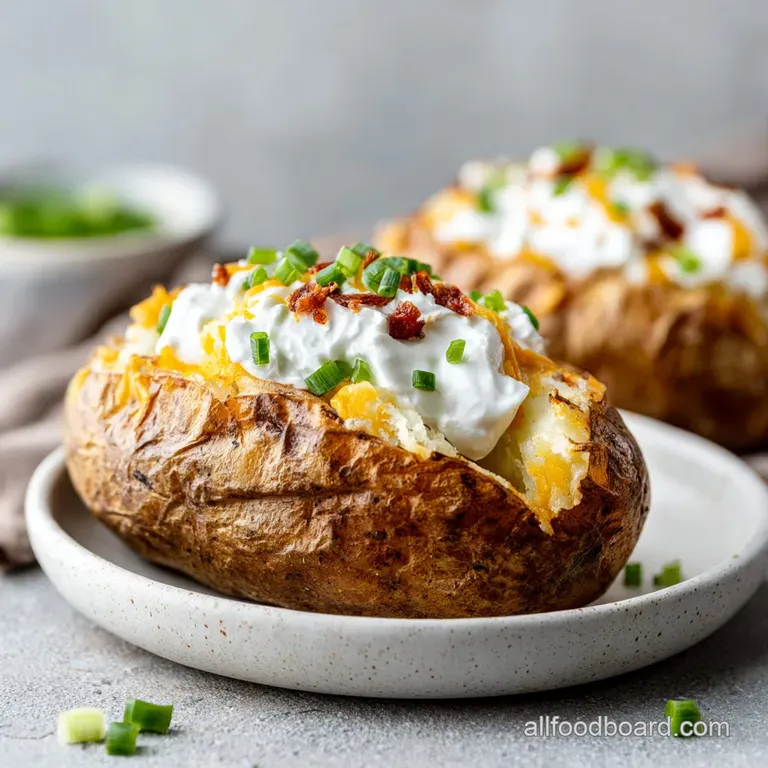
- Scrub the potatoes. Run them under cold water to remove any dirt. Dry them with a lint free towel until they feel completely bone dry. Note: Excess water on the skin will steam rather than crisp.
- Pierce the skin. Use a fork to poke 6 8 deep holes into each potato. Wait for the hiss of steam later to know this worked.
- Mix the seasoning. In a small bowl, whisk 15 ml olive oil, 10 g sea salt, 2 g pepper, and 1 g garlic powder.
- Coat the potatoes. Rub the oil mixture over each potato. Ensure the entire surface is glossy and no dry patches remain.
- Arrange the basket. Place the potatoes in the air fryer. Ensure they are not touching; airflow is your most important ingredient.
- Set the heat. Cook at 400°F (200°C) for 40–50 minutes.
- The midway flip. At the 25 minute mark, use tongs to flip the potatoes. Listen for the sizzle as the oiled skin hits the basket.
- Check for doneness. Squeeze the sides with tongs; they should yield easily. The internal temp should hit 205°F (96°C).
- Release the steam. Remove immediately and slice a line down the center. Watch the steam billow out to keep the inside from getting gummy.
Pro Tricks and Hidden Pitfalls
One mistake I once made was wrapping the potatoes in foil because I thought it would keep them warm. Honestly, don't even bother with foil in an air fryer. Foil reflects the heat and traps the steam against the skin, giving you a soft, wet exterior that is the exact opposite of what we want.
If you need to keep them warm, just leave them in the turned off air fryer with the drawer slightly ajar.
The Steam Release Valve
If you don't cut the potato open immediately after cooking, the internal steam will condense back into water. This turns your fluffy, cloud like interior into a dense, wet mass within minutes.
As soon as they are safe to handle, give them a "slash and squeeze." Use a clean kitchen towel to protect your hands, push the ends of the potato toward the center, and watch the flesh blossom upward.
Avoid the Soggy Bottom
If your fryer basket has a solid tray at the bottom, your potatoes will likely have a soft spot where they rest. To prevent this, don't just flip them rotate them. Change their orientation so a different part of the skin is in contact with the tray.
This ensures the 400°F (200°C) air hits every surface.
Common Mistakes Checklist
- ✓ Pat potatoes completely dry before oiling (prevents steaming).
- ✓ Pierce the skin at least 1/2 inch deep (prevents pressure build up).
- ✓ Leave at least one inch of space between each potato in the basket.
- ✓ Use a thermometer to hit 205°F (96°C) for that perfect mealy texture.
- ✓ Slice immediately upon removal to vent internal moisture.
| Problem | Root Cause | Solution |
|---|---|---|
| Tough/Leathery Skin | Not enough oil or too much cook time | Coat thoroughly and check temp at 40 mins |
| Hard Interior | Potato was too cold or large | Bring to room temp before cooking; add 5 mins |
| Uneven Browning | Crowded basket | Ensure spuds don't touch for better airflow |
Creative Flavor and Texture Swaps
While the classic salt and pepper rub is hard to beat, you can easily adapt this base recipe to fit different cravings. The beauty of the air fryer is that it toasts dry spices better than an oven does. If you want a smoky profile, swap the garlic powder for smoked paprika.
For a Mediterranean vibe, use dried oregano and lemon zest mixed into the oil.
If you’re feeling adventurous, try making Air Fryer Twice Baked Potatoes. Once the potatoes are done, scoop out the centers, mash them with butter and cheese, and shove them back into those crispy "vault" skins.
Pop them back in the fryer for 5 minutes at 350°F (180°C) until the cheese is bubbling and bronzed. The pre crisped skin will hold its shape perfectly, acting like a natural bowl for the creamy filling.
| Original Ingredient | Substitute | Why It Works |
|---|---|---|
| Extra Virgin Olive Oil | Ghee (clarified butter) | Higher smoke point and adds a rich, toasted nutty flavor |
| Sea Salt | Smoked Salt | Adds a campfire aroma without needing a grill |
| Russet Potato | Sweet Potato | Same method, but result is velvety and caramelized. Note: Takes 10 mins less |
This potato goes great with my Broccoli Casserole recipe which adds that cheesy contrast we all love. The crunch of the skin against the creamy sauce is something you have to experience to believe. Trust me on this the textures just make sense together.
Smart Storage and Leftover Ideas
If you find yourself with leftovers, you’re in luck because a cold baked potato is actually a goldmine for other dishes. Store them in an airtight container in the fridge for up to 4 days. When you’re ready to eat, don't use the microwave; it will turn the skin into rubber.
Instead, pop it back into the air fryer at 350°F (180°C) for about 5–8 minutes. This will revive the crunch and heat the center through without making it soggy.
For zero waste enthusiasts, the skins are the best part. If you have a potato that's lost its fluff, peel off the skins in large strips, toss them with a little extra salt, and air fry them at 400°F (200°C) for 3 minutes.
They become better than-store-bought potato chips. You can also freeze the whole cooked potatoes for up to 2 months. To reheat from frozen, give them about 20 minutes at 350°F (180°C) in the air fryer until the center is piping hot.
Ideal Sides and Pairing Options
An Air Fryer Baked Potato is essentially a blank canvas. If you’re keeping it budget smart, a dollop of sour cream and some chopped green onions from your windowsill garden are all you need. But if you want a full meal, think about contrast.
A sharp, acidic slaw or a vinegary salad helps cut through the starch and salt of the potato.
Chef's Tip: For a truly unconventional finish, grate a small cube of frozen butter directly over the steaming potato slit. The frozen butter shavings melt slowly into the hot starch, creating a silky, butter infused texture that is far superior to just dropping a cold slab of butter on top.
- The Classic: Salted butter, sour cream, and a mountain of chives.
- The BBQ: Leftover pulled pork, a drizzle of sauce, and pickled jalapeños.
- The Healthy Nut: Greek yogurt (instead of sour cream) and steamed broccoli.
- The Steakhouse: Crumbled bacon, sharp cheddar, and a hit of hot sauce.
Right then, you're ready to crack on. Just remember: dry skins, deep pierces, and that 205°F (96°C) internal temp. Once you hear that first crunch, you'll know exactly why we put in the effort. Enjoy your spuds!
Very High in Sodium
975 mg 975 mg of sodium per serving (42% 42% of daily value)
The American Heart Association recommends a limit of about 2,300mg per day, with an ideal limit of no more than 1,500mg per day for most adults.
Tips to Reduce Sodium
-
Drastically Reduce Added Salt-25%
The primary sodium source is the 10g of fine sea salt. Reduce added salt by 75%. This change alone will significantly lower the sodium content.
-
Boost Flavor with Herbs & Spices
Instead of relying on salt, use a variety of fresh or dried herbs and spices. Consider rosemary, thyme, paprika, or onion powder to enhance the potato's natural flavor.
-
Use Fresh Garlic-5%
Swap garlic powder for fresh minced garlic. Fresh garlic offers a more robust flavor, allowing you to further reduce or eliminate added salt.
-
Add a Pinch of Spice-5%
Incorporate a small amount of cayenne pepper or red pepper flakes for a touch of heat and flavor complexity, distracting from the need for salt.
Recipe FAQs
How long does a baking potato take in the air fryer?
Cook for 40 50 minutes. At the 25-minute mark, flip the potatoes with tongs to ensure even browning and consistent texture.
Can type 2 diabetics eat a baked potato?
Yes, in moderation. Potatoes can fit into a diabetic friendly diet when portion controlled and paired with fiber or protein to help manage blood glucose responses.
Is an air fryer good for diabetics?
Yes, it promotes healthier cooking. By using minimal oil, you reduce overall calorie intake compared to deep frying, which is beneficial for weight and glycemic management.
Is it better to bake a potato in the oven or air fryer?
The air fryer is faster and provides superior crispness. Because of the concentrated high speed airflow, it achieves a signature golden skin significantly quicker than a conventional oven.
Why is my potato skin tough and leathery?
This usually happens from insufficient oil or overcooking. Ensure the skin is thoroughly coated in the olive oil mixture and verify doneness using a thermometer to hit exactly 205°F (96°C) instead of relying solely on time.
How to ensure the potato is cooked perfectly all the way through?
Pierce the skin 6 8 times with a fork before cooking. This essential step prevents steam pressure build-up inside the potato; if you enjoyed mastering this heat venting technique, see how we apply similar moisture control methods in scalloped potatoes.
Is it true you should wrap potatoes in foil before air frying?
No, this is a common misconception. Wrapping potatoes in foil traps moisture and steams the potato, which results in a soggy skin rather than the crispy exterior the air fryer is designed to produce.
Air Fryer Baked Potato

Ingredients:
Instructions:
Nutrition Facts:
| Calories | 208 calories |
|---|---|
| Protein | 4.7 g |
| Fat | 3.6 g |
| Carbs | 40.1 g |
| Fiber | 3.2 g |
| Sugar | 1.4 g |
| Sodium | 975 mg |
