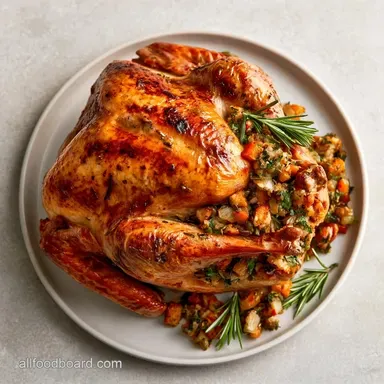
Crispy Skin Turkey with Stuffing
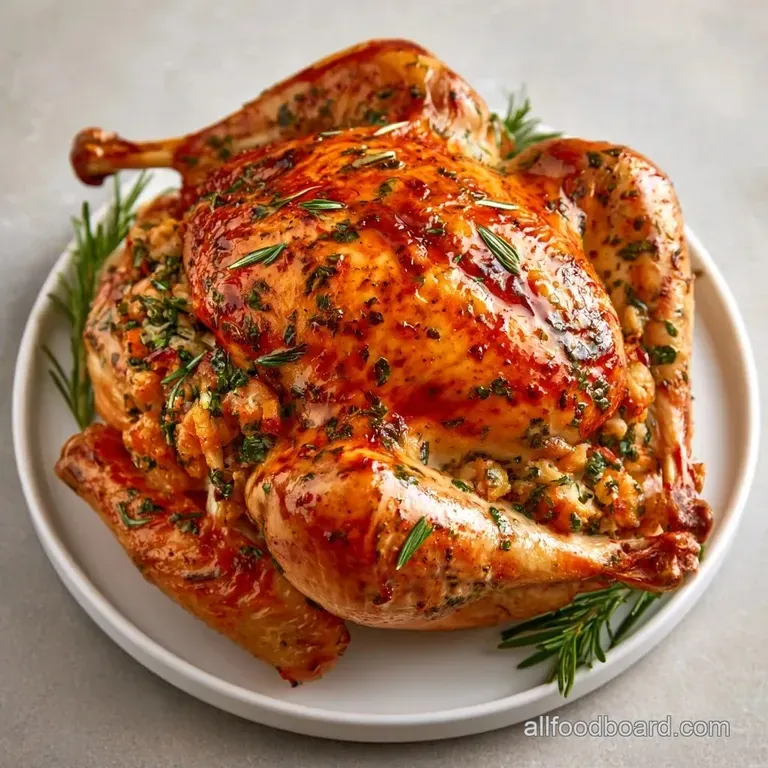
- Time: 40 min active + 225 min roasting
- Flavor/Texture Hook: Deep mahogany, crispy skin paired with a tender, herb-infused interior
- Perfect for: Festive family dinners or large winter celebrations
- Quick Specs for Turkey with Stuffing
- The Building Blocks
- Essential Tools for the Roast
- Bringing It Together
- The Trick Behind the Texture
- Avoiding Kitchen Disasters
- Preservation Guidelines
- Mix It Up
- What to Serve This With
- Common Turkey Myths
- Final Thoughts on Turkey with Stuffing
- Critical Sodium Level
- Recipe FAQs
- 📝 Recipe Card
The aroma of roasted poultry and toasted sage often evokes childhood memories for many of us. In most households, the bird serves as the definitive centerpiece that signals the start of the holiday season.
Growing up, the moment the platter hit the table meant the day's frantic energy had settled and it was finally time to gather.
I used to be intimidated by this dish. One year, I carved the turkey immediately without letting it rest, watching the juices flood the cutting board and leaving the meat dry. To avoid that, I now rely on a strict timeline and precise temperature checks to ensure a perfect result every time.
This Turkey with Stuffing recipe emphasizes a slow roast method and a precise bread-to-broth ratio. You can expect a skin that crackles and a stuffing that soaks up all the savory pan drippings without becoming mushy.
Quick Specs for Turkey with Stuffing
Here are the specifications to help you organize your oven space. This dish requires more precision than a simple "set it and forget it" meal.
| Goal | What to change |
|---|---|
| More Crispy Skin | Increase butter rub |
| Moister Stuffing | Add 1/4 cup broth |
| Faster Cook | Remove stuffing, roast higher |
Because the stuffing is cooked inside the bird, the process takes longer than a plain roast. Maintain a steady 325°F (165°C) to ensure the center reaches a safe temperature without scorching the exterior.
The Building Blocks
The ingredients here are simple, but the quality of the bread makes a huge difference. I prefer a crusty sourdough because it holds its shape better than white sandwich bread.
For the Turkey & Rub
- 1 (13 lb) whole turkey, giblets removed
- 1/2 cup unsalted butter, softened Why this? Carry the herbs into the meat
- 1 tbsp kosher salt
- 1 tsp cracked black pepper
- 1 tbsp chopped fresh sage
- 1 tbsp chopped fresh rosemary
For the Homemade Stuffing
- 10 cups dry sourdough or French bread cubes Why this? Better structural integrity
- 4 tbsp unsalted butter
- 1 cup yellow onion, finely diced
- 1 cup celery, finely diced
- 2 cloves garlic, minced
- 1 1/2 cups low sodium chicken or turkey broth
- 1 tbsp fresh parsley, chopped
- 1 tsp dried thyme
- 1 tsp salt
| Original Ingredient | Substitute | Why It Works |
|---|---|---|
| Sourdough Bread | French Bread | Similar crust, slightly milder flavor |
| Fresh Sage | Dried Sage (1 tsp) | Concentrated flavor, though less aromatic |
| Turkey Broth | Chicken Broth | Almost identical salt and fat profile |
Essential Tools for the Roast
While you don't need a commercial setup, a few key tools will make your life much easier. Use a heavy roasting pan with a rack to ensure the bird doesn't stew in its own juices.
I strongly suggest using a digital meat thermometer. Counting on the pop-up timer from the packaging is far too risky. You want to be certain that the center of the stuffing has reached 165°F (74°C).
You should also have some kitchen twine on hand. Tying the legs keeps the bird tight, ensuring it cooks uniformly. If the legs spread, they'll likely overcook before the breast is finished.
Bringing It Together
Preparation is key here. Organize your stuffing first before turning your attention to the bird.
1. Preparing the Bird
Thoroughly dry the turkey using paper towels; any remaining moisture creates steam, which hinders browning. Combine softened butter with salt, pepper, rosemary, and sage. Gently lift the skin over the breast to rub half of the compound butter directly onto the meat, then spread the rest over the outer skin.
2. Constructing the Stuffing
Sauté onion and celery in butter over medium heat until translucent (5-7 minutes). Stir in thyme and garlic until aromatic. In a large bowl, combine the bread cubes with the sautéed vegetables and parsley.
Slowly pour in the broth, stirring gently until the mixture is moist but not soggy.
3. The Roasting Process
Loosely fill the turkey cavity with stuffing. Avoid packing it too tightly, as the heat needs to reach the center. Truss the legs with twine. Place the bird in an oven preheated to 325°F (165°C).
Roast until the center of the stuffing and the thickest part of the breast both reach 165°F (74°C). This typically takes about 3 hours and 45 minutes.
4. The Final Rest
Transfer the turkey to a carving board and tent it loosely with foil. Let it sit for 30 minutes. This ensures the moisture stays locked in the meat rather than spilling all over your platter.
The Trick Behind the Texture
Making a stuffed turkey that is both succulent and crispy can seem like a paradox, but it's all about controlling the heat.
- Low Temp Roasting: Roasting at 325°F keeps the breast meat from drying out while the stuffing warms through gradually.
- Under Skin Butter: Adding fat directly to the meat creates a protective layer that retains moisture.
For more side dish inspiration, this Sourdough Dressing recipe is an excellent way to use leftover bread cubes if you prefer your stuffing served separately.
| Ingredient | Role | If You Don't Have It |
|---|---|---|
| Sourdough Cubes | Structure | French bread or ciabatta |
| Compound Butter | Moisture & Flavor | Olive oil and herbs |
| Turkey Broth | Hydration | Vegetable broth |
Avoiding Kitchen Disasters
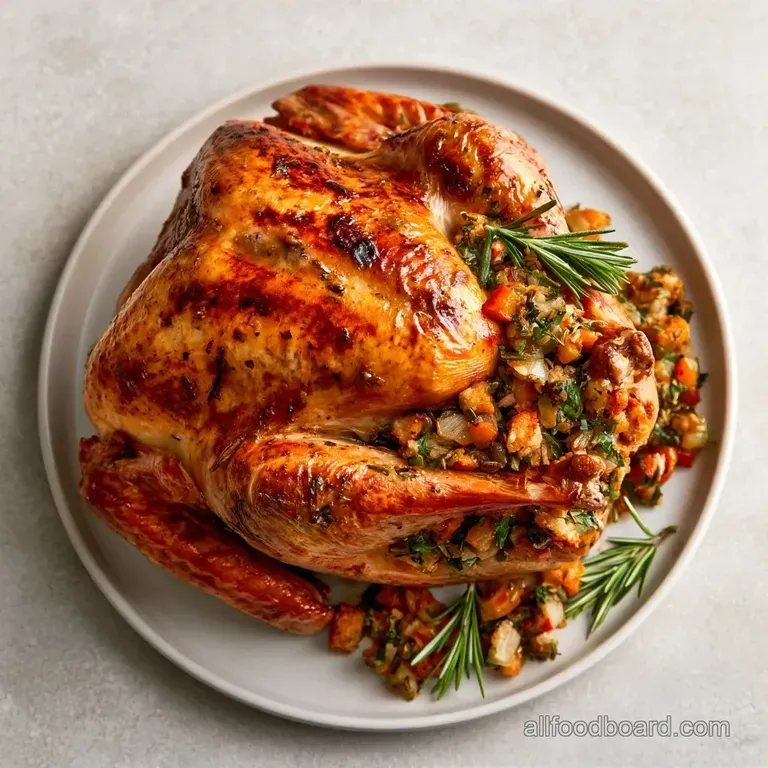
Even with a plan, things happen. The biggest issue with Turkey with Stuffing is often an uneven cook.
Breast Meat Drying Out
If the top is getting too dark but the legs are still raw, use a foil tent. Just lay a piece of aluminum foil loosely over the breast to deflect the heat. This lets the lower half catch up without burning the skin.
Stuffing Not Reaching Temperature
This happens when the cavity is packed too tightly. Air needs to move through the stuffing to cook it. If the bird is done but the stuffing is still under 165°F, scoop the stuffing into a baking dish and pop it under the broiler for 5 minutes.
Skin Tearing During Carving
This usually happens if you carve too soon. Resting the meat for 30 minutes firms up the proteins and prevents the skin from sliding off the meat in one wet sheet.
| Problem | Root Cause | Solution |
|---|---|---|
| Dry Breast | Overcooked or no butter | Use foil tent / Butter under skin |
| Soggy Stuffing | Too much broth | Use drier bread / Less liquid |
| Raw Stuffing Center | Packed too tight | Fill cavity loosely |
Preservation Guidelines
After the celebration, you'll likely have a good amount of turkey and stuffing remaining. Store the sliced meat and stuffing in separate containers to maintain their distinct textures.
Refrigerate the leftovers for a maximum of 3 days. If you won't finish them by then, the meat stays fresh in the freezer for about 3 months. Securely wrap it in foil and a freezer bag to protect against freezer burn.
To reduce waste, save the turkey carcass. Place the bones in a pot with water, onion scraps, and celery ends. Simmer for 4 hours to create a hearty stock for soups later in the week.
Mix It Up
I prefer the traditional recipe, but there are several ways to customize this Turkey with Stuffing to suit your taste.
The Savory Sausage Blend
Sauté half a pound of breakfast or Italian sausage before adding the celery and onions. This introduces a salty, savory depth that pairs perfectly with the sourdough.
Autumn Orchard Twist
Stir in one diced Granny Smith apple and a handful of dried cranberries. This tartness balances the heavy butter and turkey.
Gluten-free Swap
Substitute gluten-free bread cubes and make sure your broth is certified GF. The consistency is a bit different, but the herb flavors remain identical.
Low Sodium Alternative
Choose homemade stock and unsalted butter. You can maintain a bold profile by adding more fresh rosemary and sage.
What to Serve This With
A Turkey with Stuffing is a heavy main, so you need sides that provide some acidity or sweetness to balance the plate.
I usually pair this with a bright cranberry sauce and some roasted root vegetables. If you're planning a full spread, checking out a Thanksgiving Dinner Menu can help you coordinate your oven timings so everything hits the table hot.
For a creamier side, a sweet potato casserole works beautifully. The sweetness of the potato complements the savory herbs in the bird.
Common Turkey Myths
Searing the meat first doesn't "seal in" the juices. It adds flavor and color through browning, but moisture loss happens regardless of whether you sear.
You don't need to baste the bird every 30 minutes. Opening the oven door drops the temperature significantly, which actually increases your total cooking time. Trust the compound butter to do the work.
Stuffing the bird doesn't automatically make the meat taste better. The flavor comes from the herbs and the roasting process, but the stuffing does benefit from the drippings.
Final Thoughts on Turkey with Stuffing
The real joy of a homemade Turkey with Stuffing isn't in a fancy presentation, but in the process of preparing it for the people you love. It takes a few hours, and it can be a bit stressful, but the result is always worth it. Just remember to pat that skin dry and let the meat rest.
Trust me on the resting part, or you'll end up with a dry bird and a sad platter. Happy cooking!
Critical Sodium Level
1254 mg 1,254 mg of sodium per serving (55% 55% of daily value)
The American Heart Association recommends a daily sodium limit of no more than 2,300 mg, with an ideal limit of 1,500 mg for most adults to reduce the risk of cardiovascular disease.
Strategies to Reduce Sodium
-
Upgrade the Broth-30%
Swap the low-sodium broth for no-salt added broth or a homemade unsalted stock to significantly lower the base sodium levels.
-
Minimize Added Salt-25%
Reduce or eliminate the 1 tbsp of kosher salt, replacing it with a squeeze of fresh lemon juice to provide a similar brightness to the turkey.
-
Smarter Bread Choice-15%
Use homemade salt free bread cubes or look for a low-sodium artisanal French bread to reduce the hidden sodium in the stuffing.
-
Amplify Fresh Herbs
Increase the volume of fresh sage, rosemary, and thyme to create a more robust flavor profile that compensates for less salt.
Recipe FAQs
Should I put stuffing inside my turkey?
Yes, for the best flavor. The stuffing absorbs the natural poultry drippings and herb butter as the bird roasts.
How long does it take to cook a turkey with stuffing inside?
Roast for 225 minutes at 325°F (165°C). Use a meat thermometer to confirm the breast and the stuffing center both hit 165°F (74°C).
Do I cook the stuffing before I stuff it in the turkey?
No, only sauté the vegetables. Sauté the onion and celery in butter first, then toss with bread and broth to allow it to finish cooking inside the cavity.
Is it true that stuffing inside a turkey is always safe?
No, and here's why. The stuffing must reach an internal temperature of 165°F (74°C) to be safe; otherwise, the moist interior can harbor bacteria.
Can I roast turkey with stuffing in the oven?
Yes, using a low temperature. Roast at 325°F (165°C) and truss the legs with twine to keep the filling securely in place.
How do I prepare this turkey with stuffing?
Rub compound butter under the skin and fill the cavity with bread cubes. If you enjoyed mastering this filling technique, see how we apply a similar approach in our stuffed peppers.
Turkey With Stuffing