Beef Rice Bowl: Speedy Japanese Umami Supper
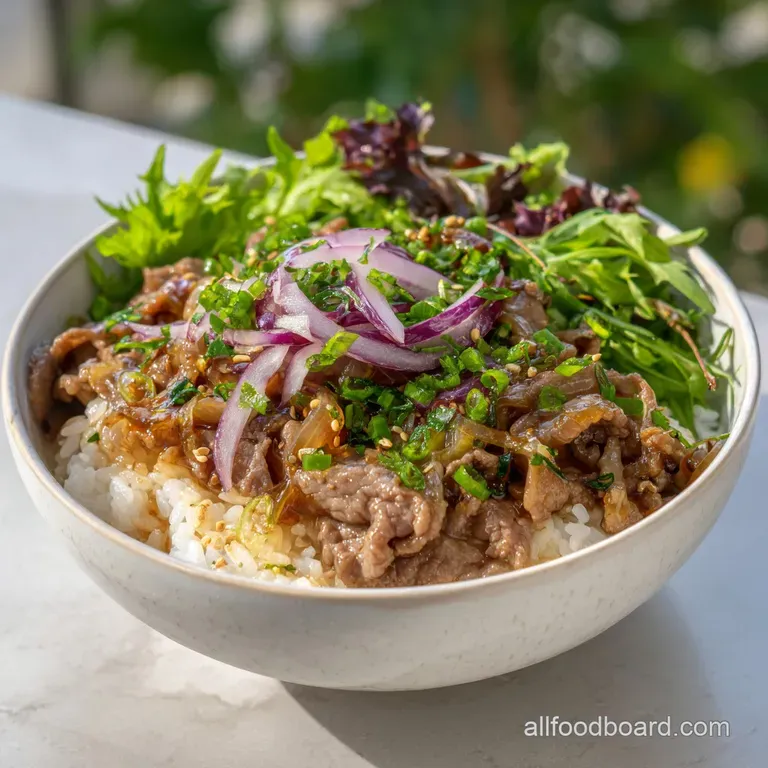
- Unlocking Umami: The Speedy Supper Japanese-Style Beef Rice Bowl
- Essential Components: Gathering Your Ingredients for the Ultimate Beef Rice Bowl
- Mastering the Technique: Simple Steps for Preparing Your Savoury Rice Bowl
- The Science of Flavor: Why This Beef and Onion Combination Triumphs
- Expert Secrets: Elevating Your Japanese-Style Beef Bowl from Good to Great
- Meal Prep and Longevity: Storing and Reheating This Dish
- Perfect Pairings: What to Serve Alongside Your Umami Bowl
- Recipe FAQs
- 📝 Recipe Card
Unlocking Umami: The Speedy Supper Japanese Style Beef Rice Bowl
When that sweet, savoury steam hits your face, you know you’re about to have a profoundly good night. We are talking about the ultimate comfort dish: the homemade Beef Rice Bowl .
It’s glossy, deeply savoury, slightly sweet, and unbelievably tender the kind of dinner that makes the whole kitchen smell divine.
This recipe is my weeknight lifesaver; seriously, it’s faster than ordering takeout, and about a thousand times better than anything you’ll get delivered. It’s cheap, incredibly satisfying, and requires zero fancy equipment, meaning you can whip up this whole production in about 45 minutes flat.
It truly is the definition of minimal effort, maximum flavour.
Ready to trade those bland lunch leftovers for true umami perfection? Grab your sharpest knife, and let’s dive into how to make the best Beef Rice Bowl you've ever tasted. This is the only recipe you'll need for quick, comforting, Japanese inspired cooking.
Why We Love This 45 Minute Weeknight Winner
The key to this recipe's success lies entirely in the sauce and the speed. We aren't simmering for hours like with my famous Crock Pot Beef Stew: Tender Beef Rich Gravy . Instead, we rely on a trio of Japanese pantry staples soy, mirin, and sake to create instant, concentrated flavour. Because the meat is sliced so thinly, it soaks up that rich sauce in seconds and cooks through before it has a chance to toughen up. That means a beautiful, tender result every single time. It's truly a genius cooking hack for fast flavour.
What Exactly is Gyūdon and How Does This Recipe Compare?
Gyūdon translates literally to "beef bowl" (Gyū = beef, don = bowl) and it's a staple of Japanese fast food. It’s famously served over plump, steaming white rice and topped with sweet, simmered onions. Our version is heavily inspired by that classic technique.
This isn't a Teriyaki Beef Rice Bowl, which often uses a thick glaze. Instead, we create a thinner, broth like sauce that saturates the rice underneath, giving you delicious flavour in every single bite. The sauce is the difference between a good rice bowl and a great one.
Decoding the Flavor Profile: Soy, Sake, and Sweetness
The secret to why this Beef Rice Bowl recipe tastes so balanced is the careful ratio of salty (soy sauce), alcoholic/umami (sake), and sweet (mirin and sugar). Mirin is essential here; it’s a sweet cooking wine that lends a glossy sheen and depth you just can't replicate.
We use just enough sugar to counteract the saltiness of the soy sauce, resulting in that perfectly savoury, craveable flavour profile.
Essential Components: Gathering Your Ingredients for the Ultimate Beef Rice Bowl
You’ll notice the ingredients list is quite small, which is great for the budget and for speed. The quality of your ingredients really shines through when the list is this short, so aim for decent, fresh items.
Selecting the Right Cut: Choosing the Best Sirloin for Flash Cooking
For this Beef Rice Bowl , you absolutely must use a cut that lends itself to fast cooking. Flank steak is traditional and excellent, but I often reach for sirloin tip or top sirloin because they are lean and very tender when sliced correctly.
Chef’s Note: Do not, under any circumstances, use a stewing cut like chuck roast. It needs long, slow cooking, and will turn into boot leather in this speedy environment. We want quick caramelization and maximum tenderness.
Substitutions for Mirin, Sake, and Soy Sauce
Don't panic if your local grocery store doesn't stock all the Japanese essentials. There are easy ways around it! You can still achieve a fantastic umami bowl with simple swaps.
| Ingredient | Why it's Important | Viable Substitution |
|---|---|---|
| Mirin | Sweetness, gloss, unique flavour depth | Dry sherry mixed with 1 tsp of sugar, or a small amount of white grape juice. |
| Sake | Umami depth, tenderizes the meat | Dry white wine (like Pinot Grigio), or simply use extra beef stock. |
| Short Grain Rice | Sticky, toothsome texture | Calrose (medium grain) rice works perfectly well, or even jasmine rice in a pinch. |
| Sirloin/Flank Steak | Quick cooking, tenderness | Thinly sliced pork loin or boneless pork chops. |
The Humble Onion: Preparation and Texture Notes
The onion isn't just filler here; it’s an absolute flavour sponge. You need to slice it thinly, ideally against the grain, so that it melts gently into the sauce rather than staying stubbornly crunchy. The goal is translucent, silken onions that have fully absorbed the sweet and salty flavour of the broth.
You shouldn't taste "raw onion" at all.
Mastering the Technique: Simple Steps for Preparing Your Savoury Rice Bowl
Remember, this is a speedy process. Mise en place (getting everything ready) is critical before you even turn on the heat.
Preparing the Umami Sauce Base
Start by whisking together the soy sauce, mirin, sake, brown sugar, and stock in a small bowl. Do this first! If you wait, you’ll be scrambling once the onions are already cooking.
A little pro-tip: make sure your stock is warm, as this helps the brown sugar dissolve immediately, which is crucial for a smooth base.
Sautéing the Onions to Translucency
Heat a neutral oil in your large skillet over medium high heat. Add the thinly sliced onion and sauté, stirring constantly, for 3 to 5 minutes. You want them soft and translucent, almost glassy.
This is the foundation of the savoury sweetness that defines the Japanese Beef Rice Bowl . Once softened, toss in the grated ginger and garlic, cooking them for just 30 seconds until they smell amazing don't let them burn!
Flash Cooking the Sirloin Slices
Pour the reserved sauce mixture over the cooked onions and bring it up to a gentle simmer. Let that sauce bubble for about five minutes to thicken and marry the flavours. Now, add the thinly sliced sirloin. This is the crucial step. You must work quickly here.
Stir the beef gently, ensuring the pieces separate and are fully submerged in the simmering sauce. Cook for 2– 3 minutes, tops, until the beef is just cooked through. Remove the pan from the heat immediately, or you risk drying out all that lovely meat.
Assembling and Serving the Hot Bowl
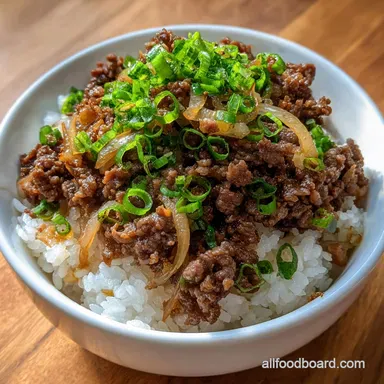
Fluff the perfectly steamed rice and divide it into deep, warm bowls. Next, use tongs to arrange the slices of beef and sweet onions over the rice. Be sure to spoon plenty of that glossy, remaining sauce over the meat and rice.
I like to finish this easy Beef Rice Bowl with finely sliced scallions and a dash of Japanese chili flakes for a nice pop of colour and heat.
The Science of Flavor: Why This Beef and Onion Combination Triumphs
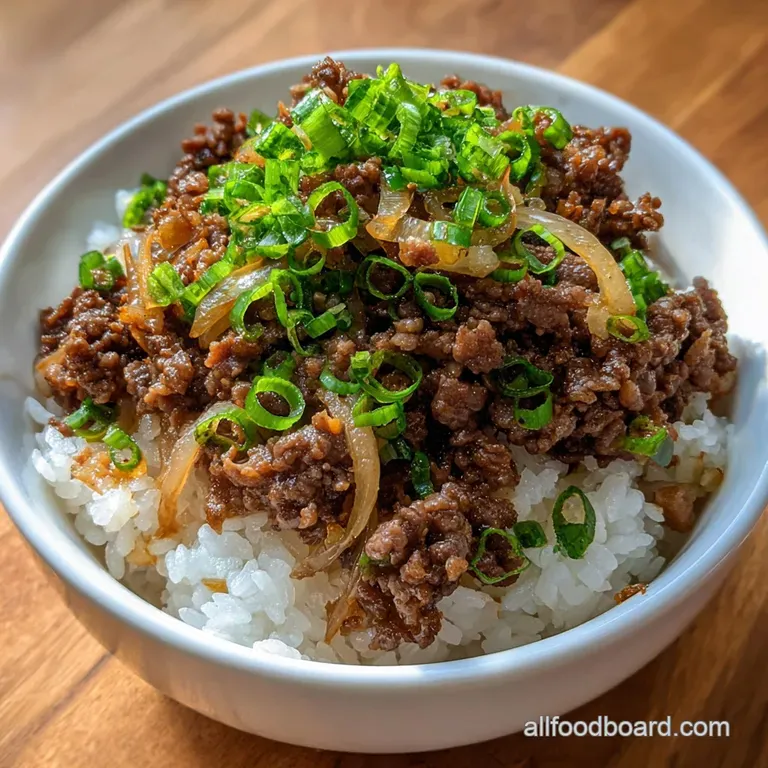
The magic of this specific combination is chemical. When the onions are simmered in the mirin and sake, their natural sugars caramelize slightly while absorbing the deep umami notes from the soy sauce.
When the lean sirloin slices are introduced, they cook fast, retaining their moisture, and the connective tissues dissolve into the sauce, making it even richer. It’s a perfect equilibrium of salty, sweet, fatty, and lean.
Expert Secrets: Elevating Your Japanese Style Beef Bowl from Good to Great
You've made a great Beef Rice Bowl , but now let’s make it unforgettable. A few simple tricks can really level up your dinner game.
Achieving Maximum Tenderness: The Key to Thinly Slicing Sirloin
I can’t stress this enough: Flash freezing the sirloin for 15 minutes is the game changer. It stiffens the meat so your knife glides through, allowing you to achieve those paper thin, melt-in-your mouth slices.
If your slices are too thick, they won't absorb the sauce properly and they will inevitably taste tougher.
The Magic of Mirin and Sake in the Simmering Broth
Don't skimp on the alcohol (sake and mirin). While the alcohol cooks off quickly, it leaves behind an incredible layer of flavour depth that plain water or stock simply cannot replicate. It provides that essential complexity that separates restaurant quality food from standard home cooking.
Perfecting the Balance: High Heat vs. Gentle Simmering
The beef requires medium high heat to cook quickly, but the sauce should never be aggressively boiling when the meat goes in. If the sauce is boiling too vigorously, it will seize up the proteins in the meat too quickly and make the beef stiff. Keep it at a gentle, rolling simmer.
Avoiding Toughness: The Cold Slicing Trick
If you try to slice the beef while it’s still warm or even just resting at room temperature, it will shred and tear. The slight stiffness provided by the quick trip to the freezer ensures a clean, uniform cut every time.
Troubleshooting Common Mistakes (Too Dry, Too Sweet)
- Mistake 1: The Beef is Tough. You either sliced it too thick, or you overcooked it. Solution next time: slice thinner, cook for exactly 90 seconds per side, and rely on the residual heat.
- Mistake 2: The Sauce is Too Sweet. This usually means you used too much mirin or sugar. Fix it by adding a splash more soy sauce and maybe a teaspoon of rice vinegar to cut the sweetness.
- Mistake 3: The Beef Rice Bowl is Too Dry. You didn't leave enough sauce! Make sure you double the liquid next time if you prefer a very soupy, gravy like bowl. You want that fluffy rice to soak up every last drop of the glorious umami broth.
Meal Prep and Longevity: Storing and Reheating This Dish
This is a fantastic candidate for meal prepping, provided you handle the components correctly.
- Storage: Store the cooked beef/onion mixture in an airtight container in the refrigerator for up to 3 days. Store the rice separately.
- Freezing: This sauce and onion mixture freezes beautifully! Allow the cooked beef and sauce to cool completely, then place it in a freezer safe bag or container. It will last up to 3 months. When ready to eat, thaw overnight in the fridge.
- Reheating: This is where the magic happens. Place the beef and sauce mixture into a small saucepan and reheat gently over low heat until simmering. Cooked beef reheated too quickly in the microwave tends to toughen. Always steam or microwave the rice separately, and then layer the hot, simmering beef and sauce over the top.
Perfect Pairings: What to Serve Alongside Your Umami Bowl
Because this Easy Beef Rice Bowl is rich and savoury, the best sides are something crisp, clean, and acidic.
- A Simple Salad: A quick Japanese style cucumber salad with sesame oil and a touch of rice vinegar is the ideal contrast.
- Pickles: Any kind of bright, crunchy pickle (ginger, daikon, or radish) provides a necessary palate cleanser.
- Soup Starter: A simple bowl of clear broth or Miso soup rounds out the meal perfectly.
If you enjoy making quick, comforting meals using similar ingredients, you might want to try my recipe for Beef and Broccoli: Silky, Restaurant Quality Stir Fry next. But for now, enjoy the deep, rich satisfaction of this perfectly crafted Beef Rice Bowl . It truly is the ultimate weeknight win.
Recipe FAQs
What is the best cut of beef to use if I don't have sirloin?
While sirloin is excellent for flavor, thinly sliced flank steak or even eye round works very well as a substitute for Gyūdon. The critical factor is achieving an extremely thin slice (shaved, almost) cut against the grain to ensure maximum tenderness during the quick cooking process.
Why did my beef turn out dry or chewy, and how can I prevent this?
If the beef becomes tough, it is typically due to either overcooking or slicing the meat incorrectly. Ensure you only flash cook the thin beef slices until they just lose their pink color, generally 1 to 2 minutes in the simmering broth, and avoid letting the sauce reach a rolling boil.
Can I skip the sake and mirin, or what are appropriate substitutions?
Sake and mirin provide essential sweetness and deep umami notes and should ideally not be omitted entirely. You can substitute the sake with dry sherry, and if you must replace the mirin, use white wine combined with a small amount of extra sugar, though the flavor profile will slightly shift.
How should I store leftover Gyūdon, and can I freeze the cooked beef?
Leftover Gyūdon keeps well in the refrigerator for 3 to 4 days when stored in an airtight container, preferably storing the beef mixture separately from the rice. We do not recommend freezing the cooked beef, as the thin slices tend to lose their delicate texture and become watery upon thawing.
What traditional toppings are recommended for this Beef Rice Bowl?
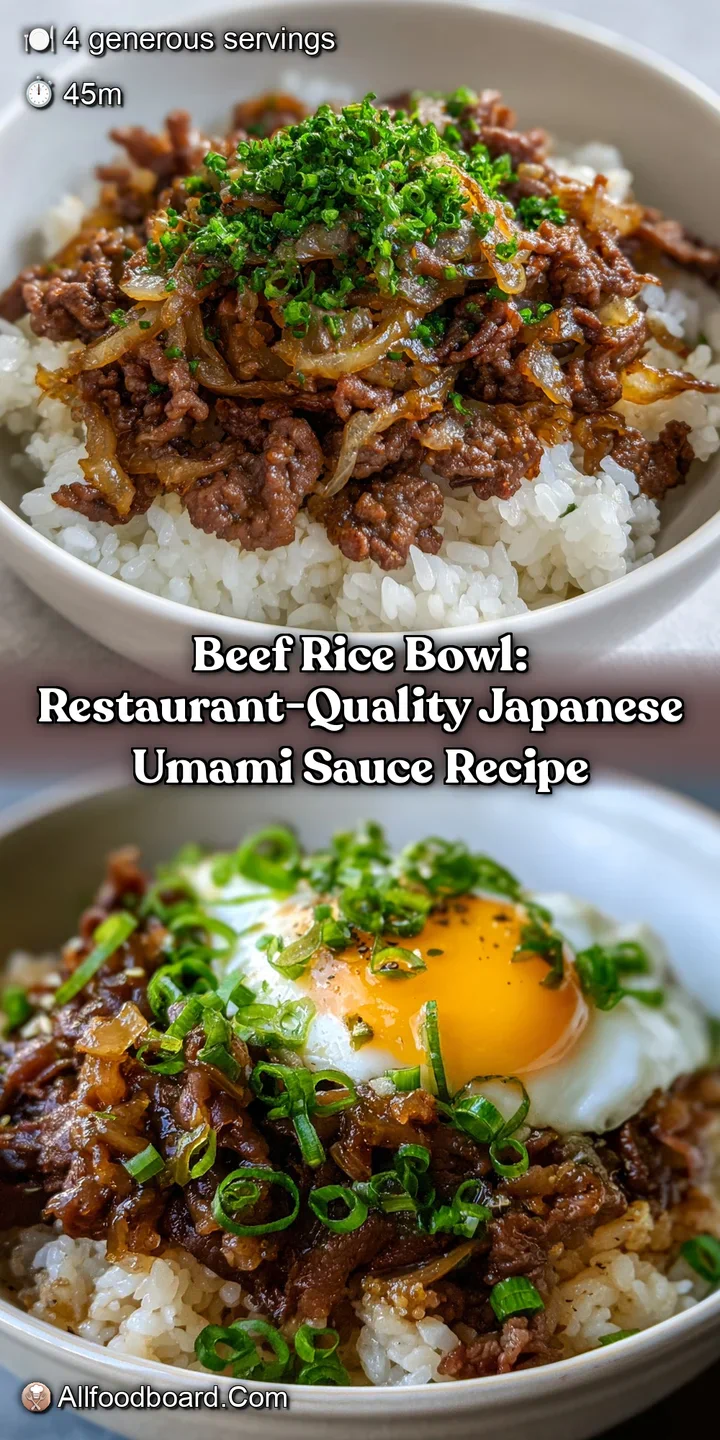
Traditional Gyūdon is usually topped simply with pickled ginger (beni shoga) and a dusting of shichimi togarashi (Japanese seven spice blend) for heat. For extra richness, many home cooks stir a raw or lightly poached egg yolk into the hot rice just before serving.
How can I make this recipe lower in sodium?
Since soy sauce forms the base of the savory broth, the simplest method is to exclusively use a high-quality, low-sodium soy sauce alternative. You can also dilute the cooking broth slightly with water or dashi and balance the flavor by adding a touch more sugar or seasoning instead of relying solely on the salty components.
Speedy Umami Beef Rice Bowl
Ingredients:
Instructions:
Nutrition Facts:
| Calories | 877 kcal |
|---|---|
| Protein | 68.0 g |
| Fat | 27.0 g |
| Carbs | 61.5 g |
