Thanksgiving Side Dishes: Sourdough Dressing Sage

- The Real MVP of the Holiday Table: Sourdough Dressing Perfection
- The Science of Texture: Achieving the Perfect Crisp-Meets-Tender Dressing
- Essential Provisions: Sourcing and Preparing Your Autumnal Ingredients
- The Culinary Method: Crafting the Deeply Flavorful Stuffing Base
- Master the Dish: Advanced Tips and Troubleshooting Your Dressing
- Prep, Store, and Reheat: Managing the Side Dish Rush
- Beyond the Plate: Perfect Pairings for Your Holiday Table
- Recipe FAQs: Sourdough Dressing
- 📝 Recipe Card
The Real MVP of the Holiday Table: Sourdough Dressing Perfection
That smell hitting you the second you open the oven that’s the true definition of Thanksgiving, isn't it? It’s the deep perfume of sage and caramelized butter, melding beautifully with the hearty, slightly tangy scent of toasted sourdough bread.
Forget the turkey; this incredible dressing is what makes everyone feel instantly at home.
This particular recipe is my secret weapon for the holiday rush because it completely saves my sanity. Most of the hard work can be handled 48 hours ahead of time, and baking it outside of the bird guarantees a perfect, crispy texture every single time, which is both fast and incredibly easy. It’s an absolutely essential component of any solid plan, right alongside planning the Thanksgiving Dinner Menu: Guaranteed Juicy, Crispy Herb Brined Turkey .
We are finally moving past the soggy stuffing of the past. I’ve learned exactly where people go wrong with Thanksgiving Side Dishes, and I'm sharing all the best tricks for achieving that perfect, buttery crisp top and moist, deeply flavorful center.
Grab your largest mixing bowl seriously, the biggest you have and let’s crack on with crafting the ultimate holiday side.
The Science of Texture: Achieving the Perfect Crisp Meets-Tender Dressing
Why We Bake It Outside the Bird (A Safety and Texture Debate)
I learned this the hard way many years ago, when I served a batch of what could only be described as warm, dense paste. Baking the dressing inside the turkey turns it into heavy, steamed mush, sacrificing all hope of a crispy exterior. Texture is everything.
Cooking this Thanksgiving side dish separately allows the heat to circulate freely around the mixture. Plus, it guarantees food safety because the center actually reaches the proper 75°C (165°F) temperature, which is often a challenge inside a massive bird.
A Symphony of Autumnal Flavors: Shallots, Sage, and Sourdough
Sourdough is the hero here, providing that essential chewiness and just enough tang to balance the savory fat. The key flavor component is the fresh sage, which screams "holiday" and works brilliantly with thyme. When these herbs are sautéed in butter, they infuse the whole dish with a vibrant, earthy aroma.
Elevating the Classic: An Heirloom Thanksgiving Side Dish Recipe
This isn't just about throwing bread and broth together; it's about building layers. We are taking the time to caramelize the shallots and infuse the butter before any bread even gets involved. This extra 15 minutes of love is what turns an ordinary dish into an heirloom favorite.
The Caramelization Difference: Sweet Depth from Shallots
Don't rush the first step! Slowly sautéing the shallots and celery until they are deeply softened and slightly browned is absolutely critical. This patient process pulls out their natural sugars, adding a subtle, underlying sweetness that prevents the final dressing from tasting one-dimensional.
This step adds complexity without needing extra sugar.
The Sourdough Secret: Preventing the Soggy Center
Sourdough bread is naturally denser and has a sturdier crumb structure compared to a standard sandwich loaf. Because of this density, it can soak up the flavorful broth without immediately collapsing into mush. Always choose a dense, crusty loaf.
Balancing Sweet and Savory: The Cranberry and Sage Ratio
The richness of butter and the deep savoriness of the broth need a sharp counterpoint. That's where the dried cranberries come in, adding a tart burst of flavor. This balance is what makes it the Best Thanksgiving Side Dish, cutting through the heaviness of the main meal beautifully.
Essential Provisions: Sourcing and Preparing Your Autumnal Ingredients
For amazing Thanksgiving Side Dishes, you need quality ingredients that can handle the heat and the moisture. I always tell people, if the herbs are tired and the bread is airy, the dressing will be sad.
Choosing Your Loaf: Sourdough vs. Other Crusty Breads
You need structure! Sourdough is my absolute favorite, but anything with a thick, rustic crust works beautifully.
| Ingredient | Why it's Great | Substitution Strategy |
|---|---|---|
| Sourdough Loaf | Sturdy structure absorbs liquid without collapsing. | Substitute with Challah or rustic French baguette (just make sure it’s dried properly!). |
| Shallots | Milder, sweeter flavor profile than common onions. | Substitute with 1 large Spanish onion or 2 large leeks (white/light green parts only). |
| Unsalted Butter | The foundation of flavor; allows you to control salt. | Use 1/4 cup olive oil and 1/2 cup plant based butter for dairy-free needs. |
| Chicken Broth | Adds depth and savory richness. | Use a high-quality, flavorful Vegetable Broth to keep it vegetarian. |
| Eggs | Essential binder that helps the dressing set. | Substitute with 3 tbsp cornstarch mixed with 3 tbsp cold water (binding only, texture won't be identical). |
A Guide to Fats: Butter, Olive Oil, or Combining for Flavor
We are using a lot of butter, and that's okay because it’s Thanksgiving. It coats the bread beautifully and helps carry the herb flavor right into the mixture. Melting the butter slowly ensures you don't burn the milk solids, which keeps the flavor clean.
Flavor Boosters: Preparing Aromatic Vegetables (Shallots/Celery)
Finely diced vegetables are essential here. If the pieces are too big, they won't soften fully during the short sauté time, leading to tough bites of celery. Chop them evenly and finely. We are looking for aromatics, not chunks of veg.
Chef’s Note: Do not skip the toasting/drying step for the bread. I once tried to rush this process, and the result was the heaviest Thanksgiving Side Dish I have ever made dense, gluey, and entirely forgettable. Toasting is what creates the scaffolding for the whole dish.
The Culinary Method: Crafting the Deeply Flavorful Stuffing Base
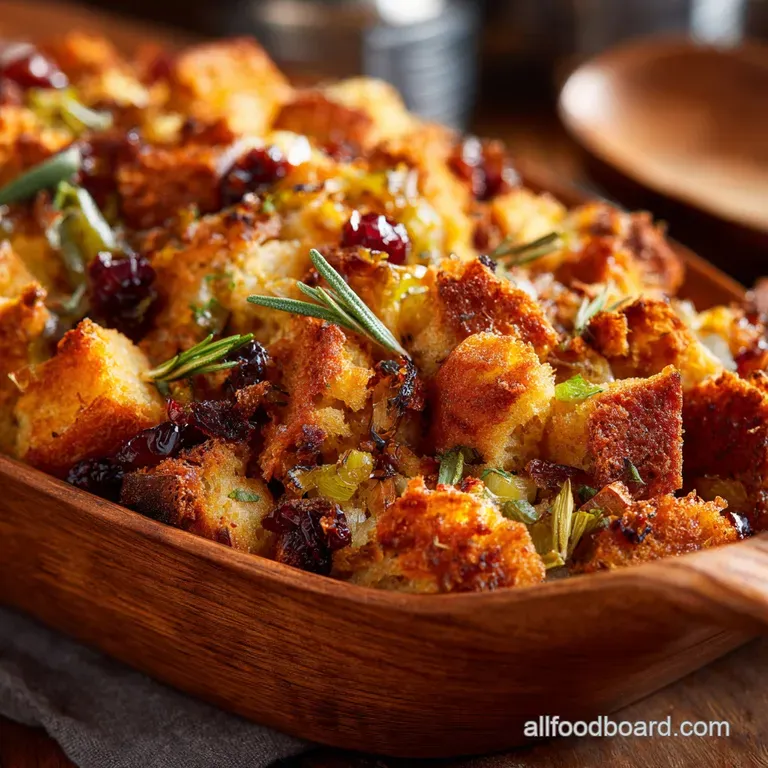
Stage One: Toasting and Drying the Cubes (The Foundation)
Whether you air-dry them for 12 hours or toast them quickly in a 150°C (300°F) oven, the bread needs to be rock hard and crunchy. Toss those cubes with a tablespoon of neutral oil before drying to promote an even crisper edge later on.
Once dry, transfer them straight into your massive mixing bowl and set them aside.
Stage Two: Infusing the Fat with Aromatics (Building Flavor Depth)
Melt 170g of butter in your skillet over medium heat, not high! Add the shallots and celery, then slow sauté them for a full 10 to 12 minutes until they are deeply softened. The aroma should be nutty and slightly sweet at this point.
Next, stir in the garlic, fresh sage, and thyme; cook this for just two minutes until it becomes intensely fragrant. Do not burn the garlic! Remove it immediately from the heat.
Stage Three: Achieving the Perfect Moisture Ratio (Preventing Mush)
Pour the aromatic mixture over the dried bread cubes, along with the cranberries and any nuts you’re using. Gently toss until the bread is coated in the fragrant butter. Now, whisk your warm broth and eggs together. Start by adding 700ml (3 cups) of the liquid gradually over the bread.
Use your hands or a wooden spoon to fold it in. The bread should be moist, look saturated, but should not be dripping wet. Stop when the mixture holds its shape loosely when squeezed.
Baking to Golden Perfection: Achieving a Crispy Top Crust
Lightly grease your 9x13 inch casserole dish. Transfer the dressing mixture into the dish without pressing it down we want it light and fluffy. Dot the remaining 55g of butter over the surface. Cover it tightly with foil and bake for 30 minutes at 190°C (375°F).
Removing the foil for the final 15 to 20 minutes is essential for that gorgeous, golden brown, crispy top crust.
Master the Dish: Advanced Tips and Troubleshooting Your Dressing
How to Fix a Dry or Overly Moist Mixture
If your dressing seems too dry after baking, stir in a splash of warm broth when you pull it from the oven, cover it again, and let it rest for 10 minutes. If it’s too wet and dense, it probably means you added too much liquid initially, or the bread wasn't dry enough. The fix?
Scoop the dressing into smaller, flatter dishes and bake uncovered for longer to encourage evaporation and crust development.
Maximizing the Crispy Edges (The Maillard Reaction for Stuffing)
The key to maximizing the crispy bits everyone fights over is surface area. Don't use a deep roasting pan; use a wide, shallow casserole dish. Make sure those small butter dots are spread evenly across the top, too.
That exposed, buttery surface area is what reacts with the heat during the final uncovered bake, giving you that incredible, crunchy Maillard crust.
Prep, Store, and Reheat: Managing the Side Dish Rush
Prepping Ahead: The 24 Hour Stuffing Timeline
This recipe is a champion of make-ahead Thanksgiving Side Dishes. You can complete everything up to Stage 3 (mixing the aromatics and the bread) 24 hours in advance. Do not add the wet broth and eggs yet! Keep the butter coated bread mixture covered in the refrigerator.
On Thanksgiving morning, bring it out, add the warm binder, let it rest for 10 minutes, and bake.
Refrigerating Unbaked vs. Baked Dressing
The unbaked, fully wet mixture should be baked within 24 hours of adding the broth, due to the eggs. If it's already baked, leftovers will keep brilliantly in the fridge for up to 4 days. Always store it in an airtight container.
The Best Way to Freeze Leftovers Without Losing Texture
But does it freeze well? You bet! Allow the baked dressing to cool completely. Wrap it tightly in heavy duty foil, then place the foil wrapped portion in a freezer bag, squeezing out all the air. It lasts up to 3 months.
When reheating, bake it straight from frozen (still wrapped in foil) at 160°C (325°F) for an hour, then unwrap it for the final 15 minutes to re-crisp the top.
Restoring the Crisp: Reheating Strategies for Thanksgiving Day
Avoid the microwave! This is a crucial rule for all your Thanksgiving Side Dishes. Microwaving leads to soggy edges and dry interiors. The best method is placing the leftover slices on a baking sheet, lightly spritzing them with water or broth, and reheating them in a 175°C (350°F) oven for 10 to 15 minutes until piping hot and the crust is restored.
Beyond the Plate: Perfect Pairings for Your Holiday Table
This deeply savory Sourdough Dressing is rich and complex, so it needs simple, bright accompaniments. It pairs beautifully with a deeply rich Giblet Gravy, of course. For a needed palate cleanser, try something light and vinegary, like a simple lemon vinaigrette dressed green bean salad. If you’re looking for other stunning make-ahead items for the feast, I highly recommend checking out the recipe for Thanksgiving Appetizers: make-ahead Butternut Squash Tartlets .
Recipe FAQs: Sourdough Dressing
Why did my dressing turn out dry and crumbly?
Dryness usually means the bread cubes did not absorb enough liquid before baking, or the cubes were too fresh. Ensure you use truly stale or well toasted bread, and confirm the mixture is moist throughout before it goes into the oven.
If it seems too dry midway through baking, add a quarter cup of warm stock and cover the dish tightly for 10 minutes to redistribute moisture.
How do I prevent the dressing from becoming soggy or mushy?
The key to a perfect texture is using dense, dried out bread, which holds its shape when moistened. Avoid over mixing the dressing once the liquid is added, as this breaks down the bread structure.
Also, always finish baking the dressing uncovered for the last 15 20 minutes to allow excess steam to escape and crisp the top layer.
Can I assemble this sourdough dressing ahead of time?
Yes, preparing the dressing ahead is highly recommended for Thanksgiving efficiency. You can assemble the entire mixture, transfer it to the baking dish, and cover it tightly up to 24 hours in advance. Remove it from the refrigerator 30 minutes before baking time to ensure it cooks evenly throughout.
What is the best way to substitute the sourdough bread?
Sourdough provides great tang and structure, but you can successfully substitute it with stale ciabatta, challah, or a good French baguette. The crucial step is ensuring your chosen bread is completely dried out either left on the counter overnight or toasted in a low oven before absorbing the flavorful stock.
How can I make this recipe suitable for a vegan or gluten-free diet?
For a vegan version, substitute the butter with quality olive oil or a plant based butter, and use a rich vegetable broth instead of poultry stock. To make it gluten-free, use a dense, day-old gluten-free artisan loaf and follow the same drying process as the sourdough.
What’s the secret to achieving a truly crispy, golden brown crust?
A crunchy crust comes down to fat and exposure. Before the final bake, dot the top layer generously with extra cubes of cold butter, then ensure the dressing is placed on the oven's middle or upper rack. Bake completely uncovered for at least the last 20 minutes to achieve maximum caramelization and browning.
Can the leftover dressing be frozen and reheated?
Cooked dressing freezes well, making it perfect for meal prepping. Allow the leftovers to cool completely, then wrap them tightly in foil and place them in a freezer bag for up to two months. To reheat, thaw overnight in the fridge and warm slowly in a 300°F oven until piping hot throughout.
Sourdough Dressing Recipe
Ingredients:
Instructions:
Nutrition Facts:
| Calories | 400 calories |
|---|---|
| Fat | 21 g |
| Fiber | 3 g |
