Sauteed Cabbage with Caramelized Edges Bright Vinegar
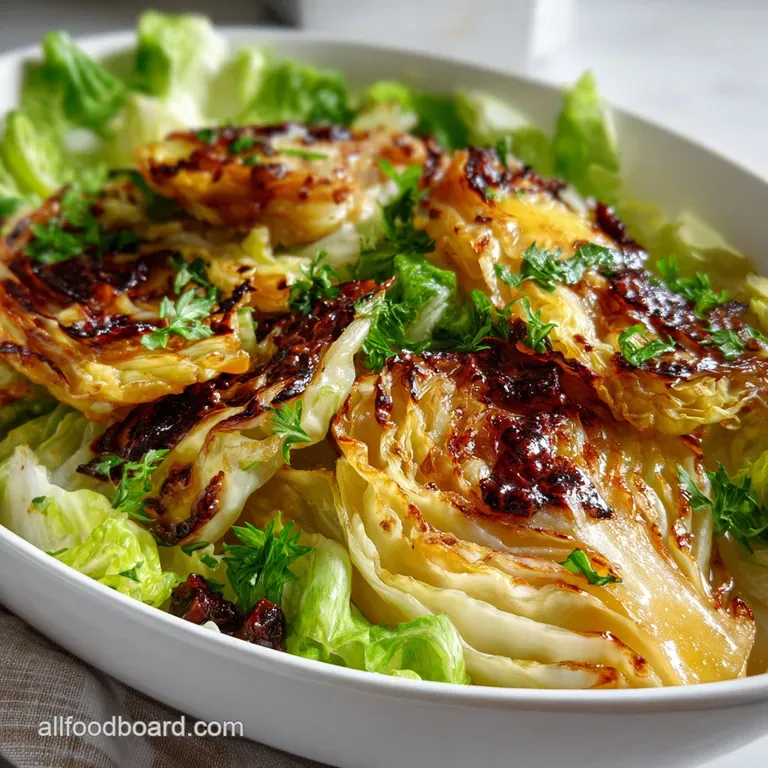
- Introduction & Overview — Pan‑Seared (Sautéed) Cabbage with Browned Edges and Bright Vinegar Finish
- Why This Recipe Works — Sauteed Cabbage
- Ingredients & Substitutions — Sauteed Cabbage
- Tools and pantry basics
- Step-by-Step Instructions — Sauteed Cabbage
- Quick method at a glance
- Chef's Tips & Common Mistakes
- Storage & Freezing — Sauteed Cabbage
- Serving Suggestions
- Recipe FAQs
- 📝 Recipe Card
Introduction & Overview Pan-Seared (Sautéed) Cabbage with Browned Edges and Bright Vinegar Finish
My kitchen smelled like browned butter and toasted cabbage the first time I nailed this Sauteed Cabbage.
The edges caramelized and made that tiny crackle when I nudged a leaf with the spatula.
This Sauteed Cabbage recipe is a lifesaver on weeknights because it’s fast, cheap, and forgiving.
It comes together in about
20
minutes and stretches to feed four without drama.
So let’s crack on I’ll walk you through exactly how to get sweet, golden edges and a bright vinegar finish every time.
Grab a skillet. We’re doing serious cabbage theater.
Why This Recipe Works Sauteed Cabbage
Sauteed Cabbage works because you control surface contact, heat, and moisture.
When you let bits sit and brown, the sugars caramelize and the flavor transforms into something nutty and almost meaty in depth.
The short cook time keeps the leaves tender but with bite, so you don’t end up with limp, gray mush.
And the final splash of acid wakes the whole pan up, cutting through the richness and making the dish sing.
What to expect: flavor profile, texture, and visual cues
Sauteed Cabbage gives sweet, toasted edges and a bright finish.
You’ll see glossy, wilted leaves with golden brown fringe and smell a toasty, slightly sweet aroma.
Bite into a ribbon and it should be tender with a little crunch near the core.
If everything looks uniformly pale, you’ve missed the caramelization step.
Why quick, high-heat cooking brings out sweetness
Sauteed Cabbage relies on fast, hot contact to develop those browned bits.
High heat evaporates surface moisture quickly so the cabbage can brown instead of steam.
If you cook too low and slow, the sugar won’t toast properly and the texture will be softer than I like.
Trust me a little patience with heat pays off.
When to serve this rustic, tangy vegetable side
Sauteed Cabbage is perfect with hearty mains, grain bowls, or just a hunk of crusty bread.
It also shines as a quick weeknight side when you want big flavor from a humble veg.
If you want pairing ideas, try the tangy contrasts in
Roasted Cabbage: Crispy Caramelised Steaks with Balsamic Glaze
or the cozy comfort of
Cheesy Dream Scalloped Cabbage Casserole So Easy
.
I link to a few more options below.
The science of caramelization on cabbage leaves
Sauteed Cabbage browns when sugars and amino acids meet heat and dry surface conditions.
That Maillard like reaction creates the toasted aroma and deep flavor you crave.
Caramelization happens fastest where the leaves overlap and dry edges form.
So, let things rest in the pan stirring constantly kills the process.
How fat, moisture control, and surface contact create browning
Sauteed Cabbage needs enough fat to coat the leaves and a hot pan to sear.
Too much water and the cabbage steams; too little fat and it sticks or burns.
Fat conducts heat and helps dissolve flavor compounds into the cabbage.
A small knob of butter at the end gives velvet and gloss.
Why a finishing splash of vinegar balances richness
Sauteed Cabbage finishes with acid because fat and caramelized sugar can feel heavy.
A tablespoon of apple cider or white wine vinegar brightens and sharpens every bite.
Lemon works too, but vinegar deglazes the pan and pulls those browned bits into the sauce.
It’s the tiny trick that makes people ask, “Who cooked this?”
Ingredients & Substitutions Sauteed Cabbage
Sauteed Cabbage (yields 4 side dish servings)
-
1 medium green cabbage (about 1.5 2 lb / 700 900 g), cored and thinly sliced
- Substitute: savoy or Napa cabbage (adjust cook time); red cabbage works for color but needs more acid.
-
2 tbsp neutral oil (vegetable, canola, or light olive oil)
- Substitute: olive oil, avocado oil, or rendered bacon fat for flavor.
-
1 tbsp unsalted butter (optional, for finishing)
- Substitute: vegan butter or omit for vegan version; extra oil works too.
-
1 small yellow onion, thinly sliced (optional)
- Substitute: shallot, sliced leek, or 2 tbsp powdered onion if you’re out.
-
2 garlic cloves, minced (optional)
- Substitute: 1/4 tsp garlic powder or omit entirely.
-
1 tsp kosher salt (adjust to taste)
- Substitute: sea salt or 3/4 tsp table salt.
-
1/2 tsp freshly ground black pepper
- Substitute: white pepper or pinch of crushed red pepper.
-
1 tbsp apple cider vinegar or white wine vinegar (or fresh lemon juice)
-
Substitute: lemon juice, sherry vinegar, or rice vinegar for a milder tang.
Optional finishing & garnish: parsley or dill, brown sugar or honey, caraway seeds.
-
Substitute: lemon juice, sherry vinegar, or rice vinegar for a milder tang.
Chef's Note: If you want a sweet savory twist, add a thinly sliced tart apple with the cabbage. It caramelizes quickly and tastes brilliant.
| Ingredient | Quick Substitute |
|---|---|
| Green cabbage | Savoy or Napa (faster); red cabbage (more acid) |
| Neutral oil | Olive, avocado oil, or bacon fat |
| Butter | Vegan butter or extra oil |
| Apple cider vinegar | Lemon, sherry, or rice vinegar |
Tools and pantry basics
Sauteed Cabbage loves a wide, heavy pan.
I use a 10 12 inch cast iron or stainless skillet for even browning.
A sharp chef’s knife or mandoline helps get uniform ribbons.
Tongs make tossing easy without bruising the leaves.
Choosing the cabbage: green, Savoy, or Napa which to use and why
Sauteed Cabbage prefers green or Savoy for texture and sweetness.
Napa cooks faster and becomes silkier, while red adds color and needs a touch more acid.
If your cabbage feels heavy, it’s fresh.
If it smells off, toss it.
Fats and oils: butter, neutral oil, or clarified butter (pros and cons)
Sauteed Cabbage benefits from a neutral oil for over high heat browning.
Butter adds flavor but can burn; add it at the end for gloss.
Clarified butter is clever if you want butter flavor at higher heat.
Use what you like.
Acid choices: types of vinegar and how much to add
Sauteed Cabbage brightens with 1 tablespoon of vinegar.
Apple cider and white wine vinegar are my favorites for balance.
Taste and adjust.
A little goes a long way.
Aromatics and optional small add-ins (onion, garlic, fresh herbs) and substitutions
Sauteed Cabbage gains depth from sautéed onion and a touch of garlic.
Herbs like parsley or dill at the end keep things fresh.
Bacon or a sliced apple are lovely options.
Keep additions minimal so cabbage shines.
Essential pan and stove requirements for even browning
A heavy bottomed pan retains heat and prevents cold spots.
Medium high heat is your friend; too low equals steaming.
Preheat for at least a minute until the oil shimmers.
Then add the cabbage.
Knife and cutting notes for thin, uniform slices
Aim for 1/8 1/4 inch ribbons for even cooking.
Use a mandoline guard or steady slicing hand.
Uniform pieces cook at the same rate.
That’s the secret to consistent texture.
step-by-step Instructions Sauteed Cabbage

Sauteed Cabbage comes together fast; prep first, then cook.
Follow these steps and pay attention to the smell and color.
- Prep the cabbage: Remove outer leaves, quarter, remove core, and thinly slice into 1/8 1/4 inch ribbons. Dry thoroughly so the pan can brown.
- Heat the pan: Warm a large skillet over medium high heat until hot and shimmering. Add oil.
- Cook aromatics (if using): Sauté onion 3– 4 minutes until translucent and slightly golden. Add garlic and cook 30 45 seconds until fragrant.
- Add cabbage: Toss in the sliced cabbage and coat with fat. Sprinkle salt and pepper. Let sit, undisturbed, for 1– 2 minutes to brown.
- Continue cooking: Stir and let other areas brown. Total 8– 12 minutes until wilted with browned edges. Add water 1 2 tbsp and cover if it’s stubbornly steaming.
- Finish: Stir in brown sugar if using, then splash vinegar and scrape the pan to deglaze. Add butter and herbs, taste, and adjust seasoning. Serve immediately.
Quick method at a glance
Sauteed Cabbage needs heat, fat, and a short cook time.
Hot pan, oil, a little patience, quick finish with vinegar done.
Prep: trimming the core and slicing the cabbage thinly and evenly
Trim, quarter, core, and slice into even ribbons.
Uniform slices = uniform cooking.
Start hot: how to heat the pan and add fat for best contact
Heat until oil shimmers then add cabbage.
Don't be shy with temperature.
Sautéing technique: working in batches, when to let edges brown vs stir
Let patches sit for 1–
2
minutes to develop crust.
Stirring constantly kills caramelization.
Finishing: when and how to add vinegar, taste, and adjust seasoning
Add vinegar at the end and scrape browned bits.
Taste and tweak salt and acid.
Timing breakdown for a 10 15 minute cook (what to watch each minute)
- - 3
- onions soften, cabbage wilts slightly.
- - 8
- browning accelerates; smell gets toasty.
- - 12
- finish with vinegar and butter; serve.
Heat settings and visual cues to prevent steaming instead of searing
If it’s steaming, the pan is crowded or too cool.
Turn up heat or work in batches.
Chef's Tips & Common Mistakes
Sauteed Cabbage wins when you avoid three mistakes.
Here’s what trips people up and how to fix it.
- Overcrowding the pan If the cabbage steams, brown in batches or use a larger pan.
- Cutting unevenly Matchstick thin and thicker bits cook differently; slice uniformly.
- Adding acid too early Vinegar added too soon stops browning; save it for the end.
Tip: Add a tiny pinch of brown sugar early if you want extra caramelization, but always finish with acid.
Storage & Freezing Sauteed Cabbage
Sauteed Cabbage keeps well in the fridge for 3 4 days.
Cool quickly and store in an airtight container on the middle shelf.
Freezing is possible but textural changes occur; the cabbage will be softer after thawing.
Flash freeze on a tray, then transfer to freezer bags for up to 3 months.
Reheat from fridge: warm gently in a skillet over medium high to revive crisp-tender edges.
From frozen: thaw overnight in the fridge, then reheat in a hot pan, adding a splash of oil and a squeeze of vinegar to refresh flavors.
Serving Suggestions
Sauteed Cabbage pairs well with rustic mains and grain bowls.
Serve it warm with a scatter of fresh herbs and crusty bread to mop up the juices.
For inspired variations, check these recipes: Smoked Sausage Cabbage Skillet Easy Weeknight Winner , Easy Sauteed Zucchini My Quick Summer Side Dish , and Chicken and Cabbage Recipes: Crispy Skin Braised with Cider for ideas that pair or riff on this simple side.
Avoid limp results by controlling moisture and pan contact.
If your cabbage needs rescuing, crank the heat and let it brown for a minute without stirring.
Final thought: Sauteed Cabbage is ridiculously forgiving and wildly satisfying.
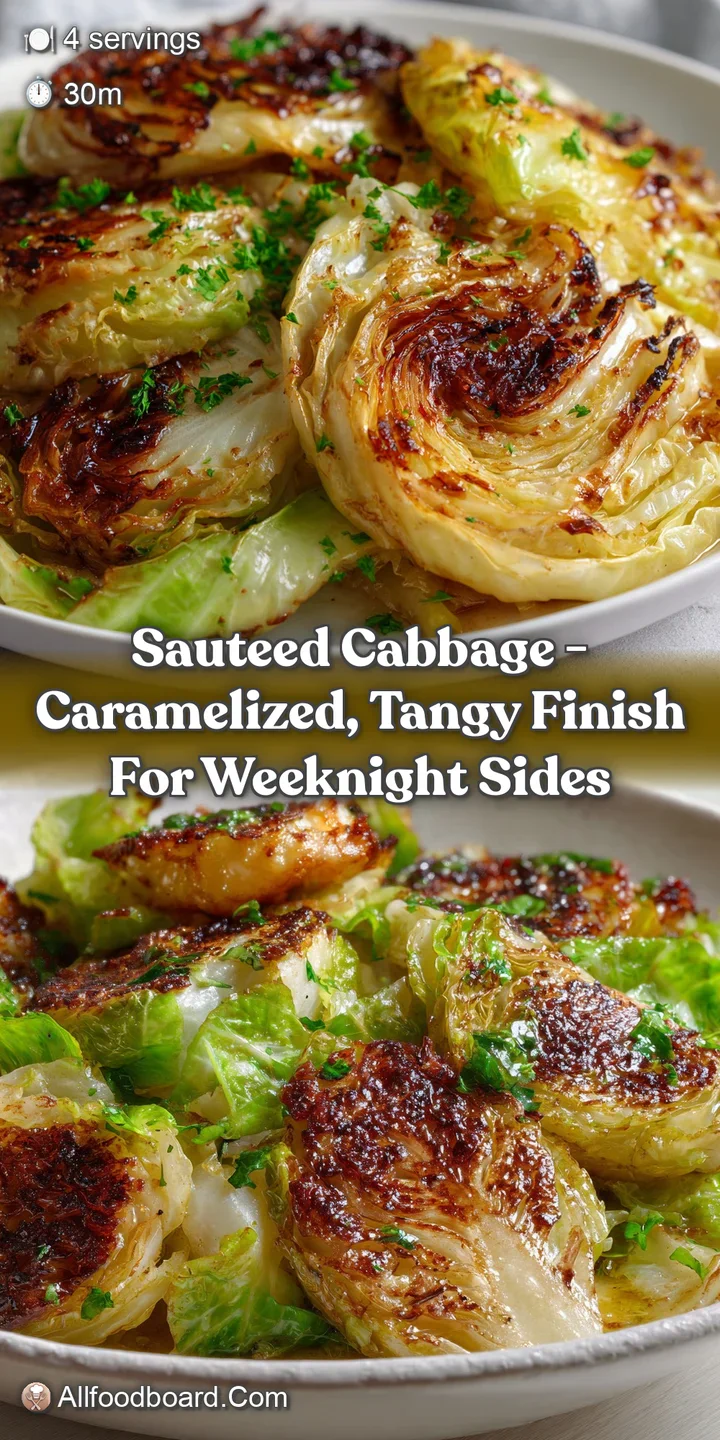
Make it your way, finish with a bright splash of vinegar, and enjoy that caramelized, toasty goodness.
Recipe FAQs
Why is my sautéed cabbage soggy instead of browned?
Soggy cabbage usually means the pan was overcrowded or the heat was too low, which causes steaming rather than searing. Cook in batches on a hot, wide skillet and dry the cabbage well after washing to promote browning.
How do I get those sweet, browned edges without burning the cabbage?
Use medium high heat and a heavy bottomed skillet, and give the cabbage space so edges make good contact with the pan; resist stirring constantly so caramelization can develop. If using butter, add a little neutral oil to raise the smoke point and watch closely to prevent charring.
My cabbage tastes bitter how can I fix it?
Bitterness can come from undercooking or older cabbage; cook until sweet notes develop and add a splash of the recipe’s vinegar to balance harsh flavors. A small pinch of sugar or a bit more salt while cooking can also round out the taste.
Can I make this recipe vegan or dairy-free?
Yes replace butter with a neutral oil or olive oil and finish with the bright splash of vinegar; add nutritional yeast or a dash of soy sauce for extra savory depth. You can also boost richness with sautéed mushrooms, toasted nuts, or caramelized onions.
Can I add other vegetables or proteins to the pan?
Yes, but time additions so everything finishes together: add harder vegetables like carrots or onions first, then softer items like bell peppers or greens. For proteins, brown meats or firm tofu separately (or first) to develop color, then combine at the end so nothing overcooks.
How long will leftovers keep in the fridge and how should I store them?
Store cooled leftovers in an airtight container in the refrigerator for 3 4 days, pressing out excess air to slow softening. Reheat gently in a skillet to revive texture rather than microwaving straight from the fridge when possible.
Can I freeze sautéed cabbage, and what's the best way to thaw and reheat it?
You can freeze sautéed cabbage in a freezer safe container or heavy duty bag for up to 2 3 months, though the texture will be softer after thawing. Thaw overnight in the refrigerator and reheat in a skillet over medium heat, adding a splash of broth or water if it seems dry, and avoid refreezing once thawed.
Sauteed Cabbage Recipe

Ingredients:
Instructions:
Nutrition Facts:
| Calories | 270 kcal |
|---|---|
| Protein | 14.2 g |
| Fat | 16.5 g |
| Carbs | 16.3 g |
