Crustless Quiche Lorraine: Light Flavourful
- The Proper Crustless Quiche Lorraine: An Overview
- Essential Ingredients and Expert Substitutions
- Method: Step-by-Step Guide to Baking the Best Crustless Quiche
- Troubleshooting and Mastering Your Crustless Quiche Bake
- Making Ahead: Storage and Reheating Guide
- Elegant Pairings and Serving Suggestions
- Recipe FAQs
- 📝 Recipe Card
The Proper Crustless Quiche Lorraine: An Overview
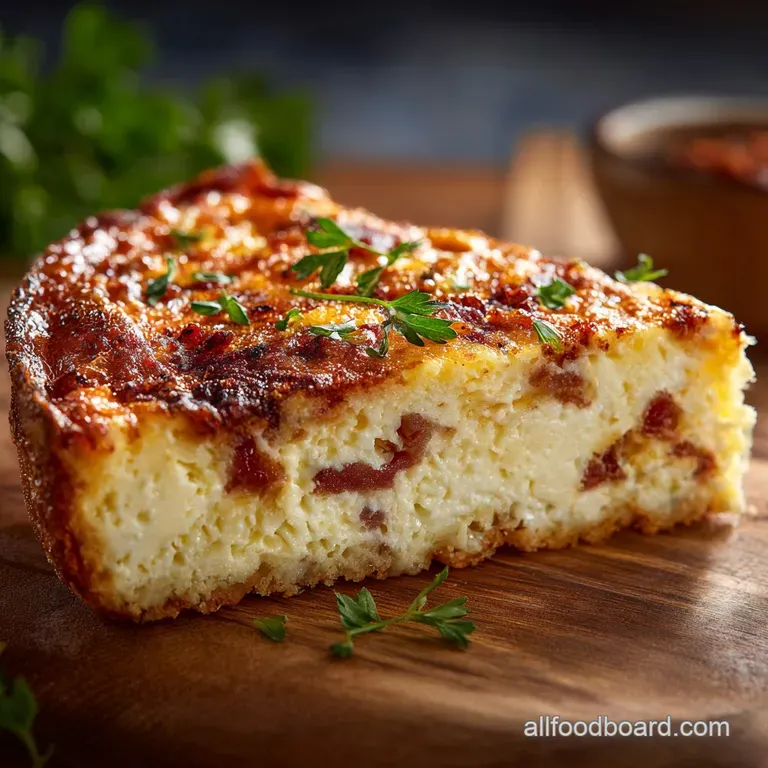
Walking into a kitchen when this is baking? That smoky, creamy, slightly sharp aroma of Gruyère and nutmeg hits you first. It smells expensive, deeply comforting, and entirely French.
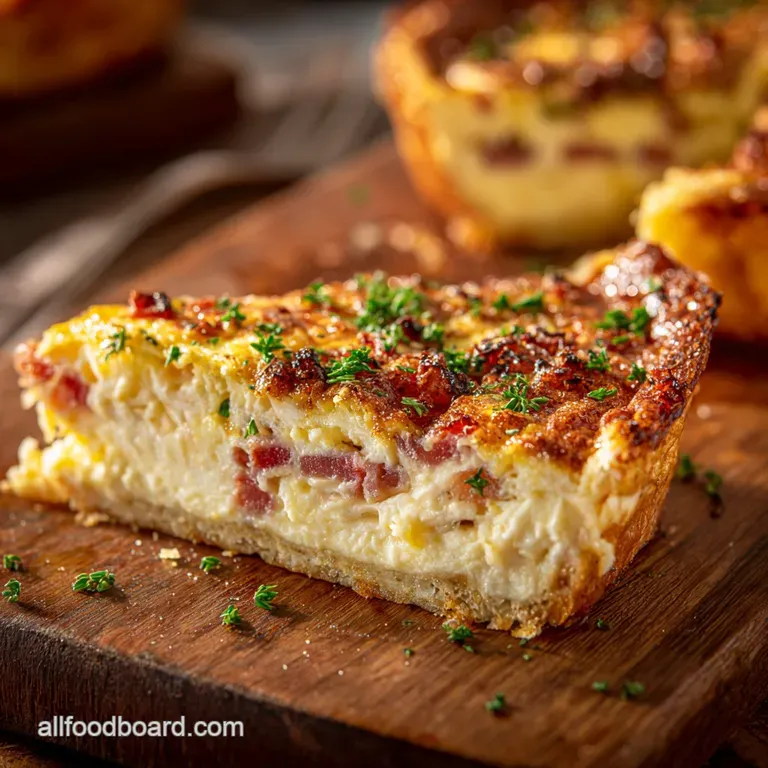
Then you slice into it, and that silky, almost pudding like custard base holds its shape perfectly, studded with salty, crisp bacon.
This specific recipe is a total lifesaver for busy weeknights or when unexpected brunch guests arrive. Ditching the pastry crust isn't just a low-carb choice; it saves you a solid hour of fiddly chilling and blind baking stress.
It’s a genuine cheat code for getting that rich, lush Quiche Lorraine flavour onto the table fast, and honestly, sometimes the crust just gets in the way of the good stuff.
Forget dry, rubbery, or watery attempts; we’re tackling the real deal here. We are going to nail the texture and flavour profile of a true French quiche, focusing on high-quality ingredients and simple techniques. Ready to make the best easy crustless quiche you've ever tasted? Let's crack on.
What Makes a True Quiche Lorraine (Lardons, Eggs, and Cream)
A Quiche Lorraine isn't just any egg pie, you know. Historically, it was a celebratory peasant dish from the Lorraine region, hence the name. Its integrity relies on three key elements: eggs, cream, and lardons (thick, smoked bacon bits).
If you add spinach or cottage cheese, you're making a fantastic casserole, but you’re not making a proper Quiche Lorraine.
Why Go Crustless? The Appeal of a Time Saving, Low-Carb Alternative
For me, the crustless approach means speed and reliability. Pastry is a pain; it can shrink, burn, or turn soggy if you look at it wrong. By removing the crust, we cut the complexity in half, focusing all our effort on perfecting that gorgeous, velvety filling.
This low-carb Crustless Quiche Lorraine recipe is perfect if you’re trying to reduce grains without sacrificing richness. Plus, it just makes cleanup so much simpler!
The History of the Beloved French Savoury Tart
The original tart was likely more of an open bread dough base topped with cream and eggs, predating the use of bacon and cheese. It evolved into the classic French tart we know today, using buttery shortcrust pastry and eventually incorporating the smoky, salty pork.
It’s fascinating how such a simple combination of ingredients can produce such an iconic, enduring dish, isn't it?
Essential Ingredients and Expert Substitutions
To achieve that rich, restaurant quality custard, we need to commit to fat and flavour. Seriously, no skimping here.
The Smoked Meat: Choosing Between Lardons and Thick Cut Bacon
Lardons are traditionally small, thick cubes of pork belly, often smoked, giving you a beautiful chewy texture and intense flavour. If you can find them, use them! If not, a good quality, thick cut smoked bacon, diced small, works perfectly.
| Ingredient | My Recommendation | Viable Substitute |
|---|---|---|
| Smoked Lardons | 6 oz (170g), diced | Thick cut, good quality smoked bacon rashers |
Dairy Decisions: Whole Milk vs. Heavy Cream (Defining 'Lush')
This is where the magic happens. We need that high fat content for structure. Heavy cream (or double cream in the UK) is non-negotiable for a truly lush, silky custard. The whole milk just helps thin it slightly so it bakes evenly, but the heavy cream does the heavy lifting, preventing that rubbery texture you sometimes see in cheap quiches.
| Ingredient | My Recommendation | Viable Substitute |
|---|---|---|
| Heavy Cream | 1 cup (240ml) | High fat Crème Fraîche or half and half (use half and half only if supplemented with an extra egg yolk for richness) |
Cheese Selection: Mastering the Classic Gruyère/Emmental Blend
Gruyère is the traditional choice because it melts beautifully, offering a nutty, salty depth that defines the dish. I prefer a blend of Gruyère and a sharper Swiss cheese, like mature Emmental.
The key is to grate it fresh; pre-shredded cheese is coated in starch and can prevent your custard from setting smoothly.
| Ingredient | My Recommendation | Viable Substitute |
|---|---|---|
| Gruyère Cheese | 5 oz (140g), freshly grated | Sharp, mature White Cheddar (for a tangier flavour) or Monterey Jack/Swiss blend |
Seasoning Checklist: The Essential Dash of Nutmeg
Please, for the love of France, do not skip the nutmeg. It's the secret little whisper of warmth that separates this dish from a mere bacon and egg scramble. Use freshly grated nutmeg if you have it; the aroma is phenomenal.
Crucial Ingredient Tip: We also add 1 teaspoon of cornstarch (or plain flour) to the custard. This tiny amount acts as a crucial binder, ensuring your Crustless Bacon and Cheese Quiche sets firmly without clinging to a pastry shell. Trust me on this one.
Method: step-by-step Guide to Baking the Best Crustless Quiche
Prepping the Filling: Sautéing and Cooling the Bacon Base
First things first, preheat the oven to 350°F (180°C) and thoroughly grease your 9 inch pie dish. You need to be generous with the butter or spray here because you don't have a crust barrier! Sauté your lardons or bacon until they are nice and crisp, rendering out most of the fat.
Then, add the shallots and cook until they soften and turn translucent, absorbing all that smoky flavour.
This is critical: Drain that filling mixture immediately and spread it on a plate to cool down. If you drop hot bacon into your egg mixture, you’ll end up with scrambled eggs disguised as quiche, and nobody wants that grainy texture.
Mixing and Incorporating the Creamy Custard Base
Grab a large bowl and gently whisk your eggs until they are just combined, maybe 30 seconds max. We don't want a meringue; we just want uniformity. Now pour in the heavy cream and whole milk, followed by your teaspoon of cornstarch, salt, pepper, and that essential freshly grated nutmeg.
Whisk briefly until the cornstarch disappears.
Finally, gently fold in the grated Gruyère and the cooled bacon/shallot mixture. We want the fillings evenly distributed so every slice gets a perfect ratio of cheese and salty pork.
The Baking Process: Oven Temperature and Timing for a Tender Set
Pour the custard mixture into your prepared dish. Now, slide it carefully into the preheated oven. You’ll bake this Easy Crustless Quiche Lorraine for about 40 to 45 minutes. We are aiming for a slow, even set, so don't crank the heat!
The quiche is ready when the edges are firm and slightly puffed, but the centre still has a slight tremble, like firm jelly. A knife inserted near the edge should come out clean.
The Essential Cooling and Setting Stage
I know you want to dive in immediately, but don't you dare! Pull the quiche out and let it rest on a wire rack for at least 15 minutes. This resting time is non-negotiable; it allows the residual heat to finish cooking the centre and, crucially, lets the proteins fully set. This step ensures you get beautifully clean, structural slices every single time. If you love perfectly formed snacks, you might enjoy my small PintSized Perfection Classic Quiche Lorraine Bites Recipe — they also rely heavily on cooling!
Troubleshooting and Mastering Your Crustless Quiche Bake
Preventing a Watery Custard (Dealing with Moisture)
A common issue with any Crustless Quiche Lorraine is a watery base, often caused by dairy separation or excessive moisture from the fillings. The fix is threefold: use high fat dairy, incorporate that little bit of cornstarch, and ensure your bacon/shallots are fully drained and cooled before they touch the wet ingredients.
Never add water heavy fillings (like raw spinach or mushrooms) without thoroughly pre-cooking and squeezing them dry first.
Avoiding Cracks and Deflation (The Low and Slow Rule)
Quiche cracks happen when the outside cooks much faster and sets before the centre has a chance to catch up, causing the structure to pull apart as it cools. The solution is the low and slow baking temperature (350°F is ideal).
If you find your quiche is cracking severely, try using a bain marie (water bath). It surrounds the dish with gentle, indirect steam heat, guaranteeing an incredibly tender set.
The Foil Tent Trick: Preventing an Over Browned Top
If your quiche hits the 30 minute mark and the top is darkening nicely, but the centre is still wobbly, it’s time for the foil tent. Simply loosely place a sheet of aluminum foil over the top of the quiche dish.
This blocks direct heat and allows the interior to finish baking perfectly without burning the surface.
Making Ahead: Storage and Reheating Guide
Refrigerating Leftovers Safely (Shelf Life)
This Low Carb Crustless Quiche Lorraine stores beautifully. Once fully cooled, wrap any leftovers tightly in cling film or place them in an airtight container. It will last reliably in the fridge for up to 4 days. It tastes fantastic cold, straight from the fridge, or gently warmed.
Freezing and Thawing Whole or Sliced Quiche
Yes, it freezes well! For best results, allow the baked quiche to cool completely, then wrap it tightly in aluminum foil, followed by a layer of freezer plastic wrap. Label and date it. It will keep well for up to 3 months. To thaw, move it to the fridge overnight.
To reheat, place the thawed quiche (wrapped loosely in foil) in a 300°F (150°C) oven for about 20 minutes, or until heated through. Alternatively, slices reheat perfectly in the toaster oven for about 5– 8 minutes.
Elegant Pairings and Serving Suggestions
This classic French dish requires equally simple and elegant accompaniments; nothing too heavy or complicated!
Simple Green Salads and Vinaigrette Combos
Because the quiche is so rich, you need something acidic and clean to cut through the creaminess. A light butter lettuce or crisp mixed greens tossed in a simple, sharp vinaigrette is perfect. Think Dijon mustard, white wine vinegar, and good olive oil.
Sometimes, I’ll add a few sprigs of fresh chives or tarragon for an extra herbaceous punch.
If you’re hosting a casual brunch, pair this beautiful slice of quiche with a simple fruit salad. It’s light, satisfying, and looks utterly gorgeous on the plate.

Recipe FAQs
Why is my Crustless Quiche watery or not fully setting?
A watery quiche usually indicates either undercooking or insufficient draining of add-ins, such as spinach or pre-cooked onions, which release moisture during baking. Ensure the internal temperature reaches 165°F (74°C) and let the quiche cool fully on a rack before slicing; this cooling period allows the custard structure to solidify completely.
How do I know when the quiche is perfectly set and ready to come out of the oven?
The quiche is ready when the edges are firm and slightly puffed, but the very center still exhibits a slight, barely perceptible jiggle like set gelatin. Do not wait until the center is completely solid, or the quiche will overcook and become rubbery once cooled.
Can I use milk instead of heavy cream in this Quiche Lorraine?
While you can substitute milk, it significantly reduces the necessary fat content, which is essential for achieving a rich, silky texture and preventing weeping. If you must substitute, use half and-half or whole milk mixed with a stabilizing agent like a teaspoon of cornstarch per cup of liquid to help emulate the structure of heavy cream.
How should I store leftover quiche, and can I freeze it?
Store leftover quiche tightly covered in the refrigerator for up to 3 days, reheating slices gently in a moderate oven (350°F / 175°C) until warm. Freezing is not generally recommended for dairy heavy custards; the emulsion tends to break upon thawing, resulting in a grainy or spongy texture.
The top of my quiche is browning too quickly while the center is still jiggly. What should I do?
This suggests that the oven is running too hot or the heating element is unevenly intense. Gently place a sheet of aluminum foil over the top of the quiche to shield the surface from direct heat for the remainder of the baking time. Lowering the oven rack slightly can also help protect the top.
Can I make this quiche vegetarian by substituting the lardons?
Absolutely; this recipe adapts beautifully to vegetarian fillings. Excellent substitutions include deeply caramelized onions, sautéed mushrooms, sun-dried tomatoes, or blanched spinach, ensuring the vegetables are cooked and fully drained of moisture before being folded into the egg mixture.
Why did my quiche filling overflow while baking, even though I used the correct pan size?
Overflow usually occurs if the dish was filled completely to the brim, as the custard will expand slightly during the baking process. Next time, leave about a half inch of space between the liquid level and the top of the baking dish to allow for natural expansion without spillage.
You can also place the dish on a baking sheet to catch any drips.
Proper Crustless Quiche Lorraine
Ingredients:
Instructions:
Nutrition Facts:
| Calories | 475 kcal |
|---|---|
| Protein | 18.1 g |
| Fat | 42.4 g |
| Carbs | 5.3 g |
