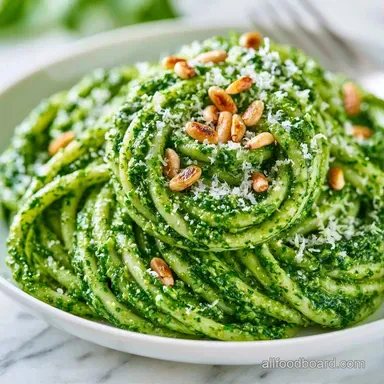
Pesto Pasta with Spinach in 20 Minutes
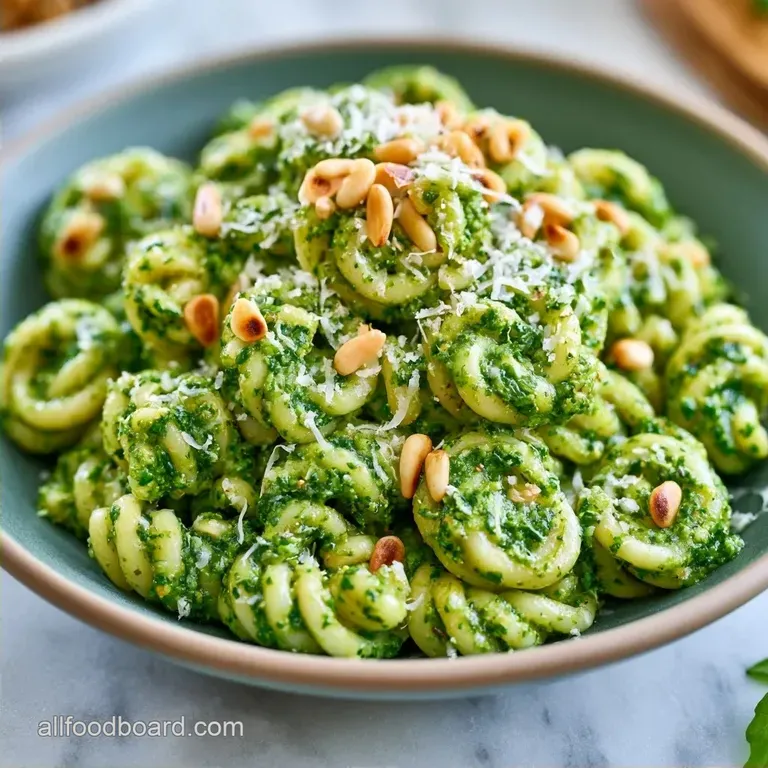
- Preparation: 10 min active + 10 min cook
- Taste Profile: A silky, herbal sauce paired with soft spinach
- Ideal for: A quick 20-minute evening meal
The scent of pine nuts browning in a hot skillet is my favorite signal that dinner is ready. That toasted fragrance blended with aromatic basil creates an instant sense of comfort in the kitchen.
Years ago, my attempt to stealthily add spinach to my toddler's meal failed miserably one stray leaf was enough to send the whole dish flying.
I eventually learned that the secret isn't camouflage, but integration. By blending some spinach directly into the pesto and stirring in fresh leaves at the finish, the transformation was complete. It stopped being "healthy pasta" and became "Hulk pasta," quickly turning into a household staple.
The result is a bright, zesty dish with a sauce that coats every strand of pasta rather than settling at the bottom. This Pesto Pasta with Spinach hits a perfect note, pairing savory Parmesan cheese with a splash of lemon for a refreshing finish.
Pesto Pasta with Spinach Specs
This recipe is built for speed and efficiency. You aren't spending an hour over the stove here, just enough time to boil water and pulse a few ingredients in a processor. It's a great baseline meal that you can dress up or keep simple depending on how much energy you have left after work.
Since we're using fresh greens, the goal is to keep the heat minimal at the end. We want the spinach to wilt, not turn into a mushy paste. This keeps the dish looking bright and tasting fresh.
| Method | Time | Texture | Best For |
|---|---|---|---|
| Stovetop | 20 mins | Glossy and fresh | Weeknights |
| Oven Baked | 45 mins | Cheesy and crusty | Sunday Dinner |
Gathering Your Essentials
To keep things stress free, I recommend prepping all your ingredients before starting the pasta. For a quick toast, heat the pine nuts in a dry pan for 3 minutes until they turn golden brown.
| Ingredient | What It Does | Best Swap |
|---|---|---|
| Fresh Basil | Primary flavor | Baby spinach (increase amount) |
| Pine Nuts | Creamy base | Walnuts or toasted almonds |
| Parmesan | Salt and depth | Pecorino Romano |
| Lemon Juice | Cuts the fat | Apple cider vinegar |
The Full List:
- 2 cups (60g) fresh basil leaves, packedWhy this? Core herb for authentic flavor
- 2 cups (60g) fresh baby spinachWhy this? Adds nutrients and color
- 1/3 cup (50g) pine nuts or walnuts, toastedWhy this? Adds essential fats and richness
- 2 cloves (6g) garlic, peeled
- 1/2 cup (50g) grated Parmesan cheese
- 1/2 cup (120ml) extra virgin olive oil
- 1 tbsp (15ml) fresh lemon juice
- 1/2 tsp (3g) salt
- 1 lb (450g) pasta (penne, fusilli, or linguine)
- 2 cups (60g) fresh baby spinach (for the final toss)
- 1/4 cup (60ml) reserved pasta water
- Salt and black pepper to taste
Tools You'll Need
While a basic setup works, a food processor ensures a smoother pesto. An immersion blender paired with a tall jar is another option, though it takes a bit more effort to get the nuts fully blended.
Make sure to use a large pot so the pasta has room to move and won't clump. I typically use a 6-quart pot for a pound of noodles. It's also helpful to keep a colander in the sink for quick draining.
Pro Tip: For those without a food processor, a mortar and pestle is a fantastic substitute. It takes more time, but it creates a rustic, chunky texture that many people prefer.
The Cooking Process
- Place the basil, baby spinach, toasted nuts, and garlic into a food processor and pulse until roughly chopped.
- With the processor running on low to medium, gradually drizzle in the olive oil until the sauce is smooth and velvety. Note: Gradual pouring keeps the oil from separating
- Fold in the lemon juice and Parmesan by hand, or pulse briefly to incorporate; set the mixture aside.
- Fill a big pot with water, add plenty of salt, and bring it to a boil.
- Boil the pasta as directed on the package, but remove the noodles one minute prior to reaching al dente.
- Reserve 1/2 cup of the starchy cooking water before pouring the pasta into a colander.
- Place the cooked pasta back into the pot over low heat.
- Mix in the prepared spinach pesto along with the other 2 cups of baby spinach.
- Stir in the saved pasta water a tablespoon at a time, tossing lightly, until the spinach has wilted and a glossy sauce coats the pasta.
Fixing Common Issues
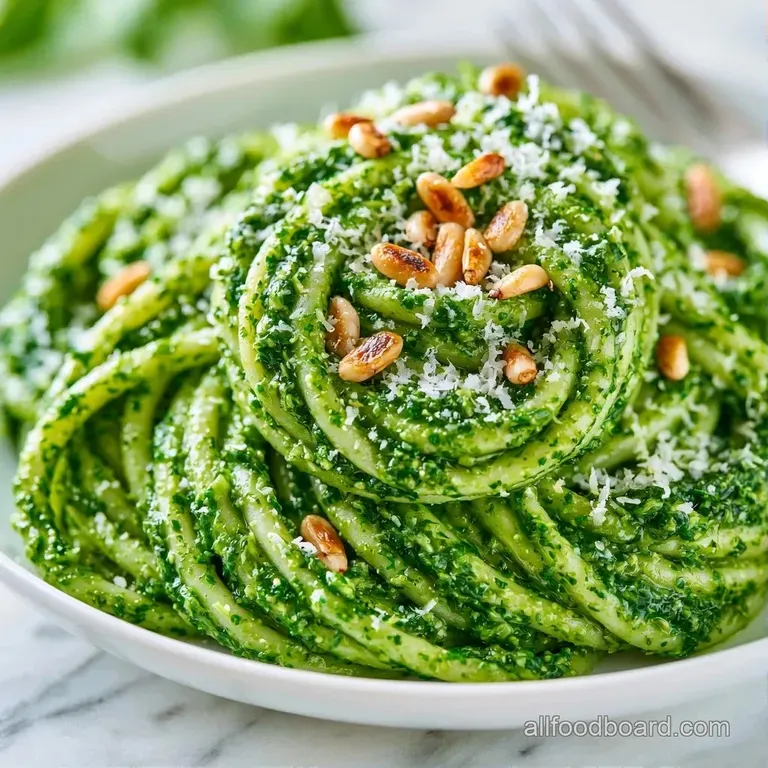
Keeping Your Sauce Bright
Pesto can lose its color and turn brown if exposed to too much heat or air. While lemon juice helps preserve the hue, you should seal the top of the sauce with plastic wrap if prepping in advance to block out oxygen. This ensures your Pesto Pasta with Spinach stays vibrant.
Avoiding Mushy Pasta
The quickest way to spoil this dish is by overcooking the noodles. Drain them while they still have a slight firmness. Because the final minute of cooking takes place in the pot with the sauce and pasta water, the noodles finish perfectly without becoming gummy.
Adjusting Sauce Consistency
If the sauce appears too thick or "clumpy," avoid simply adding more oil. Instead, stir in some of the reserved pasta water. The starch in the water assists the pesto in emulsifying, creating a silky coating that clings to the pasta rather than sliding off.
Fun Flavor Twists
To transform this into a complete dinner, adding a protein source works wonders. For a more filling meal, create a Pesto Pasta with Spinach and Chicken by tossing in grilled breast strips at the final stage. You could also use a Classic Basil Pesto Recipe as your starting point and then mix in extra spinach.
If you enjoy a sharper flavor, try a Pesto Pasta with Spinach and Sundried Tomatoes. The deep sweetness of the tomatoes balances the rich pine nuts perfectly. For a lighter, juicier contrast, consider adding some burst cherry tomatoes.
Decision Shortcut:
- Brighten it up? → stir in 1 tsp lemon zest
- Nut allergy? → replace pine nuts with toasted sunflower seeds
- More greens? → add 1 cup chopped kale to the blend
Keeping It Fresh
Store any leftover Pesto Pasta with Spinach in a glass container in the cooler. It stays good for about 3 days. I don't recommend freezing the cooked pasta, as the spinach can get watery when it thaws.
However, you can freeze the pesto itself. Pour it into ice cube trays, freeze, and then pop the cubes into a freezer bag. This is a great way to avoid waste if you make a double batch of sauce.
To use up the spinach stems from your prep, toss them into a vegetable stock or a smoothie. They have plenty of nutrients, even if they aren't as tender as the leaves.
Great Ways to Serve
This dish is quite rich, so I usually pair it with something acidic. A simple arugula salad with a lemon vinaigrette works well. If you're hosting a dinner, serving this alongside a Caprese Stuffed Chicken Breast makes for a complete Italian style spread.
For a more casual lunch, serve it at room temperature. Pesto actually develops a deeper flavor after it sits for a bit. Just add a tiny splash of olive oil if the noodles have absorbed too much sauce.
Finish the plate with a sprinkle of fresh Parmesan and a crack of black pepper. It adds a nice sharp contrast to the earthy greens.
Why This Works
The magic of Pesto Pasta with Spinach comes down to how we handle the heat. By adding the fresh spinach at the very end, we use the residual heat of the pasta to wilt the leaves. This keeps the nutrients intact and prevents the greens from overcooking.
The One Step Most People Skip:Pasta Water: The starchy water acts as a binder. It links the oil in the pesto with the pasta, ensuring the sauce is smooth and clings to every curve of the noodle.
Citric Acid: The lemon juice isn't just for taste. It helps stabilize the chlorophyll in the basil and spinach, which keeps the dish from turning brown too quickly.
Recipe FAQs
Can spinach be added to pesto pasta without ruining the flavor?
Yes, baby spinach blends seamlessly with basil for a vibrant, fresh taste.
Tip: Use baby spinach specifically for a milder and sweeter flavor profile.
Should spinach be cooked before adding it to the noodles?
No, the residual heat from the freshly drained pasta is sufficient.
Tip: Toss the fresh leaves in at the very end to prevent them from becoming mushy.
Could you swap basil for spinach in the pesto sauce?
Yes, spinach works as a primary base for a more earthy version of the sauce.
Tip: Add an extra squeeze of lemon juice to keep the green color bright.
How to make this pesto pasta?
Pulse basil, spinach, toasted nuts, and garlic in a processor, then slowly blend in olive oil.
Tip: Reserve some starchy pasta water to help the sauce create a glossy coating.
Which additions make the pesto pasta a complete meal?
Toasted pine nuts and Parmesan provide the necessary protein and richness.
Tip: Serve this alongside cheesy breadsticks for a more filling dinner.
Is it true that pesto requires both pine nuts and parmesan cheese?
Actually, no. You can use walnuts instead of pine nuts to achieve a similar crunch.
Tip: Toast your nuts in a dry pan first to deepen the overall flavor.
Does every pesto recipe require cheese?
No, this is a common misconception. You can simply omit the Parmesan for a dairy-free version.
Tip: Increase the salt slightly to compensate for the missing savory notes of the cheese.
Pesto Pasta with Spinach in 20 Minutes