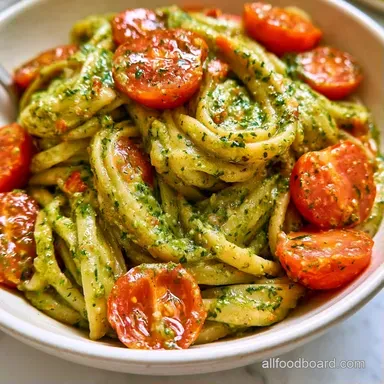
Pesto Pasta with Cherry Tomatoes in 20 Minutes
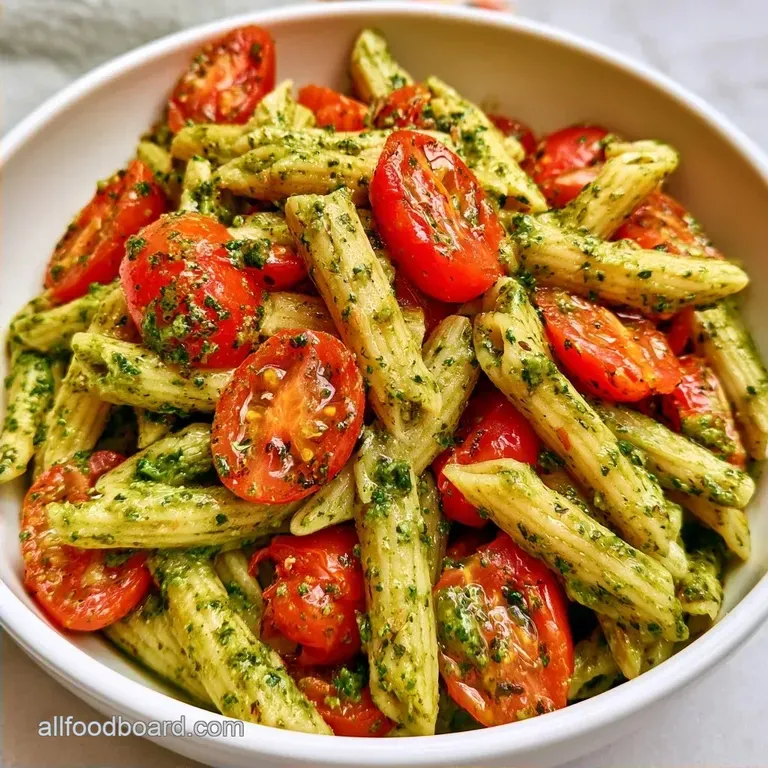
- Time: 5 min active + 15 min cooking
- Flavor/Texture Hook: Zesty basil paired with bursting, sweet tomatoes
- Perfect for: A 20 minute weeknight dinner
I recall making this for the first time on a drizzly Tuesday. I had a jar of pesto and some cherry tomatoes that were starting to soften. Rather than tossing them in raw, I let the tomatoes hit a hot pan until they popped. That simple tweak turned a plain bowl of noodles into a proper meal.
The recipe captures the coastal vibe of Liguria, the home of pesto. They prefer simplicity and fresh produce there, and this version brings that same spirit to a hectic Tuesday evening.
You can expect a result that feels light but fulfilling. Without a heavy cream base, the richness provided by the parmesan and olive oil makes the dish feel whole.
Why this works - Blistered Tomatoes: Applying high heat concentrates the sugars in the tomatoes, making them sweet and acidic. - Starch Binding: Using a splash of the pasta cooking water ensures the oil-based pesto sticks to the pasta instead of pooling at the bottom.
| Method | Time | Texture | Best For |
|---|---|---|---|
| Stovetop | 20 min | Bright and glossy | Fast weeknight meals |
| oven-roasted | 45 min | Deep and jammy | Slow Sunday dinners |
Pesto Pasta with Cherry Tomatoes
Let's start with the essentials. This recipe serves 6 people and takes exactly 20 minutes from the moment you start the heat to plating. No specialized equipment is necessary.
The Ingredient List
This dish excels because of how its diverse elements balance one another. The cherry tomatoes offer a zesty, acidic punch that cuts through the richness of the pesto's olive oil and pine nuts. While the garlic provides a sharp foundation, the red pepper flakes add a gentle heat to awaken the palate.
I suggest using penne or fusilli for the pasta. These specific shapes feature ridges and hollows that capture the pesto and bits of burst tomato. Smooth varieties like spaghetti don't hold the sauce as effectively, which can lead to the dressing pooling at the base of the dish.
What you'll need:
- 1 lb (450g) Penne, Fusilli, or Gemelli pastaWhy this? Ridged shapes grab the pesto more effectively
- 1 tbsp (15g) SaltWhy this? Ensures the noodles are flavorful throughout
- 2 cups (300g) Cherry tomatoes, halvedWhy this? They break down easily to create a natural sauce
- 2 tbsp (30ml) Extra virgin olive oilWhy this? Premium oil provides a peppery finish
- 3 cloves Garlic, thinly slicedWhy this? Thin slices brown more consistently than minced garlic
- 1/4 tsp (1.5g) Red pepper flakesWhy this? Adds a hint of warmth without being overly spicy
- 1 cup (240ml) Pesto sauceWhy this? The primary source of flavor
- 1/2 cup (120ml) Reserved pasta waterWhy this? Necessary for a silky sauce consistency
- 1/4 cup (30g) Grated Parmesan cheeseWhy this? Contributes salt and a nutty depth
- 1/4 cup (15g) Fresh basil leaves, tornWhy this? Fresh herbs revitalize the taste of the cooked pesto
Essential Cooking Tools
Basic kitchen equipment is all that's required here. A few simple tools are plenty. I recommend a large pot for the pasta to ensure the noodles have plenty of room to move, which keeps them from sticking.
The most critical piece of gear is a large skillet. Opt for a wide bottomed pan so the tomatoes can spread out and blister rather than steaming in a pile. To achieve a proper high heat sear on the tomatoes, stainless steel or cast iron works best.
The Cooking Process
- Start by boiling a big pot of well salted water.
- Drop in the pasta and boil as directed on the box until al dente. Note: It should have a slight bite in the center.
- Save 1 cup of the starchy pasta water, then drain the noodles.
- Place olive oil in a large pan over medium high heat.
- Toss in the halved cherry tomatoes and sauté for 3-5 minutes until the skins shrivel and they burst.
- Mix in the sliced garlic and red pepper flakes, cooking for 60 seconds until the garlic smells fragrant.
- Lower the heat.
- Combine the cooked pasta, pesto, and 1/4 cup of the saved water. Stir well until a glossy, velvety coating forms.
- Take the pan off the burner. Stir in the Parmesan and torn fresh basil.
- If the sauce is too thick, stir in a bit more pasta water.
Fixing Common Issues
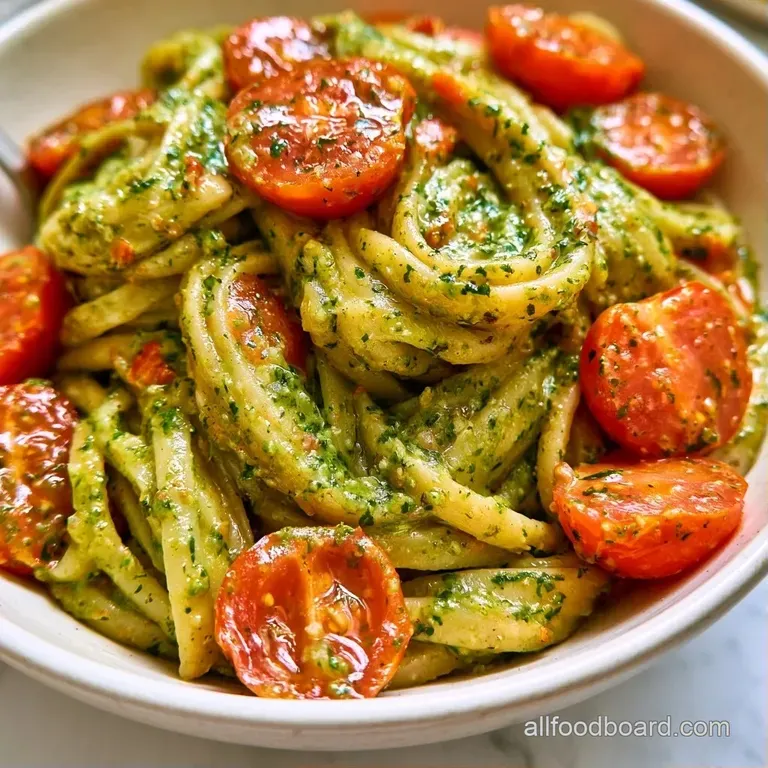
Fixing Dull Pesto Color
Pesto can turn a muddy brown if it gets too hot. The heat breaks down the chlorophyll in the basil. To keep that bright green look, always add the pesto at the very end over low heat or even after you've turned the burner off.
Dealing with Dry Pasta
If the noodles look like they aren't coated, it's usually because the sauce has thickened too fast. This is where your reserved pasta water comes in. Stir in one tablespoon at a time and toss again. Serious Eats' testing shows that the starches in this water help the sauce emulsify and cling to the pasta.
Balancing Overpowering Garlic
Sometimes a garlic clove is just too punchy. If the garlic taste is too strong, stir in an extra tablespoon of pesto or a tiny pinch of sugar. This helps mellow out the sharpness without changing the overall flavor of the dish.
Swaps and Variations
If you want to change things up, you can easily add protein. I like adding grilled chicken breast or sautéed shrimp right after the garlic step. For a meatless boost, some chickpeas tossed in with the tomatoes add a nice nutty texture. If you're looking for something even lighter, try using a high protein Banza pasta salad base for this recipe.
You can also swap the greens. If you don't have basil, baby spinach works well. Just fold the spinach in at the very end; the residual heat from the pasta will wilt it in about 30 seconds.
| Original Ingredient | Substitute | Why It Works |
|---|---|---|
| Penne | Fusilli | Similar shape, catches sauce well |
| Cherry Tomatoes | Grape Tomatoes | Same sweetness and pop |
| Parmesan | Pecorino | Saltier, adds a sharper kick |
Freshness and Storage
This Pesto Pasta with Cherry Tomatoes is best eaten immediately, but it keeps well if you have leftovers. Place the pasta in a sealed glass jar and keep it in the fridge for up to 3 days.
When you reheat it, don't use a microwave on high. The pesto can separate and get oily. Instead, put it back in a skillet over medium heat with a splash of water or a tiny bit of olive oil. This helps bring the sauce back together.
To avoid waste, take any leftover basil stems and toss them into a vegetable stock. If you have a few leftover tomatoes, roast them with some olive oil and salt to make a quick topping for toast the next morning.
Best Pairing Ideas
Since this dish is quite bright and zesty, it pairs well with something simple. A side of crusty garlic bread is a classic choice to soak up the leftover sauce. If you want something healthier, a simple arugula salad with a lemon vinaigrette provides a peppery contrast.
If you're in the mood for something similar but different, you might like a tomato basil pasta for a more traditional red sauce experience. For a full meal, adding a slice of toasted sourdough with a smear of ricotta cheese on the side makes it feel like a restaurant dish.
The One Crucial Step
The real trick is the reserved pasta water. The starch released from the noodles binds the oil in the pesto with the juices from the tomatoes, creating a sauce that actually sticks to the pasta.
Recipe FAQs
Can I put cherry tomatoes in pesto pasta?
Yes, they add a sweet, acidic balance. Halving them and sautéing for 3-5 minutes allows them to burst and create a jammy texture.
Which tomatoes work best for this recipe?
Cherry tomatoes are the ideal choice. Their sweetness mirrors the fresh profile found in caprese stuffed chicken, providing a bright contrast to the rich pesto.
Avoid which common mistakes when making pesto pasta?
Overheating the pesto is the most frequent error. Toss the sauce in on low heat or off the burner to prevent the basil from darkening and losing its fresh flavor.
How to make this pesto pasta recipe?
Boil pasta in salted water until al dente. Sauté halved cherry tomatoes in olive oil for 3-5 minutes, stir in garlic and red pepper flakes for 60 seconds, then toss with pesto and reserved pasta water on low heat.
Incorporating jarred pesto: what is the best method?
Stir it in at the very end on low heat. Use a splash of reserved pasta water to emulsify the sauce, ensuring it coats the noodles smoothly rather than clumping.
Is it true that all pesto contains cheese?
That's a myth. Many versions omit the parmesan entirely to create a dairy-free sauce.
Pesto Pasta with Cherry Tomatoes for 6