Perfect Crepe Recipe

- Time: Active 15 minutes, Passive 35 minutes, Total 50 minutes
- Flavor/Texture Hook: Shatter crisp buttery edges with a velvety, flexible center
- Perfect for: Slow weekend brunches, elegant desserts, or savory "complete" dinners
- Finally Nailing the Perfect Crepe Recipe Every Time
- The Science of Thin, Lacy Batters
- Official Specs for the Perfect Batch
- Pantry Staples for French Breakfasts
- Minimal Tools for Flawless Results
- Mastering the Sizzle and Swirl
- Troubleshooting Your Crepe Texture Issues
- Flavor Swaps for Every Cravings
- Storage Secrets for Busy Mornings
- Presentation and Classic Filling Folds
- Recipe FAQs
- 📝 Recipe Card
Finally Nailing the Perfect Crepe Recipe Every Time
You know that feeling when you're standing over the stove, and the first crepe sticks, the second is too thick, and by the third, you’re ready to just make scrambled eggs instead? We've all been there.
It took me years of torn edges and rubbery textures to realize that a great crepe isn't about luck, it's about the chemistry of the rest and the temperature of your pan.
Once you see those lacy, golden brown spots, often called "leopard spotting," you’ll realize how simple this actually is. This isn't just a pancake; it's a versatile canvas for everything from simple lemon and sugar to rich, savory ham and gruyère.
I’ve made every mistake in the book so you don't have to, from over mixing the flour to skipping the most important step: the butter.
We are going for that bistro style result where the edges are so thin they almost shatter, while the middle remains soft and foldable. If you've been searching for the Classic French Crepes recipe that actually works in a standard home kitchen, you’ve found it. Right then, let’s crack on and get your kitchen smelling like a Parisian street corner.
The Science of Thin, Lacy Batters
The secret to a crepe that doesn't snap when you fold it lies entirely in the gluten. When we mix flour with liquid, we start developing protein bonds. If those bonds are too tight, you get a rubbery crepe.
By letting the batter sit, we allow those proteins to relax and the starch granules to fully hydrate, which results in a much more tender bite.
The Science of Why it Works
Protein Relaxation: Resting the batter allows the gluten network to loosen, preventing a tough, chewy texture. Starch Hydration: The flour particles absorb the milk and water completely, creating a stable, thin emulsion that spreads evenly without clumping.
Beyond the rest, we use a specific ratio of fat to liquid. Using four eggs might seem like a lot, but they provide the structure and "lift" that keeps the crepe from becoming a soggy mess.
When that batter hits the hot pan, the water evaporates instantly, creating tiny steam pockets that give us that signature airy feel.
| Method | Total Time | Texture | Best For |
|---|---|---|---|
| Blender Mix | 40 minutes | Ultra smooth, no lumps | Busy mornings/Large batches |
| Hand Whisked | 50 minutes | Slightly more rustic | Small batches/No cleanup |
| Food Processor | 45 minutes | Very aerated | Extra light/fluffy crepes |
It's also worth noting that using a combination of milk and a bit of water is a trick I learned from a chef in Brittany. The milk provides the rich flavor and color through the Maillard reaction, but the water lowers the overall protein density just enough to make the edges crispier.
It’s a small tweak that makes a massive difference in the final mouthfeel.
Official Specs for the Perfect Batch
When you are aiming for consistency, the weight of your ingredients matters more than the volume. I’ve included both here because I know sometimes you just want to grab the measuring cups and go, but if you have a scale, use the grams for the perfect crepe recipe.
| Ingredient | Science Role | Pro Secret |
|---|---|---|
| 4 Large Eggs | Structural Binder | Use room temp eggs for a more stable emulsion |
| Browned Butter | Flavor & Fat | Toasting the milk solids adds a nutty, deep aroma |
| Whole Milk | Tenderness | The fat in whole milk creates a richer, silkier crumb |
The addition of the water helps the batter stay fluid. If you use only milk, the batter can sometimes feel a bit "heavy" and won't swirl around the pan as quickly as it needs to. We want a consistency that looks like heavy cream, not pancake batter.
Pantry Staples for French Breakfasts
You likely have everything you need in your cupboard right now. The beauty of this recipe is its simplicity. I always suggest using high-quality eggs and real butter because, with so few ingredients, there is nowhere for low quality flavors to hide.
- 1.5 cups all purpose flour (190g): Why this? Provides the perfect protein balance for structure without being overly heavy or dense.
- Substitute: White spelt flour for a slightly nuttier, sweeter undertone.
- 1.5 cups whole milk (350ml): Why this? Adds essential fats and sugars for the Maillard reaction (browning).
- Substitute: Oat milk (full fat) for a dairy-free option that still browns well.
- 0.5 cup water (120ml): Why this? Lightens the batter to ensure the edges become shatter crisp instead of chewy.
- Substitute: Sparkling water for an even lighter, airier texture.
- 4 large eggs (200g): Why this? The primary binder that gives the crepes their "stretch" and flexibility.
- Substitute: 1 cup of liquid egg substitute if needed, though fresh is better.
- 4 tablespoons unsalted butter (56g): Why this? Melted and browned butter provides a deep, toasted flavor and prevents sticking.
- Substitute: Refined coconut oil, though you'll lose that nutty brown butter scent.
- 0.5 teaspoon fine sea salt: Why this? Sharpens all the other flavors and balances the sugar.
- Substitute: Standard table salt, but use slightly less.
- 2 tablespoons granulated sugar: Why this? Aids in caramelization and adds a hint of sweetness for dessert styles.
- Substitute: Honey or maple syrup, but watch for faster browning.
- 1 teaspoon vanilla extract: Why this? Rounds out the aroma; skip this if making strictly savory crepes.
- Substitute: Almond extract for a Frangipane style flavor profile.
Minimal Tools for Flawless Results
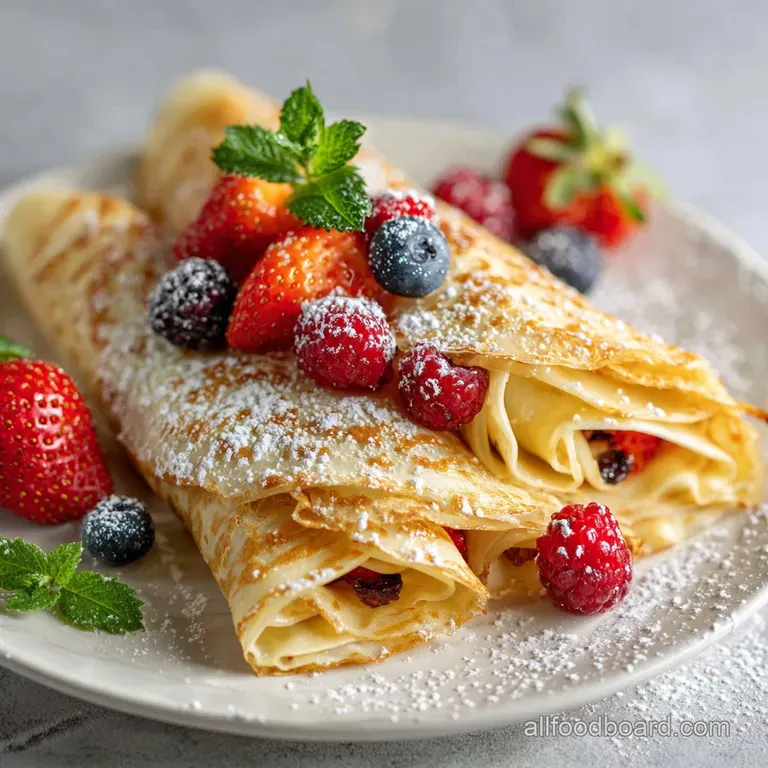
You don't need a fancy electric crepe maker or a specialized wooden spreader to make this work. Honestly, I find a good non stick skillet or a well seasoned cast iron pan works just as well, if not better, because of the heat retention.
A blender is my favorite shortcut. It ensures there are absolutely zero lumps of flour in the batter. If you don't have one, a sturdy whisk and a fine mesh strainer will be your best friends.
Passing the batter through a sieve is a step you shouldn't skip if you’re whisking by hand, as those tiny flour clumps will turn into white spots on your beautiful crepes.
Chef's Tip
Freeze your butter for 10 minutes before melting it in the pan to brown. The cold start allows the water in the butter to evaporate more slowly, giving the milk solids a better chance to toast evenly without burning.
Mastering the Sizzle and Swirl
This is the part where you need to be quick. Once the pan is hot, it's all about the wrist motion. If you're feeling adventurous, you might even pair these with a Homemade Breakfast Biscuits recipe for a full brunch spread, but the crepes usually steal the show.
- Brown the butter. Melt the 4 tablespoons of butter in a small saucepan over medium heat. Whisk constantly until it stops foaming and you see little brown specks at the bottom. Note: This adds a hazelnut like aroma that defines the perfect crepe recipe.
- Combine liquids. In a blender, add the milk, water, eggs, vanilla, and the slightly cooled brown butter.
- Add dry ingredients. Pour in the flour, sugar, and salt.
- The "Whirlwind" Mix. Pulse the blender for 20-30 seconds until the batter is completely smooth and bubbles form on top.
- The Cold Cure. Pour the batter into a bowl and let it rest in the fridge for at least 30 minutes. Note: This is non negotiable for the proteins to relax.
- Preheat the pan. Heat a 10 inch non stick skillet over medium heat and lightly brush with a tiny bit of butter.
- The Sizzle and Swirl. Pour about 1/4 cup of batter into the center and immediately tilt the pan in a circular motion until the batter thinly coats the entire bottom.
- The Golden Flip. Cook for about 60-90 seconds until the edges start to curl and the bottom is golden spotted. Flip with a thin spatula.
- Finish the second side. Cook for another 30 seconds. It won't need as long as the first side.
- The Steam Stack. Transfer the finished crepe to a plate and cover with a clean kitchen towel. Note: The trapped steam keeps them soft and prevents the edges from drying out.
Troubleshooting Your Crepe Texture Issues
Even with a great recipe, the first crepe is almost always a "tester." Don't let it discourage you. Usually, it's just the pan finding its "sweet spot" with the heat. If you're still having trouble, it's likely a temperature or a timing issue.
Fixing Thick Rubbery Crepes
If your crepes feel like a workout for your jaw, you likely over mixed the batter after it rested or didn't let it rest at all. Another culprit is a pan that isn't hot enough. If the batter sits too long before it starts cooking, it "steams" more than it sears, leading to a leathery texture.
Batter Clumping Issues
If you're whisking by hand and see white dots, your flour wasn't sifted or you added the liquid too fast. The easiest way to fix this is to pour the whole batch through a fine mesh sieve. It takes two minutes and saves the entire batch.
Tearing and Pan Sticking
This usually happens if you try to flip the crepe too early. Wait until those edges are visibly lifting away from the pan and look dry. If it's still sticking, you might need a tiny bit more fat in your pan or your heat is too high, causing the batter to bond to the surface before the proteins set.
| Problem | Root Cause | Solution |
|---|---|---|
| Crepe is too thick | Batter is too cold/viscous | Whisk in 1-2 tbsp of water to thin it out |
| Holes in the crepe | Pouring batter too slowly | Use a larger ladle and swirl faster |
| Too many bubbles | Over blending before cooking | Let the batter rest longer to let air escape |
Common Mistakes Checklist
- ✓ Skipping the 30 minute rest (leads to rubbery texture)
- ✓ Using a pan that is too cold (batter won't spread thin)
- ✓ Adding too much oil to the pan (greasy, heavy crepes)
- ✓ Over whisking the batter after the rest period
- ✓ Not covering the stack with a towel (they will dry out and crack)
Flavor Swaps for Every Cravings
While the base recipe is slightly sweet from the sugar and vanilla, it’s remarkably easy to pivot. If I’m making these for dinner, I’ll often skip the vanilla and sugar entirely. You can even sprinkle some dried herbs directly into the batter for a savory touch, much like you would for proper bistro homemade herby croutons.
| Original Ingredient | Substitute | Why It Works |
|---|---|---|
| Granulated Sugar (2 tbsp) | Coconut Sugar | Adds a caramel, toasted flavor but browns faster |
| Whole Milk (1.5 cups) | Cashew Milk | Provides a similar creaminess. Note: Slightly nuttier finish |
| AP Flour (1.5 cups) | Buckwheat Flour | Traditional for savory galettes. Note: Earthier, gluten-free option |
For a "Complete" savory version, I love cracking an egg right into the center of the crepe while it's still in the pan, adding ham and cheese, and folding the edges in to create a square. The heat from the pan cooks the egg white while keeping the yolk runny.
Storage Secrets for Busy Mornings
One of my favorite things about this recipe is that it's a meal prep dream. You can make a double batch on Sunday and have "fancy" breakfasts all week. If you have leftovers, just make sure they are completely cool before you stack them for the fridge, otherwise, they will stick together from the residual moisture.
Storage: Store stacked crepes in an airtight bag or container in the fridge for up to 3 days. If you're worried about sticking, place a small square of parchment paper between each one.
Freezing: These freeze beautifully. Wrap the stack tightly in plastic wrap and then foil. They stay fresh for up to 2 months. To thaw, just leave them in the fridge overnight.
Zero Waste Tip: If you have torn crepes or scraps, don't throw them away! Cut them into thin ribbons and toss them into a hot pan with a little butter and cinnamon sugar for "crepe noodles," or use them as a unique topping for a salad.
Presentation and Classic Filling Folds
How you fold your crepe says a lot about what's inside. For sweet fillings like Nutella, strawberries, or simple lemon and sugar, the "Triangle Fold" is king. It creates layers of filling and crepe in every bite.
If you're doing a thicker filling like caramelized apples or sautéed mushrooms, the "Cigar Roll" is much more practical.
Classic Sweet Folding Techniques
For the triangle, spread your filling over the whole surface, fold it in half, then fold it in half again. It’s the classic street food look. If you want to get fancy, try the "Fretted" style where you fold the sides in just an inch to create a square frame, leaving the beautiful filling visible in the center.
The Savory Complete Style
This is the heart of Brittany. You place your ham and cheese in the center, wait for the cheese to melt, and then fold the four sides over to form a square. The steam trapped inside warms the ham perfectly.
It’s a full meal that looks like it came from a high end bistro but actually only took you five minutes of assembly.
Whether you go sweet or savory, the key is not to overfill. A crepe is a delicate thing. If you load it up like a burrito, it loses that elegant, light quality we worked so hard to achieve with the batter rest and the brown butter. Keep it simple, keep it hot, and enjoy the sizzle!

Recipe FAQs
What is the secret to perfect crepes?
Resting the batter is the secret. Letting the batter sit for at least 30 minutes allows the gluten to relax and the starch to fully hydrate, preventing a tough texture and ensuring tender crepes.
What is the ratio for crepe batter?
Aim for a 1:1:1 ratio of flour to milk to water, adjusted by eggs and butter. A typical ratio is 1.5 cups flour, 1.5 cups milk, and 0.5 cup water, along with 4 eggs and 4 tablespoons of butter. This creates a thin, pourable batter with a consistency similar to heavy cream.
What are common crepes making mistakes?
Common mistakes include skipping the batter rest, using a pan that's too cold, and over mixing. Not letting the batter rest leads to rubbery crepes, a cold pan causes them to stick and not spread thinly, and over mixing after resting develops too much gluten.
What are the 3 ingredients in crepes?
The three core ingredients are flour, eggs, and liquid (milk or water). These form the base structure and consistency of the crepe batter.
How do I prevent my crepes from being thick and rubbery?
Ensure you rest the batter and don't over mix after resting. Resting allows the gluten to relax, and a gentle whisking preserves that relaxation. Also, make sure your pan is properly preheated so the batter sets quickly.
Why do my crepes stick to the pan?
This is usually due to the pan not being hot enough or not using enough fat. For perfectly seared crepes, preheat your pan to medium heat and use a thin layer of butter or oil. You can also practice the skill of swirling the batter quickly, similar to how we achieve crispiness in PanSeared Scallops with Lemon Butter Sauce: Crispy Crust.
Can I make savory crepes with this recipe?
Yes, absolutely. Simply omit the sugar and vanilla extract from the batter. You can also add dried herbs or a pinch of black pepper for an extra savory note, much like you would for proper bistro homemade herby croutons.
Perfect Crepe Recipe
Ingredients:
Instructions:
Nutrition Facts:
| Calories | 141 kcal |
|---|---|
| Protein | 4.7 g |
| Fat | 6.5 g |
| Carbs | 15.6 g |
| Fiber | 0.4 g |
| Sugar | 3.5 g |
| Sodium | 125 mg |
