Lemon Orzo Chicken: One-Pan Greek Sunshine Dish
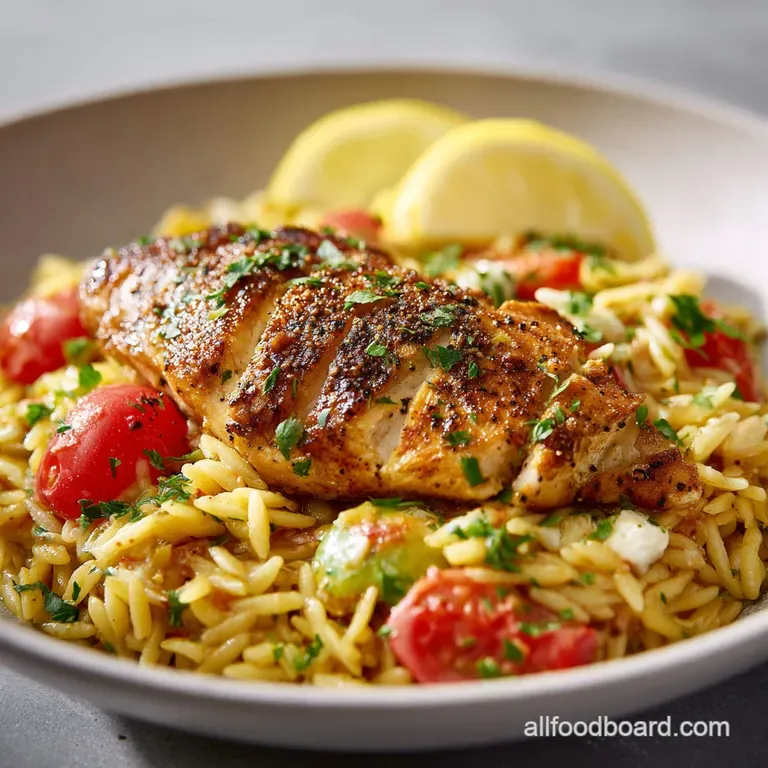
- The Ultimate One-Pan Lemon Orzo Chicken: A Midweek Mediterranean Escape
- Mastering the Texture: Why This Lemon Orzo Chicken Recipe Excels
- Essential Ingredients and Smart Swaps for Your Pantry
- Method: Building Flavor from Sear to Simmer
- Troubleshooting and Chef's Secrets for Perfect Lemon Orzo
- Handling Leftovers: Reheating and Preservation Guide
- Perfect Pairings: Completing Your Mediterranean Meal
- Recipe FAQs
- 📝 Recipe Card
The Ultimate One-Pan Lemon Orzo Chicken: A Midweek Mediterranean Escape
Can we talk about the smell of absolute sunshine hitting a hot pan? That first sizzle of lemon and oregano is what unlocks the magic of this dish. This is the ultimate lemon orzo chicken recipe, blending comfort food depth with sparkling Mediterranean freshness.
It instantly transports you, even if you’re just eating it standing over the counter after a chaotic workday.
The beauty of making easy lemon orzo chicken is that it is fundamentally a one-pan wonder. You sear, you simmer, and you stir, resulting in minimal cleanup and maximum flavor saturation.
It’s a lifesaver for busy weeknights when you need something cheap, fast, and satisfying, proving that true culinary luxury doesn't require complex techniques or a dozen dirty dishes.
I’ve made every mistake possible with pasta from gluey sauces to dry, sad pieces so trust me when I say I’ve engineered the process to be foolproof. Let’s dive into how to achieve the silkiest, most flavorful sauce and the tenderest protein for this specific creamy lemon orzo chicken recipe.
Mastering the Texture: Why This Lemon Orzo Chicken Recipe Excels
Most people treat the orzo in this kind of dish like regular boiled pasta, and that is exactly where things go wrong. We are borrowing a trick from the Greek technique for Kritharaki , treating the orzo like a tiny grain of rice in a risotto.
This is why this specific lemon orzo chicken recipe delivers such a superior, velvety texture compared to standard weeknight versions.
Why Lemon Orzo is the Perfect Weeknight Dinner Solution
It’s fast. It’s comforting. That’s the simple truth. The tiny shape of orzo means it cooks through quickly, absorbing all the liquid and flavor in about 10 to 12 minutes.
The goal is not just quick food, but a luxurious, deeply savory lemon orzo chicken meal that truly satisfies your craving for something bright and flavorful without taking two hours.
Unpacking the Flavor Profile: Bright, Creamy, and Tangy
The flavor profile here hinges on contrast. We start with the deep, savory notes created by searing the chicken and deglazing the pan, which provides the rich backbone. Then we layer in the bright, acidic punch of the fresh lemon juice and zest right at the end.
That final pop of citrus cuts through the richness, preventing the dish from feeling heavy.
Meet the Star: Orzo, the Pasta That Thinks It's Rice
Orzo is a rice shaped pasta, and because it’s made from wheat, it releases starch heavily when agitated. We harness this starch release. We don't need heavy cream because the orzo naturally thickens the sauce into an incredible, velvety consistency.
This starch based creaminess is key to what makes this dish so inherently comforting.
The Maillard Reaction: Achieving Deep Flavor on the Chicken
We sear the chicken hard and fast at the beginning for a reason. The Maillard reaction that beautiful chemical process creates hundreds of new flavor compounds on the surface of the protein, giving it depth and complexity.
Always reserve those golden brown bits, or fond , left at the bottom of the pan, because that is where the soul of the final sauce lives.
Starch Release Magic: Creating a Naturally Creamy Orzo Sauce
It’s a magic trick, honestly. By toasting the orzo first (a technique called tostatura in Italian cooking), we help the grains cook more evenly and keep them from dissolving entirely. Then, we add warm liquid slowly, stirring frequently.
This gentle agitation releases the perfect amount of starch to thicken the liquid into a perfectly glossy, spoon coating sauce.
Balancing Acidity: The Role of Fresh Lemon Zest and Juice
The rule of thumb for this dish is Zest First, Juice Last. The zest contains essential oils that carry the majority of the lemon flavor without the sharp acidity. Adding the zest earlier helps infuse the entire liquid base.
We save the fresh juice for the very end, off the heat, ensuring its acidity is vibrant and doesn't mellow or turn bitter from simmering.
Essential Ingredients and Smart Swaps for Your Pantry
The best lemon orzo chicken starts with great ingredients, but life happens, right? I am a huge proponent of smart substitutions, so don't sweat it if you're missing one item.
Choosing the Right Chicken Cut (and How to Prep It)
I usually opt for boneless, skinless breasts because they cook quickly, making them ideal for the one-pan method. If you use breasts, pound the thicker ends lightly so they are uniform this ensures even cooking.
You can absolutely use boneless, skinless thighs for deeper flavor; just remember they will need an extra 5– 7 minutes of simmering time at the end to cook completely.
| Ingredient | Smart Swap / Alternative |
|---|---|
| Chicken Breasts | Boneless, skinless thighs (richer flavor) |
| Orzo Pasta | Arborio rice (longer cook time, same creamy technique) or Ditalini (small pasta) |
| Shallots | Small yellow onion (use half a medium onion) |
| White Wine | Non-alcoholic white wine or an equal amount of chicken stock + 1 tsp white wine vinegar |
| Parmesan Cheese | Grated Pecorino Romano or nutritional yeast (for dairy-free) |
| Fresh Dill | Fresh chives or a tiny pinch of dried oregano (used sparingly) |
Selecting Quality Orzo and Pasta Alternatives
Orzo is key to the texture of this dish, but if you truly can't find it, consider another small pasta shape. Stelline or acini di pepe will work, but you must monitor the cooking time and liquid absorption closely.
If you want to lean into the creamy texture even further, Arborio rice (the risotto staple) is an excellent swap, though your total cook time will increase by about 10 minutes.
The Zest Factor: Maximizing Fresh Lemon Flavor
You cannot substitute bottled lemon juice here; I forbid it. We need the essential oils from the fresh zest to achieve that authentic, bright flavor. If you only have bottled juice, skip the zest entirely and try incorporating dried oregano instead.
That specific zing is non-negotiable for true lemon orzo chicken .
Stock vs. Broth: Impacting the Sauce Depth
I prefer low-sodium chicken stock because it has slightly more body and flavor than broth, and "low sodium" allows me to control the final seasoning precisely. Whichever you choose, make sure it is warm when you add it to the orzo.
Adding cold liquid stops the cooking process and can seize up your creamy sauce.
Chef's Note: Always have a little extra warm stock ready. Orzo's absorption rate varies based on humidity and pan size. It’s better to have too much liquid than to end up with a dry, sad starch lump.
Method: Building Flavor from Sear to Simmer
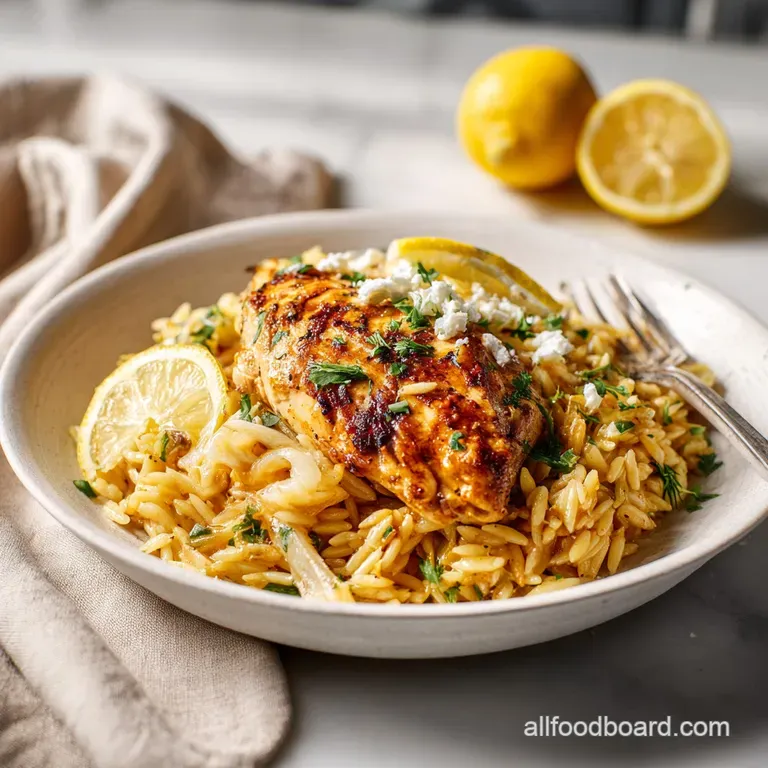
This isn't just about assembling ingredients; it’s about layering flavor. How to perfect your one-pan lemon orzo chicken relies entirely on patience during the first two phases.
Phase 1: Searing the Chicken for Golden Brown Crust
- Prep: Pat the chicken pieces completely dry. This is crucial for getting a hard sear. Season them generously with salt, pepper, and dried oregano.
- Sear: Heat 1 tbsp of olive oil in your pan over medium high heat until it shimmers. Sear the chicken for 3– 4 minutes per side. Do not move the chicken during this searing time. We are aiming for that deep, golden brown crust.
- Rest: Remove the chicken and place it on a clean plate. It will still be raw inside, but that’s okay. Keep all the beautiful brown bits and drippings in the pan.
Phase 2: Developing the Aromatic Base (Garlic and Oregano)
- Aromatics: Reduce the heat to medium low. Add the butter and let it melt. Sauté the finely minced shallots for about 3 minutes until they turn translucent and sweet. Add the minced garlic and cook for only 60 seconds don't let it brown!
Phase 3: Transforming Orzo into a Creamy Sauce ( Kritharaki Style)
- Toast: Add the 1 cup of dry orzo pasta to the aromatic base. Stir constantly for 2– 3 minutes until the orzo begins to look slightly translucent around the edges and you detect a nutty aroma. This simple step prevents gummy pasta later.
- Deglaze: Pour in the white wine (or stock/vinegar mixture). Use a wooden spoon to scrape up all those browned bits (the fond ) from the bottom of the pan. Let the wine simmer vigorously until it has almost completely evaporated.
- Simmer: Add 1 cup of the warm chicken stock. Stir until the liquid is nearly absorbed. Continue adding the remaining stock, ½ cup at a time, stirring gently between additions, until the orzo is al dente —chewy, not mushy. This is the stage where the lemon orzo chicken truly comes alive.
Phase 4: Finishing Touches and Final Plating
- Finish Cooking: Place the partially cooked chicken back on top of the simmering orzo. Cover the pan tightly and let it steam gently for 5– 8 minutes, or until the chicken reaches an internal temperature of 165°F (74°C).
- Rest & Slice: Remove the chicken and let it rest for 5 minutes before slicing it diagonally into thick strips.
- Final Seasoning: Take the pan off the heat. Stir in the lemon zest, lemon juice, grated Parmesan cheese, and 2 tbsp of extra virgin olive oil. The oil adds a crucial silkiness to the sauce.
- Garnish: Fold in the fresh parsley and dill. Adjust salt and pepper as needed. Serve the orzo immediately, topped with the sliced protein.
Troubleshooting and Chef's Secrets for Perfect Lemon Orzo
Everyone messes up sometime, including me! I remember the first time I made this and added the lemon juice too early; it tasted like bitter cleaner. Gross. A truly great lemon orzo chicken dish requires precise cooking and timing, so let’s talk about the common pitfalls.
Avoiding Gummy Orzo: The Critical Liquid-to-Orzo Ratio
If your orzo turns into one big, gelatinous block, you either didn't toast it enough in Phase 3, or you added too much liquid all at once. When cooking lemon orzo chicken , many fail here. The goal is to let the starch be released gradually as the liquid is stirred in and absorbed.
If it looks too thick near the end, add a splash of warm water or stock literally one tablespoon at a time until it achieves that perfect, creamy consistency.
Temperature Check: Ensuring Perfectly Cooked Chicken
Since the chicken is seared and then finished in the sauce, relying on sight alone is risky. Overcooked chicken is the enemy of any delicious meal. Use a meat thermometer to ensure the thickest part of the breast hits 165°F (74°C). When it hits temperature, take it out immediately and let it rest.
If the chicken is done but the orzo is still firm, simply remove the protein and continue stirring the orzo until it’s ready.
Correcting Too Much Acidity or Saltiness
If your lemon orzo chicken tastes too sharp due to over zealous lemon squeezing, don't panic. You have two easy fixes. First, stir in a tiny pinch (about ¼ tsp) of sugar to balance the acid.
Second, a splash of heavy cream or a bit more grated Parmesan can help neutralize the sour notes without dulling the overall brightness. For saltiness, add a peeled, raw potato wedge to the sauce during the final simmer; it will absorb some of the excess sodium, and you can simply discard it before serving.
Handling Leftovers: Reheating and Preservation Guide
Creamy, starchy leftovers are notoriously difficult to reheat without drying out or turning into concrete. Storing leftover lemon orzo chicken is absolutely possible, but you need a strategy.
Short Term Storage: Refrigerating Creamy Orzo
Cool the dish quickly and store it in an airtight container in the fridge for up to 3 days. The orzo will absorb almost all the remaining sauce as it cools, making the texture very dense when cold. This is normal.
Reheating Strategy: Restoring Moisture to Starchy Leftovers
Reheating leftover lemon orzo chicken requires patience and liquid. My preferred method is the stovetop: put the orzo (and sliced chicken) in a small saucepan over medium low heat. Add 1 2 tablespoons of chicken stock or water per serving.
Stir constantly as it heats through, adding more liquid until the creamy sauce is restored. Don't use the microwave unless you're desperate, and even then, cover it loosely with a damp paper towel to prevent rubbery results.
Is Freezing Recommended for Cream Based Pasta Dishes?
Technically, you can freeze leftover lemon orzo chicken , but I really don’t recommend it. When starches freeze and thaw, they often release moisture, resulting in a grainy or mushy texture. If you must freeze it, freeze the orzo and the chicken separately. Use the thawed orzo within a month, and be prepared to heavily rehydrate it with stock and fresh lemon juice upon reheating. If you’re looking for a great freezer meal, try my recipe for Instant Pot Chicken Tacos: Speedy 45 Min Shredded Filling instead!
Perfect Pairings: Completing Your Mediterranean Meal
Serving your beautiful lemon orzo chicken is the final, rewarding step. This dish is rich and bright, so you want sides that offer crunch, contrast, or complexity.
Green Bean Perfection
A simple side of blanched or roasted green beans or asparagus provides a wonderful snap that cuts through the creamy orzo. Tossing them lightly with a pinch of sea salt and a little more lemon zest is always a winner.
The Salad Factor
A Mediterranean meal demands fresh greens. I love pairing this with a quick salad of peppery arugula, shaved fennel, and pine nuts, dressed with a sharp Dijon vinaigrette. That bitterness is perfect against the savory chicken and rich sauce.
Aromatic Companions
If you enjoy the brightness of this dish, you might also adore the similar flavor profile in my Lemon Caper Chicken: Zesty Classic Ready in 35 Mins recipe it’s another fantastic midweek hero!
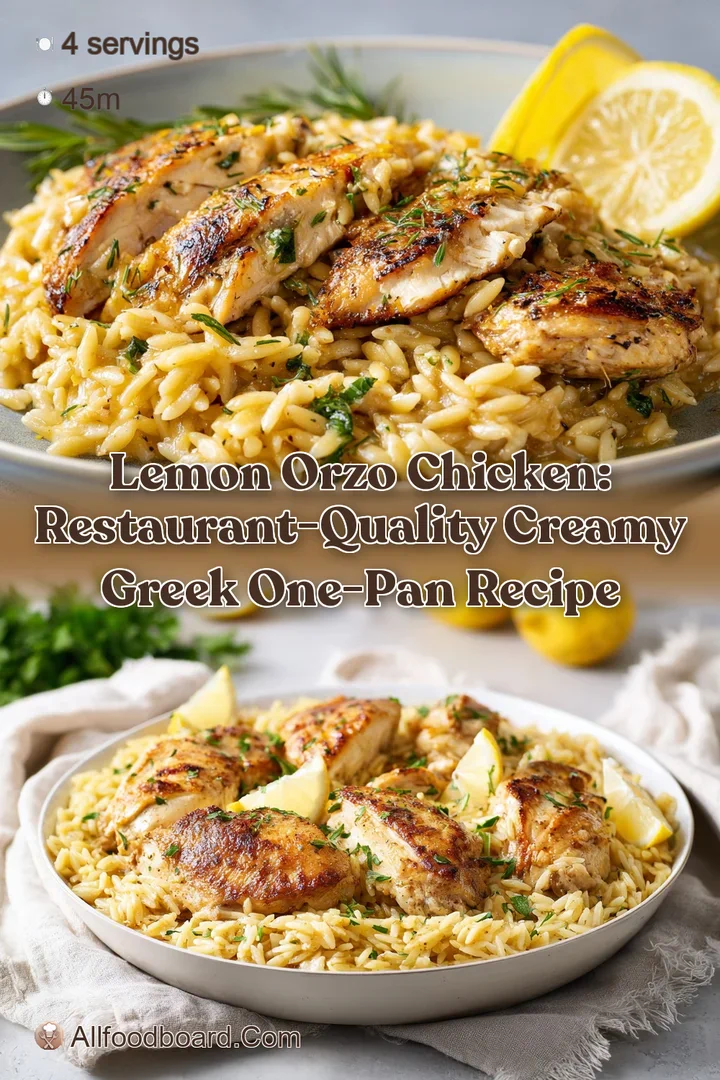
You will be addicted to this beautiful lemon orzo chicken because it proves that truly spectacular food can be effortless. Now go make some sunshine!
Recipe FAQs
Why is my orzo too sticky or has absorbed all the liquid too quickly?
This stickiness usually happens if the heat is too high, causing the liquid to evaporate rapidly before the pasta starch is fully dispersed, or if you failed to stir consistently. Ensure you are maintaining a gentle simmer, using hot broth, and stirring frequently during the last 5 to 7 minutes of cooking to create that desirable creamy risotto like texture.
Can I substitute chicken thighs for the breasts in this recipe?
Absolutely, chicken thighs are an excellent substitution for their richer flavor and superior moisture retention during the cooking process. Sear them the same way as the breasts, but note that they generally require 5 to 10 minutes longer cooking time to reach the safe internal temperature of 165°F (74°C).
What is the best way to store and reheat leftovers?
Store leftovers in an airtight container in the refrigerator for up to 3 days. When reheating, the orzo will be much thicker, so you must add a splash of extra chicken broth, water, or even cream to loosen the pasta before heating gently on the stovetop or in the microwave.
My chicken came out dry. What might have gone wrong?
Dry chicken is almost always a result of overcooking or starting with pieces that were sliced too thin. To prevent this, ensure your chicken pieces are uniformly thick and use an instant read thermometer to check that the internal temperature reaches exactly 165°F (74°C) before removing the pan from the heat.
I don’t have orzo pasta. What is a suitable alternative?
You can substitute orzo with other small, rice shaped pasta types like ditalini or small pearl couscous (Israeli couscous). Keep in mind that different starches absorb liquid at different rates, so you may need to adjust the amount of broth and overall cooking time slightly.
Can I make this dish dairy-free or vegan?
Yes, you can make this dairy-free by omitting the Parmesan cheese, or substituting it with nutritional yeast for a cheesy undertone. For a fully vegan meal, replace the chicken with hearty white beans or cubed zucchini, and use a quality vegetable broth instead of chicken broth.
Can I add fresh vegetables to the one-pan setup?
Certainly, Mediterranean additions like bell peppers, chopped zucchini, or artichoke hearts are excellent. Add hard vegetables during the last 15 minutes of the orzo simmer, while softer vegetables like spinach or cherry tomatoes should be stirred in during the final few minutes so they gently wilt but retain their structure.
One Pan Lemon Orzo Chicken

Ingredients:
Instructions:
Nutrition Facts:
| Calories | 849 kcal |
|---|---|
| Protein | 63.5 g |
| Fat | 43.6 g |
| Carbs | 44.8 g |
