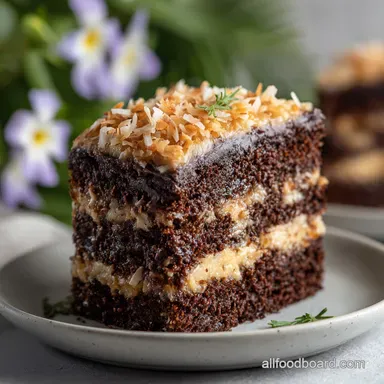
German Chocolate Cake with Coconut Pecan Frosting
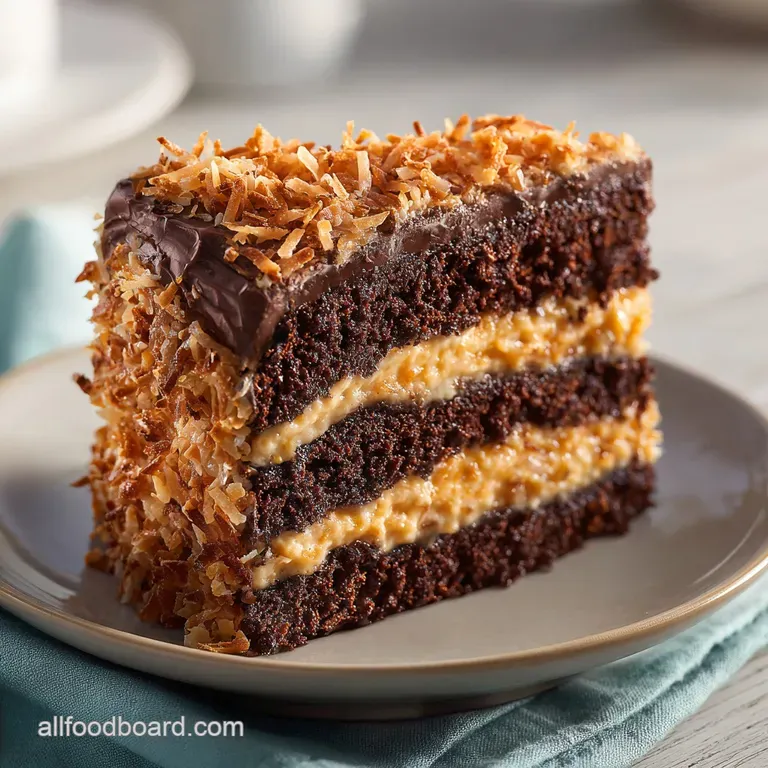
- Time:15 minutes active + 30 minutes baking = Total 1 hour 45 mins
- Flavor/Texture Hook: Silky cocoa layers with a chewy, nutty coconut topping
- Perfect for: Holiday celebrations, family reunions, or an impressive birthday surprise
- German Chocolate Cake with Coconut Pecan Frosting Recipe
- The Secret Texture Shift
- The Core Components
- Essential Baking Specs
- Step by Step Process
- Fixing Common Mistakes
- Troubleshooting Common Issues
- Adjusting Your Batch Size
- Busting Baking Myths
- Storage and Waste Tips
- Serving and Plating Styles
- Recipe FAQs
- 📝 Recipe Card
Have you ever wondered why a cake named after a country it doesn't even come from has become such a staple in our kitchens? It's a bit of a baking riddle, actually. This cake owes its name to Samuel German, who developed a specific type of dark baking chocolate, not to the nation of Germany.
There is something so nostalgic about that first scent of toasted coconut and browned butter filling the room, reminding me of flour dusted aprons and the kind of slow Sunday afternoons where the only goal was to get the frosting just right.
This is the only German Chocolate Cake with Coconut Pecan Frosting Recipe you'll ever need. I've spent way too many hours staring at lumpy custard and sunken cake centers to let you make those same mistakes.
We are going for a result that looks rustic yet intentional, with layers that feel like a warm hug and a frosting that doesn't slide off the sides like a melted candle.
You can expect a cake that is deeply chocolatey but not overly sweet, balanced by the saltiness of the pecans. The crumb is tight but tender, providing a sturdy foundation for that heavy, velvety coconut topping. Right then, let's get into how we actually make this happen without the stress.
German Chocolate Cake with Coconut Pecan Frosting Recipe
The secret to a cake that doesn't dry out is all in the acid. By using buttermilk, we're not just adding a slight tang, we're ensuring the cocoa powder doesn't seize up and the crumb stays soft for days. It's that classic combination of fat and acidity that creates a velvety mouthfeel.
But the real star is the frosting. This isn't your standard buttercream. It's essentially a coconut pecan custard. If you overcook it, it becomes a thick paste; undercook it, and your cake layers will slide apart. We're looking for that glossy, slow drip consistency that clings to the chocolate.
If you're in the mood for other cozy bakes, you might love my Pumpkin Cake recipe, which brings that same warmth but with a different spice profile.
The Secret Texture Shift
Buttermilk Interaction: The lactic acid in buttermilk breaks down gluten strands, ensuring the cake is tender rather than bready.
Cocoa Bloom: Mixing the cocoa with fats and liquids allows the flavor to "bloom," intensifying the chocolate notes.
Custard Thickening: Egg yolks and evaporated milk create a stable emulsion that holds the heavy pecans and coconut in place.
Sugar Caramelization: The brown sugar in the frosting melts into a syrup, giving it a deep, toffee like flavor.
| Cake Style | Pan Type | Texture | Best For |
|---|---|---|---|
| Traditional Layer | 9 inch Round | Tall and stately | Birthdays, Parties |
| Rustic Sheet | 9x13 Rectangle | Easier to slice | Casual Gatherings |
| Mini Bundt | Individual Molds | Cute and portable | Brunch, Gifts |
The choice between a layer cake and a sheet cake usually comes down to how much effort you want to put into the assembly. A layer cake looks stunning on a pedestal, but a sheet cake is far more relaxed.
The Core Components
To get that deep, dark color, I always use Dutch process cocoa. According to Serious Eats, Dutching the cocoa reduces acidity and creates a smoother, more mellow chocolate taste. If you use natural cocoa, the cake might be a bit lighter and tangier.
| Ingredient | Science Role | Pro Secret |
|---|---|---|
| Dutch Process Cocoa | Color & Base Flavor | Sift with flour to avoid bitter clumps |
| Buttermilk | Tenderizer | Use room temp to prevent butter from curdling |
| Evaporated Milk | Protein Stability | Whisk constantly to keep the custard glossy |
| Egg Yolks | Emulsifier | Add slowly to the frosting for a silky finish |
When picking your pecans, try to find the ones that still have a bit of their skin on. They provide a more rustic, earthy flavor that cuts through the sugar of the coconut.
Essential Baking Specs
For the cake, you'll need: - 2 cups (250g) all purpose flour Why this? Balanced protein for structure. Substitute: White whole wheat flour (adds nuttiness, denser crumb). - 3/4 cup (75g) dutch process cocoa powder Why this? Darker color, smoother taste.
Substitute: Natural cocoa (lighter color, more acidic). - 1 cup (200g) granulated sugar Why this? Standard sweetness/structure. Substitute: Cane sugar. - 1 1/2 tsp (7g) baking soda Why this? Reacts with buttermilk for lift.
Substitute: Baking powder (use 3x amount). - 1/2 tsp (3g) salt Why this? Balances chocolate bitterness. Substitute: Sea salt. - 1/2 cup (115g) unsalted butter, softened Why this? Richness and air. Substitute: Neutral oil (moister, less flavor).
- 2 large eggs, room temperature Why this? Binding and lift. Substitute: Flax eggs (denser, nuttier). - 1 cup (240ml) full fat buttermilk, room temperature Why this? Essential for tenderness. Substitute: Milk + 1 tbsp lemon juice.
- 1 tsp (5ml) pure vanilla extract Why this? Aromatic depth. Substitute: Maple extract.
For the coconut pecan frosting: - 1 can (12 oz / 354ml) evaporated milk Why this? Concentrated creaminess. Substitute: Heavy cream (richer, less stable). - 1/2 cup (100g) brown sugar, packed Why this? Molasses flavor. Substitute: Coconut sugar.
- 3 large egg yolks Why this? Thickens the custard. Substitute: Cornstarch slurry (lacks richness). - 1/2 cup (115g) unsalted butter Why this? Gloss and flavor. Substitute: Coconut oil.
- 2 cups (200g) sweetened shredded coconut Why this? Classic texture. Substitute: Unsweetened (reduce frosting sugar). - 1 cup (115g) chopped pecans Why this? Crunch and salt. Substitute: Walnuts.
- 1 tsp (5ml) pure vanilla extract Why this? Final flavor note. Substitute: Almond extract. - 1/4 tsp (1.5g) salt Why this? Cuts the sweetness. Substitute: Flaky salt.
| Original Ingredient | Substitute | Why It Works |
|---|---|---|
| Dutch Cocoa | Natural Cocoa | Still chocolatey. Note: Lighter color, slightly tangier taste |
| Buttermilk | Yogurt + Water | Similar acidity. Note: Slightly thicker consistency |
| Pecans | Walnuts | Similar crunch. Note: More bitter, less buttery flavor |
Trust me on this: don't use low-fat butter or skim milk. This is a decadent cake, and trying to "lighten" it usually just results in a crumb that feels dry and a frosting that won't set.
Step by step Process
Preparing the Foundation
Preheat your oven to 350°F (175°C). Grease two 9 inch cake pans and line the bottoms with parchment paper. This is a non negotiable step - nothing is worse than a cake that sticks to the pan after you've spent an hour on it.
Whipping the Batter
Cream the softened butter and granulated sugar in a bowl until the mixture is light and fluffy. Beat in the eggs one at a time, making sure each is fully incorporated before adding the next, then stir in the vanilla extract.
Mixing the Dry and Wet
Sift together the flour, cocoa powder, baking soda, and salt. Alternately add the dry ingredients and buttermilk to the butter mixture, stirring until just combined. Stop stirring the moment the streaks of flour disappearNote: overmixing creates a tough, bready cake.
Baking to Perfection
Divide the batter evenly between the two pans. Bake for 30-35 minutes until a toothpick inserted in the center comes out clean. You'll smell a deep, cocoa aroma filling the kitchen just before they're done.
The Cooling Phase
Cool cakes in pans for 10 minutes, then transfer to a wire rack to cool completely. If you frost a warm cake, the custard will just melt and slide right off.
Simmering the Frosting
In a medium heavy bottomed saucepan over medium heat, whisk together evaporated milk, brown sugar, egg yolks, butter, and salt. Stir constantly for 10-12 minutes until the mixture thickens into a glossy custard. It should coat the back of a spoon.
Adding the Texture
Remove the custard from heat and fold in the shredded coconut, chopped pecans, and vanilla extract. Let it cool slightly so it becomes easier to spread.
Assembling the Layers
Place one cooled cake layer on a plate. Spread a generous amount of coconut pecan frosting over the top. Top with the second cake layer and cover the top and sides with the remaining frosting. Don't worry if it looks a bit messy; that's part of the rustic charm.
Chef's Note: For a more intense flavor, toast your pecans in a dry pan for 3 minutes before adding them to the frosting. It creates a shatter crisp texture that contrasts beautifully with the silky custard.
Fixing Common Mistakes
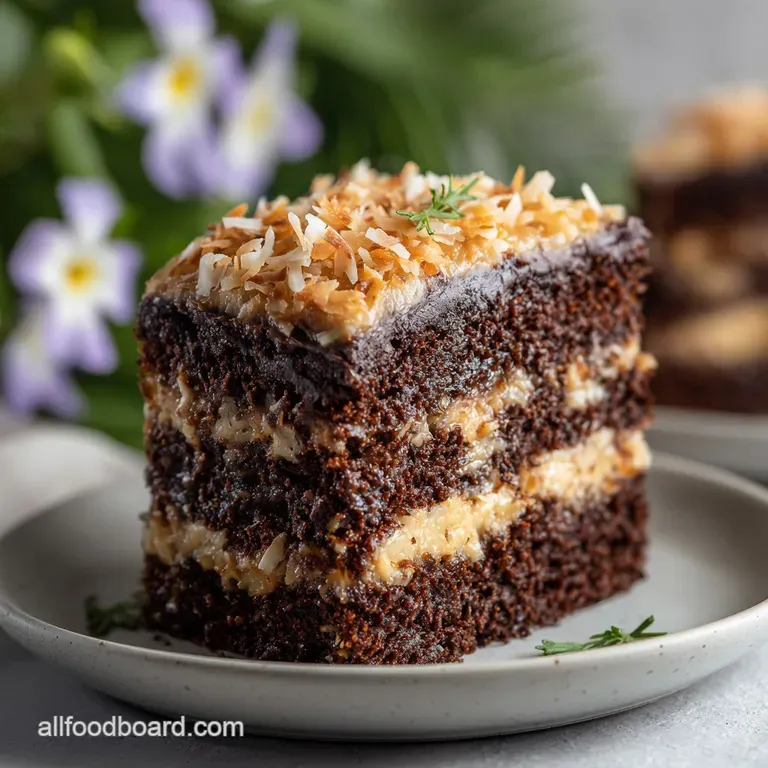
Troubleshooting Common Issues
| Issue | Solution |
|---|---|
| Why Your Cake Sank | Usually, this is because the oven door was opened too early or the baking soda was expired. If the structure hasn't set, the air bubbles collapse. |
| Why Your Frosting is Lumpy | This happens if the egg yolks aren't whisked in properly or the heat was too high, scrambling the eggs. Keep the heat medium and the whisk moving. |
| Why Your Cake is Dry | Overbaking is the main culprit. Start checking the cake at 28 minutes. Even two extra minutes can turn a velvety crumb into a dry one. |
Common Mistakes Checklist
- ✓ Check that eggs and buttermilk are truly room temperature.
- ✓ Avoid over mixing the batter once the flour is added.
- ✓ Use a heavy bottomed pan for frosting to prevent scorching.
- ✓ Ensure cakes are 100% cool before assembly.
- ✓ Line the bottom of the pans with parchment.
Adjusting Your Batch Size
If you're baking for a small group, you can halve this recipe. For a half batch, beat one egg in a small bowl and use exactly half of it. Use 4.5 inch or 6 inch pans and reduce the baking time by about 20%, checking frequently.
For a double batch (making two cakes), I recommend working in batches unless you have a professional grade stand mixer. If you're baking more layers at once, lower the oven temperature to 325°F (160°C) and extend the time by 5-10 minutes to ensure even heat distribution.
Remember that when scaling up, you don't need to double the salt or vanilla exactly - 1.5x is usually plenty to maintain the balance. If you're looking for more chocolatey inspiration, you might enjoy a Chocolate Peppermint Bundt Cake, though it's a bit more festive.
Busting Baking Myths
Myth: You must use a stand mixer for a fluffy cake. Truth: A hand mixer or even a sturdy whisk works just fine. The key is the process of creaming the butter and sugar, not the machine you use to do it.
Myth: Adding extra sugar makes the cake moister. Truth: Too much sugar can actually draw moisture out of the flour, leaving the cake feeling sticky but dry. The moisture comes from the buttermilk and butter, not the sugar.
Myth: You can't freeze a layer cake. Truth: You absolutely can. In fact, freezing the cake layers individually wrapped in plastic wrap makes them much easier to handle and frost.
Storage and Waste Tips
Store this cake in an airtight container in the fridge for up to 5 days. Because of the custard based frosting, it doesn't stay safe at room temperature for more than a day. To serve, let it sit out for 30 minutes so the butter in the cake softens back up.
For the freezer, wrap individual slices in parchment paper and then foil. They'll stay fresh for 3 months. Thaw in the fridge overnight before bringing to room temperature.
Zero Waste Tips:
- Coconut Water: If you have leftover coconut milk from other recipes, use it to soak the cake layers slightly before frosting for extra moisture.
- Cake Scraps: If you trim the tops of your cakes to make them flat, don't toss the scraps! Crumble them into a jar with a bit of frosting to make "cake pops" or a trifle.
- Buttermilk Substitute: If you have a tiny bit of buttermilk left, add it to your next batch of pancakes for a fluffier result.
Serving and Plating Styles
Depending on who you're serving, you can change the look of this cake from "homey" to "high end." Since the frosting is naturally rustic, it's a great canvas for different styles.
The Simple Slice Cut a generous wedge and serve on a plain white plate. Let the layers speak for themselves. This is perfect for a cozy family dinner where the focus is on the taste.
The Polished Presentation Frost the cake smoothly, then press toasted coconut flakes and halved pecans onto the sides of the cake. Place a single, perfect pecan half on top of each slice before serving.
The Restaurant Approach Instead of a full cake, serve a "deconstructed" version. Place a neat cylinder of chocolate cake in the center of the plate, pipe a precise quenelle of coconut pecan frosting on top, and garnish with a fresh raspberry and a mint leaf.
| Level | Key Element | Vibe |
|---|---|---|
| Simple | Natural Layers | Homey/Rustic |
| Polished | Coconut Rim | Celebration |
| Restaurant | Plated Quenelle | Modern/Fancy |
Right then, you're all set to tackle this beauty. Just remember to take your time with the frosting and don't rush the cooling process. Once you see those velvety layers and taste that nutty crunch, you'll see why this remains a classic. Happy baking!
Recipe FAQs
How to prevent the cake from drying out?
Start checking for doneness at 28 minutes. Overbaking is the primary cause of dryness, and even two extra minutes can turn a velvety crumb into a dry one.
How to avoid lumpy frosting?
Keep the heat medium and whisk constantly. Lumps happen if the egg yolks aren't whisked in properly or if the heat is too high, which scrambles the eggs.
Can this cake be stored at room temperature?
No, keep it refrigerated. The custard based frosting is not safe at room temperature for more than a day. Since you are exploring German classics, you might also enjoy our homemade spaetzle.
How to freeze the cake for later?
Wrap individual slices in parchment paper and then foil. This protects the cake from freezer burn and keeps it fresh for up to 3 months.
Is it true that opening the oven door during baking won't cause the cake to sink?
No, this is a common misconception. Opening the door too early can cause air bubbles to collapse before the cake structure has set.
How to bring the cake to the ideal serving temperature?
Let the cake sit out for 30 minutes. This allow the butter in the cake to soften back up, restoring the proper texture.
How to ensure the frosting reaches the correct thickness?
Stir the mixture constantly for 10-12 minutes over medium heat. This steady whisking transforms the evaporated milk and egg yolks into a thick, glossy custard.
German Chocolate Cake Recipe