Rotisserie Chicken with Garlic and Herbs
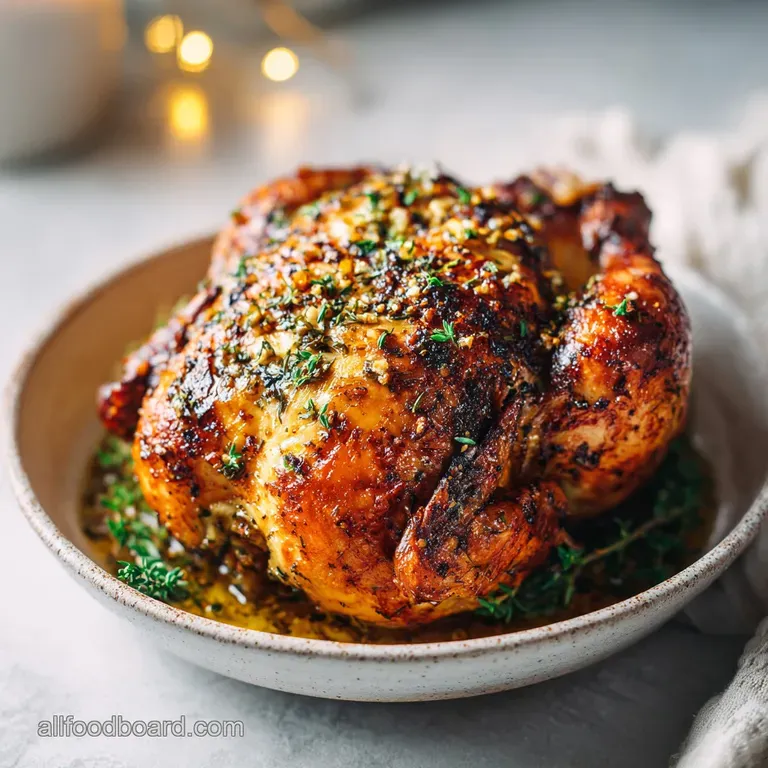
- Time: Active 15 minutes, Passive 75 minutes, Total 90 minutes
- Flavor/Texture Hook: Shatteringly crisp skin with a buttery, woodsy garlic herb finish
- Perfect for: Sunday family dinners, impressive meal prep, or holiday centerpieces
- Make-ahead: Prepare the herb butter up to 3 days in advance
- Golden and Crackling Rotisserie Chicken Recipe with Garlic and Herbs
- Heat Mechanics and Moisture Management
- Component Role Analysis
- Choosing the Best Aromatics
- Minimal Tools for a Professional Roast
- Step by Step Guide to Your Best Chicken
- How to Save Your Bird from Common Errors
- Tailoring the Recipe for Your Needs
- Kitchen Folklore Debunked
- Storage and Zero Waste Strategies
- Best Sides for Herbed Chicken
- Very High in Sodium
- Recipe FAQs
- 📝 Recipe Card
Golden and Crackling Rotisserie Chicken Recipe with Garlic and Herbs
There is a specific sound that happens in my kitchen about twenty minutes after the bird hits the oven. It is a rhythmic, frantic sizzle, like tiny droplets of rain hitting a hot tin roof.
That is the sound of the herb butter rendering out of the skin, mingling with the chicken fat, and frying the exterior of the bird to a perfect crunch. I used to think you needed a spinning spit and a specialized machine to get that rotisserie finish, but honestly, it is all about heat management and a very specific "dry skin" policy.
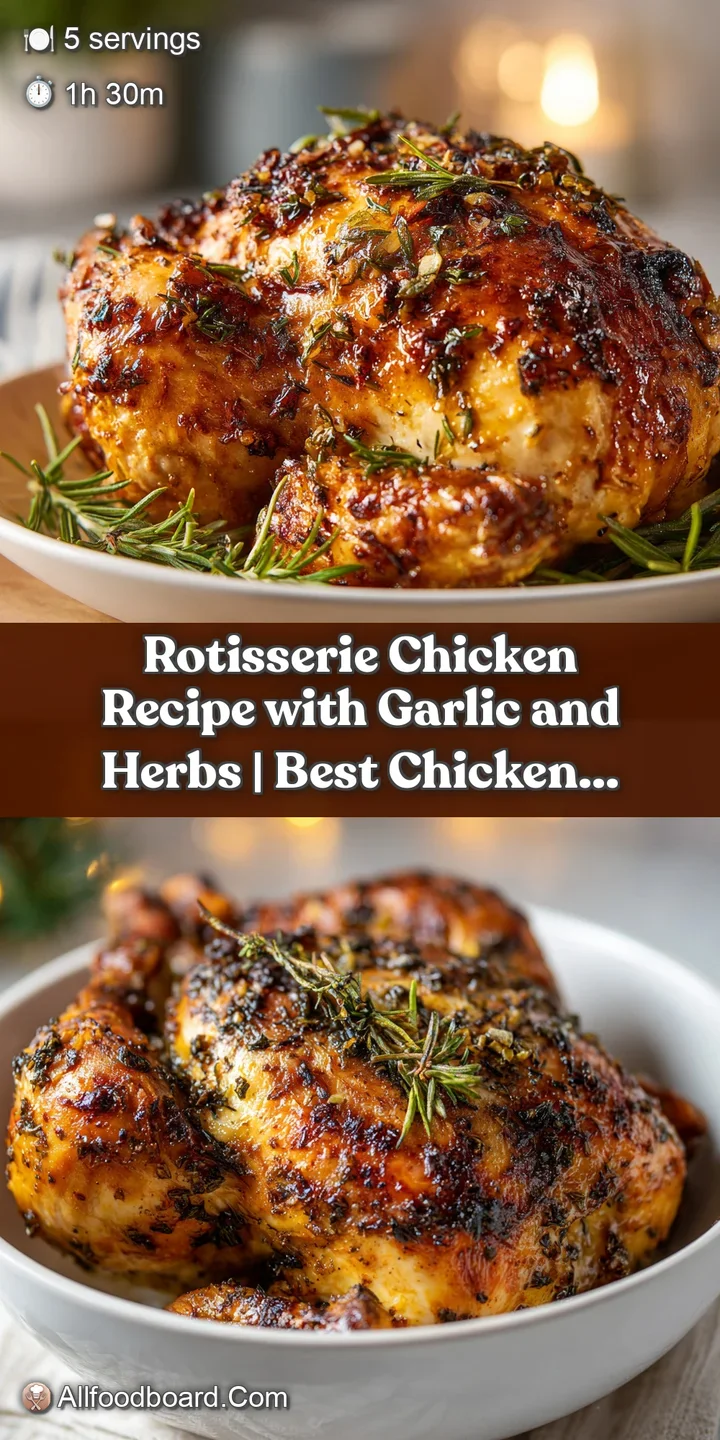
Discover your new go to Rotisserie Chicken Recipe with Garlic and Herbs for a truly memorable meal.
The first time I tried this, I didn't realize how much moisture was my enemy. I left the bird a bit damp, and instead of a roast, I got a beige, steamed disappointment. It was a lesson learned the hard way.
Now, I treat the chicken skin like parchment paper; it has to be bone dry before that compound butter even touches it. When you pull it out of the oven, the aroma of toasted rosemary and charred garlic is enough to bring everyone into the kitchen without you saying a word.
It's the kind of meal that feels like a big, warm hug for the whole family.
We are going for a texture that is velvety on the inside and brittle on the outside. This isn't just about cooking meat; it is about creating a contrast of sensations. The smoked paprika gives it that "store-bought" glow but with a depth of flavor you can only get at home.
Trust me, once you hear that skin crack under your carving knife, you will never look at a plastic domed supermarket chicken the same way again. It's a simple process, but the details in the preparation are what turn a basic roast into something people talk about for weeks.
Heat Mechanics and Moisture Management
High Heat Surface Trigger
The 230°C (450°F) start isn't just for show; it causes the fat in the skin to render quickly. This rapid heat causes the water in the skin to evaporate instantly, which is the only way to get that brittle, flaky texture rather than a rubbery one.
Internal Steam Chamber Construction
By stuffing the cavity with lemon and fresh herbs, we create a moist micro environment inside the bird. As the lemon heats up, it releases citrus scented steam that penetrates the meat from the inside out, keeping the delicate breast fibers from drying out while the outside busters.
Compound Butter Barrier
The herb butter acts as a physical shield between the direct oven air and the meat. By tucking it under the skin, you are essentially "frying" the meat in garlic infused fat as it roasts, which prevents the protein from toughening.
| Thickness | Internal Temp | Rest Time | Visual Cue |
|---|---|---|---|
| Thickest part of thigh | 74°C (165°F) | 15 minutes | Juices run clear when poked |
| Deepest breast lobe | 71°C (160°F) | 15 minutes | Meat is opaque and firm |
| Wing joint | 74°C (165°F) | 15 minutes | Bone moves easily in socket |
The resting period is probably the most ignored step in any roast, but it's where the magic happens. When the bird is in the oven, the heat pushes all the juices toward the center. If you cut it the second it comes out, all that flavor just floods onto your cutting board.
Waiting fifteen minutes allows the muscle fibers to relax and soak those juices back up, ensuring every slice is as moist as the first.
Component Role Analysis
| Ingredient | Science Role | Pro Secret |
|---|---|---|
| Unsalted Butter | Fat soluble flavor carrier | Use European style butter for higher fat content |
| Smoked Paprika | Sugar caramelization & color | Adds a "rotisserie" hue without a heat lamp |
| Kosher Salt | Protein denaturant | Draws out surface moisture for better browning |
| Fresh Rosemary | Volatile oil infusion | Bruise the leaves before chopping to release oils |
While you can technically use any salt, Kosher salt has larger grains that are easier to distribute evenly. If you use fine table salt, you run the risk of over salting because it packs more tightly into a spoon. If you are looking for a way to use up leftover chicken later in the week, these Zesty Thai Chicken Wraps are a brilliant way to transform the cold meat into something entirely different.
Choosing the Best Aromatics
- 1 whole roasting chicken (approx. 1.8 kg): Look for a bird with intact skin and no bruising. Why this? The 1.8kg size ensures the meat cooks before the skin burns.
- Substitute: A large capon or a small turkey (adjust cook time significantly).
- 113g Unsalted butter, softened: This is the base of our flavor delivery system. Why this? Softened butter allows for even mixing and easier spreading under skin.
- Substitute: Ghee or duck fat for a higher smoke point.
- 4 cloves Garlic, minced into a paste: Essential for that classic rotisserie profile. Why this? A paste distributes flavor better than chunks, which can burn.
- Substitute: 1 tablespoon of garlic confit for a milder, sweeter taste.
- 4g Fresh rosemary, finely chopped: The piney notes cut through the richness of the chicken fat. Why this? Rosemary holds its flavor well under high oven temperatures.
- Substitute: Dried rosemary, but use only 1.5g as it is more concentrated.
- 4g Fresh thyme leaves: Adds a subtle, earthy floral note that rounds out the garlic. Why this? Thyme is the classic partner for poultry and lemon.
- Substitute: Fresh oregano for a more Mediterranean profile.
- 5g Smoked paprika: This provides the deep mahogany color we associate with a rotisserie. Why this? Adds a hint of wood smoke flavor without needing a grill.
- Substitute: Sweet paprika if you prefer zero smoke flavor.
- 1 medium Lemon, halved: The acid brightens the heavy fats and creates steam. Why this? Lemon juice tenderizes the meat from the inside during the roast.
- Substitute: A small orange for a sweeter, floral aroma.
- 12g Kosher salt: The most important seasoning for both flavor and texture. Why this? Large crystals help create a "crust" on the exterior.
- Substitute: 8g of sea salt (finer grains require less volume).
- 5g Cracked black pepper: Adds a necessary bite to the finish. Why this? Freshly cracked pepper has volatile oils that pre ground lacks.
- Substitute: White pepper for a more fermented, funky heat.
Minimal Tools for a Professional Roast
You don't need a high end rotisserie oven to make this work. In fact, I prefer using a heavy cast iron skillet or a dedicated roasting pan with a V rack. The V rack is important because it lifts the bird up, allowing hot air to circulate under the bottom.
If the chicken sits directly on the pan, the bottom skin will end up soggy and greasy from sitting in the rendered fat.
If you don't have a V rack, you can actually create a "natural" rack by slicing thick rounds of onion and potato and lining the bottom of your pan with them. The chicken sits on the vegetables, elevating it just enough for the air to flow, and you get the added bonus of chicken fat-roasted potatoes for dinner.
You will also need a sharp chef's knife for carving and some kitchen twine if you want to truss the bird, though that is optional if you're in a hurry.
step-by-step Guide to Your Best Chicken
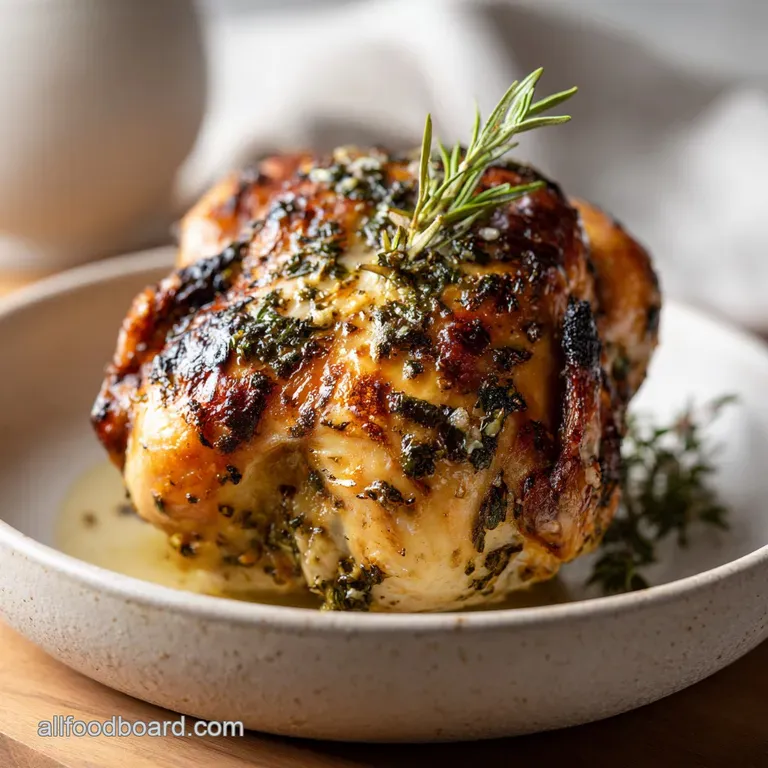
- Prep the bird. Pat the chicken extremely dry with paper towels to ensure a crispy skin. Note: Any moisture left on the skin will turn to steam and prevent browning.
- Create skin pockets. Use your fingers to gently loosen the skin over the breast and thighs to create a pocket for the herb butter. Do this slowly to avoid tearing.
- Mix the compound butter. In a small bowl, combine the softened 113g unsalted butter, minced garlic, 4g rosemary, 4g thyme, 5g smoked paprika, and 5g garlic powder.
- Apply the butter. Spread the compound butter generously under the loosened skin and over the entire exterior of the bird. Ensure the breast meat is fully covered.
- Season the exterior. Season the outside thoroughly with 12g kosher salt and 5g cracked black pepper.
- Stuff the cavity. Stuff the chicken cavity with the halved lemon, halved head of garlic, and 4 sprigs of parsley. Note: This creates the internal steam that keeps the meat moist.
- Position for roasting. Place the bird on a V shaped roasting rack inside a roasting pan. The elevation is key for air circulation.
- Initial over high heat blast. Roast at a over high heat start of 230°C (450°F) for 15 minutes to trigger the Maillard reaction. Listen for the sizzle.
- Finish the roast. Reduce heat to 190°C (375°F) and continue roasting for approximately 60 minutes or until the internal temperature reaches 74°C (165°F).
- The critical rest. Allow the chicken to rest for at least 15 minutes before carving. This allows the juices to redistribute back into the fibers.
How to Save Your Bird from Common Errors
One of the biggest frustrations people have with this Rotisserie Chicken Recipe with Garlic and Herbs is when the skin looks beautiful, but the joints are still pink. This usually happens if the chicken was too cold when it went into the oven.
If you can, let the bird sit on the counter for about 30 minutes before you start prepping it. This takes the chill off the bones and ensures a more even cook from the center out.
Another common issue is the garlic in the butter burning. Because we use a over high heat start, bits of garlic on the very surface can turn bitter. This is why I recommend mincing the garlic into a very fine paste or even using a microplane.
The finer the garlic, the more it integrates into the butter and the less likely it is to scorch and ruin that silky flavor profile.
Why Your Chicken Skin Is Rubbery
If the skin isn't crackling, it's almost always a moisture issue. Even "air chilled" chickens from the store often have a bit of liquid in the packaging. If you have the time, pat it dry and leave it uncovered in the fridge for 2 hours before cooking.
This "air dries" the skin, making it paper thin and ready to shatter once the heat hits it.
| Problem | Root Cause | Solution |
|---|---|---|
| Acrid or bitter smell | Garlic on the skin surface is burning | Rub the garlic paste under the skin instead of on top |
| Dry, stringy breast meat | Oven temp was too high for too long | Use the 230°C blast for 15 mins only, then drop to 190°C |
| Soggy bottom skin | Chicken sat in its own juices | Use a V rack or a bed of vegetables to lift the bird |
Common Mistakes Checklist
- ✓ Forgot to pat the cavity dry (steam escapes and softens the skin)
- ✓ Skipping the resting period (all the juice runs out on the board)
- ✓ Using cold butter (it won't spread and will clump under the skin)
- ✓ Not seasoning the cavity (the flavor needs to come from the inside too)
- ✓ Checking the temperature in the fat instead of the meat (gives a false reading)
Tailoring the Recipe for Your Needs
Scaling a roast chicken is more about pan management than math. If you are cooking for a larger crowd, it is often better to roast two 1.8kg chickens side-by-side rather than one massive 3.5kg bird. Smaller birds have a better skin to meat ratio and cook much more evenly.
If you do roast two at once, make sure there is at least 5cm of space between them so the air can still circulate; otherwise, the sides will be pale and soft.
When scaling down for a solo dinner, you can use the same herb butter method on bone in, skin on chicken thighs. They are much more forgiving than the breast and will be incredibly succulent. For those times when you don't want to roast a whole bird, you can use the same flavor profile for Juicy Homemade Chicken Patties which give you that herb forward taste in a fraction of the time.
| Premium Option | Budget Alternative | Flavor Impact | Savings |
|---|---|---|---|
| Fresh Herbs (Rosemary/Thyme) | Dried Poultry Seasoning | Less bright, more savory | Save ~€4.00 |
| European High Fat Butter | Standard Salted Butter | Slightly less rich finish | Save ~€2.00 |
| Organic Free Range Bird | Standard Supermarket Bird | Leaner texture, less "gamey" | Save ~€10.00 |
If you are going the budget route, don't worry. The technique is actually more important than the price of the bird. A standard supermarket chicken, when dried properly and blasted with high heat, will still taste ten times better than anything you can buy pre cooked.
The key is the garlic herb butter never skimp on that.
Kitchen Folklore Debunked
Many people believe that trussing a chicken (tying the legs and wings tight to the body) is essential for a juicy bird. In reality, trussing can actually prevent the dark meat in the thigh joints from cooking at the same rate as the breast.
Leaving the legs "free" allows the hot air to circulate into the leg crevices, meaning the whole bird reaches the safe temperature at the same time. I only tie the legs if the bird is too big for the pan.
Another myth is that you should baste the chicken every 15 minutes. Every time you open that oven door, the temperature drops by about 15-20 degrees. Basting also pours liquid over the skin you are trying to get crispy.
The herb butter we put under the skin handles all the basting for you from the inside. Keep the door shut and let the heat do its job.
Storage and Zero Waste Strategies
- Fridge
- Keep leftover chicken in an airtight container for up to 4 days. To keep it moist, leave the skin on until you are ready to eat it.
- Freezer
- Shred the meat and store it in freezer bags for up to 3 months. This is perfect for quick soups or tacos later on.
- Reheating
- Avoid the microwave if possible. It turns the skin to rubber. Instead, place the chicken in a 150°C oven with a splash of water or broth in the bottom of the pan, covered with foil, for 10-12 minutes.
Zero Waste Tips: Never, ever throw away the carcass. Even if you've picked it mostly clean, those bones are gold. Throw the bones into a large pot with an onion, a carrot, and some peppercorns. Cover with water and simmer for 3-4 hours.
You will have a rich, gelatinous chicken stock that beats anything in a carton. You can even freeze the stock in ice cube trays for when you need just a "hit" of savory flavor for a sauce. If you have leftover herb butter, melt it down and use it to toss with roasted potatoes or as a base for a quick garlic bread.
Best Sides for Herbed Chicken
To truly round out this Rotisserie Chicken Recipe with Garlic and Herbs, you need sides that can stand up to the bold garlic and rosemary notes. A bright, acidic green salad is a must to cut through the richness of the butter.
I also love serving this with a creamy element, like a root vegetable mash or a cheesy pasta dish.
If you are looking for a pairing that feels like a full feast, this Cheesy Chicken Pasta Bake uses a similar garlic forward profile and can be tucked into the oven while the chicken is resting. The juices from the chicken carving board can even be drizzled over the pasta for an extra hit of savory goodness. Whatever you choose, make sure you have some crusty bread on hand to mop up the herb butter that pools at the bottom of the roasting pan it is arguably the best part of the entire meal.
Very High in Sodium
960 mg 960 mg of sodium (42% 42% of daily value)
The American Heart Association recommends no more than 2,300mg of sodium per day, with an ideal limit of less than 1,500mg for most adults.
Tips to Reduce Sodium
-
Significantly Reduce Added Salt-25%
Reduce the Kosher salt from 2 tsp to 0.5 tsp (approximately 3g). This is the most impactful change you can make, drastically cutting down the primary sodium source.
-
Boost Flavor with Herbs and Spices
Amplify the natural flavors of the chicken and other ingredients by generously using fresh rosemary, thyme, parsley, smoked paprika, garlic powder, and black pepper. The garlic paste and sliced garlic will also contribute significantly to flavor without adding sodium.
-
Leverage Lemon for Acidity-5%
Use the juice of the halved lemon generously over the chicken before roasting. The bright acidity of the lemon can mimic the savory 'brightness' often provided by salt.
-
Enhance Aromatics-5%
Ensure the minced garlic paste and sliced head of garlic are well distributed within and around the chicken. These aromatics add deep savory notes that can reduce the perceived need for salt.
Recipe FAQs
What herbs are good for rotisserie chicken?
Use fresh rosemary, thyme, and parsley. These woody herbs hold up best to high heat roasting and infuse the meat with a classic, aromatic flavor profile.
What is the secret to a good rotisserie chicken?
The secret is moisture control and high heat. Patting the bird extremely dry before roasting prevents the skin from steaming, while that initial 450°F blast triggers the Maillard reaction for golden, crispy results. If you mastered these sensory doneness cues here, apply them to our classic chicken soup for perfect results.
Why is Costco being sued over their rotisserie chicken?
False. This is a common misconception often linked to sensationalized internet rumors rather than the actual preparation or safety of store-bought birds.
How to make garlic and herb roast chicken?
Pat the bird dry, create skin pockets, and apply herb butter. Stuff the cavity with lemon, garlic, and parsley, then roast at 450°F until the meat reaches an internal temperature of 165°F.
How to ensure the chicken skin gets crispy?
Remove all surface moisture with paper towels before seasoning. Any lingering water turns into steam during the roasting process, which prevents the skin from achieving that desired crunch.
How long should the chicken rest after roasting?
Wait at least 15 minutes before carving. Resting is mandatory, as it allows the internal juices to redistribute throughout the meat rather than spilling out onto your cutting board.
Is it true that I should check the temperature near the bone?
No, this is a common misconception. Always check the internal temperature in the thickest part of the meat, avoiding the bone or fat pockets, to ensure an accurate 165°F reading.
Garlic Herb Rotisserie Chicken
Ingredients:
Instructions:
Nutrition Facts:
| Calories | 566 kcal |
|---|---|
| Protein | 52.2 g |
| Fat | 38.8 g |
| Carbs | 2 g |
| Fiber | 0.5 g |
| Sugar | 0.2 g |
| Sodium | 960 mg |
