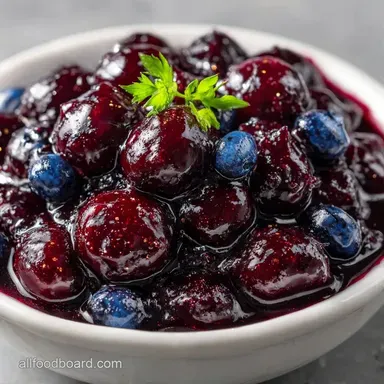
Cooked Garden Huckleberry Preserves: Glossy and Velvety
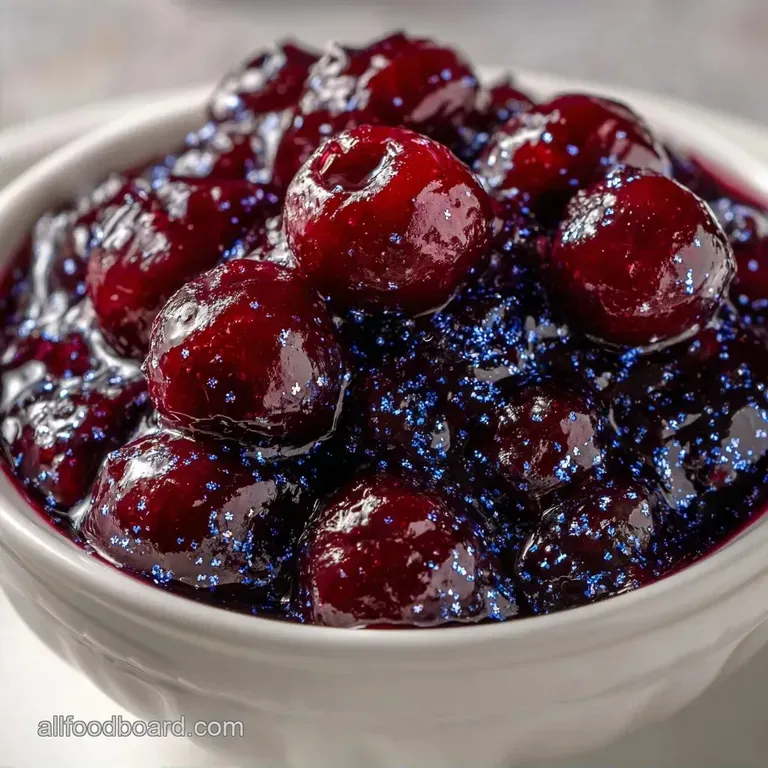
- Time: 10 min active + 45 min processing/cooling
- Flavor/Texture Hook: Glossy, translucent, and velvety
- Perfect for: Rustic breakfasts or gifting during late summer
- Cooked Garden Huckleberry Preserves: August Magic
- The Science of Setting
- Quick Recipe Specs
- Component Analysis
- The Kitchen Arsenal
- Step-by-Step Cooking Guide
- Fixing Common Errors
- Flexible Ingredient Swaps
- Adjusting Batch Sizes
- Preserve Myths
- Storage and Waste
- Serving Suggestions
- Recipe FAQs
- 📝 Recipe Card
Cooked Garden Huckleberry Preserves: August Magic
The air in my kitchen always smells like warm sugar and damp earth during the last week of August. I remember one morning where the counter was absolutely stained purple, and my fingertips were dyed a deep, bruised violet for three days.
There is something about the specific crackle of fresh garden huckleberries hitting a hot pot that feels like the official end of summer.
I used to treat these berries with a bit of suspicion, fearing that "nightshade" flavor, but once they hit the heat, they change. They go from a matte, dusty purple to this glowing, jewel toned syrup that clings to a piece of toasted sourdough.
It's the kind of preserve that makes a simple piece of toast feel like a slow Sunday morning in a cottage.
This batch of Cooked Garden Huckleberry Preserves is all about capturing that fleeting window of ripeness. You aren't looking for a stiff, gelatinous block, but rather a spread that's thick enough to stay put but soft enough to melt. It's a rustic, flour dusted kind of vibe that feels honest and homemade.
The Science of Setting
Understanding how the preserve thickens helps you avoid the dread of a runny syrup. It's all about the relationship between pectin, acid, and sugar.
Pectin Bond: Pectin forms a mesh like structure that traps liquid. In these berries, the fruit pectin needs sugar to pull water away from the pectin molecules, allowing them to bond.
Acid Activation: The lemon juice lowers the pH. This makes the pectin bonds stronger and more stable, ensuring the preserve doesn't turn into a liquid soup.
Sugar Stabilization: Sugar isn't just for taste. It acts as a preservative and prevents the pectin from clumping, creating that velvety, smooth texture.
If you're looking for something lighter and less structured, my tangy huckleberry sauce uses a similar base but skips the heavy pectin set.
| Feature | Fast Boil Method | Classic Slow Simmer |
|---|---|---|
| Cooking Time | 20 minutes | 1-2 hours |
| Color | Bright, Glossy | Deep, Dark |
| Texture | Fresh, Jammy | Concentrated, Syrupy |
| Best For | Fresh harvests | Deeply ripe fruit |
Quick Recipe Specs
Before you start, make sure your jars are sterilized. There is nothing worse than finishing a batch only to realize you don't have a clean place to put it.
For this recipe, we are aiming for a specific "sheet" effect. When you pull your spoon out of the pot, the preserves should slide off in one cohesive piece rather than dripping like water.
Component Analysis
The interaction of these five ingredients is what creates that specific "old-fashioned" taste.
| Ingredient | Science Role | Pro Secret |
|---|---|---|
| Garden Huckleberries | Pectin Source | Use only deep purple berries for color |
| Lemon Juice | pH Adjuster | Fresh squeezed is always more vibrant |
| White Sugar | Humectant | Prevents crystallization and preserves color |
| Fruit Pectin | Gelling Agent | Whisk with a bit of sugar to avoid lumps |
| Sea Salt | Flavor Enhancer | Cuts the sugar peak and brings out tartness |
The Kitchen Arsenal
You don't need a laboratory, but a heavy bottomed pot is non negotiable. Thin pots create hot spots, which means your sugar will burn before the berries burst. I usually reach for a stainless steel Dutch oven.
You'll also want a silicone spatula for constant stirring. The pectin can settle at the bottom and scorch in seconds once the mixture reaches a rolling boil.
Step-by-step Cooking Guide
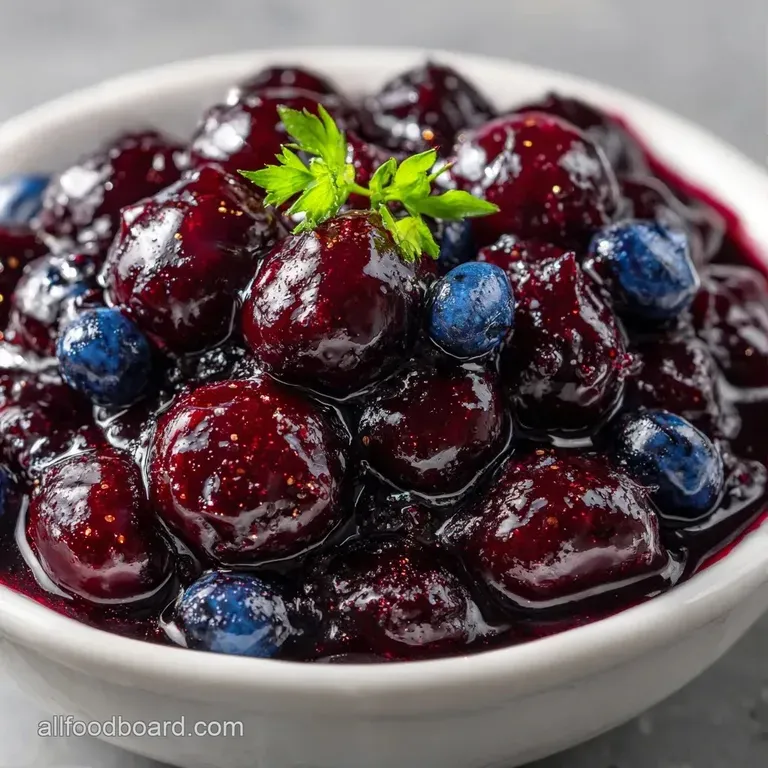
Right then, let's get into the actual process. Keep your heat steady and stay by the stove.
- Rinse the berries in cold water. Remove the green stems and toss out any berries that are still bright green. Note: Underripe berries add a bitter, raw taste.
- Combine the cleaned berries and lemon juice in your heavy pot over medium heat.
- Stir occasionally for 8-10 minutes until the berries burst and look like a thick compote.
- Sprinkle the granulated white sugar, fine sea salt, and fruit pectin over the top.
- Stir the mixture thoroughly to incorporate the sugar.
- Crank the heat up to a rolling boil.
- Stir constantly for 1-2 minutes until the color shifts from matte purple to a glossy, translucent mahogany.
- Perform the spoon test: lift the spoon and ensure the mixture sheets off.
- Remove from heat immediately and pour into jars.
Fixing Common Errors
The most common struggle with Cooked Garden Huckleberry Preserves is the "set." If it's too runny, you likely didn't hit the rolling boil long enough. If it's too stiff, you might have overcooked it, causing the pectin to break down.
Why Your Jam Is Runny
This usually happens if the sugar wasn't fully dissolved or the temperature didn't reach 220°F (104°C). The pectin simply didn't "click" into place.
Managing the Foam
You'll notice a greyish foam rising to the top during the boil. This is just trapped air and impurities. You can skim it off with a spoon for a clearer look.
| Problem | Root Cause | Solution |
|---|---|---|
| Runny Consistency | Under boiled | Reheat to a rolling boil for 1 min |
| Burnt Bottom | Heat too high | Use a diffuser or lower the flame |
| Dull Color | Not enough acid | Add 1 tsp extra lemon juice |
Mistake Checklist:
- ✓ Did I remove all the green stems?
- ✓ Did I use a heavy bottomed pot to avoid scorching?
- ✓ Did I reach a full rolling boil?
- ✓ Did I stir constantly after adding the pectin?
Flexible Ingredient Swaps
Depending on what you have in the pantry, you can tweak the sweetness or the tartness without ruining the batch.
| Original Ingredient | Substitute | Why It Works |
|---|---|---|
| White Sugar | Cane Sugar | Similar sweetness. Note: May result in a slightly darker color |
| Lemon Juice | Lime Juice | Similar acidity. Note: Adds a zesty, tropical undertone |
| Fruit Pectin | Apple Pectin | Natural gelling. Note: May require a longer boil to set |
If you prefer a more savory sweet profile, these preserves are surprisingly good when paired with something salty, like homemade calzones served with a side of goat cheese.
Adjusting Batch Sizes
Scaling this recipe is simple, but the physics of the pot change.
Scaling Down (½ Batch): Use a smaller saucepan. Reduce the initial berry softening time by about 2 minutes. I recommend beating one egg if you're adding any thickening agents not listed here, but for this preserve, just halve the pectin precisely.
Scaling Up (2x Batch): Do not double the salt or pectin exactly. Use 1.5x for the salt and 1.75x for the pectin. Liquids should be reduced by 10% because less moisture evaporates in a larger, deeper mass. Work in batches if your pot is too full to allow a rolling boil.
Preserve Myths
Some people believe that adding more sugar automatically makes a jam thicker. This is a myth. Sugar helps, but without the correct acid pectin balance, you'll just have a very sweet syrup.
Another common thought is that you must boil preserves for an hour to "set" them. In reality, over boiling destroys the pectin chains, leaving you with a runny mess. Short, hot bursts are better.
Storage and Waste
Keep your jars in the fridge for up to 3 weeks, or process them in a water bath for long-term shelf storage (up to 1 year). They also freeze surprisingly well for 6 months, though the texture can become slightly more gelatinous.
To avoid waste, don't toss the "berry sludge" left in the pot. Stir it into some Greek yogurt or swirl it into a bowl of oatmeal. Even the stems, if you're feeling adventurous, can be steeped in hot water for a very light, herbal tea.
Serving Suggestions
Depending on the occasion, you can change how you present these.
- Simple
- A thick swipe on buttered rye toast with a sprinkle of flaky salt.
- Polished
- A dollop of preserves atop a toasted brioche slice, topped with a slice of brie and a fresh mint leaf.
- Restaurant
- A "Deconstructed Berry Tart." Place a circle of buttery shortbread crumble on a plate, pipe small dots of preserves around it, and garnish with a single fresh huckleberry and a dusting of powdered sugar.
| Level | Base | Topping | Vibe |
|---|---|---|---|
| Simple | Sourdough | Butter | Rustic |
| Polished | Brioche | Brie/Mint | Brunch |
| Restaurant | Shortbread | Fresh Berries | Gourmet |
Whether you're making a small batch for yourself or a dozen jars of Cooked Garden Huckleberry Preserves for friends, the key is watching that color change. Once it hits that translucent mahogany, pull it off the heat and enjoy the taste of August.
Recipe FAQs
Can you eat garden huckleberries?
Yes, they are edible and delicious when cooked. While they can be eaten raw, cooking them transforms their flavor and texture into something similar to a traditional berry jam.
What do garden huckleberries taste like?
They have a sweet and tangy flavor. Once cooked with sugar, they taste like a cross between a blueberry and a cranberry with a slightly more herbal note.
What is the difference between huckleberries and garden huckleberries?
Garden huckleberries are a variety of nightshade, not true huckleberries. True huckleberries are wild shrubs in the Vaccinium family, whereas garden huckleberries are grown on larger garden bushes.
Is it true that garden huckleberries are just wild huckleberries grown in a garden?
No, this is a common misconception. They are entirely different species; garden huckleberries are members of the Solanaceae family, while wild huckleberries are not.
How to prepare garden huckleberries for these preserves?
Rinse the berries in cold water and remove the green stems. Discard any underripe green berries to ensure the preserves don't have a bitter, raw taste.
When should the lemon juice be added to the pan?
Add it at the very beginning with the cleaned berries. Heat them together over medium heat for 8–10 minutes until the berries burst into a thick compote.
How to tell when the preserves have reached the correct consistency?
Look for the mixture to turn from matte purple to a glossy, translucent mahogany. The preserves are done when they sheet off a spoon after boiling for 1–2 minutes. If you enjoyed mastering these sensory doneness cues here, see how the same principle works in our classic potato salad.
Cooked Garden Huckleberry Preserves: 4 Jars