Classic Deviled Eggs Recipe: Velvety Filling
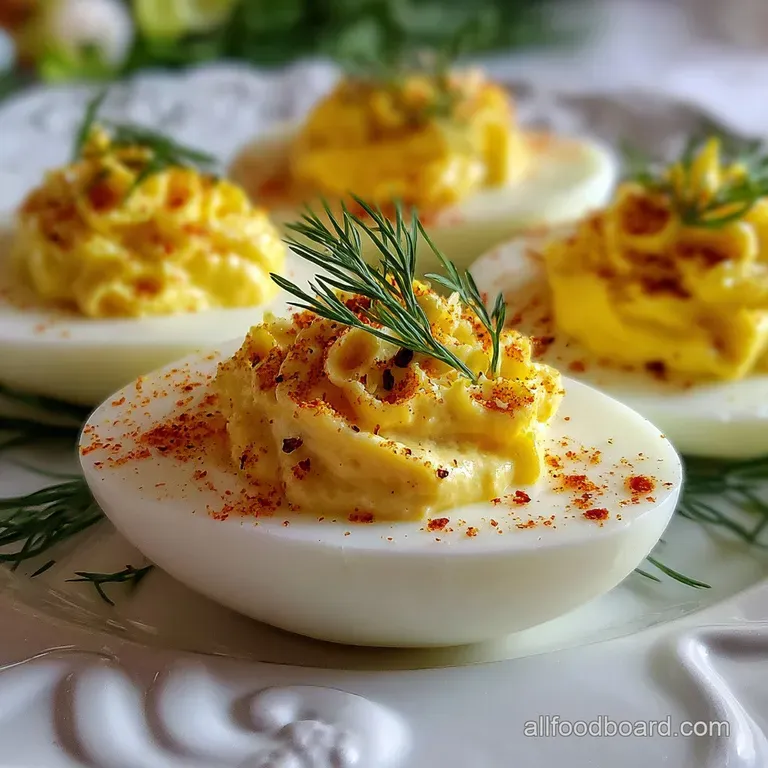
- Time: Active 10 minutes, Passive 15 minutes, Total 25 minutes
- Flavor/Texture Hook: Zesty, silky filling with a snappy, chilled egg white base
- Perfect for: Backyard barbecues, holiday potlucks, or a high protein afternoon snack
- Nailing This Timeless Classic Deviled Eggs Recipe
- Budget Friendly Appetizers People Crave
- Real Expectations for Your Platter
- Essential Components for Rich Filling
- Simple Tools for Professional Results
- Step-by-Step Guide to Perfect Bases
- Prevent Rubbery Whites and Green Yolks
- Ingredient Swaps for Every Guest
- Keeping Leftovers Fresh and Safe
- Garnish Ideas for Your Platter
- Classic Deviled Eggs Recipe FAQs
- 📝 Recipe Card
Nailing This Timeless Classic Deviled Eggs Recipe
The first sound you hear is the gentle click clack of eggs dancing against the bottom of a heavy pot. Then, the sharp, clean scent of distilled vinegar hits the steam. I remember standing in my grandmother’s kitchen, watching her "whack" the eggs against the counter with a precision that seemed like magic.
For years, I struggled with whites that looked like they had been through a shredder, but I finally realized that the secret isn't in the boiling it's in the cooling.
When you finally slice into that egg, the yolk should be a pale, dusty gold, not that depressing shade of swamp green. There is something deeply satisfying about the "pop" of a perfectly cooked yolk falling into a mixing bowl, ready to be transformed into something lush.
This isn't just a side dish; it's a nostalgic bite that bridges the gap between a fancy brunch and a casual Tuesday snack.
We've all been there trying to peel a fresh egg only to lose half the white in the process. It’s frustrating, right? But once you understand the relationship between temperature and the egg’s membrane, you’ll never fear the peel again.
We are going for a texture so smooth it feels like silk, with enough tang to make your tongue tingle. Trust me, these vanish from the plate before the main course even hits the table.
Budget Friendly Appetizers People Crave
Making a crowd pleaser doesn't require a trip to a specialty grocery store. In fact, the beauty of this dish lies in how it uses pantry staples to create a high impact result. We are taking the humble egg and using basic chemistry to turn it into a luxury.
It's about working smarter with what you already have in the fridge.
- Thermal Shocking: Plunging hot eggs into ice water causes the egg white to slightly contract away from the shell membrane, making it slide off effortlessly.
- Protein Denaturation: The addition of apple cider vinegar doesn't just add flavor; the acid helps break down the yolk proteins, resulting in a much smoother, less grainy emulsion.
- Emulsification Bridge: The lecithin naturally found in egg yolks acts as a stabilizer, helping the mayo and mustard bind together into a velvety mousse that won't weep or separate.
| Element | Fresh Prep | Shortcut Version | Impact |
|---|---|---|---|
| The Filling | Hand mashed yolks with Dijon | store-bought egg salad | Homemade is silkier and less oily |
| The Herbs | Freshly minced chives | Dried chive flakes | Fresh adds a bright, oniony "snap" |
| The Acid | Apple cider vinegar | Plain white vinegar | Cider vinegar adds a subtle fruity depth |
One of the biggest wins for your wallet is the versatility of the ingredients. You can easily adjust the zestiness depending on what kind of mustard you have on hand. If you find yourself making these often, you might notice that the technique is quite similar to getting the base right for my Perfectly Hard Boiled Eggs recipe, where the timing is absolutely everything.
Real Expectations for Your Platter
When you are planning your spread, knowing exactly when to pull the eggs off the heat is the difference between a bouncy white and a rubbery one. I like to aim for a 12 minute simmer for a fully set, creamy yolk that isn't chalky.
If you go too long, you get that gray green ring which is actually a reaction between iron and sulfur. It's safe to eat, but it certainly isn't pretty.
| Component | Science Role | Pro Secret |
|---|---|---|
| Large Eggs | Structural base and fat source | Older eggs (7-10 days) peel significantly better than farm fresh ones. |
| Real Mayo | Primary fat for creaminess | Use a high-quality brand to ensure the filling doesn't become greasy. |
| Dijon Mustard | Acidic stabilizer and piquant flavor | The mustard seeds contain mucilage that helps thicken the filling. |
It is important to remember that the weight of the filling matters. If you use too much mayo, the filling will lose its shape and slump out of the egg white. We want a mixture that holds a "peak" when you lift your spoon. This structural integrity is what makes them look so professional on a platter.
Essential Components for Rich Filling
Let’s talk about what actually goes into the bowl. I’ve tried the versions with fancy oils and truffle salts, but honestly, the classic combination is hard to beat. You want the saltiness of the sea salt to play against the sweetness of the relish.
- 6 large eggs: These are your vessels. Make sure they are at room temperature if possible before boiling to prevent cracking.
- 1 tbsp distilled white vinegar: Added to the boiling water to help set the whites quickly if a shell leaks.
- 1 tsp salt: For the boiling water, helping to increase the water's boiling point slightly.
- 3 tbsp real mayonnaise: Why this? Provides the foundational creamy texture and fat content. (Avoid the "whipped" dressing varieties).
- 1 tsp Dijon mustard: Why this? Adds a sophisticated sharp bite that cuts through the fat.
- 1 tsp apple cider vinegar: Why this? Provides a bright, tangy finish to the filling.
- 2 tsp sweet pickle relish: Adds a crunch and a hint of sweetness that balances the salt.
- 1/8 tsp fine sea salt: Enhances all the other flavors without being overwhelming.
- 1/8 tsp freshly cracked black pepper: Provides a subtle floral heat.
- 1/4 tsp smoked paprika: The classic garnish that adds an earthy, charred aroma.
- 1 tbsp fresh chives: Mince these as finely as you can for a professional look and a fresh "hit."
If you are looking for a slightly more decadent texture, you can actually follow some of the whisking methods I use in my other How to Make recipe, which focuses heavily on that "air whipped" feel. For a classic Southern style, some folks swear by yellow mustard instead of Dijon, but I find the Dijon adds a layer of complexity that's hard to pass up.
Simple Tools for Professional Results
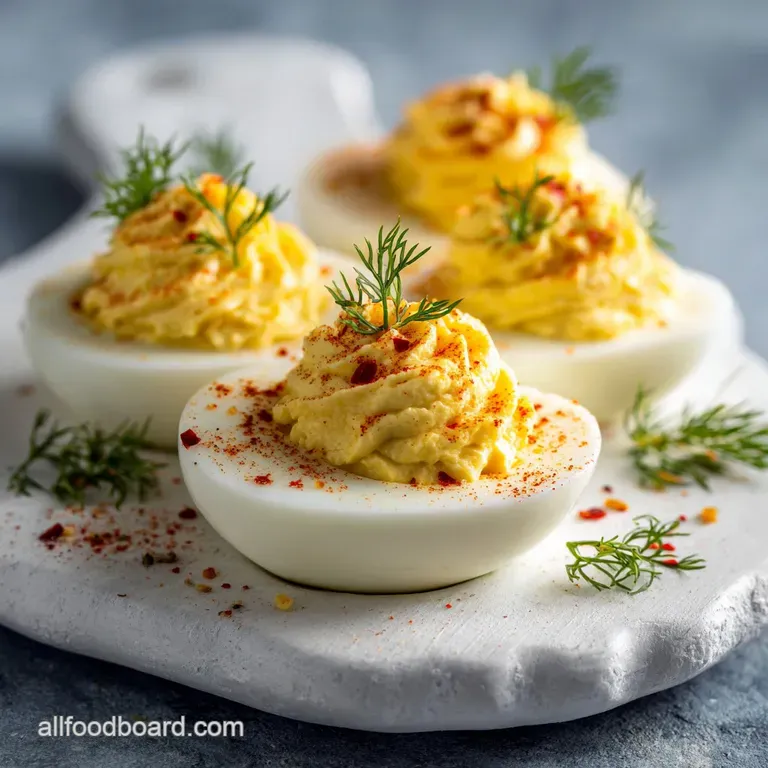
You don't need a high tech kitchen for this. A simple medium sized saucepan is your best friend here. Just make sure it’s large enough to hold the eggs in a single layer. If they are clambering over each other, they’ll cook unevenly and likely crack.
I also highly recommend using a fine mesh sieve if you want that truly "velvety" filling. Pushing the yolks through a sieve before mixing in the mayo removes every single tiny lump. It takes an extra 60 seconds, but the results are night and day.
If you don't have a piping bag, a simple zip top bag with the corner snipped off works brilliantly for filling the whites without making a mess.
step-by-step Guide to Perfect Bases
Right then, let's get into the actual cooking. Follow these steps closely, especially the cooling part. The "shock" is the most important step for a clean peel.
Mastering the 12 Minute Simmer
- Prepare the pot. Place 6 large eggs in a single layer in your saucepan and cover with cold water by at least an inch.
- Add the stabilizers. Stir in 1 tbsp distilled white vinegar and 1 tsp salt to the water. Note: This helps the whites coagulate quickly if any shells happen to hairline crack during the boil.
- Heat it up. Bring the water to a rolling boil over high heat. Once it boils, turn off the heat.
- The waiting game. Cover the pot with a tight lid and let the eggs sit in the hot water for exactly 15 minutes.
- Shock the eggs. Prepare an ice bath while you wait. Move the eggs immediately into the ice water for at least 5 minutes. Wait until they feel cold to the touch.
Whisking a Silky Filling
- Peel and prep. Gently crack the shells and peel the eggs under cool running water. Pat them dry with a paper towel.
- Extract the yolks. Slice each egg in half lengthwise and carefully pop the yolks into a small bowl. Arrange the whites on a serving plate.
- Combine the flavors. Mash the yolks with a fork (or sieve) until crumbly. Add 3 tbsp real mayonnaise, 1 tsp Dijon mustard, 1 tsp apple cider vinegar, 2 tsp sweet pickle relish, 1/8 tsp sea salt, and 1/8 tsp pepper.
- Whip it good. Stir vigorously until the mixture is smooth and pale gold. Look for a texture like thick frosting.
- Assemble and garnish. Spoon or pipe the filling into the egg white cavities. Dust with 1/4 tsp smoked paprika and sprinkle with 1 tbsp fresh chives.
Prevent Rubbery Whites and Green Yolks
The biggest disaster in the world of deviled eggs is the rubbery, bouncy white. This usually happens from overcooking or boiling the eggs too violently. By using the "off heat" method mentioned above, you gently cook the proteins so they stay tender.
But what about the sogginess? If you add too much relish or vinegar too early, the filling can start to weep. If your filling looks a little loose, don't panic. You can add an extra yolk if you have one, or a tiny pinch of instant mashed potato flakes (a secret chef trick!) to soak up the excess moisture without changing the flavor.
Fixing a Runny Filling
| Problem | Root Cause | Solution |
|---|---|---|
| Runny Filling | Too much liquid from relish or vinegar | Chill the filling for 30 mins or add a half teaspoon of cornstarch. |
| Torn Whites | Eggs were too fresh or not shocked | Peel under running water to let the liquid get under the membrane. |
| Bland Taste | Lack of acidity | Add a tiny drop of lemon juice or extra Dijon. |
Common Mistakes Checklist
- ✓ Don't skip the ice bath: It stops the cooking process and prevents the green sulfur ring.
- ✓ Avoid farm fresh eggs: Use eggs that have been in your fridge for at least a week for the easiest peeling experience.
- ✓ Dry your whites: If the egg whites are wet when you fill them, the filling will slide right out.
- ✓ Don't over mash: If you want a chunky texture, use a fork; for silky, use a sieve.
- ✓ Taste as you go: Salt levels in mayo and mustard vary, so always taste before you pipe.
Ingredient Swaps for Every Guest
One of the reasons this is my favorite recipe to bring to parties is how easily it adapts. If you have guests with dietary restrictions, you don't have to start from scratch. For example, using a vegan mayonnaise works surprisingly well because the egg yolk itself provides so much of the traditional flavor and structure.
If you want to scale this down for a solo snack, just use 3 eggs and cut all other ingredients in half. If you are feeding a literal army (or a very hungry family reunion), you can double or triple the recipe easily. When scaling up, I recommend not doubling the salt immediately.
Start with 1.5 times the salt and adjust at the end, as saltiness can concentrate quickly in large batches.
| Servings | Egg Count | Mayo Amount | Pan Size |
|---|---|---|---|
| 4 People | 6 Eggs | 3 tbsp | Medium Saucepan |
| 8 People | 12 Eggs | 6 tbsp | Large Stockpot |
| 12 People | 18 Eggs | 9 tbsp | Large Stockpot (Work in batches) |
If you are looking for something with a bit more of a punch, you can try making a Southern Deviled Eggs Recipe by swapping the Dijon for yellow mustard and adding a dash of hot sauce.
For those on a keto diet, simply omit the sweet relish and use diced dill pickles instead to keep the carb count near zero.
Keeping Leftovers Fresh and Safe
Storage is the one place where you have to be careful. Eggs are magnets for fridge odors, so you want to keep them tightly sealed. I usually place them in a single layer in a plastic container. If you have a dedicated egg carrier, now is the time to shine!
- Fridge: They stay good for up to 2 days. After that, the whites start to get a bit watery and the filling loses its zing.
- Freezer: Just don't. Hard boiled egg whites turn into a rubbery, spongy mess when frozen.
- Reheating: These are meant to be served chilled. If they’ve been sitting out for more than 2 hours at room temperature, it's best to toss them for safety reasons.
Zero Waste Tip: If you find yourself with extra filling, don't throw it out! It makes an incredible spread for toast the next morning, or you can dollop it onto a green salad for a quick protein boost.
You can even use the leftover chive ends to start a little herb garden in a glass of water on your windowsill.
Garnish Ideas for Your Platter
Presentation is half the battle. While the classic sprinkle of paprika is iconic, you can really make these "shatter" with flavor by adding a bit of texture on top. I love adding a tiny piece of crispy bacon or a single caper for a salty "pop."
Mastering the Platter Layout
When arranging them, try to keep some space between each half so they don't stick together. If you are traveling, you can actually put the filling in a piping bag and the whites in a container, then fill them right before serving. This keeps the whites crisp and the filling looking fresh and "fluffy."
Pairing for a Party
These go beautifully with a crisp white wine or a light lager. If you’re doing a full spread, they pair perfectly with salty snacks or even a spicy main course. The creaminess of the egg acts as a natural palate cleanser.
Honestly, there’s no wrong way to serve them just make sure you make enough, because they’re usually the first thing to disappear!

Classic Deviled Eggs Recipe FAQs
How do you make classic devilled eggs?
Bring water to a boil, then turn off the heat and steep the eggs for 15 minutes. After steeping, immediately plunge them into an ice bath for 5 minutes to stop cooking and aid peeling.
Halve the cooled, peeled eggs, mash the yolks with mayonnaise, Dijon mustard, apple cider vinegar, and relish, then pipe or spoon the filling back into the whites.
What are the five golden rules of deviled eggs?
No, there isn't a universally strict "five golden rules" list, but key principles are paramount for success. Focus on rapid chilling (ice bath) to prevent the green ring, using room temperature eggs for easier peeling, mixing the yolks until very smooth, balancing the acid (mustard/vinegar), and
chilling the final product thoroughly before serving.
What is the secret ingredient in deviled eggs?
The combination of two distinct acids is the secret to cutting through the richness. While mayonnaise provides the body, the combination of Dijon mustard and apple cider vinegar provides the necessary tang that balances the fat, making the flavor bright rather than heavy.
What is the 5 5 5 rule for eggs?
No, there is no standardized 5-5-5 rule specific to deviled eggs, but a similar timing strategy is crucial for perfect hard boiled eggs. A reliable timing method is bringing the water to a boil, turning off the heat, covering it, and letting the eggs steep for 15 minutes, followed by 5 minutes in an ice bath (a 15-5 timing). If you master temperature control here, you will apply that skill perfectly when learning how to make a base for a Classic Egg Salad Sandwich recipe.
How do I stop my deviled egg filling from tasting watery or weeping?
Chill the filling mixture for at least 30 minutes before assembling the eggs. Excess liquid often comes from the relish or too much vinegar, and chilling allows the lecithin in the yolk/mayo emulsion to fully bind. For immediate fixes, incorporate a tiny pinch of cornstarch to absorb excess moisture.
Is it true that older eggs peel easier than fresh eggs?
Yes, eggs that are one to two weeks old peel significantly easier than farm fresh eggs. As eggs age, the pH of the white increases, causing the membrane to separate more readily from the shell structure. This separation is key to getting clean whites that don't shred.
Can I use yellow mustard instead of Dijon in this recipe?
Yes, you can substitute yellow mustard for Dijon, but expect a milder, sweeter result. Yellow mustard has less complex flavor and often contains less turmeric, which affects the final color. If you prefer a richer, deeper flavor profile in other baked goods, look at how we balance flavor in The Classic Neiman recipe.
Classic Deviled Eggs Recipe
Ingredients:
Instructions:
Nutrition Facts:
| Calories | 188 kcal |
|---|---|
| Protein | 9.6 g |
| Fat | 15.2 g |
| Carbs | 1.8 g |
| Fiber | 0.1 g |
| Sugar | 0.9 g |
| Sodium | 422 mg |
