The Grand Dame of Louisiana Authentic Chicken and Andouille Gumbo
- Authentic New Orleans Gumbo: More Than Just a Stew
- Unlocking the Soul of Cajun Cuisine
- The Essential Elements of Authentic New Orleans Gumbo
- Gathering the Culinary Cast: What You Need for the Perfect Pot
- Mastering the Art of the Dark Roux (The Gumbo Foundation)
- Step-by-Step: Crafting the Grand Dame of Louisiana
- Tips, Tricks, and Troubleshooting for Your Gumbo
- Maximizing Flavor and Meal Planning
- Recipe FAQs
- 📝 Recipe Card
Authentic New Orleans Gumbo: More Than Just a Stew
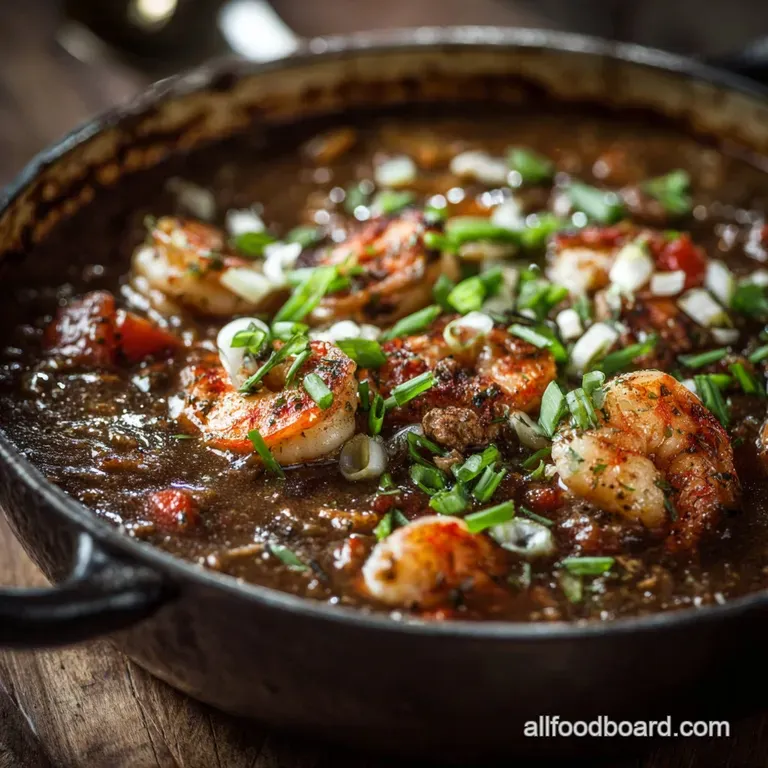
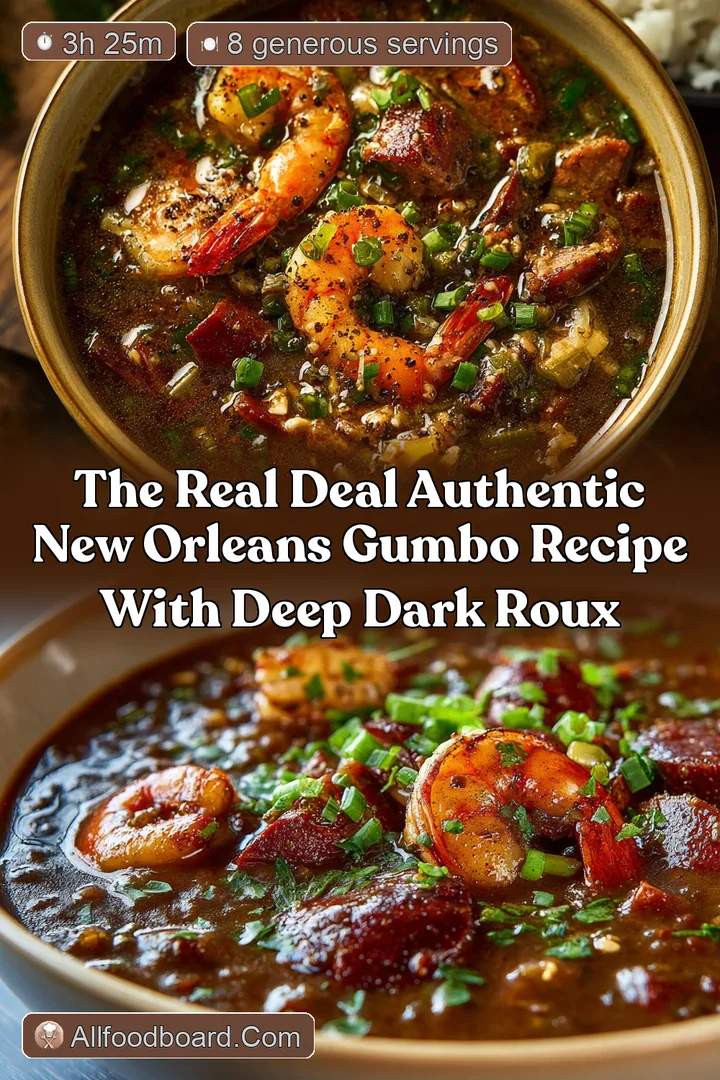
Gumbo is not merely a stew; it is a culinary ceremony, an edible reflection of the rich, complex history of Louisiana. Hailing from the vibrant, multicultural heart of the French Quarter, the Authentic New Orleans Gumbo transcends its simple description as a soup or potage, offering a deep, smoky, and intensely comforting experience.
This specific recipe focuses on the classic Chicken and Andouille combination, resulting in a rich, velvety texture and a flavor profile that speaks volumes about time, tradition, and patience.
Dedicating the necessary three plus hours mostly passive simmering time is the secret to unlocking the true essence of this iconic dish.
Unlocking the Soul of Cajun Cuisine
To understand Gumbo is to understand the regional influences that created it. Reflecting African, French, Spanish, and Native American culinary traditions, Gumbo is the ultimate melting pot dish. It’s an exercise in layering flavors, starting from the ground up, demanding respect for ingredients and technique.
What Makes This Gumbo Recipe a True Legacy Dish?
The identity of a great gumbo, and specifically this authentic new orleans gumbo recipe , lies entirely in the color and flavor of its foundation: the dark roux.
While some regional variations (like seafood gumbo) utilize a lighter, blond roux, the traditional chicken and sausage base demands a deep, chocolate brown color. Achieving this requires meticulous attention and continuous stirring, proving that the deepest flavors are always earned.
The result is a profoundly smoky, rich broth that holds its body and showcases the quality of the traditional new orleans gumbo ingredients —especially the highly seasoned Andouille sausage.
This is the real new orleans gumbo experience, passed down through generations.
Gumbo vs. Jambalaya: Understanding the Key Differences
Newcomers to Louisiana Recipes often confuse the state’s two primary celebratory dishes. While both are built on the aromatic foundation of the Holy Trinity, their structures are fundamentally different.
Gumbo is defined by its broth, which is thickened by the long cooked flour and oil mixture (the roux), making it a hearty soup or stew that is served over a bed of fluffy rice. Jambalaya, conversely, is a rice dish.
The grains are cooked in the seasoned stock, absorbing the liquid and becoming the main body of the dish itself. If Gumbo is a sophisticated sauce forward creation, Jambalaya is its more rustic, hearty cousin.
A Culinary Passport to the Louisiana Bayou
Crafting this dish is akin to receiving a culinary passport. Following this process guarantees not only a delicious meal but a true sense of connection to the South. New Orleans Recipes rely heavily on balancing heat, spice, fat, and long simmering times, which is why the flavor of Gumbo improves so dramatically after a day or two.
It’s comforting food in the truest sense, perfect for feeding a crowd and celebrating the spirit of the Bayou.
The Essential Elements of Authentic New Orleans Gumbo
Every great Gumbo is built upon four non-negotiable pillars: the Roux, the Holy Trinity, quality Stock, and the Proteins. This particular Gumbo Recipe utilizes a hefty 1 kg (2.2 lbs) of dark meat chicken thighs and 450 g (1 lb) of smoked Andouille sausage, balanced by 2.5 liters (10 cups) of rich chicken stock.
The true complexity comes from the roux, which takes a solid 30 to 45 minutes of active cooking to achieve the deep, nutty flavor that defines traditional new orleans gumbo . This patience is non-negotiable; rushing the process is the fastest way to ruin a batch.
Gathering the Culinary Cast: What You Need for the Perfect Pot
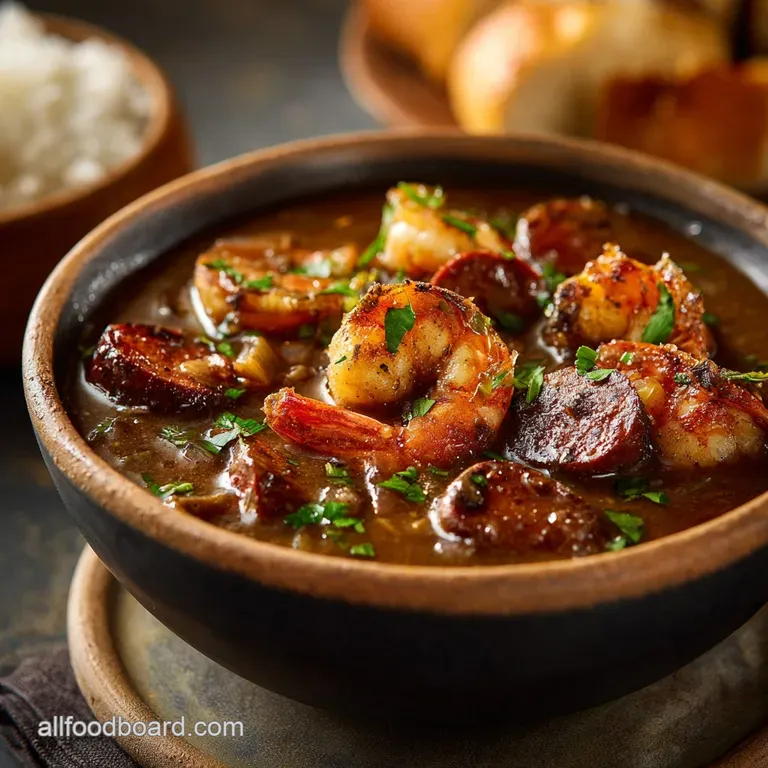
Successful gumbo starts with flawless preparation. With a total prep time estimated at 40 minutes, ensuring all elements are diced and ready before the heat is turned on is critical, particularly because of the speed required when the roux finishes cooking.
The Holy Trinity: Prep and Proportions
The aromatic core of the dish, known locally as the Holy Trinity, is a mixture of diced yellow onions, celery, and green bell peppers. For our proportions, we need two large yellow onions, one large green bell pepper, and four stalks of celery.
These are sautéed in the newly finished roux, and they serve a dual purpose: they provide the fundamental savory and slightly sweet base flavor, and, more importantly, the cool, diced vegetables instantly halt the cooking of the hot roux, preventing it from scorching.
We also integrate four cloves of minced garlic, added just toward the end of the sautéing process.
Choosing Your Proteins: Chicken, Sausage, and Seafood Options
For our robust Chicken and Andouille Gumbo, boneless, skinless chicken thighs, cut into 1 inch cubes, are the meat of choice. Thighs contain sufficient fat and connective tissue to remain juicy and tender through the obligatory two-hour simmer, unlike chicken breast, which would quickly dry out.
The essential smoky depth comes from the traditional new orleans gumbo ingredients , specifically the highly seasoned Andouille sausage, sliced into half inch rounds.
If you opt for a Seafood Gumbo variation, remember to omit the chicken and use a much lighter roux, adding quick cooking items like shrimp or crab only in the last ten minutes of the simmer.
Specialty Spices and Thickeners: File Powder and Okra Defined
Beyond the basic kosher salt, freshly ground black pepper, and cayenne pepper, this authentic new orleans gumbo requires dried thyme, oregano, and bay leaves. It's crucial to understand the role of traditional thickening agents.
While some recipes use okra, our primary thickener is the roux itself. Gumbo File Powder (ground sassafras leaves) is highly traditional but should never be cooked into the pot of a dark roux gumbo.
Instead, it is served on the side, allowing guests to add the powder to their bowl for a unique earthy flavor and extra thickening agent, according to their preference.
Essential Equipment for Building a Deep Roux
The success of the roux hinges entirely on the equipment. You must use a heavy bottomed Dutch oven or a thick walled stock pot, ideally 6-8 liters in capacity. This heavy base ensures the heat is distributed evenly, minimizing hot spots that can instantly burn the delicate mixture.
Crucially, a flat edged wooden spoon or a heat resistant spatula is required for constant scraping of the pot's bottom, preventing any flour from sticking and scorching, which would immediately ruin the entire batch.
Related Recipes Worth Trying
- Authentic Tres Leches Cake The Proper Perfectly Soaked Classic — This Best Tres Leches Cake Recipe is authentic and foolproof Get the secret to a featherlight sponge that drinks up all the milk for a perfectly creamy and...
- The Silky Smooth Standard Authentic Hummus Recipe Better Than ShopBought — Ditch the dusty supermarket tubs Learn the chefs secret for truly Silky Smooth Hummus originating from the Levant Our easy hummus recipe uses ice water for...
- Authentic Louisiana Dirty Rice Recipe The Bayou Classic — Stop making anemic rice This Louisiana Dirty Rice Recipe builds deep savory flavour using the Holy Trinity and rich ground meat Get the foolproof steps now
Mastering the Art of the Dark Roux (The Gumbo Foundation)
The roux is what elevates this dish from a simple stew to a transcendent Cajun Gumbo Recipe . It is a combination of equal parts fat and flour specifically, 175 mL (¾ cup) of high smoke point vegetable oil or lard, combined with 175 g (1 ½ cups) of all-purpose flour.
The process demands focus: over medium low heat, these two ingredients are married together and cooked while stirring continuously. This stage takes anywhere from 30 to 45 minutes.
The low temperature prevents burning, allowing the starch molecules to cook down and develop a complex, nutty flavor profile.
step-by-step: Crafting the Grand Dame of Louisiana
From Pale Gold to Chocolate Brown: Achieving the Perfect Color
Begin stirring immediately upon mixing the oil and flour. Initially, the mixture resembles a thick paste. As time progresses, the color will move steadily from a pale, creamy beige to the color of peanut butter, then steadily darkening through the shades of milk chocolate.
The ideal, final color for a deep, rich gumbo is that of a dark copper penny or dark chocolate brown. The moment this depth is achieved, immediately remove the pot from the heat. Residual heat will continue to cook the roux, making speed essential for the next step.
Sautéing the Trinity to Release Maximum Aromatics
The transition from a perfectly cooked roux to the flavorful base is rapid. Immediately, add the diced Holy Trinity (onion, celery, and bell pepper) to the scorching hot roux. Stir vigorously for about five to eight minutes until the vegetables soften and 'sweat.' This addition serves the critical function of cooling the roux instantly, preventing it from burning.
Once the Trinity is fragrant, push the vegetables aside and add the sliced Andouille sausage and cubed chicken thighs. Sauté for about five minutes until the raw edge of the chicken has faded, then introduce the minced garlic during the last minute to ensure it doesn't burn.
The Simmering Ceremony: Layering Flavors and Thickness
With the aromatics and proteins integrated, it is time to build the liquid base. Sprinkle in the dried thyme, oregano, salt, pepper, and cayenne pepper. Pour in a small splash of the chicken stock first, scraping up any brown bits (fond) stuck to the bottom this deglazing adds a vital layer of depth.
Then, gradually pour in the remaining 2.5 liters of stock, stirring constantly until the thick roux fully dissolves and emulsifies, creating the characteristic gumbo body. Add the three bay leaves, bring the pot to a gentle boil, then immediately reduce the heat to the lowest setting.
Cover the pot loosely and allow the mixture to simmer for a minimum of two hours, stirring every 20 minutes to prevent settling and scorching. This slow cook marries all the robust flavors perfectly.
Final Adjustments: Seasoning and Serving
After the long simmer, the Gumbo will be rich, thick, and flavorful. Remove and discard the bay leaves. Taste and adjust the seasoning, adding more salt or cayenne pepper as desired. The final consistency should be noticeably thicker than a typical soup, yet still liquid enough to pour easily over rice.
Ladle the piping hot Gumbo over a scoop of fluffy long grain white rice, garnish with chopped green onions, and serve with hot sauce on the side.
Tips, Tricks, and Troubleshooting for Your Gumbo
Achieving a flawless Authentic New Orleans Gumbo hinges on dedication to the process. If you notice any scent resembling burnt coffee or nuts during the roux stage, the flour has scorched, and the entire mixture must be discarded and started anew; bitterness cannot be cooked out.
Plus,, absolute commitment to mise en place (having everything, especially the Holy Trinity, diced and ready) is crucial. When the roux reaches its target dark color, you only have seconds to add the cool vegetables to halt the cooking process.
Finally, always use chicken thighs over breast meat, as the longer simmer demanded by the roux base will invariably dry out leaner cuts.
Maximizing Flavor and Meal Planning
Making Ahead: The Secret to Even Better Second Day Gumbo
One of the greatest virtues of this Gumbo Recipe is its ability to improve dramatically with time. Like many deep flavored stews, Gumbo needs time for the spices and the roux base to fully hydrate and meld.
Making the entire batch one day ahead and allowing it to cool and rest overnight enhances the complexity and depth, rewarding the cook with a truly spectacular second day meal.
Proper Storage and Freezing Instructions
Gumbo stores exceptionally well, making it ideal for batch cooking. It can be kept tightly covered in the refrigerator for three to four days. For longer storage, Gumbo freezes beautifully. Portion the cooled gumbo into airtight containers (leaving some head space for expansion) and freeze for up to three months.
Thaw it overnight in the refrigerator and reheat gently on the stovetop.
Dietary Modifications and Variations (gluten-free Roux)
While this is a traditional preparation, modifications are possible. For a Cajun Gumbo Recipe variation focusing on seafood, use a light, blonde roux (cooking for only about 15 minutes) and omit the chicken.
If you require a gluten-free adaptation, you can use specialized gluten-free flour blends in place of the $1
frac{1}{2}$ cups of all-purpose flour, though the texture and cooking time of the roux may vary slightly.
For a meatless option, substitute the chicken and sausage with hearty vegetables like okra and sliced portobello mushrooms, utilizing smoked tempeh for the necessary smoky flavor profile and using vegetable stock.
Serving Suggestions: Rice, Potato Salad, and Beyond
Serving Gumbo is simple but specific. A large scoop of fluffy, long grain white rice is absolutely mandatory, providing the neutral backdrop for the rich sauce. Traditionally, Gumbo is served alongside a crusty piece of French bread, perfect for "souping the bowl" and ensuring not a drop of that smoky, delicious broth is left behind.
Finally, ensure the table is set with optional additions like Gumbo File Powder and a good Louisiana hot sauce, such as Tabasco, allowing everyone to customize the heat and earthiness of their own bowl.
Recipe FAQs
I'm terrified of burning the roux! What’s the secret to getting that perfect dark colour without starting a kitchen fire?
Making the roux is the moment of truth, akin to facing the final boss in a video game. Patience is paramount low and slow is the mantra here. Use a proper bit of kit, like a heavy bottomed Dutch oven, and stir constantly with a flat edged wooden spoon, ensuring you scrape the very bottom edges.
If you smell anything remotely like burnt nuts or coffee, the roux is ruined, sadly; you must start again, as there's no fixing bitterness.
What makes this an Authentic New Orleans Gumbo, and when should I use Gumbo File powder?
The dark, chocolate brown roux is the defining feature of this Authentic New Orleans Gumbo, providing the deep nutty foundation that distinguishes it from other stews. Note that this recipe skips the okra, which is often included in Cajun or regional gumbo styles.
Gumbo File (ground sassafras leaves) is traditionally not cooked into the dish; instead, it is offered at the table, sprinkled on top like a condiment to provide a unique earthy flavour and slight thickening effect after serving.
My Gumbo looks too oily or too thin after simmering. Did I mess up the ratio?
If you see oil pooling on top (known as 'fat separation'), don't fret! Sometimes the fat and flour need more time to emulsify. Try giving it another 30 to 45 minutes of slow simmering.
If it is too thin, simply remove the lid and allow the gumbo to reduce naturally until it achieves that classic, rich consistency thicker than soup, but definitely not a solid stew.
Can I make this Gumbo ahead of time, and is it suitable for freezing?
Yes, and frankly, you should! Gumbo is notoriously better the next day, once all those complex smoky flavours have had a chance to properly marry overnight, making it a brilliant choice for entertaining. Leftovers store well in the fridge for up to four days.
If you want to batch cook, it freezes brilliantly; just ensure it’s completely cooled before sealing in an airtight container for up to three months.
I can’t find Andouille sausage is there a decent substitution that won't ruin the flavour?
Andouille is tough to find outside of specialist shops sometimes! The key flavour profile you need is smokiness and a decent kick of spice. A high-quality, smoked Kielbasa or even a spicy Spanish chorizo will work in a pinch.
Just compensate by adding a bit more cayenne pepper and a teaspoon of smoked paprika to your seasoning blend to recapture that essential, deep Cajun heat.
Authentic New Orleans Gumbo
Ingredients:
Instructions:
Nutrition Facts:
| Calories | 979 kcal |
|---|---|
| Protein | 9.5 g |
| Fat | 22.1 g |
| Carbs | 72.0 g |
| Fiber | 21.4 g |
| Sodium | 196 mg |
