Soft and Creamy Scrambled Eggs the Ultimate French Bistro Technique
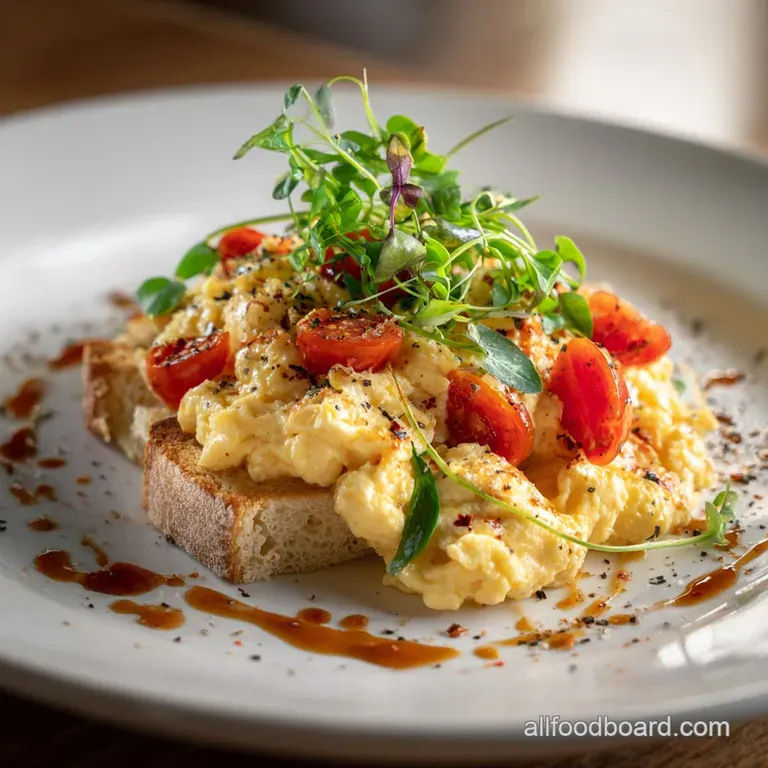
Ditching the Rubber: Why Your Scrambled Eggs Need a Technique Overhaul
Okay, look. If your scrambled eggs come out pale yellow, bouncy, and squeak when you chew them, we need to have a serious talk. You’re not alone. For years, I approached scrambling like it was a race, high heat, furious whisking in the pan, and the result was always... fine. Edible.
But never that magnificent, silky, custard and like texture you dream of. The kind they serve in posh hotels where you’re secretly judging everyone else’s toast preferences.
The truth is, making truly soft and creamy scrambled eggs is less about ingredients and more about respecting the egg itself. We aren’t aiming for fluffy; we’re aiming for luxurious. We’re swapping speed for patience. It's the difference between a quick protein hit and an actual culinary experience.
Right then, let’s crack on.
The Custard Secret: Understanding Low and Slow Heat
Why does high heat ruin eggs? Simple. Eggs are mostly protein and water. When you hit them with high heat, those proteins seize up immediately. They contract, squeezing out all the moisture (that’s the water), leaving you with dry, tough curds. Think of it like a rubber band snapping shut.
The secret to creaminess is keeping those proteins relaxed. When you cook over low heat, the proteins set gently, trapping the moisture (and the added fat) inside those delicate curds. This is why we call it the "custard secret." You are essentially making a savory custard in a pan.
If you can make a roux or stir a pot of oats without burning them, you can handle this.
The French Bistro Method for Truly Soft and Creamy Scrambled Eggs
The best scrambled eggs I have ever eaten were made using this technique, often called the French Bistro or Escoffier method. And no, you don't need a fancy toque.
The genius of this method is the intermittent heat cycling. Instead of keeping the pan permanently glued to the burner, you constantly move it on and off the heat. Why? Because even on the lowest setting, the heat builds up.
Removing the pan allows you to use the residual heat (the temperature already stored in the pan and the eggs) to continue cooking gently, without risk of scorching the delicate bottom layer. This gives you time to stir and fold the eggs into those perfect, minuscule, soft curds. It is brilliant.
Essential Elements for Achieving Silky Perfection
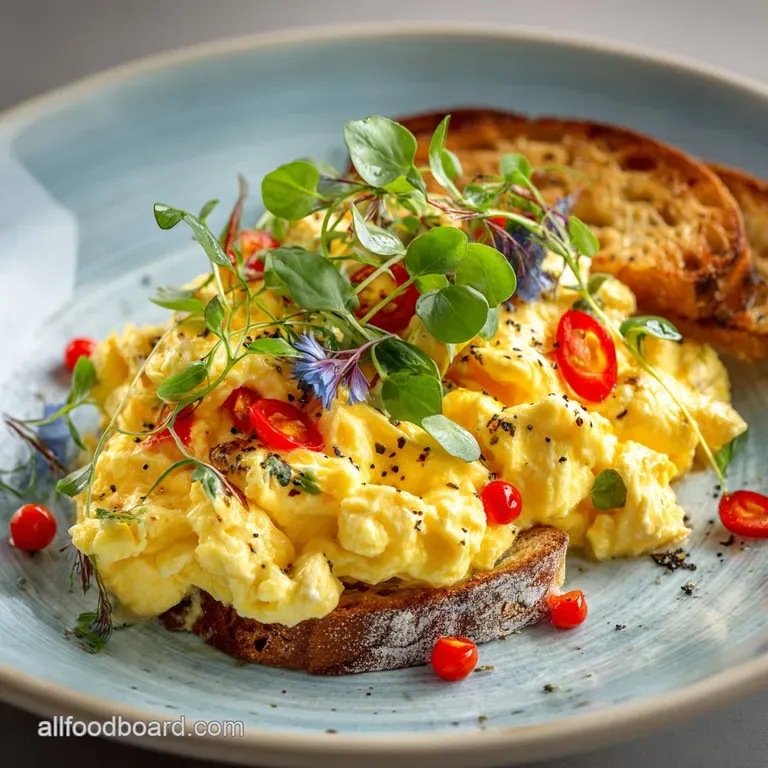
Choosing Your Dairy: Butter vs. Cream (And When to Use Both)
This is one of the most debated topics in egg circles. Do you add liquid (milk/cream) at the beginning, or do you only use fat (butter) for cooking?
I am in the camp that believes the initial liquid should be minimal, if used at all. Adding too much milk or water dilutes the flavor and often leads to a steamed, soggy final product.
| Dairy Option | Role in Scrambled Eggs | My Honest Take |
|---|---|---|
| Butter (Cooking) | Essential fat for flavor and non and stick barrier. | Must be high-quality and unsalted. |
| Crème Fraîche/Cream | Added at the end for richness and gloss. | The perfect finisher. Adds luxurious texture. |
| Milk/Water (Initial) | Dilutes the mixture, potentially adds steam. | Skip it entirely if you follow the French method. |
Honestly, you need butter for cooking. And you need cold butter or heavy cream (or crème fraîche, which is my favourite) at the very end. The finishing fat emulsifies with the eggs and stops them from drying out.
The Non and Negotiable Tools for Custard and Like Eggs
You can’t cheat here. You need two things, and if you don’t have them, you won’t get the truly soft and creamy scrambled eggs we’re aiming for.
- A Fantastic Non and Stick Pan. Period. The moment eggs stick, they overcook and clump. A small (8 inch) pan is best for 2 3 servings because it lets you control the temperature more precisely. Don't use your rusty cast iron skillet for this.
- A Flexible Rubber or Silicone Spatula. You are not aggressively stirring with a wooden spoon. You are gently folding, scraping the sides, and moving the soft curds without breaking them. A flexible rubber spatula is gentle yet firm enough to scrape every bit of forming egg.
Salt Timing: The Critical Step Many Cooks Miss
I messed this up for years. I’d whisk my eggs with salt ten minutes before cooking while my toast was popping, thinking I was giving the flavors time to meld. Big mistake.
Salt, when added to raw eggs too far in advance, acts as a binder that pulls moisture out and makes the proteins tighten up, creating tough, dry curds. If you want proof, try salting one egg 15 minutes before cooking and another right before it hits the pan you will notice a huge difference in texture.
Crucial Warning: Salt your eggs lightly just before pouring them into the pan, and then adjust the remaining salt at the very end (Stage 3 of the recipe). This maintains maximum moisture and ensures your perfect soft and creamy scrambled eggs stay that way.
Related Recipes Worth Trying
- Thanksgiving Casseroles The Best Creamy Green Bean Recipe — The search for the ultimate Thanksgiving Casseroles ends here This traditional vegetable side dish features a scratchmade mushroom sauce fresh beans and...
- Fall Crockpot Dinner Recipes Hearty Stout Beef Stew Set it and Forget it — Fall Crockpot Dinner Recipes are easy with this ultimate stout beef stew Its an Easy Fall Crockpot Meal featuring tender beef pumpkin and a rich gravy...
- Crockpot Recipes SetandForget Moroccan Lamb Tagine Dinner — Crockpot Recipes dont get easier or more flavourful than this Moroccan Lamb Tagine This is one of the best healthy crockpot dinners turning budget lamb...
The Art of the Gentle Scramble: A Step and by-Step Guide
This is where the magic happens. We’re going from raw ingredients to pure, silken perfection in about seven minutes.
Prepping the Mix: Whisking for Maximum Air Incorporation
Crack your four eggs into a small bowl. Add your initial pinch of salt and pepper. Now, take your whisk or fork and combine them just until the yolks and whites are homogenous. You don't want foam. You aren't making a soufflé. Over and whisking incorporates too much air, which leads to a fluffier, drier texture.
We are aiming for a dense, wet curd, so keep it gentle.
The Initial Melt: Introducing Eggs to the Pan (The Temperature Sweet Spot)
Put your non and stick pan over the absolute lowest heat setting your stove has. I mean barely and on low. Add your cooking butter and let it melt. When the butter is foamy but hasn't turned brown (we don't want hazelnut flavor here, just richness), pour in the egg mixture.
Let the eggs sit undisturbed for about 30 seconds. You want to see the edges just start to barely set. This creates a base for the curds to form.
The Continuous Figure and Eight: Mastering the Stirring Motion
Once those edges are slightly set, take your rubber spatula and begin gently pushing the cooked edges toward the center, allowing the wet egg mixture to flow back onto the pan surface.
The moment you see distinct curds forming, lift the pan completely off the heat . This is the non and negotiable step. Continue stirring and folding the eggs off the heat for 30 seconds. The residual heat is plenty to keep them cooking slowly.
Repeat this cycle on low heat for 15 seconds, off heat for 30 seconds, stirring continuously until the eggs are mostly cooked but still look glistening and wet. They should be looser than you think they should be.
The Finishing Touch: Adding Cold Butter for the Ultimate Soft and Creamy Scrambled Eggs
This is the finisher, the move that separates the amateurs from the pros. When the eggs are about 90% done (they should look slightly too runny to serve), remove the pan from the heat one final time.
Toss in your small, cold cubes of finishing butter. Stir gently until they melt. The cold butter shocks the pan, instantly dropping the temperature and stopping the cooking process dead. The melting fat also emulsifies with the eggs, giving them that glorious, glossy, wet look and phenomenal richness.
If you’re using crème fraîche, stir that in now too. Adjust your final seasoning.
Serve immediately. Seriously. If you wait even a minute, they will continue to set.
Elevate Your Experience: Pairings, Troubleshooting, and Scaling
Fixing Common Mistakes: Preventing Dryness and Overcooking
The single most common complaint is dryness. This always comes back to two things: heat too high, or cooking too long.
- If your eggs start looking dry or crumbly: Quickly remove them from the heat and aggressively stir in a tablespoon of cold water, cream, or milk. This will cool everything down and add much and needed moisture back into the protein matrix.
- If you overshoot the cook time: Immediately transfer them from the hot pan to a cold plate. Don't leave them sitting in the residual heat. You might not salvage the perfect texture, but you will stop them from turning into yellow dust.
Scaling Up: Adapting the Recipe for a Crowd
I’ll be honest with you: making perfect French bistro and style soft and creamy scrambled eggs for eight people is a nightmare. It requires too much surface area and too much fiddly technique.
If you absolutely must make a big batch, the rule is to cook them in small batches (no more than 4 6 eggs at a time) and combine them just before serving, keeping them warm in a double boiler (a bowl set over simmering water).
Do not try to cook a dozen eggs in one large pan, or you will end up with a huge block of unevenly cooked rubber. Small batches are the way to go here.
Flavor Variations: How to Infuse Truffle, Herbs, or Cheese
Once you master the base technique, adding flavor is fun and easy. The key is knowing when to introduce the ingredient so it doesn't interfere with the cook time or curd formation.
- Herbs: Always add soft, fresh herbs (chives, chervil, dill) right at the very end, along with the cold butter. The heat of the eggs will release their fragrance without turning them brown and sad.
- Truffle: A tiny splash of white truffle oil (a little goes a long way, seriously) can be added with the finishing butter. It adds an instant hit of luxury.
-
Cheese:
I only recommend soft cheeses, folded in at the end. Harder cheeses (like cheddar or Parmesan) require high heat to melt smoothly, which will overcook your eggs.
- Try goat cheese or cream cheese for tang.
- Boursin or Alouette works brilliantly for an herby kick.
- A small spoonful of mascarpone folded in at the end is pure heaven.
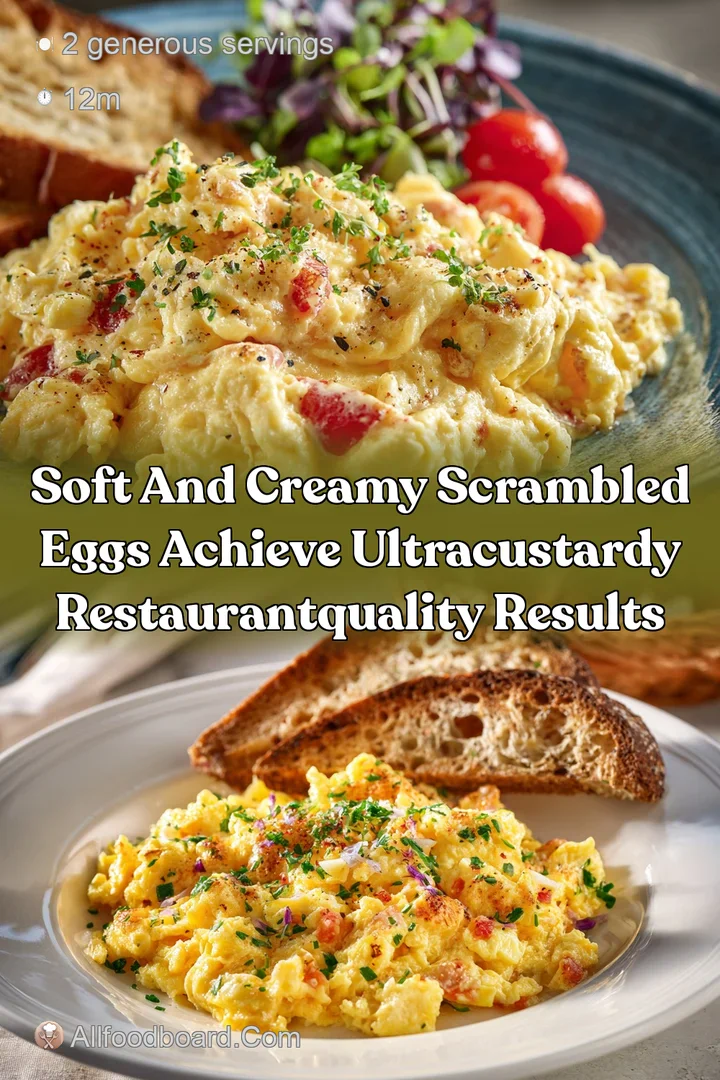
Recipe FAQs
I’m used to high heat. Why must I use such low heat for these lovely Soft and Creamy Scrambled Eggs?
The low and slow technique is the whole kit and caboodle here; it prevents the egg proteins from tightening up quickly, which is the fast track to rubbery eggs. It ensures the curds form slowly and retain maximum moisture, resulting in that lush, velvety finish we’re aiming for.
Do I really need crème fraîche or double cream for that luxurious, rich texture?
While the initial butter and low heat do most of the heavy lifting, the final tablespoon of cream or crème fraîche simply seals the deal. It adds an incomparable richness and shine, but if you're out, a splash of whole milk or an extra cube of cold butter works perfectly well to arrest the cooking.
My eggs still came out a bit dry what went wrong?
The likely culprit is either heat that was marginally too high, or you left them on the hob for too long at the finishing stage. Remember this golden rule: if the eggs look done in the pan, they are already overdone; remove them from the heat when they still look visibly wet (or 'baveuse').
How quickly must I serve these? Can I hold them warm for a few minutes?
These luxurious eggs must be served immediately! Because they are cooked gently to maintain moisture, they lose heat and their silky texture very quickly, so plate them immediately onto warm plates scrambled eggs wait for no one, as we say.
Can I scale up this recipe to make a big batch for a family brunch?
Sadly, attempting to make more than 4-5 eggs at a time often leads to disaster, as maintaining consistent, low heat and stirring evenly across a large pan is nigh impossible. For the best result, it’s worth the extra effort to cook this style in small batches.
Soft And Creamy Scrambled Eggs Recipe
Ingredients:
Instructions:
Nutrition Facts:
| Calories | 337 kcal |
|---|---|
| Protein | 11.0 g |
| Fat | 31.0 g |
| Carbs | 3.0 g |
