Creamy Polenta: Silky Smooth Pub Grub Recipe
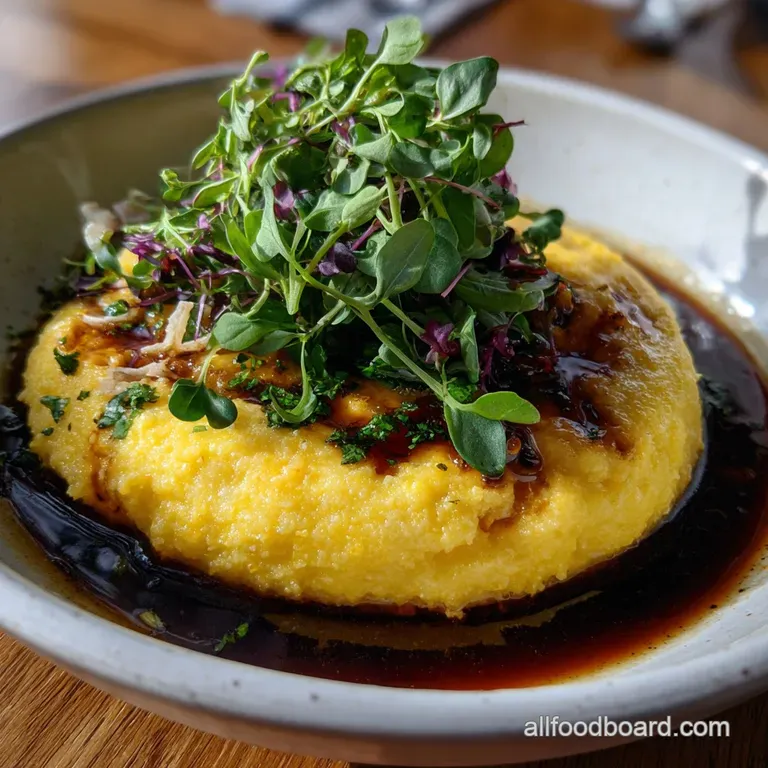
- The Soul of Northern Italy: Why You Need This Creamy Polenta Recipe
- Achieving That Signature Velvety Texture
- Pantry Essentials for the Perfect Pub Grub Side
- Mastering the Method: Step-by-Step Guide to Silky Cornmeal
- Troubleshooting and Expert Finishing Touches
- Storing Leftovers and Reheating Cold Polenta
- Delicious Ways to Serve Your Velvety Polenta
- Recipe FAQs
- 📝 Recipe Card
The Soul of Northern Italy: Why You Need This Creamy Polenta Recipe
Have you ever smelled something that immediately feels like a warm hug? That’s what happens when a pot of slow simmered cornmeal starts bubbling on the stove. It smells nutty, savory, and promises pure comfort.
This specific Creamy Polenta recipe delivers that feeling perfectly; it’s the definition of simple luxury. The final texture should be so velvety, so impossibly smooth, that it melts right onto your tongue.
Honestly, people often dismiss polenta because they think it’s just boring yellow mush. But they haven't had good polenta. When done right using the right technique and finishing with absurd amounts of butter and proper Parmesan this Creamy Polenta transforms into an essential, spectacular side dish.
It is cheap, gluten-free, and an absolute workhorse for your dinner table.
I'm going to walk you through the proper Northern Italian method for making the very best Creamy Polenta at home. This isn't the instant stuff; we are talking about the real deal, achieved through patience, a heavy pot, and a willingness to stir.
Trust me, ditch the instant packets and let’s make truly memorable Creamy Polenta together.
Achieving That Signature Velvety Texture
The difference between grainy, dry cornmeal and a spectacular bowl of Creamy Polenta comes down to three things: hydration, time, and fat content. We’re aiming for something that looks more like soft risotto than dry mashed potatoes.
What Makes Traditional Polenta Unique?
It’s all about the grind. Traditional polenta uses medium- to coarse ground cornmeal, meaning the starches take longer to fully dissolve and gelatinize compared to quick cooking versions.
This extended cooking time is essential; it allows the corn particles to swell completely, resulting in that incredible, smooth mouthfeel we are chasing in this Creamy Polenta recipe.
A Brief History of Italy's Comfort Cornmeal
Polenta has ancient origins, evolving from coarser grains into the yellow cornmeal we know today after the introduction of maize to Europe. Historically, it was a peasant staple, providing essential energy when little else was available.
Today, making Creamy Polenta is a beloved tradition, especially in Northern Italy where it serves as a hearty base for rich sauces and slow braised meats.
The Essential Difference Between Coarse and Instant Grains
Instant polenta is pre-cooked and then dried, which allows it to absorb liquid much faster like, five minutes fast. But that speed comes at the expense of texture and depth.
Coarse ground polenta, the foundation of this luscious Creamy Polenta , requires 40 minutes of patient stirring, but the flavour and the creamy texture are unmatched. This is non-negotiable if you want the best result.
The Science of Starch Gelatinization
Gelatinization sounds fancy, but it just means the starches in the cornmeal are absorbing hot liquid and expanding until they burst. When you make Creamy Polenta , you are forcing the starch to release into the cooking liquid, thickening the mixture.
The secret is keeping the heat low enough so the process happens slowly and evenly, preventing lumps.
The Role of Butter and Parmesan in Emulsion
The final step is arguably the most important for turning good polenta into excellent, luxurious Creamy Polenta . Adding cold butter and grated Parmesan Reggiano off the heat creates an incredible emulsion.
The fat molecules trap the starch particles, making the polenta silky and preventing it from becoming too stiff as it cools. That’s why we stir in a huge amount of dairy right at the end!
Perfecting the Water-to-Cornmeal Ratio
This is where many people mess up their initial attempts at Creamy Polenta . I swear by a 5:1 liquid-to-cornmeal ratio (5 cups of liquid to 1 cup of cornmeal) when using a medium grind.
This slightly generous liquid amount ensures you have plenty of cooking time to fully hydrate the grain, achieving a loose, luxurious texture that will solidify slightly as it rests.
Pantry Essentials for the Perfect Pub Grub Side
You don't need much to make spectacular food, but you do need quality. Don’t skimp on the final additions, because they define the flavour of your finished Creamy Polenta .
Choosing the Best Cornmeal (Coarse Grind vs. Fine)
Look specifically for medium or coarse ground yellow cornmeal labeled "Polenta." If you see "corn flour" or "finely ground cornmeal," skip it that will give you a thick, concrete like paste, not the lovely, velvety Creamy Polenta we are aiming for.
Using Quality Dairy: Whole Milk vs. Water
I use a combination of 4 parts water (or stock) to 1 part whole milk. Using stock (vegetable or chicken) instead of just water adds a fundamental savory base that plain water can’t touch. The whole milk provides richness and helps the final dish maintain a lighter, whiter color and creamier texture.
Chef's Note: If you want truly decadent Creamy Polenta, use all whole milk, but beware it is far more prone to scorching on the bottom of the pot!
Why Freshly Grated Parmesan Reggiano is Non-Negotiable
Please, for the love of all that is holy, do not use the pre-grated Parmesan in the shaker can. We need the oil and complexity of real, aged cheese. The salt and umami notes from quality Parmesan Reggiano are essential components of great Creamy Polenta .
Ingredient Swaps and Adaptations (e.g., dairy-free Options)
| Ingredient | Substitute | Notes |
|---|---|---|
| Whole Milk | Oat or Cashew Milk | Use unsweetened. These provide the best body for dairy-free Creamy Polenta . |
| Stock | Water + Bouillon | If you don't have stock, dissolve a good bouillon cube into the water. |
| Butter | Vegan Butter Sticks | Use the stick format, as it has less water than tubs. |
| Parmesan | Nutritional Yeast (3 Tbsp) | Use this for a salty, cheesy, umami hit in dairy-free Creamy Polenta . |
Mastering the Method: step-by-step Guide to Silky Cornmeal

This process takes 45 minutes, and most of that is just waiting while stirring occasionally. The start is the only stressful part, but if you go slow, you’ll nail it. This is the Creamy Polenta Recipe that will change your mind about cornmeal.
Preparing the Liquid Base: Salting and Heating
First, grab that heavy bottomed pot. This is essential, as it helps distribute heat and prevents scorching. Combine your 4 cups of stock/water and 1 cup of whole milk, then stir in the salt and pepper. Bring this mixture to a rolling boil over medium high heat, and then immediately turn the heat down to low.
We need a very gentle simmer.
The Critical First Stir: Preventing Lumps
Here's the key to making smooth Creamy Polenta : Hold the cornmeal in one hand and a sturdy whisk in the other. Slowly stream the cornmeal into the simmering liquid while whisking constantly and aggressively.
Keep whisking for a good two minutes until all the cornmeal is incorporated and the mixture looks like thick, bubbly pancake batter. Do not stop whisking during this introduction phase!
The Low and Slow Simmering Process (The 45 Minute Wait)
Now, ditch the whisk and switch to a wooden spoon or a heat safe spatula. Reduce the heat to the absolute lowest setting we want a bare, gentle bubble, maybe one or two bubbles surfacing every few seconds. Cover the pot loosely and let it simmer for 30– 40 minutes.
You must stir every 5– 10 minutes, scraping the bottom and sides thoroughly, to ensure uniform cooking and prevent any sticky bits from forming.
Finishing the Dish: Integrating Butter and Cheese
When the polenta pulls cleanly away from the sides of the pot and tastes fully cooked (no gritty texture!), it’s done. Remove the pot from the heat. Now, stir in the cold cubed butter until it is completely melted into the polenta. This is the foundation of that luscious texture.
Finally, stir in the Parmesan Reggiano until the whole batch of Creamy Polenta is impossibly smooth and glossy. Taste it, adjust the salt, and serve immediately.
Troubleshooting and Expert Finishing Touches
Mistakes happen. I once served polenta that was essentially cement because I didn’t add enough liquid mid-cook. We live and we learn! This advice will save your dinner.
How to Rescue Lumpy Polenta
If, despite your best efforts, you end up with pockets of dry cornmeal, do not panic. Simply transfer the polenta to a blender, adding a splash of hot stock or water, and blend until smooth. Or, if you have an immersion blender, stick it directly into the pot and give it a quick 30 second blitz.
This will instantly restore that beautiful, silky texture required for the ultimate Creamy Polenta .
Maintaining the Right Consistency: Adding Liquid Mid-Cook
Coarse polenta can vary wildly in how much liquid it absorbs. If your polenta thickens up halfway through the cooking time and starts forming thick mounds, simply stir in 1/4 cup of hot stock or water. Keep adding liquid in small increments until the desired creamy consistency returns.
The goal is always flow, not stiffness.
The Importance of Resting Time Off the Heat
Once the butter and cheese are incorporated, don't let it sit too long. Polenta starts to set the moment it leaves the heat. If you need to hold it for a few minutes before serving, cover the pot tightly and maybe put it over a very gentle bain marie (a pot of barely simmering water).
You’ll need to vigorously stir in a final tablespoon of hot liquid before serving this amazing Creamy Polenta .
Storing Leftovers and Reheating Cold Polenta
If you’ve made a large batch of truly fantastic Creamy Polenta , don't let it go to waste! But you need a plan, because cold polenta is basically a building material.
Refrigerating and Freezing Cooked Polenta
You can store leftover polenta in an airtight container in the fridge for up to 4 days. It will turn solid, like a firm sliceable block. For longer storage, you can freeze it for up to 3 months.
Let it cool completely, slice the solid block into squares or circles, wrap them individually in plastic wrap, and then transfer to a freezer bag.
Best Methods for Returning Creaminess (Reheating)
You cannot microwave cold polenta and expect that gorgeous Creamy Polenta texture to magically reappear. To reheat, scoop the cold polenta block into a saucepan. Add a generous splash of milk or stock (about 1/4 cup per 1 cup of solid polenta).
Heat it gently over low heat, stirring constantly and aggressively, until it breaks down and returns to that silky, pourable state. This often yields excellent Savory Polenta Recipes for the next day.
Turning Leftovers into Grilled Polenta Squares
This is my favourite trick. Slice the cold, refrigerated polenta block into 1 inch squares or triangles. Brush them lightly with olive oil, sprinkle them with salt and pepper, and grill them or sear them in a hot skillet. They become golden, crusty, and tender inside. They're amazing topped with herbs or served alongside rich tomato dishes, perhaps even alongside a fiery, saucy dish like Spicy Sausage Pasta: Fiery Penne in Creamy Tomato Sauce .
Delicious Ways to Serve Your Velvety Polenta
This perfect Creamy Polenta is such a fantastic foundation. It's truly a blank canvas for anything saucy, providing the necessary richness and body to elevate even the simplest meal.
Serve this cheesy polenta warm, straight from the pot, beneath anything that has a lovely liquid component. I love to mix a bit of chopped fresh sage into the final stir for an aromatic twist. If you love deep, Italian flavours, serve this next to a rich tomato sauce or topped with deeply caramelized shallots. If you’re looking for other incredibly satisfying comfort meals, this pairs wonderfully with a big bowl of Creamy Chicken Rice Soup: The Ultimate Comfort Bowl Recipe . Making Creamy Polenta is easy when you stick to these foundational techniques.

Recipe FAQs
Why is my polenta gritty or not smooth, even after 45 minutes of cooking?
Grittiness usually means the cornmeal hasn't fully hydrated or you may be using too coarse a grind. Ensure you are using fine or medium ground cornmeal, and confirm the liquid is simmering gently the entire time to allow the starch to swell.
If it is still slightly abrasive, add a splash more hot stock or water and continue cooking for another 10 to 15 minutes.
My polenta became too stiff and dry after taking it off the heat. How do I fix the consistency?
Polenta thickens significantly upon cooling due to starch retrogradation. To restore its creamy, silky texture, vigorously stir in a few tablespoons of very hot milk, stock, or water until the desired looseness returns.
Always serve polenta immediately after adding the butter and cheese, or keep it warm over a double boiler while waiting to serve.
Can I substitute instant or quick cooking polenta for this slow cooked recipe?
While you technically can for expediency, instant polenta is pre-cooked and results in a much less complex flavor and smoother texture profile than traditional slow cooked cornmeal.
If using quick cooking polenta, follow the package's liquid directions, but always incorporate the specified butter and Parmesan at the very end to maximize flavor.
Can I make this creamy polenta recipe dairy-free or vegan?
Absolutely. For a dairy-free version, substitute the butter with high-quality olive oil or vegan butter, and use robust vegetable stock instead of milk or cream. To replicate the savory umami flavor of Parmesan, stir in several tablespoons of nutritional yeast at the end of the cooking process.
Do I have to stir the polenta continuously during the entire 45 minutes?
Initial vigorous stirring is necessary for the first 5 minutes after adding the cornmeal to prevent immediate clumping. After the polenta begins to bubble gently, you only need to stir every 5 to 7 minutes, ensuring the bottom does not stick or scorch, which is crucial for achieving that silky, smooth texture.
What is the ideal liquid-to-polenta ratio for a very creamy texture?
A general guideline for creamy polenta is 4 parts liquid to 1 part polenta (by volume), but for an exceptionally silky, soft product, you may benefit from using 4.5 or 5 parts liquid. Using a blend of water/stock and milk or cream also significantly enhances the richness and ensures a superior, smooth texture.
What is the best way to store leftover polenta, and is freezing an option?
Store leftovers tightly covered in the refrigerator for up to 4 days, noting that it will solidify greatly once cold. Freezing creamy polenta is generally not recommended as the texture degrades upon thawing and reheating.
If you anticipate having a large amount of leftovers, you can pour the cooled polenta into a dish to set, then slice and pan-fry or grill the firm pieces.
Silky Smooth Creamy Polenta

Ingredients:
Instructions:
Nutrition Facts:
| Calories | 288 kcal |
|---|---|
| Protein | 9.3 g |
| Fat | 22.1 g |
| Carbs | 11.7 g |
