One Pan Garlic Parmesan Chicken Pasta
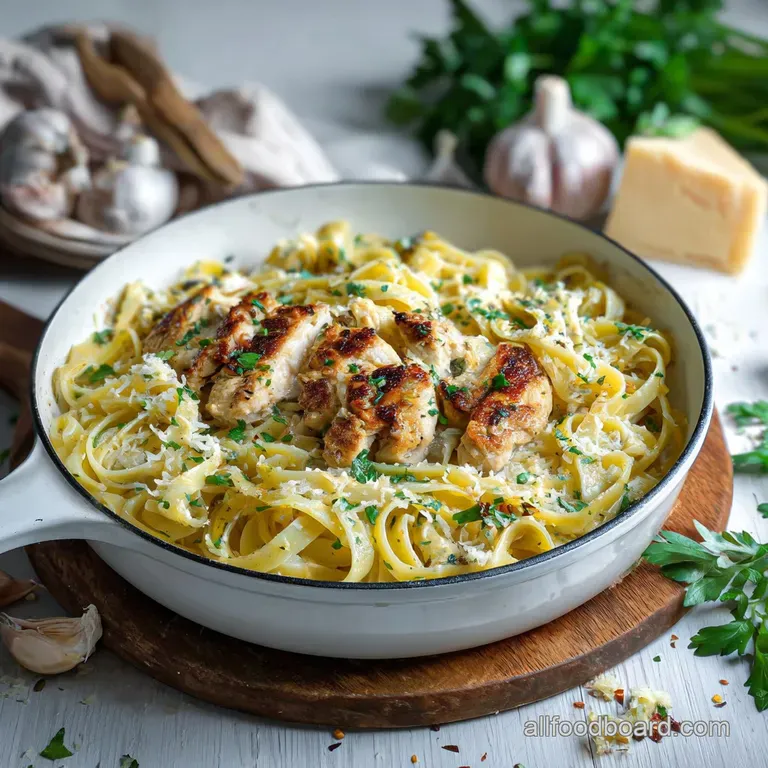
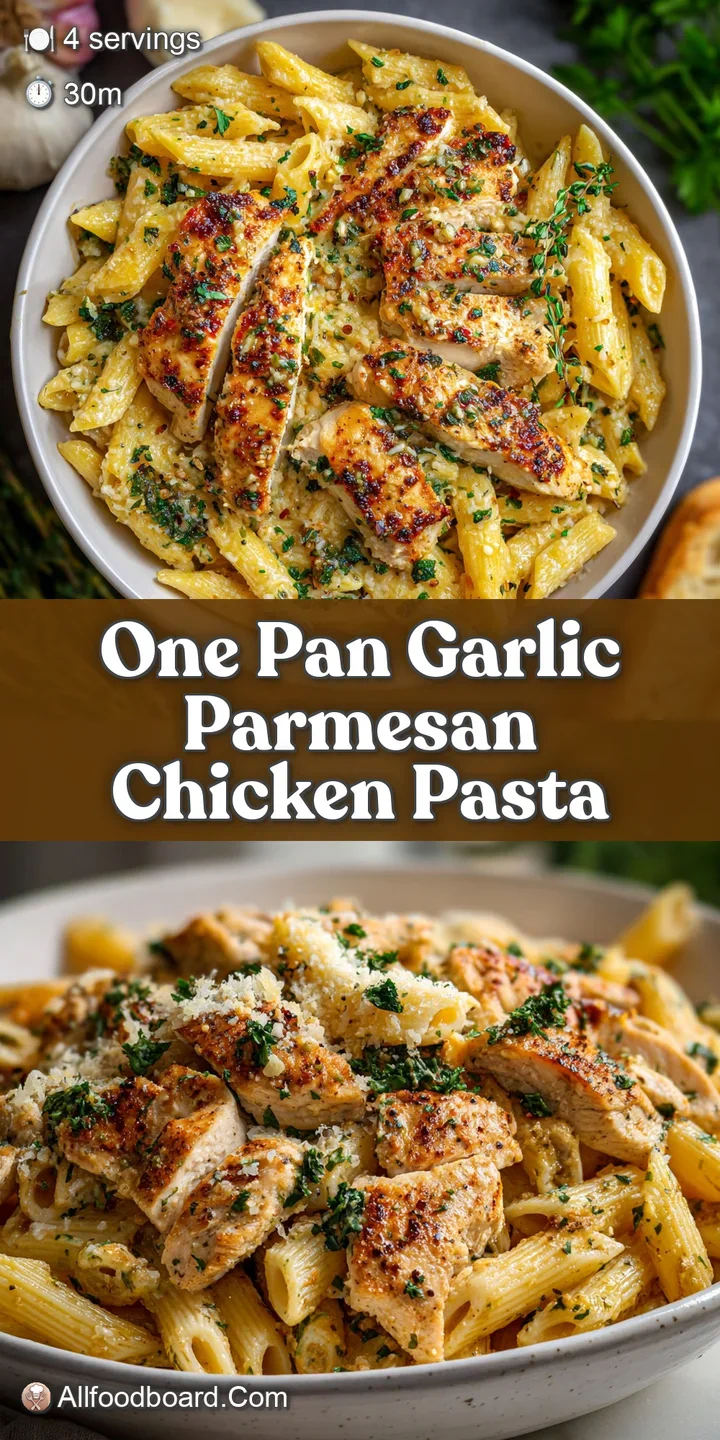
- Time: Active 10 minutes, Passive 20 minutes, Total 30 minutes
- Flavor/Texture Hook: Velvety, cheese coated pasta with golden, savory chicken
- Perfect for: Busy weeknights, beginner cooks, or low dish-day cravings
- One Pan Garlic Parmesan Chicken Pasta
- Why This Pan Method Works
- Perfect Chicken Doneness Guide
- Ingredient Deep Dive Analysis
- Ingredients and Smart Substitutes
- Simple Steps for Success
- Fixing Common Pasta Problems
- Adjusting for More People
- Fresh Ingredients vs Shortcut Options
- Flavor Tweaks to Try
- Storing and Using Leftovers
- Serving Your Beautiful Meal
- High in Sodium ⚠️
- Recipe FAQs
- 📝 Recipe Card
One Pan Garlic Parmesan Chicken Pasta
The sizzle of chicken hitting a hot pan is probably my favorite sound in the world, right next to the click of a wine bottle opening. I remember the first time I tried making a creamy pasta dish in just one pan. I was skeptical, honestly.
I thought the pasta would be gummy or the chicken would be overcooked and rubbery. I stood over the stove, spatula in hand, watching the broth bubble around the dry penne, praying it wouldn't turn into a pot of mush.
But then something happened. The liquid started to thicken, the aroma of sautéed shallots and garlic filled my tiny kitchen, and when I finally stirred in that mountain of Parmesan, it all clicked. It wasn't just "good for a one pan meal," it was genuinely one of the best textures I'd ever achieved.
The sauce clung to every ridge of the penne in a way that drained pasta never does.
We've all had those nights where the sink is full and the energy is low. This recipe is my peace offering to you for those exact moments. You get the golden, seared crust on the chicken, the bite of the pasta, and a sauce that feels like a warm hug, all with only one heavy skillet to wash at the end.
It's a total win, and I'm going to show you exactly how to get it right every single time.
Why This Pan Method Works
- Starch Gelatinization: Since we don't drain the pasta water, the starches released by the penne stay in the pan, acting as a natural thickener that binds the heavy cream and cheese into a stable sauce.
- Maillard Reaction: Searing the chicken at a high temperature first creates complex flavor compounds on the meat's surface that later dissolve into the cooking liquid, deepening the overall savory profile.
- Emulsification Stability: The combination of the starch heavy broth and the fats from the heavy cream creates a robust emulsion that resists breaking, even when the high protein Parmesan is added at the end.
- Deglazing Mechanics: Using the chicken broth to scrape up the browned bits (fond) after searing the chicken ensures that no flavor is lost to the bottom of the pan.
Perfect Chicken Doneness Guide
| Thickness | Internal Temp | Rest Time | Visual Cue |
|---|---|---|---|
| 1 inch cubes | 165°F | 3 minutes | Golden brown exterior, opaque center |
| 1/2 inch strips | 165°F | 2 minutes | No pink remaining when sliced |
| Large chunks | 165°F | 5 minutes | Firm to the touch with clear juices |
Choosing the right chicken prep is the first step toward success. If you cut your pieces too small, they'll disappear; too large, and they won't cook through during the initial sear. I find that 1 inch cubes are the "Goldilocks" zone for this specific dish.
Ingredient Deep Dive Analysis
| Ingredient | Science Role | Pro Secret |
|---|---|---|
| Dry Penne | Provides starch for sauce body | Use a high protein brand for better "al dente" hold |
| Heavy Cream | Adds fat for silkiness | Room temperature cream prevents curdling when hitting the hot broth |
| Parmesan | Provides salt and protein structure | Grate it yourself from a block to avoid grainy anti caking agents |
| Smoked Paprika | Adds depth and color | Bloom it in the oil with the chicken to unlock fat soluble flavors |
Ingredients and Smart Substitutes
- 1.5 lbs chicken breast: Cut into 1 inch pieces. Why this? Lean protein that sears quickly and stays tender in the sauce.
- Substitute: Boneless chicken thighs for a juicier, more forgiving texture.
- 12 oz dry penne pasta: Why this? The ridges (rigate) are designed to hold onto thick, creamy sauces.
- Substitute: Rotini or medium shells also work beautifully for sauce catching.
- 2 cups low sodium chicken broth: Why this? Controls the salt level while providing the primary cooking liquid.
- Substitute: Vegetable broth, though it will have a lighter, less "meaty" flavor profile.
- 1 cup heavy cream: Why this? Essential for that velvety, rich mouthfeel that defines this dish.
- Substitute: Whole milk mixed with a tablespoon of cornstarch (it will be less rich).
- 1 cup freshly grated Parmesan cheese: Why this? Melts into the sauce to provide salt, umami, and thickness.
- Substitute: Pecorino Romano for a sharper, saltier kick.
- 4 cloves garlic: Mined finely. Why this? The backbone of the flavor profile; adds aromatic pungency.
- Substitute: 1 teaspoon of garlic powder if you're in a pinch, but fresh is far superior.
- 1 small shallot: Diced. Why this? Provides a delicate, sweet onion flavor that doesn't overpower the garlic.
- Substitute: The white parts of two green onions or a small yellow onion.
- 2 tbsp extra virgin olive oil: Why this? High enough smoke point for searing with a nice fruity finish.
- Substitute: Avocado oil or even unsalted butter for extra richness.
- Seasonings: 1 tsp kosher salt, 1/2 tsp black pepper, 1 tsp smoked paprika, 1 tsp red pepper flakes.
- Finishers: 1/4 cup fresh parsley and 1 tbsp lemon juice.
Simple Steps for Success
- Season the chicken. Toss your 1.5 lbs of chicken pieces with salt, pepper, and smoked paprika. Note: This ensures the flavor is cooked into the meat, not just sitting on top.
- Sear the protein. Heat the olive oil in a large skillet and brown the chicken until a golden crust forms on all sides, about 5-6 minutes.
- Remove and rest. Take the chicken out of the pan and set it aside on a plate. Note: We do this so the chicken doesn't overcook while the pasta simmers.
- Sauté the aromatics. In the same pan, add the shallots and garlic, stirring for 1 minute until fragrant and translucent.
- Deglaze the pan. Pour in the 2 cups of chicken broth, scraping the bottom with a wooden spoon.
- Add the pasta. Stir in the 12 oz of dry penne and bring the mixture to a boil.
- Simmer the noodles. Lower the heat, cover, and cook for 10-12 minutes until the pasta is tender and liquid is reduced.
- Incorporate the cream. Stir in the 1 cup of heavy cream and the red pepper flakes, bringing it back to a gentle simmer.
- Melting the cheese. Turn off the heat and stir in the 1 cup of Parmesan and the lemon juice until the sauce is thick and velvety.
- Final combine. Add the chicken back in along with any juices from the plate and toss with the fresh parsley.
Fixing Common Pasta Problems
Why is my sauce watery?
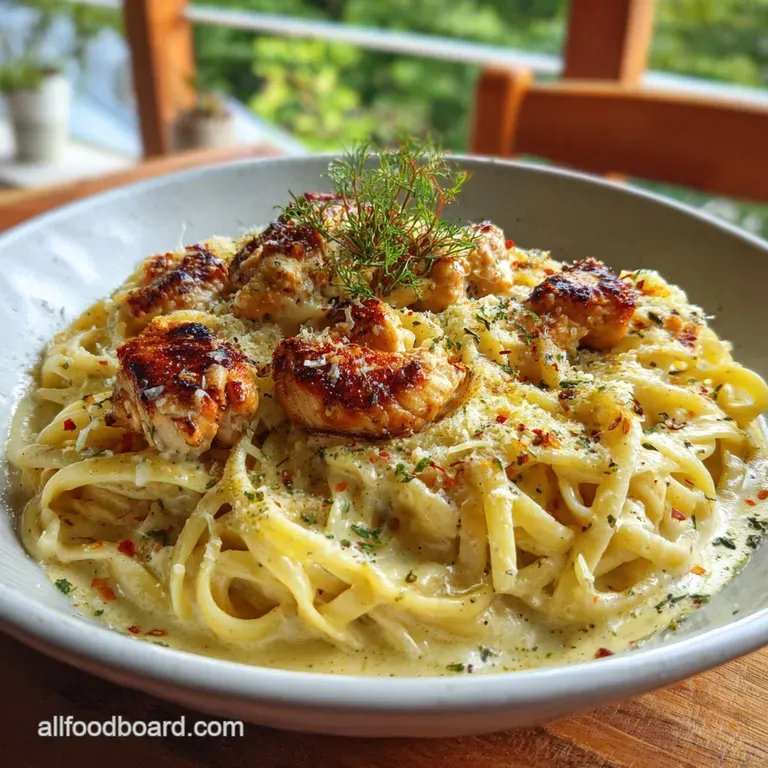
If the sauce feels thin after the pasta is cooked, it usually means the liquid didn't reduce enough or you added the cheese too early. The cheese needs a moment of residual heat to thicken the sauce, but the pasta water itself provides the starch needed for body. If it's still too thin, let it sit for 3 minutes; it will naturally thicken as it cools slightly. For a different texture entirely, you might enjoy the How to Bake recipe which uses oven heat to set the sauce.
Why is the pasta gummy?
This usually happens if you stir the pasta too much during the simmering phase or if you started with lukewarm water. The constant friction breaks down the starch too quickly. Use a lid to trap the steam and only stir every few minutes to ensure nothing is sticking to the bottom of the pan.
| Problem | Root Cause | Solution |
|---|---|---|
| Broken Sauce | Heat was too high when adding cheese | Remove from heat before stirring in the Parmesan |
| Hard Pasta | Liquid evaporated too fast | Add 1/4 cup extra broth and keep the lid tightly sealed |
| Bland Flavor | Not enough salt in the simmering liquid | Taste the broth before adding pasta; it should taste like soup |
Common Mistakes Checklist
- ✓ Grate your own Parmesan cheese to avoid a grainy or clumpy sauce texture.
- ✓ Don't skip the lemon juice; the acidity cuts through the heavy fat of the cream and cheese.
- ✓ Ensure the chicken is patted dry before seasoning to get a better sear.
- ✓ Use a large enough skillet so the pasta can submerge in a single layer if possible.
- ✓ Wait to add the chicken back until the very end to prevent it from getting tough.
Adjusting for More People
If you need to double this recipe for a crowd, you'll likely need to move to a large Dutch oven rather than a skillet. When doubling, don't just double the salt immediately; start with 1.5 times the amount and taste as you go. Liquids also evaporate differently in larger volumes, so keep an extra splash of broth handy.
For those cooking for just one or two, this recipe halves beautifully. Use a smaller 10 inch skillet and reduce the simmering time by about 2 minutes, as less volume heats up faster. If you're looking for a slightly different flavor profile for a smaller batch, this Garlic Chicken Pasta recipe is another fantastic option that relies on a similar flavor base.
Fresh Ingredients vs Shortcut Options
| Component | Fresh Method | Shortcut Method | Result |
|---|---|---|---|
| Garlic | Freshly minced cloves | Jarred minced garlic | Fresh is more pungent; jarred is milder and sweeter |
| Parmesan | Grated from the wedge | Pre shredded bag | Fresh melts smoothly; bagged can be grainy |
| Parsley | Freshly chopped leaves | Dried parsley flakes | Fresh adds bright color; dried is purely for subtle herb notes |
Flavor Tweaks to Try
Make it Spicy
If you love a kick, double the red pepper flakes and add a tablespoon of Calabrian chili paste when you sauté the garlic. The heat pairs incredibly well with the cooling cream and the salty Parmesan.
One Pan Garlic Parmesan Chicken Pasta Healthy
To lighten things up, you can swap the heavy cream for half and half or a mix of Greek yogurt and milk. Just be careful not to boil the sauce once the yogurt is added, or it will curdle.
Using whole wheat penne or a chickpea based pasta is another great way to add fiber, though you may need a bit more broth as these pastas tend to absorb more liquid.
Veggie Boost
I often throw in two cups of fresh baby spinach during the last 2 minutes of simmering. The heat from the pasta will wilt it perfectly without needing an extra pan. Broccoli florets also work well; just add them halfway through the pasta cooking time.
Storing and Using Leftovers
Storage: This pasta stays good in the fridge for up to 3 days in an airtight container. The sauce will thicken significantly as it cools because the starches continue to set.
Reheating: Don't just microwave it on high, or the sauce will break and become oily. Add a splash of milk or water to the bowl, cover it, and heat it in 30 second intervals, stirring in between. This helps re emulsify the sauce.
Zero Waste Tip: If you have leftover rinds from your Parmesan wedge, don't toss them! Toss them into the pan while the pasta simmers. They'll release deep, salty umami flavors into the broth. Just remember to fish them out before serving.
Serving Your Beautiful Meal
When you're ready to plate, don't just dump it into a bowl. Use a large pasta fork to twirl the penne and pile it high in the center of the plate. Top it with an extra dusting of Parmesan and a few cracks of fresh black pepper.
- The "If you want X, do Y" list:
- If you want a crunchier topping, toast some panko breadcrumbs in butter and sprinkle them over the top before serving.
- If you want a deeper flavor, add a splash of dry white wine (like Sauvignon Blanc) to the pan after the garlic is fragrant but before the broth.
- If you want a "pink" sauce, stir in two tablespoons of tomato paste when sautéing the shallots.
This dish is best served immediately while the sauce is at its peak silkiness. It's the kind of meal that makes you feel like a pro cook even on your most tired days. I've made this for my family dozens of times, and it's one of the few things everyone agrees on. It's simple, honest food that actually works.
Enjoy every bite!
High in Sodium ⚠️
1120 mg mg of sodium per serving (49% % of daily value)
The American Heart Association recommends limiting sodium intake to no more than 2,300mg per day for most adults.
Sodium Reduction Tips for Your Chicken Penne Pasta
-
Swap Broth-30%
Use sodium free chicken broth instead of low-sodium broth. This one simple swap can greatly reduce the sodium content without sacrificing flavor.
-
Reduce Parmesan-15%
Parmesan cheese is a significant source of sodium. Try using half the amount of Parmesan cheese, or consider a lower sodium cheese alternative like part skim ricotta.
-
Reduce Added Salt-25%
Reduce the amount of kosher salt added to the chicken. Try using only 1/2 teaspoon, or eliminate it entirely and rely on other seasonings for flavor.
-
Boost with Lemon
Enhance the flavor profile with additional lemon juice or zest. The acidity helps to brighten the dish and can mask the need for salt.
-
Herb Power
Experiment with fresh herbs and spices to boost the flavor. Consider adding more parsley, basil, or oregano to enhance the dish without adding sodium.
Recipe FAQs
What pasta goes well with chicken parmesan?
Penne or Rigatoni are ideal. Their ridges and tubes capture the thick, cheesy sauce perfectly, ensuring every bite has maximum coating. While this one-pan method works best with short pasta, fettuccine can also work if you increase the initial broth slightly.
What are common mistakes when making chicken parm?
Overcooking the chicken during the initial sear is the most common error. Sear the chicken just until golden brown on the outside, then remove it from the pan while the pasta simmers. This ensures it finishes cooking tenderly in the final sauce, preventing rubbery texture.
What is Ina Garten's most famous chicken recipe?
Her most iconic dish is often cited as "Barefoot Contessa" style Parmesan Crusted Chicken. While this recipe is a one-pan method, her style emphasizes high-quality ingredients and simple finishing touches. If you enjoy deeply savory, restaurant quality sauces, see how we build depth in our Classic Crushed Tomato recipe.
What's the secret to a creamy garlic parmesan?
Using the pasta's own starch is the secret to a naturally thick, emulsified sauce. Do not drain the pasta water; those released starches bind the heavy cream and Parmesan into a velvety texture that won't separate. If you're looking for a standalone sauce guide, check out the Creamy Garlic Sauce recipe for technique deep dive.
How do I prevent the sauce from breaking when adding cheese?
Turn off the heat completely before adding the Parmesan cheese. High direct heat causes the proteins in the cheese to seize up and separate from the fat, resulting in a grainy or oily texture. Stirring off-heat allows the residual warmth to melt the cheese slowly into the existing emulsion.
Can I use milk instead of heavy cream for a lighter version?
Yes, but you must thicken the liquid separately. Milk lacks the necessary fat content to create a stable, rich sauce on its own. Substitute half the cream with whole milk, and then incorporate a slurry made of 1 tablespoon of cornstarch mixed with 2 tablespoons of cold water.
Should I sear the chicken first, or cook it with the pasta?
Sear the chicken first and then remove it from the pan. Searing the chicken separately creates a crucial flavor layer (the fond) on the bottom of the pan and prevents the chicken from becoming tough while the dry pasta cooks in the liquid.
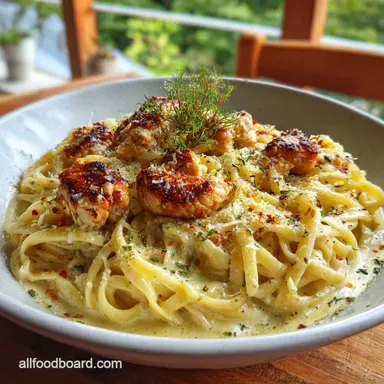
One Pan Garlic Chicken Pasta
Ingredients:
Instructions:
Nutrition Facts:
| Calories | 978 kcal |
|---|---|
| Protein | 74 g |
| Fat | 42 g |
| Carbs | 72 g |
| Fiber | 3.5 g |
| Sugar | 4.2 g |
| Sodium | 1120 mg |
