Macaroni and Cheese: Creamy and Baked
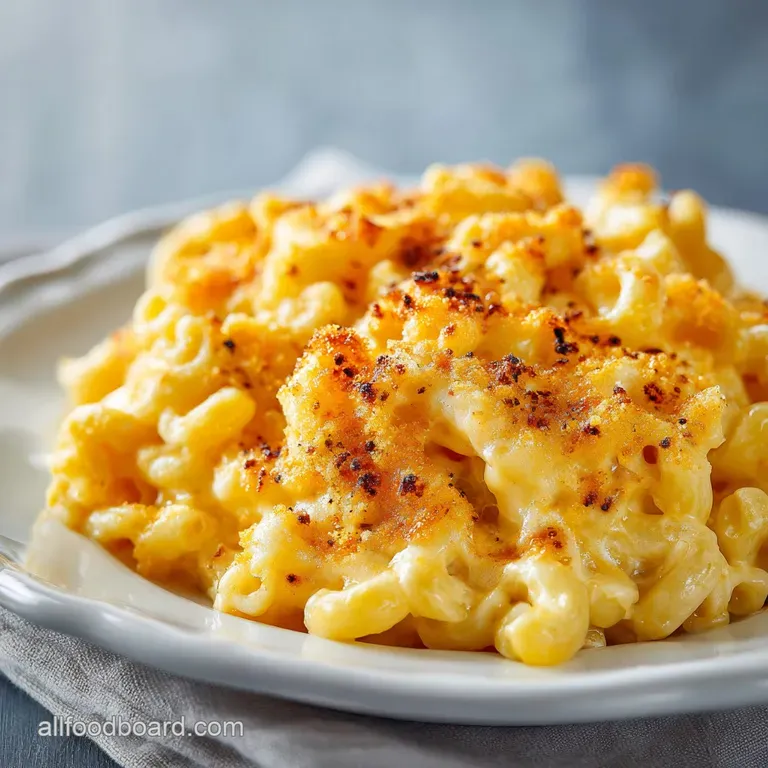
- Time: Active 15 minutes, Passive 25 minutes, Total 40 minutes
- Flavor/Texture Hook: Sharp, tangy, and silky with a satisfying panko crunch
- Perfect for: Weeknight family dinners or budget-friendly potluck gatherings
- Why Evaporated Milk Changes Macaroni and Cheese
- Important Performance Specs and Comparison
- Essential Ingredient Breakdown and Roles
- Necessary Tools for Smooth Sauces
- Detailed Cooking Methods and Cues
- Solving Common Sauce Consistency Issues
- Flavor Variations and Smart Swaps
- Proper Storage and Reheating Guide
- Best Sides and Serving Ideas
- Kitchen Myths About Cheese Sauces
- Recipe FAQs
- 📝 Recipe Card
Why Evaporated Milk Changes Macaroni and Cheese
The aroma of sharp cheddar melting into a warm, mustard spiced base is something that instantly pulls me back to my childhood kitchen. I remember the first time I tried making a proper Macaroni and Cheese on a shoe string budget during my university years.
I couldn't afford heavy cream, and the pre shredded bags of cheese were even out of reach. I reached for a dusty can of evaporated milk in the back of the pantry and a tub of plain yogurt, hoping for the best. What happened next was a revelation.
The sauce didn't break, it didn't get grainy, and it clung to every single curve of the elbow macaroni like a velvet glove.
This specific version focuses on the hero of the pantry: evaporated skim milk. While many recipes insist on heavy cream for richness, evaporated milk is actually a secret weapon for home cooks. Because it has about 60% of the water removed, it behaves like a concentrated protein bomb.
It provides a creamy mouthfeel and incredible stability that prevents the sauce from separating into an oily mess when it hits the high heat of the oven. Trust me, once you see how this interacts with the sharp cheddar, you’ll never go back to the expensive heavy cream cartons.
We are going for a result that is deeply comforting but surprisingly light on the palate. By using Greek yogurt, we add a necessary tang that cuts through the richness of the Gruyère and cheddar.
It’s a family friendly meal that feels like a massive treat but uses smart, everyday ingredients you likely already have. Let’s get into why this method actually works and how you can master it every single time without breaking the bank.
Protein Concentration: Removing water from the milk allows the proteins to coat the pasta more effectively, creating a thicker sauce without needing a heavy flour roux.
Acidic Balance: The Greek yogurt adds lactic acid, which helps the cheese melt more smoothly and provides a bright contrast to the heavy fats.
Carryover Cooking: Under boiling the pasta by exactly 2 minutes ensures it reaches the perfect texture while soaking up the sauce in the oven.
Emulsion Stability: Using mustard acts as a natural bridge between the water based milk and the fat heavy cheese, preventing that dreaded oily separation.
| Premium Ingredient | Budget Alternative | Flavor Impact | Savings |
|---|---|---|---|
| Fresh Gruyère | Extra Swiss | Slightly less nutty but very meltable | Save $4-6 |
| Fancy Panko | Crushed Crackers | Saltier finish and denser crunch | Save $2-3 |
| Smoked Paprika | Liquid Smoke (2 drops) | Intense wood smoke flavor without the spice | Save $5 |
When you are looking at your grocery list, don't feel pressured to buy the most expensive blocks of cheese. While hand grating is non negotiable for the texture, a decent store brand extra sharp cheddar often has more "bite" than the artisanal versions, which is exactly what we want here.
The sharp flavor is the backbone of the dish, and it stands up beautifully against the creamy yogurt base.
Important Performance Specs and Comparison
When we talk about Macaroni and Cheese, there is often a debate between the stovetop version and the baked version. Stovetop is all about that immediate, gooey, almost liquid gold sensation. Baked mac, however, offers those crispy edges and a structure that feels more like a complete meal.
For this recipe, we are taking the best of both worlds by starting with a stovetop emulsion and finishing with a 375°F (190°C) bake.
| Method | Time | Texture | Best For |
|---|---|---|---|
| Stovetop Only | 20 minutes | Soupier, very creamy | Quick lunch |
| Baked (This Recipe) | 40 minutes | Firm with crispy crust | Dinner/Leftovers |
| Slow Cooker | 3 hours | Very soft, unified flavor | Large crowds |
Choosing the right method depends on how much time you have. If you’re in a rush, you could technically stop after step five and eat it right out of the pot. However, you would miss out on the textural contrast of the panko and the way the Gruyère browns on top.
The oven time is where the flavors really marry together, and the edges of the pasta get those little chewy, toasted bits that everyone fights over at the dinner table.
I’ve found that the 9x13 inch baking dish is the sweet spot for this quantity of pasta. It allows for enough surface area so that everyone gets a bit of the crust, but it’s deep enough that the center stays moist and velvety.
If you use a larger pan, you risk the sauce evaporating too quickly and ending up with a dry dish. Stick to the specs, and you’ll be rewarded with a perfect cross section of cheesiness.
Essential Ingredient Breakdown and Roles
Understanding your ingredients is the first step toward becoming a more intuitive cook. We aren't just throwing things in a pot; each component has a specific job to do. For example, the Dijon mustard isn't there to make it taste like a sandwich.
It’s there because mustard contains lecithin, a natural emulsifier that keeps our fats and liquids living in harmony.
| Ingredient | Science Role | Pro Secret |
|---|---|---|
| Evaporated Skim Milk | Protein density | Use it at room temp to prevent curdling when mixing |
| Greek Yogurt | Moisture and tang | Whisk it in slowly to keep the sauce glossy |
| Sharp Cheddar | Flavor and fat | Grate it yourself to avoid the gritty starch on pre shredded bags |
| Dijon Mustard | Emulsification | A tiny bit more than the recipe says adds a "hidden" depth |
In my kitchen, I've learned that properly lush comfort food starts with how you treat the fats. If you rush the cheese addition, the proteins will tighten up and push the oil out. This is why we add the cheese gradually. It’s a slow dance, not a race. The evaporated milk provides the perfect stage for this, as it is much more forgiving than regular 2% milk which can easily become watery.
The choice of 16 oz elbow macaroni is classic for a reason. The hollow tubes act like little straws, sucking up the Silky Smooth cheese sauce so you get flavor on the inside and the outside. If you swap for a different shape, like shells or cavatappi, make sure they have plenty of ridges to grab onto that liquid gold. The science of the shape is just as important as the science of the sauce.
Necessary Tools for Smooth Sauces
You don’t need a professional kitchen to make a world class Macaroni and Cheese, but a few specific tools will make your life much easier. First and foremost, a heavy bottomed saucepan is vital.
Thin pots have "hot spots" that can scorch the milk or cause the cheese to stick and burn before it has a chance to melt into the sauce.
A sturdy whisk is your best friend here. When you are combining the Greek yogurt and the evaporated milk, you want to create a completely smooth base. If you see little white flecks, keep whisking. The goal is a uniform, pale yellow liquid before any cheese even touches the pan. I also highly recommend a box grater.
It might seem like more work, but the difference in how hand grated cheese melts compared to the bagged stuff is night and day.
- 16 oz elbow macaroni: Use the standard size for the best sauce to pasta ratio. Why this? The shape holds sauce perfectly inside the tubes.
- 12 oz evaporated skim milk: Find this in the baking aisle. Why this? Provides richness and stability without the high fat of cream.
- 1 cup low-fat Greek yogurt: Use plain, unsweetened yogurt only. Why this? Adds a necessary acidic tang and creamy body.
- 8 oz extra sharp cheddar cheese: Choose a block and grate it yourself. Why this? Sharpness provides the main flavor profile.
- 4 oz Gruyère cheese: This is the secret for a professional, nutty finish. Why this? High meltability and complex flavor notes.
- 2 tsp Dijon mustard: Don't worry, you won't taste "mustard." Why this? Acts as an emulsifier to keep the sauce smooth.
- 1/2 cup panko breadcrumbs: These are much airier than regular crumbs. Why this? Creates a superior, shattering crunch on top.
- 1/2 tsp smoked paprika: Just enough for a hint of warmth and color. Why this? Adds a subtle wood fired depth to the cheese.
Detailed Cooking Methods and Cues
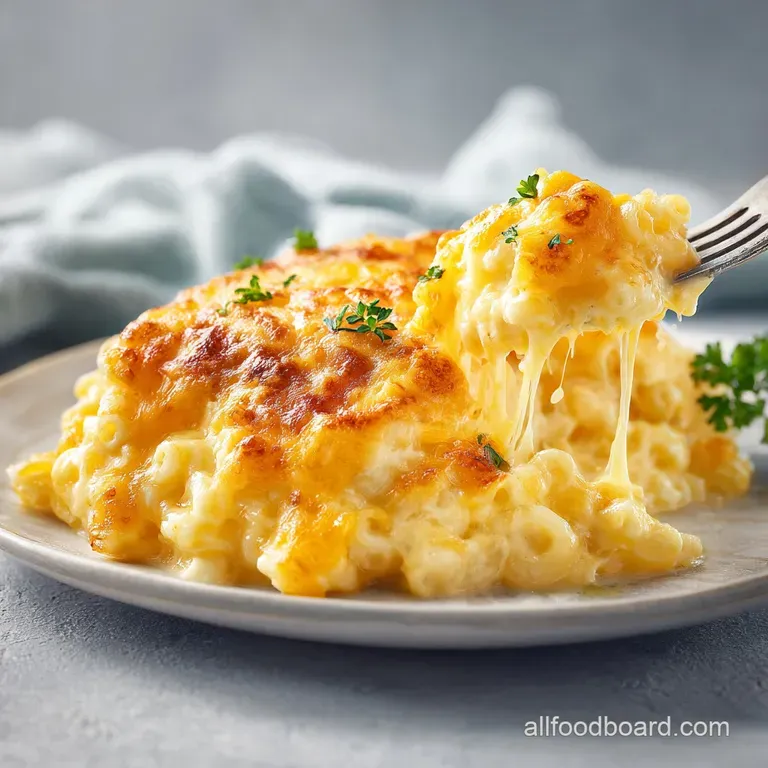
Let's get cooking. The key here is timing. You want your sauce to be ready at the exact moment your pasta is drained. If the pasta sits too long, it will clump together. If the sauce sits too long without being mixed into the noodles, it may start to form a skin. Coordination is the secret ingredient in this kitchen.
- Boil the pasta. Bring a large pot of water to a rolling boil and add 1 tsp fine sea salt. Drop the 16 oz elbow macaroni and cook for exactly 2 minutes less than the package instructions. Drain when the center still has a firm bite.
- Simmer the milk. In a medium heavy bottomed saucepan over medium low heat, whisk the 12 oz evaporated skim milk and 1 tsp garlic powder. Watch for small bubbles forming around the edges.
- Incorporate the yogurt. Slowly whisk the 1 cup low-fat Greek yogurt and 2 tsp Dijon mustard into the warm milk. Whisk until the mixture is completely smooth and no lumps remain.
- Melt the cheese. Gradually add 3/4 of the grated cheddar and Gruyère. Whisk in a figure eight motion until the sauce is glossy and coats the back of a spoon.
- Combine ingredients. Pour the cheese sauce over the drained macaroni in the large stockpot. Stir gently until every noodle is submerged in cheese.
- Prep the topping. In a small bowl, mix 1/2 cup panko breadcrumbs, 1 tbsp olive oil, and 1 tbsp minced fresh parsley. The crumbs should look like wet sand.
- Assemble the dish. Transfer the pasta to a 9x13 inch baking dish. Spread it out evenly to ensure consistent cooking.
- Add final layers. Sprinkle the remaining 1/4 of the cheese mixture over the top, followed by the panko mixture and a dusting of 1/2 tsp smoked paprika. This creates the multi textured crust.
- Bake the mac. Place in the oven at 375°F (190°C) for 15-20 minutes. Remove when the edges are bubbling and the top is golden brown.
- Rest before serving. Let the dish sit for 5 minutes. This allows the sauce to thicken slightly so it stays on the pasta.
Solving Common Sauce Consistency Issues
We have all been there: you follow the steps, but something feels off. Maybe the sauce looks a little thin, or perhaps it’s looking a bit grainy. Don't panic. Most Macaroni and Cheese issues are easily fixed with a little heat adjustment or a splash of liquid.
The most common culprit for a "broken" sauce is high heat. If you boil the cheese, it will separate. Keep that flame low and slow.
Why Your Sauce Is Gritty
If your sauce feels like it has sand in it, you likely used pre shredded cheese. Those bags are coated in potato starch or cellulose to prevent clumping in the package. Unfortunately, that starch doesn't melt; it just sits there and creates a grainy texture.
Another reason could be that the heat was too high, causing the proteins in the cheese to "clump" together.
| Problem | Root Cause | Solution |
|---|---|---|
| Sauce is watery | Not enough cheese or too much milk | Simmer for 2 more mins or add extra cheddar |
| Pasta is mushy | Over boiled in the first step | Reduce oven time to 10 mins just to melt top |
| Oil on top | Sauce separated from high heat | Whisk in a tablespoon of warm milk to re emulsify |
Beyond the table fixes, remember that the "rest time" is a functional part of the recipe. When the dish comes out of the oven, the sauce is at its thinnest because of the high temperature.
As it sits for those five minutes, the starches in the pasta continue to absorb a tiny bit of moisture, and the fats in the cheese begin to set. This turns a "soupy" mac into a "creamy" one.
- ✓ Always grate your cheese from a block for the smoothest melt possible.
- ✓ Don't rinse your pasta; the surface starch helps the sauce stick to the noodles.
- ✓ Keep the sauce on medium low heat; never let it reach a full, rolling boil once the cheese is added.
- ✓ Pat your parsley completely dry before mincing to avoid a soggy panko topping.
- ✓ Use a heavy bottomed pot to prevent the milk from scorching on the bottom.
Flavor Variations and Smart Swaps
While this recipe is a classic, your kitchen is your kingdom. You can easily adapt this base to fit whatever you have in the fridge. For example, if you find Gruyère too expensive, a good Swiss or even a Provolone can provide that stretchy, melty quality you’re looking for.
The Greek yogurt provides a great base for experimentation, too.
If you want to add some bulk, folding in roasted broccoli or sautéed spinach right before baking is a great way to get some greens into the family. Just make sure the vegetables are fairly dry so they don't water down your carefully crafted sauce.
If you’re feeling bold, a handful of chopped jalapeños or a swirl of Sriracha in the sauce can turn this into a spicy adult version that pairs beautifully with a cold beverage.
For those looking for a different textural experience, try swapping the panko for crushed Ritz crackers or even potato chips. It’s a bit more "old school" and adds a buttery saltiness that is hard to beat.
If you are feeding a crowd that prefers a more traditional flavor, you can omit the smoked paprika and add a pinch of ground nutmeg. Nutmeg is a classic addition to bechamel style sauces and brings out the creaminess of the dairy.
Proper Storage and Reheating Guide
Macaroni and Cheese is the gift that keeps on giving. It actually tastes quite good the next day because the flavors have had even more time to mingle. However, pasta is notorious for soaking up liquid as it sits. If you find your leftovers look a bit dry, don't worry it’s an easy fix.
- Fridge: Store in an airtight container for up to 4 days.
- Freezer: You can freeze the baked dish for up to 2 months. Thaw in the fridge overnight before reheating.
- Zero Waste: If you have leftover panko, toast it in a pan with some garlic and store it in a jar to top salads or soups later in the week.
When reheating, avoid the microwave if possible, as it can make the cheese oily. Instead, put a portion in a small baking dish, add a splash of milk (about a tablespoon), cover it with foil, and pop it in a 350°F (180°C) oven for 10-15 minutes.
This gently re steams the pasta and brings the sauce back to life. If you must use the microwave, use 50% power and stir every 45 seconds to ensure even heating.
For the zero waste enthusiasts, don't toss the ends of your cheese blocks. Even if they are a bit hard, you can grate them down and keep them in a "cheese ends" bag in the freezer. They are perfect for adding to the next batch of sauce.
Also, if you have leftover sauce but no pasta, it makes an incredible dip for toasted sourdough or a topping for steamed cauliflower.
Best Sides and Serving Ideas
To make this a balanced meal, I love serving it with something bright and acidic. A simple green salad with a lemon vinaigrette is the perfect counterpoint to the rich, heavy cheese. The crispness of the lettuce cleanses the palate between bites of velvety macaroni.
Another classic pairing is a bowl of tomato soup. There is something fundamentally "right" about the combination of tomatoes and cheese. If you’re serving this for a Sunday dinner, a side of roasted green beans with a little garlic and red pepper flakes adds a nice snap and a bit of color to the plate.
The Ultimate Comfort Duo
If you really want to go all out, serve this alongside some slow cooked pulled pork or BBQ ribs. The smokiness of the meat complements the smoked paprika in the mac, and the acidity of a vinegar based BBQ sauce cuts right through the Gruyère.
It’s a heavy meal, sure, but for a special occasion or a cold winter night, it’s absolutely unbeatable.
Kitchen Myths About Cheese Sauces
There are so many "rules" floating around the internet about making the perfect sauce, but many of them aren't actually true. Let's clear up a few of the most common ones so you can cook with confidence.
Myth: You must make a flour roux for a thick sauce. While a roux is traditional, it can often lead to a "pasty" flavor if the flour isn't cooked out perfectly. Using evaporated milk and yogurt provides a cleaner, more cheese forward flavor while still achieving that thick, clingy consistency we all crave.
Myth: Adding oil to the pasta water prevents sticking. This actually does more harm than good! The oil coats the pasta and prevents the cheese sauce from sticking to the noodles. The only thing you should add to your pasta water is a generous amount of salt.
Myth: Boiling the cheese sauce makes it thicker. It’s actually the opposite. Boiling a cheese sauce will likely cause the proteins to tighten and the fats to leak out, resulting in a thin, oily mess. Keep it at a gentle simmer, and let the residual heat do the work of melting the cheese.
Trust the process, and you’ll have a glossy, perfect Macaroni and Cheese every single time.

Recipe FAQs
How to ensure the pasta stays firm after baking?
Drain the macaroni two minutes before the package instructions. This ensures the pasta remains al dente after it finishes cooking in the cheese sauce and the oven.
Is it true I should rinse the pasta to stop it from sticking?
No, this is a common misconception. Rinsing removes the surface starch required for the cheese sauce to properly cling to the noodles, so keep the pasta as is after draining.
How to achieve a glossy, stable cheese sauce?
Whisk in a figure eight motion while adding the cheese. This technique helps emulsify the fat and proteins, resulting in a smooth finish similar to the one we achieve in our velvety sauce recipe.
How to get the perfect golden crust?
Combine the panko breadcrumbs with olive oil and parsley before topping. Apply this mixture to the dish before baking at 375°F for 15-20 minutes to ensure a shattering, golden finish.
Can I assemble this recipe ahead of time?
Yes, you can assemble the dish up to 24 hours in advance. Keep the panko topping separate and add it right before you place the dish in the oven to prevent the crumbs from getting soggy.
How to prevent the cheese from becoming oily or grainy?
Use hand grated cheese instead of pre-shredded bags. Pre-packaged shreds contain anti caking agents that interfere with melting, preventing the smooth, glossy texture you want.
How to properly cook the base sauce?
Maintain medium low heat while simmering the evaporated milk. If the heat is too high, the milk proteins may scorch; keep the temperature gentle to ensure the Greek yogurt and mustard blend perfectly.
Creamy Baked Macaroni And Cheese

Ingredients:
Instructions:
Nutrition Facts:
| Calories | 471 kcal |
|---|---|
| Protein | 25.2 g |
| Fat | 17.3 g |
| Carbs | 52.4 g |
| Fiber | 2.1 g |
| Sugar | 6.2 g |
| Sodium | 528 mg |
